Capability
Tactical Apparel Batch Consistency Control
Batch consistency means that a garment from the first carton, a garment from the last carton and a garment from a repeat order a season later are interchangeable. It is not achieved by care alone. It is achieved by making six variables document-controlled: colour, fabric, pattern and fit, size, trims, and the batch record that ties a shipment back to its material lots and cutting. Each variable needs an approved physical standard, a written tolerance, and an inspection step that compares production against that standard. Where any one of the six is controlled informally, inconsistency appears in exactly that dimension - a batch that is right in colour but wrong in hand-feel, or right in fit but with mismatched hardware - and it usually surfaces at the buyer's customer rather than at the factory.
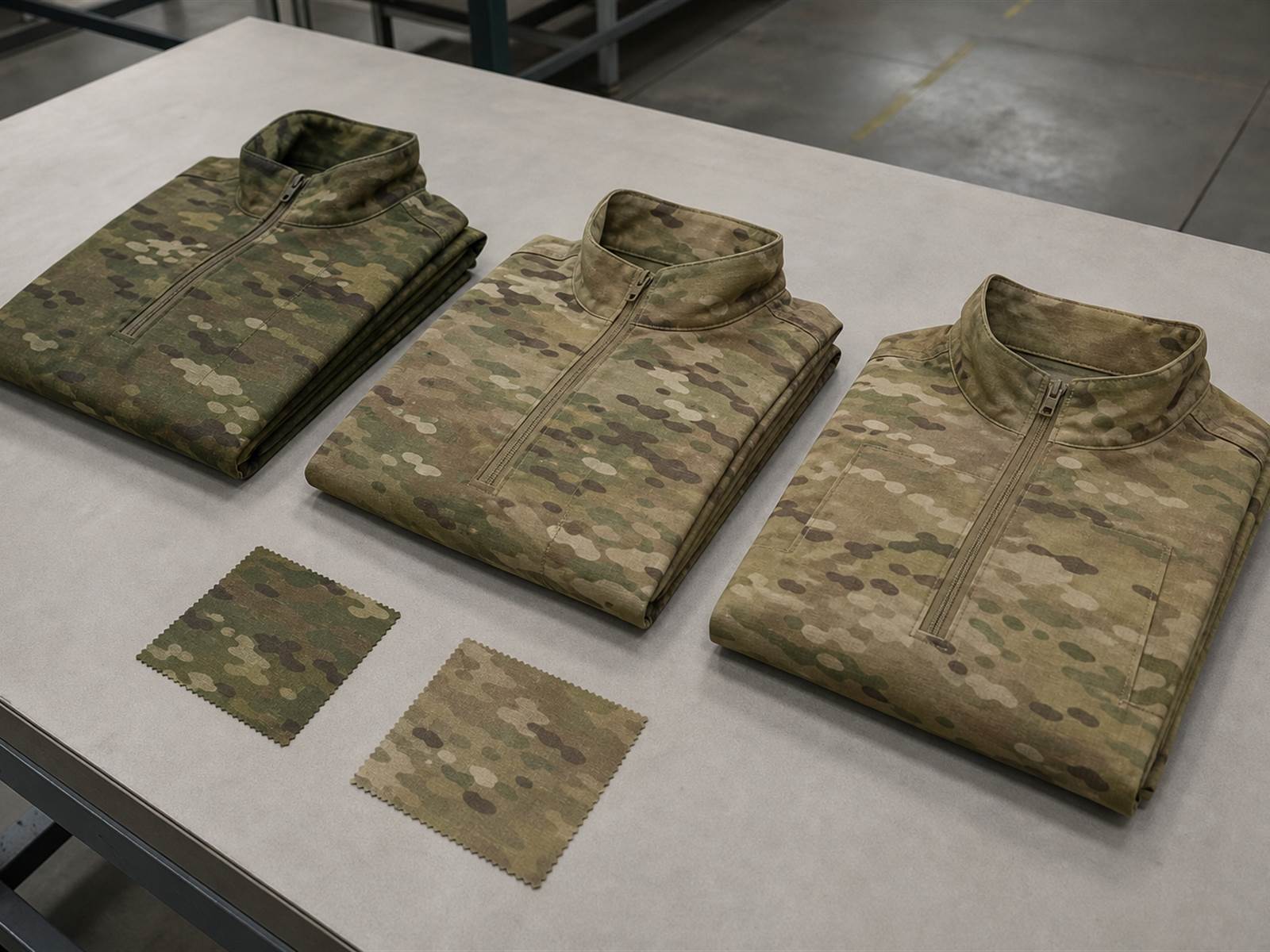
- Process steps
- 8 defined stages
- Deliverables
- 8 documented outputs
- Inputs required
- 8 from the buyer
Gallery
Batch Consistency in practice
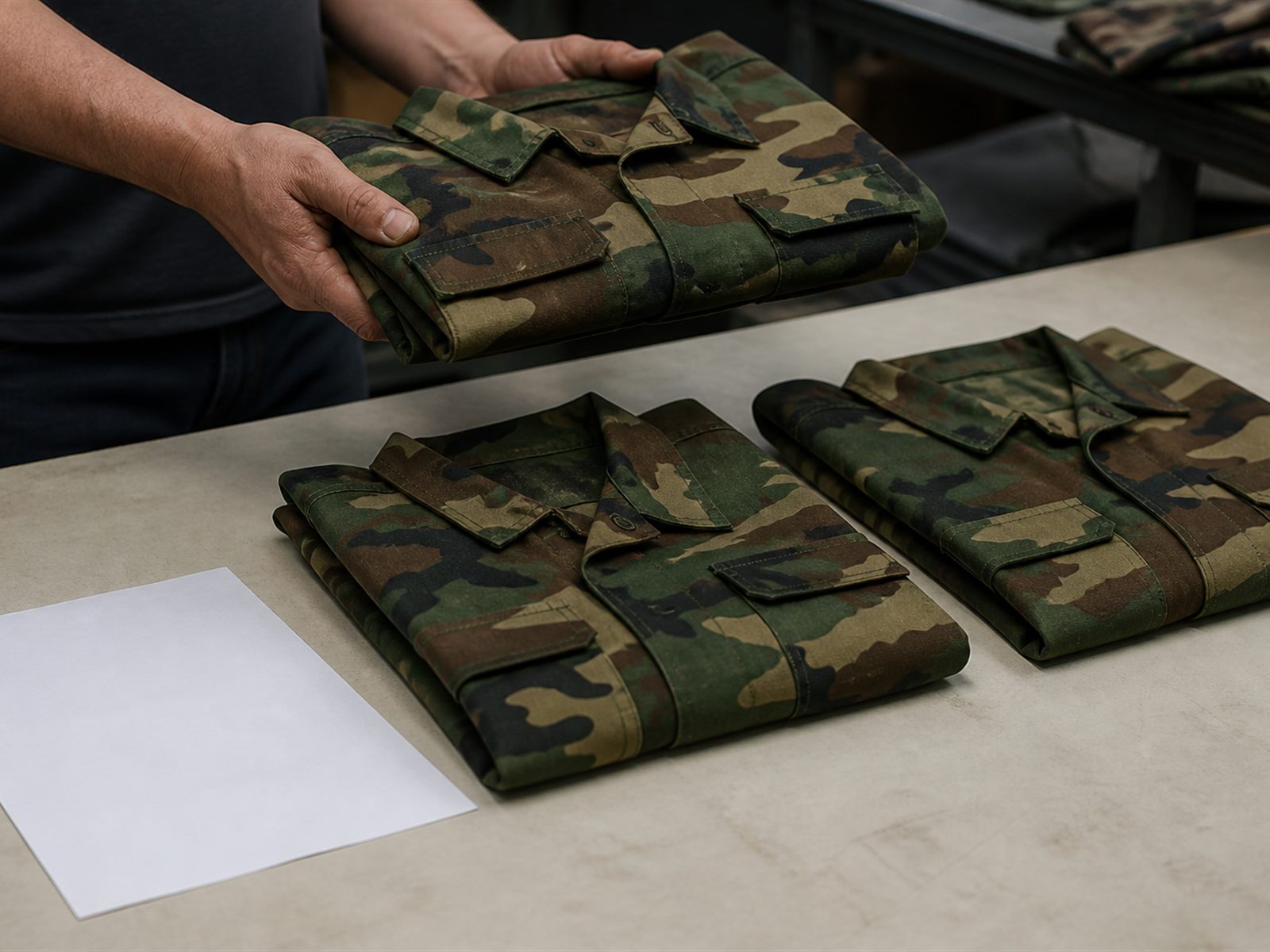
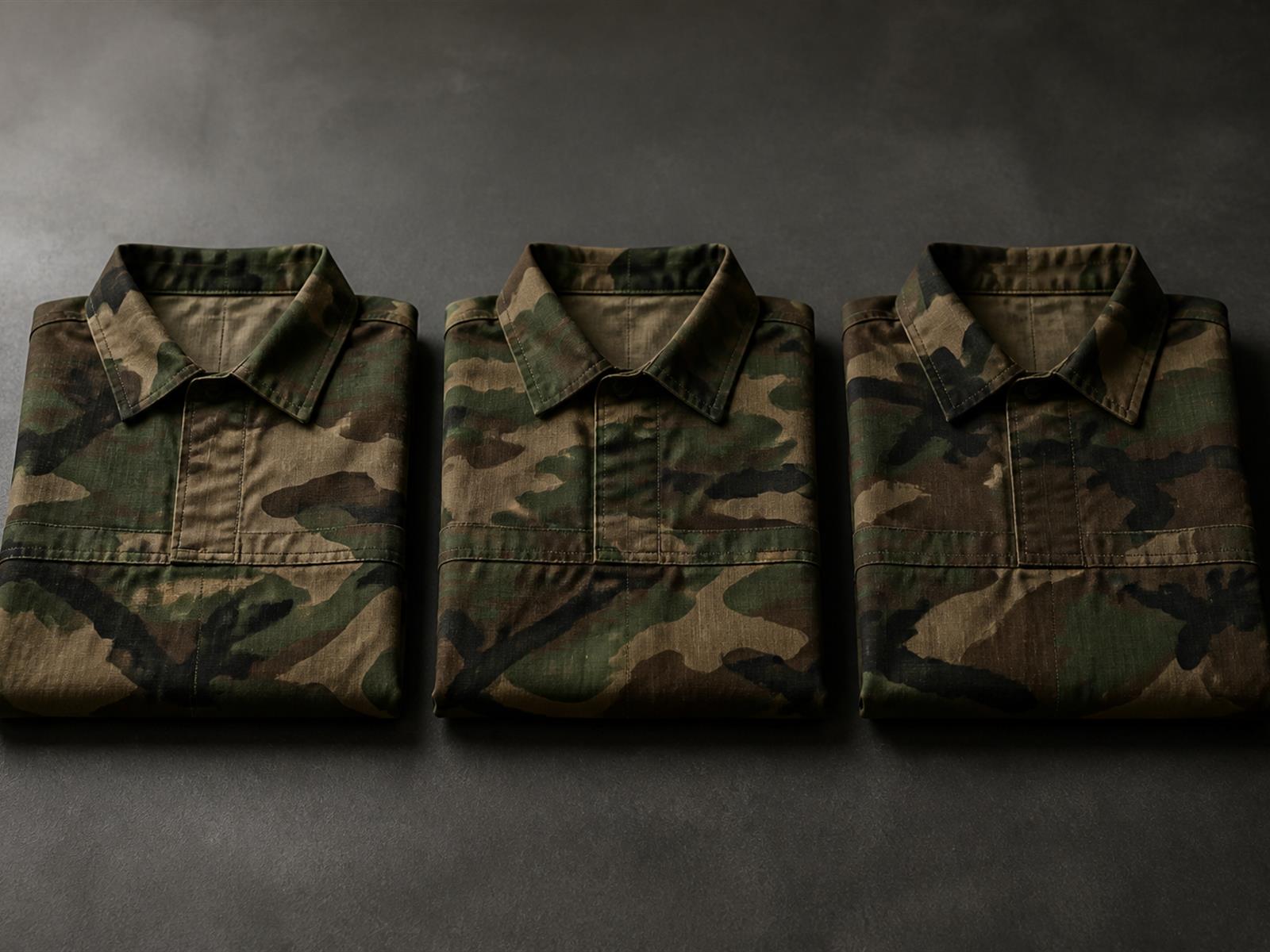
Inputs
What we need from you
The 8 inputs development of Batch Consistency needs from you, and where one is missing we will tell you it is missing rather than assume it.
- Sealed approval sample and approved fabric, trim and colour standards
- Locked measurement chart with written tolerance per critical dimension
- Colour standard with the agreed tolerance and the lighting condition it is judged under
- Camouflage or print reference, with repeat and direction confirmed
- Cutting plan, marker and panel count per size, plus how the order is to be split into batches
- Trim list with approved references for zippers, hook and loop, thread, elastic, cord, webbing and labels
- Fabric lot and dye-lot references for each roll issued to cutting
- Shipment structure: how many batches, in what sequence and against which delivery destinations
Deliverables
What you receive
The 8 tangible outputs you receive from Batch Consistency — not assurances.
- Retained physical standard set covering all six consistency variables
- Colour judgement record against the retained swatch with deviation stated
- Fabric roll lot record linked to cutting issue
- Cutting ticket recording pattern version, marker and fabric lot per batch
- Measurement record per batch against the locked chart and written tolerance
- Trim and label verification record with any substitution documented and approved
- Batch traceability record linking materials, cutting, sewing line and inspection results
- Pre-release batch comparison record covering start, middle and end of run
Process
The process, step by step
Batch Consistency runs as 8 steps, and the sequence is not administrative: each step removes a specific risk before the next one commits cost.
Standard set establishment
A physical standard is fixed for each of the six variables and retained: the approval garment for pattern and fit, the colour swatch, the fabric standard, the trim references, the locked measurement chart and the size label set. Without retained physical standards, consistency has no reference and inspection becomes a comparison between opinions.
Colour consistency control
Colour is judged against the retained swatch under a stated lighting condition, with the acceptable deviation written down in advance. Fabric panels from the same order but different rolls are compared against each other as well as against the standard, so a shade difference inside a shipment is caught before packing rather than after delivery.
Fabric consistency control
Fabric is controlled by roll lot: incoming inspection records lot, width, weight, construction and any visible defect against the approved standard, and rolls issued to cutting are recorded. This is what makes it possible to trace a hand-feel or shrinkage difference in one batch back to a specific roll instead of the whole order.
Pattern and fit consistency control
Bulk is cut only from the sealed pattern version, and any pattern change requires a new sealed version with a stated reason. Cutting tickets record the pattern version and marker, so the geometry of each batch is documented and a fit difference between batches can be attributed to a specific cutting event.
Size consistency control
Each batch is measured against the same locked chart and the same written tolerance, at the critical dimensions, with the measured values recorded. Consistency across batches is what protects a buyer who receives the same size across two shipments from two different sewing lines.
Trim and hardware consistency control
Approved trim references are attached to the order and checked at issuing and at final inspection: zipper type and colour, hook and loop grade and colour, thread shade and ticket, elastic, cord, webbing, brand label, size label and care label. Trim substitution between batches is the most common hidden inconsistency, so any substitution requires written approval and is recorded.
Batch record and traceability
Each batch carries a record linking it to the cutting ticket, pattern version, fabric lot, trim lot, sewing line and the inspection results for that batch. The record is what makes a claim actionable: a defect in one batch can be traced to its own material and process rather than to the whole order.
Batch comparison and release
Before release, garments from the beginning, middle and end of the run are compared against each other and against the retained standard for colour, fabric, construction, size, trims and labelling. Comparison between batches is a separate check from comparison against the standard, because a shipment can match the standard internally and still be inconsistent with the previous shipment.
Buyer value
Why this matters to a buyer
Why Batch Consistency matters to a buyer, framed as the 6 commercial consequences rather than as quality adjectives.
A batch problem is contained to the batch it belongs to, because traceability identifies the material lot and cutting event instead of implicating the whole order
Colour and fabric are judged against retained physical standards, which is what stops a reorder from arriving visibly different from the shipment the buyer already sold
Written tolerances and per-batch measurement records turn a consistency complaint into a documented discussion rather than a negotiation about perception
Trim substitution between batches is prevented or declared, which removes the hidden differences that only appear after the first wash
Buyers distributing to several destinations can split an order across shipments knowing the batches remain comparable
A retained standard set and batch records make the next order faster to control, because the reference already exists rather than being rebuilt
FAQ
Batch Consistency FAQ
How is colour consistency maintained between separate orders?
Through a retained physical colour standard with a written tolerance, judged under a stated lighting condition. A repeat order is compared against that retained standard, not against the previous shipment, because the previous shipment is no longer available as a reference once it has been delivered and sold.
What if one batch uses a different roll of fabric?
Different rolls are expected within an order and across orders. The control is the roll lot record: incoming fabric is inspected against the approved standard, rolls issued to cutting are logged, and panel shade is compared within the batch. If a roll does not match the standard, it is held before cutting rather than absorbed into the order.
Can a reorder be guaranteed identical to the first order?
Identical is not a claim any honest factory makes, because fabric lots and machinery conditions vary. What can be controlled and documented is conformance to the same retained standards and the same locked chart within the same written tolerance, which is the practical meaning of consistency for a repeat programme.
How do you stop trims being substituted without our knowledge?
Approved trim references are attached to the order and checked at issuing and at final inspection, and any substitution requires written approval and is recorded in the batch record. Where a substitution is unavoidable, it is declared before production rather than after shipment.
What does a batch record actually contain?
The cutting ticket, pattern version, fabric and trim lots, sewing line identification and the inspection results for that batch. It exists so that a defect can be traced to a specific cause, which is what allows a limited remedy instead of a general dispute.
Related
Related content
Related Products
Related Materials
Related Applications
Related Capabilities
Related Articles
Request a Manufacturing Assessment
Send us your tech pack, reference sample or product idea. We review your requirement, recommend materials and construction, and come back with a development plan you can act on.