Skip to content
TACTICALOEM / ODM TACTICAL APPAREL
ENEnglish

Products / Cold Weather Shell Jackets

Cold Weather Shell Jacket Manufacturer

The cold weather shell is the outermost layer of a Base / Mid / Insulation / Shell system, and it is judged by what it keeps out rather than by what it provides on its own. It has to stop wind reaching the insulation, keep wet snow, sleet and rain away from seams and openings, and still let the moisture the wearer generates escape where the design allows. This is a construction problem more than a fabric problem: in practice, cold weather shells leak at a small number of predictable places — fronts without a storm flap, cuff and hem openings, pocket edges, hood interfaces and seams under load. This page covers the shell as a distinct category from insulated jackets and from general softshells: outer fabric selection for wet cold versus dry cold, seam treatment per position, opening and closure design, hood and collar interfaces, ventilation, and how the shell is sized and documented so it can be produced again identically.

custom cold weather shell jacketwinter shell jacket OEMwindproof tactical shell supplierwholesale snow shell jacket
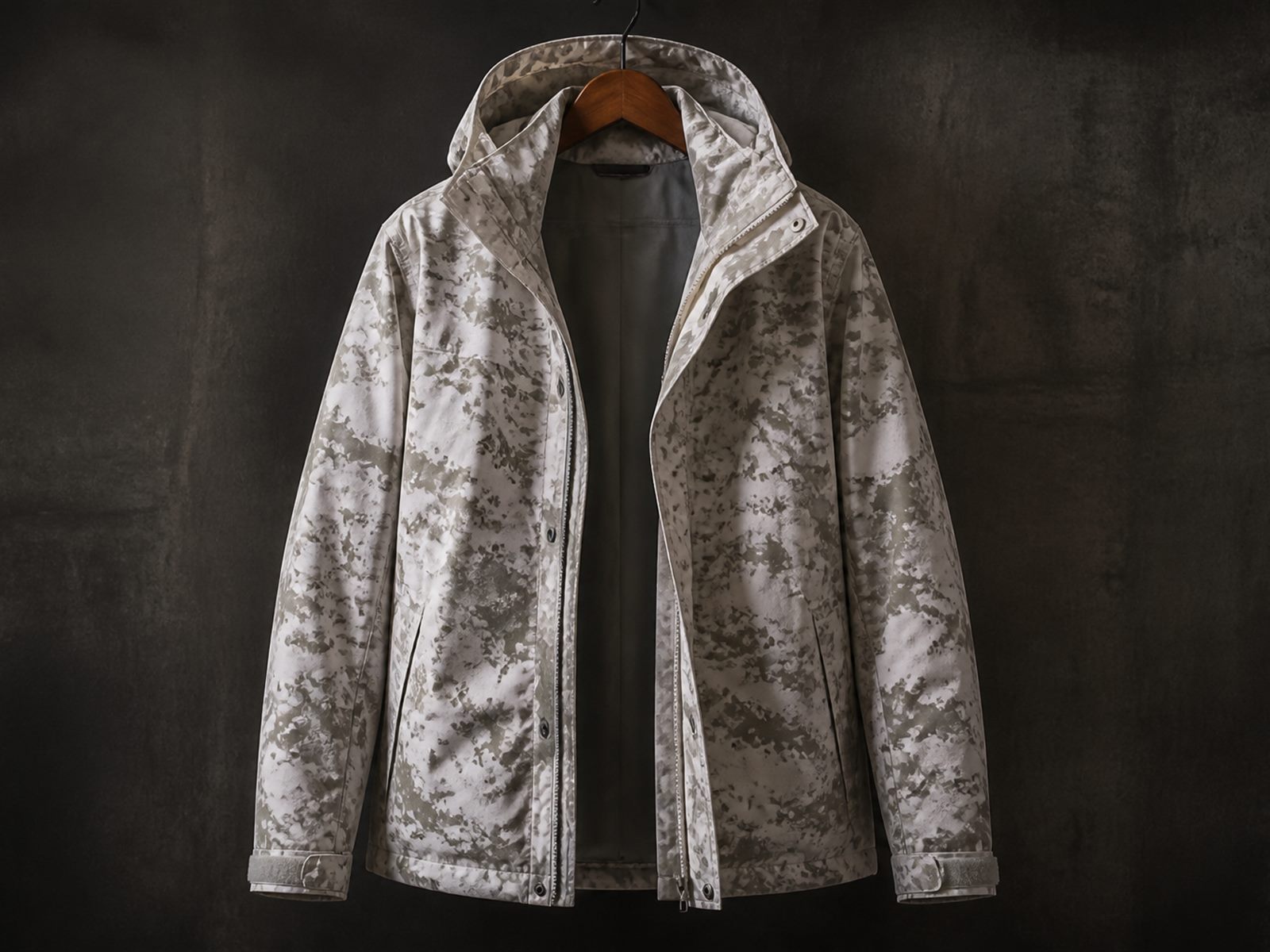
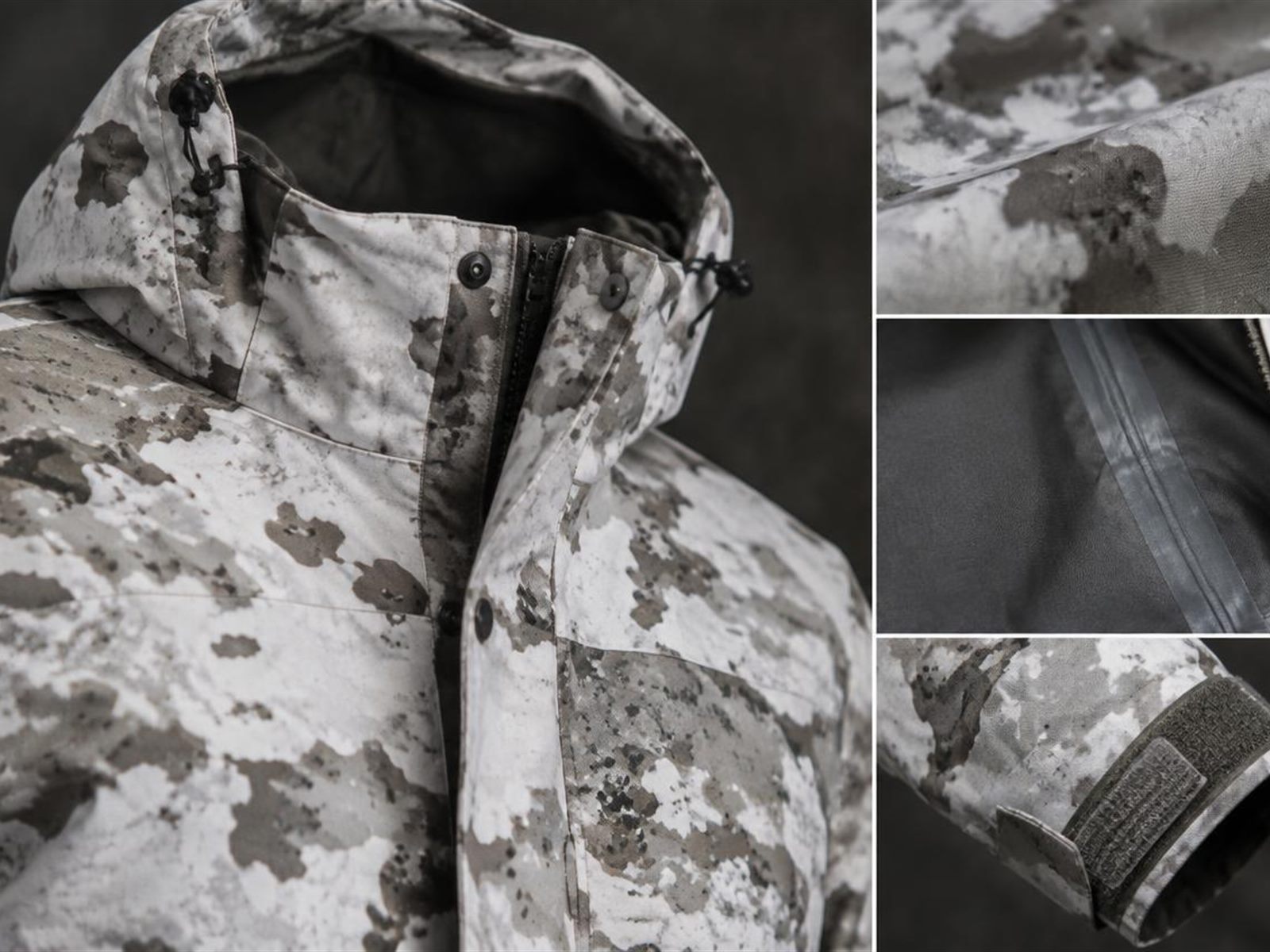
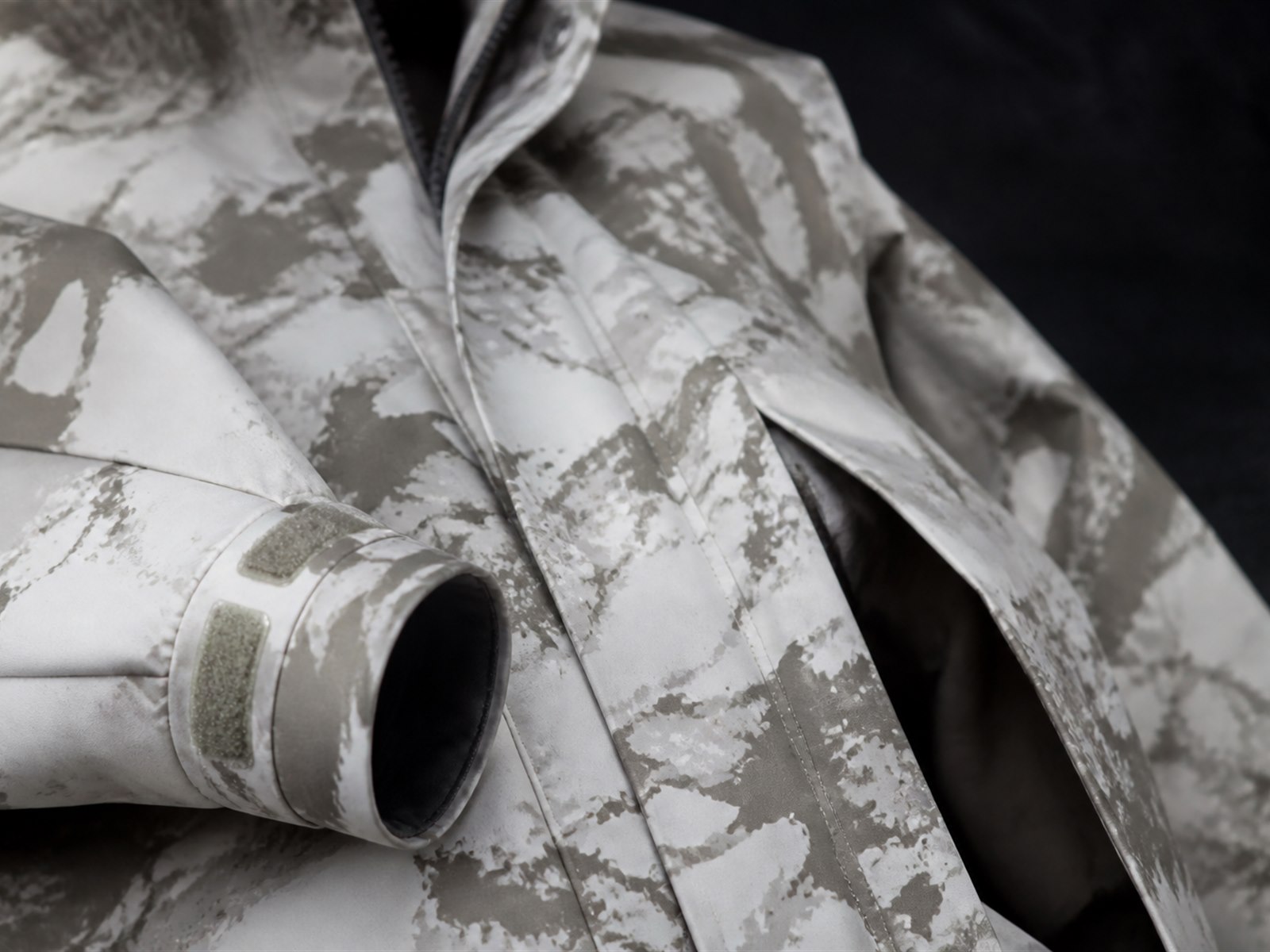
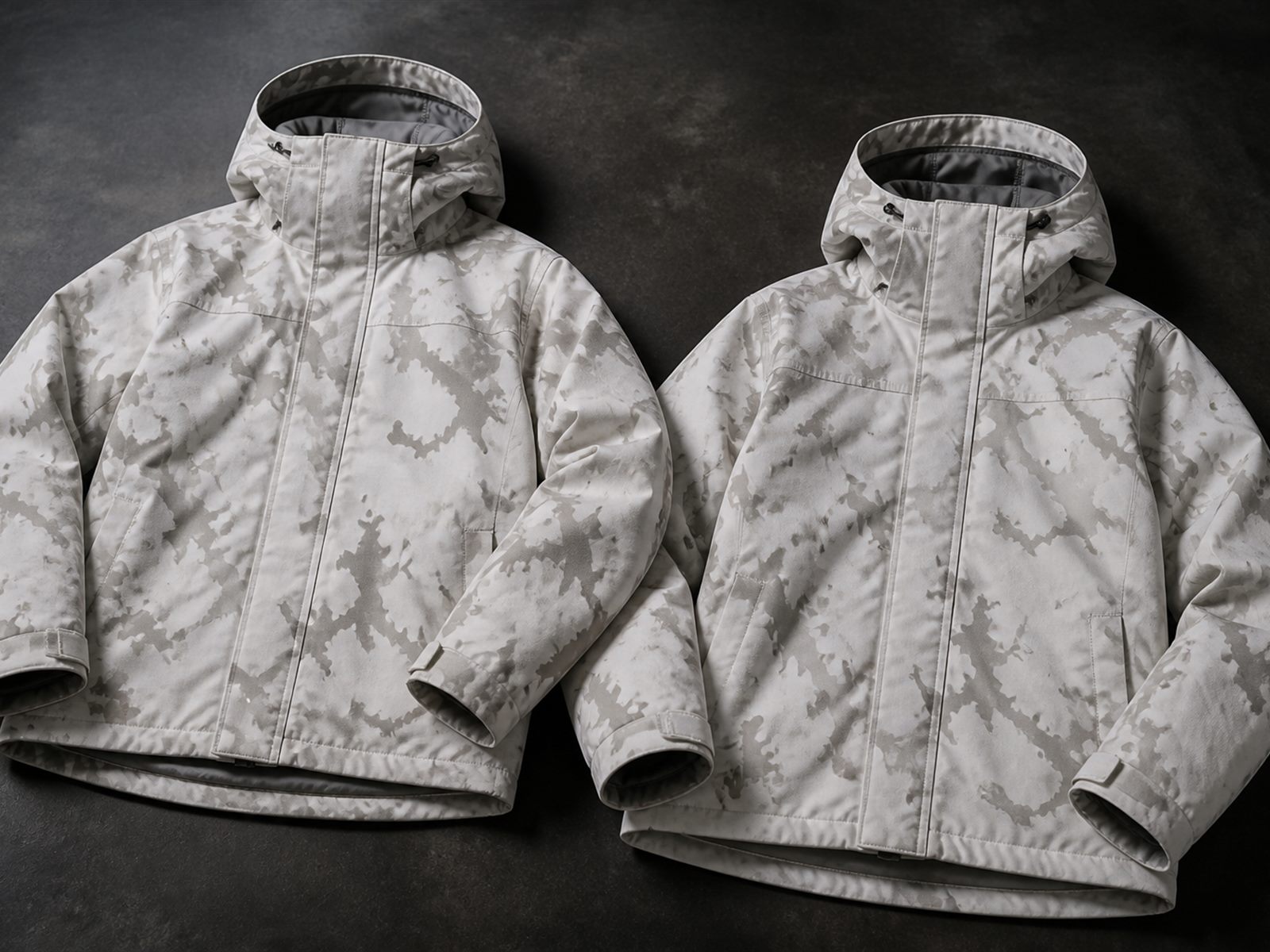
Cold weather shell jacket with storm flap, sealed seams and adjustable cuff manufactured for OEM buyers
Primary keyword
cold weather shell jacket manufacturer
Climate focus
Wet cold / Snow, sleet, freezing rain · Dry cold / Wind-affected · Cold / Sustained movement
Development input
Tech pack · Reference sample · Sketch · Photo
Cold Weather Shell JacketsCold Weather Shell JacketsCold Weather Shell JacketsCold Weather Shell Jackets

Buyers

Who buys cold weather shell jackets?

Cold Weather Shell Jackets is specified by organisations rather than bought as a single garment, so a quotation has to satisfy all 6 buyer profiles listed below.

Tactical Brands

A shell that completes an existing layering range, shares its size set with the mid and insulation layers, and survives repeat production without colour or construction drift.

Outdoor & Hunting Brands

Quieter shells in muted or camouflage palettes, with their own labelling, in a construction adjusted for active movement rather than static duty wear.

Uniform Distributors & Wholesalers

A shell they can issue alongside jackets and layering items they already stock, in a full size range, reordered against a documented specification.

Security Companies

Duty-presentable shells that take company insignia, hold their shape through frequent laundering, and remain usable for staff who work outside for full shifts.

Procurement Companies & Importers

Specification transparency and inspection documentation, because a tender that specifies a shell usually requires the construction to be evidenced rather than described.

Private Label Brands

Their own artwork, labels and retail packaging on a shell built to their specification rather than selected from an existing range.

Types

Cold Weather Shell Jackets types

The same category name covers very different garments depending on climate and wear pattern. 3 types of Cold Weather Shell Jackets are covered here, and the type is chosen before the fabric.

Wet cold / Snow, sleet, freezing rain

Waterproof Snow & Sleet Shell

Built for the condition where precipitation behaves like rain rather than dry snow. The specification is waterproof construction with exposed seams treated, storm flaps behind every closure and protected pocket openings. The trade-off is breathability: the more completely the shell blocks water, the more the wearer depends on ventilation to move internal moisture out, so vent design carries more weight here than in any other shell type.

  • Waterproof shell fabric with treated seams
  • Storm flap behind the full front closure with a chin guard
  • Protective hood with a wired or structured brim and adjustable interface
  • Pit zips or core vents with protective coverage
  • Adjustable cuffs designed to close over or under gloves
  • Hem adjustment that seals against wind without restricting hip movement
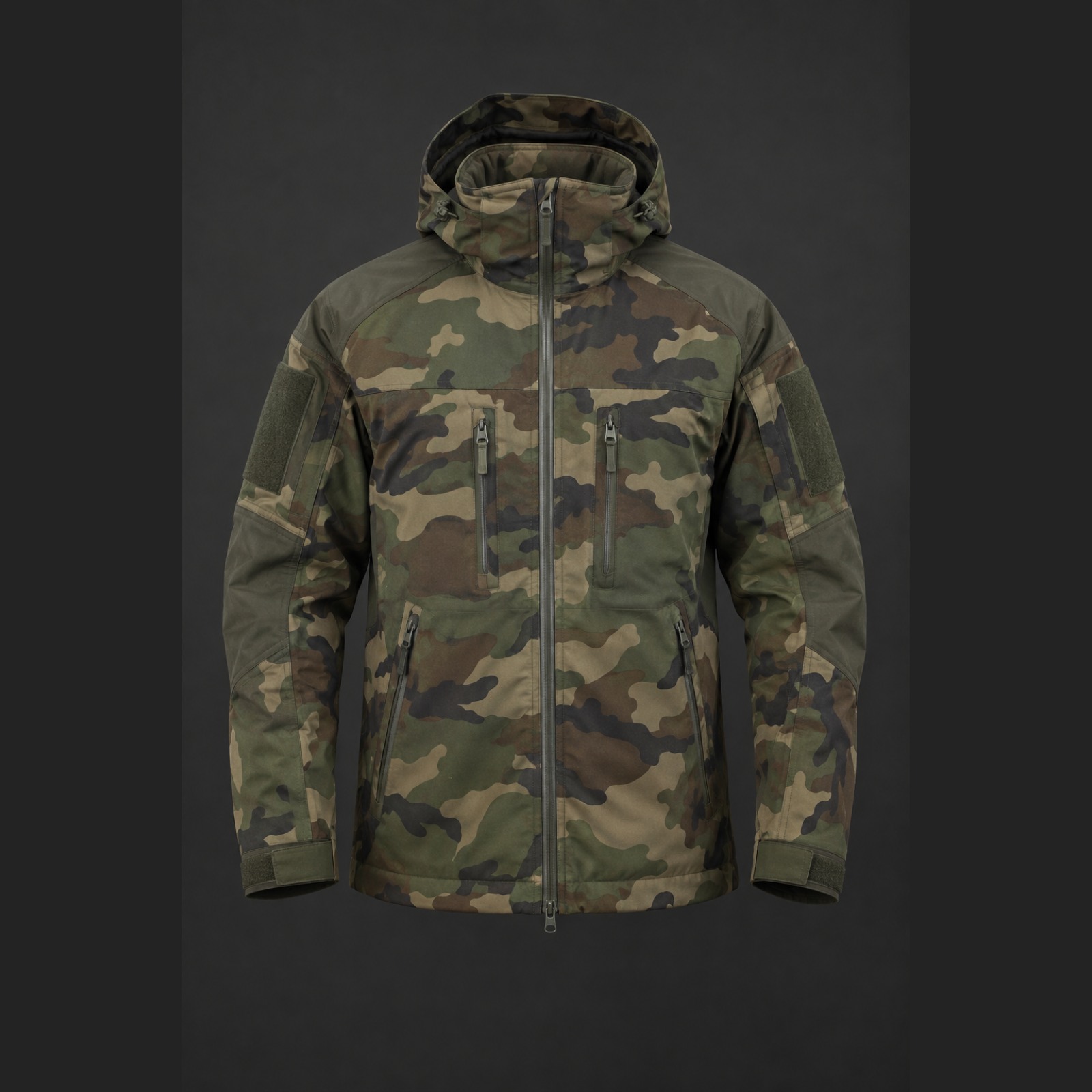
Dry cold / Wind-affected

Wind-Resistant Dry Cold Shell

For programmes where wind is the main problem and sustained precipitation is not, a shell that blocks wind while letting internal moisture escape is often the better specification than a fully waterproof one. It is lighter and generally more comfortable to work in. The trade-off is honest and worth stating: in wet snow or sleet this shell is the wrong choice, no matter how well the layers beneath perform, and it should not be issued as a universal winter outer layer.

  • Wind-resistant woven shell with limited water resistance
  • Storm flap or covered front closure as the wind path matters most
  • Adjustable cuff and hem that close the draught paths
  • Collar designed with the mid layer collar and headwear in use
  • Reinforced shoulders and forearms where equipment and abrasion contact occur
  • Ventilation options that let heat out during sustained movement

Cold / Sustained movement

Vented High-Output Cold Shell

The shell for wearers who are moving for most of the working day in cold conditions, where the dominant risk is wetting out from the inside rather than precipitation getting in. Ventilation, closure design and moisture escape are prioritised over maximum water protection, and the pattern is cut to move. The cost is water protection at the openings, which is precisely why this shell suits dry or light-snow programmes and not wet-cold ones.

  • Vent zips at the chest or underarm positioned for access while wearing equipment
  • Two-way front closure for harness and belt access
  • Lighter shell fabric for movement and packability
  • Articulated sleeves and gusseted underarm
  • Minimal pocket count to reduce leak points
  • Cuff and hem closures operable with gloves

Engineering

Construction, part by part

8 construction decisions define Cold Weather Shell Jackets, and each row below is one decision you control at specification stage.

Outer Shell Fabric

  • Waterproof fabric with treated seams
  • Water resistant fabric with breathability
  • Wind resistant fabric for dry cold
  • Softshell face for dry cold and high activity
  • Ripstop or grid-face shell for abrasion

The single most consequential decision on this garment is where the balance sits between blocking water and letting moisture out. That balance is set by the buyer's environment — dry cold or wet cold — and not by price point.

Seam Construction & Treatment

  • Fully treated exposed seams
  • Treated seams at shoulders, hood and chest only
  • Untreated seams with a water-resistant construction
  • Taped or bonded seam option
  • Seam positioning moved away from load and compression points

Shoulder and hood seams are the first to leak because they sit under load and collect water. Which seams are treated is a decision per position, and it should be written into the tech pack rather than left to the line.

Front Closure & Storm Flap

  • Full front zip with internal storm flap
  • Full front zip with external flap and hook and loop
  • Two-way zip with storm flap
  • Snap or hook and loop placket over the zip
  • Chin guard at the collar top

The front closure is the largest single opening on the garment and the main draught path. The flap is what makes the closure work in wind; the zip alone is not the specification.

Hood & Collar Interface

  • Fixed hood with volume and face adjustment
  • Removable hood with a zip or stud interface
  • Structured brim
  • High stand collar without a hood
  • Collar designed to layer with the mid layer collar

The hood has to work with the headwear and hearing protection the buyer issues. A hood that fights a helmet or a headset is a functional failure, and it is a decision made before pattern development, not during fitting.

Cuff

  • Adjustable hook and loop cuff
  • Elasticated inner cuff with a hook and loop outer cuff
  • Extended storm cuff with a thumb loop
  • Adjustable cuff sized to close over or under issued gloves

The cuff is where snow most easily enters and where heat is most easily lost. It is specified together with the glove, because a cuff that does not interface with the glove will be left open in the field.

Hem

  • Drawcord hem with side adjusters
  • Elasticated hem
  • Extended back hem
  • Hem lined with a water-resistant inner face

Hem adjustment seals the waist without making the jacket ride up. Where the shell is worn under equipment, the adjusters have to remain accessible without removing it.

Ventilation

  • Underarm pit zips
  • Chest vents
  • Back yoke vent
  • Two-way front closure as a vent route
  • No vents (low-activity builds)

Ventilation is the counterweight to a waterproof shell. Where it is specified, it needs protective coverage over the vent opening, otherwise the vent becomes the route for precipitation to enter.

Pockets

  • Zipped chest pocket with a covered opening
  • Hand pockets in the hand-warmer position
  • Napoleon pocket for documents
  • Sleeve pocket with flap
  • Internal pocket inside the shell lining

Every pocket is a potential leak point and a potential obstruction under equipment. Pocket count and placement are agreed against what the wearer carries and where the equipment sits, not added as standard features.

Available fabrics

Material options by garment area

Main Shell

Waterproof fabricWater resistant fabricWind resistant fabricSoftshell

Wet cold points to waterproof construction; dry cold and high activity usually point to a wind-resistant or softshell outer with better breathability. Water resistance alone is the wrong specification for programmes that include wet snow.

Reinforcement Panels

Waterproof fabric at shoulders and forearmsStretch ripstop at high-wear areasMechanical stretch fabric for articulated zones

Reinforcement follows reported wear points — shoulders from equipment, forearms from contact and load — and is matched to the fabric it sits on so the panel and the shell move together.

Lining

Plain mesh liningTaffeta lining for easy layering over fleeceLined hood for comfort at the faceNo lining (lightweight shell builds)

The lining decides how easily the shell slides over the mid and insulation layers, which is a layering problem rather than a comfort preference.

Trims, Seam Tape & Hardware

Seam treatment matched to the shell constructionWater-resistant zips at exposed openingsDrawcord and toggle specification for glove useHook and loop matched in colour across the fabric set

Trims are where a well-specified shell most often fails in use: pullers too small for gloves, toggles that seize in cold, or sealant that lifts after repeated washing.

Customization

What can be customized

14 specification lines are available for Cold Weather Shell Jackets, and where an option changes cost, weight or durability the consequence is stated next to it.

Fabric

Waterproof constructionWater-resistant breathable constructionWind-resistant constructionSoftshell constructionBuyer-specified composition

Colour

Solid colourwaysBuyer Pantone targetsBuyer lab dip approvalColour matching across the layering set

Camouflage

Buyer artworkWoodland styleDigital styleWinter or seasonal patternNone (solid duty colourways)

Hood

FixedRemovableStructured brimNo hood

Closure

Full zip with internal flapFull zip with external flapTwo-way zipPlacket with hook and loop or snap

Seam Treatment

All exposed seamsShoulder, hood and chest onlyTaped optionWater-resistant construction only

Ventilation

UnderarmChestBack yokeTwo-way closureNone

Cuff

Hook and loopElastic inner with outer adjusterExtended with thumb loopGlove-matched opening

Hem

DrawcordElasticatedExtended backWater-resistant inner lining

Pockets

ChestHandNapoleonSleeveInternal

Lining

MeshTaffetaLined hood and collarUnlined

Insignia

Hook and loop panelEmbroidery positionHeat transferNone

Logo & Label

Woven labelPrinted labelRubber patchMain, size, care and origin labels

Packaging

Poly bagPrinted poly bagHangtagHeader cardCustom box

Sizing

Size development

A shell is worn over the rest of the system, so its sizing cannot be developed from body measurements alone or copied from a single-layer jacket. We start from the buyer's target size range, the measurements of the mid and insulation layers the shell must cover, and any sizing system the buyer already issues against. From there we build a size set so critical measurements — chest, shoulder, sleeve length, back length, cuff opening and hem opening — are confirmed across the range, and the size set is assessed in the full layer stack wherever the buyer can supply the other layers. Sleeve length and shoulder width are the measurements most likely to be wrong on a shell, because two or three layers beneath shorten effective reach. Tolerances are agreed in writing before bulk so that inline and final inspection measure against the same numbers.

How size development works

Branding

Private label

Private label covers everything visible on the finished shell. Main label, size label, care label and country of origin label are produced to the buyer's artwork and content requirements, including any care instruction the shell construction genuinely requires. Branding is applied as woven label, printed label, rubber patch, embroidery or heat transfer, and insignia panels are placed at agreed positions with the backing the shell fabric needs to survive piercing. Packaging ranges from a plain poly bag to a printed poly bag with hangtag, header card and custom box. All labelling and packaging is confirmed on the pre-production sample so bulk follows an approved reference.

Customization capability

Development

Sampling process

Sampling for Cold Weather Shell Jackets runs in 7 stages, each one removing a specific risk before the next stage commits cost.

01

Requirement review

We review the tech pack, reference sample or photo and list the open points — dominant weather condition, layers worn underneath, equipment interfaces, hood and glove requirements and labelling — before material is cut.

02

Shell and seam strategy

Shell fabric and seam treatment are proposed against the buyer's environment, with the trade-off between water protection and breathability stated explicitly rather than assumed.

03

Interface confirmation

Hood, collar and cuff are developed against the headwear and gloves the buyer issues, and against the collar of the mid and insulation layers that will sit beneath.

04

Pattern development

The pattern is developed to the buyer's reference, including articulation, gusseting, hem shape and the sizing allowance for layering.

05

Prototype

A first sample is produced so the buyer can assess construction, opening protection, movement and how the shell sits over the layers beneath.

06

Revision round

Buyer comments are consolidated into a single revision round so the specification converges rather than drifting across samples.

07

Size set and pre-production sample

The full size range is produced for measurement confirmation across the range, and the approved construction, materials, trims and labelling are locked in a pre-production sample that becomes the bulk standard.

Production

Bulk manufacturing

Bulk production of Cold Weather Shell Jackets runs in 7 stages, which is where an approved specification is either held or lost.

01

Fabric and trim approval

Shell fabric, reinforcement panels, zips, sealant, drawcords, hook and loop, thread and labels are approved against the pre-production standard before cutting.

02

Bulk cutting

Cutting follows the approved pattern, with markers arranged so shade and direction-sensitive face fabrics are consistent between panels of the same garment.

03

Panel preparation and seam treatment

Seam treatment, panel bonding and any printed or embroidered components are completed and checked before assembly, because a treated seam cannot be inspected once the garment is closed.

04

Assembly

Line assembly follows the approved sequence, with storm flap, closure protection, hood attachment and reinforcement placed as specified.

05

Inline quality control

Work in progress is inspected during assembly so faults in closure protection or seam treatment are corrected on the line rather than after packing.

06

Finishing

Thread trimming, zip and adjuster function checks, sealant inspection and pressing are completed before final inspection.

07

Final inspection and packing

Measurement, construction and packing inspection are completed against the agreed inspection standard and documented before shipment.

Quality Control

Quality control for this category

Inspection of Cold Weather Shell Jackets is measured against an agreed standard, and the 7 checks below are listed with what each one is measured against.

01

Incoming fabric inspection

Shell and reinforcement fabrics are checked for weight, width, shade, surface condition and defects on receipt, before production.

02

Seam treatment verification

Seam treatment is verified against the approved sample at the positions specified, because a treated seam that fails in the field cannot be corrected at the line.

03

Pre-production approval

The pre-production sample is approved by the buyer and becomes the reference standard for bulk.

04

Inline inspection

Work in progress is inspected at defined points during assembly, including closure protection and hood attachment.

05

Measurement inspection

Critical measurements are measured against the approved size set with the tolerances agreed in writing.

06

Construction and hardware inspection

Stitching, zip function, storm flap coverage, hood adjustment, cuff and hem adjusters, and insignia placement are checked against the approved sample.

07

Final and packing inspection

Finished goods are inspected before packing, and labels, folding, poly bagging and carton marking are checked against the packing instruction.

Choosing a Cold Weather Shell Jackets manufacturer

How to choose a cold weather shell jackets manufacturer

The 6 questions buyers ask about Cold Weather Shell Jackets before committing to a first order.

Decide the weather condition before the fabric

Dry cold, wind-affected cold and wet cold point to genuinely different shells, and one garment cannot be optimal for all three. Write down the dominant condition your programme expects, then specify the shell against it. A shell chosen as a compromise across all three usually underperforms in the condition that matters most.

Ask where the shell leaks, not how waterproof the fabric is

Precipitation enters a cold weather shell at the front closure, the cuff and hem openings, hood seams and pocket edges far more often than through the fabric. Ask a supplier to walk through each of those positions on their construction, and to show the storm flap and seam treatment on a physical sample.

Treat breathability as a required property, not a marketing line

The more completely a shell blocks wind and water, the more the wearer depends on ventilation and moisture escape to avoid wetting out from the inside. If the programme involves sustained movement, ventilation design deserves the same attention as water protection.

Confirm the interfaces you already own

Hood against headwear and hearing protection, cuffs against gloves, hem against footwear and belt or harness. These interfaces are specified against what the buyer issues. Where that list is not yet fixed, ask the supplier to document them as open points rather than assuming.

Size the shell as part of a stack

A shell that fits well over a shirt may bind at the shoulders over a fleece and an insulation layer. Require a size set that can be assessed in the full composition, and put the layering allowance into the specification rather than correcting it later with a looser fit.

Make sure the specification is reproducible

Shell fabric shade, seam treatment and trim behaviour are the details that drift between orders. Ask what the approved standard consists of, how incoming fabric lots are compared against it, and what happens when a lot does not match.

Products

Cold Weather Shell Jackets products

Each product in Cold Weather Shell Jackets is a developed specification with its own material options, construction detail and customization map.

Cold Weather Shell Jackets

Cold Weather Shell Jacket

The shell carries no warmth of its own, and that is the point of it.

Wet cold where snow, sleet or freezing rain is expected and the shell must be waterproof with sealed exposed seamsDry cold where wind is the dominant heat loss and a breathable wind-resistant shell is the better specificationAlternating activity where the wearer generates sweat while moving and needs to vent without removing the shell
View product

FAQ

Cold Weather Shell Jackets FAQ

What temperature does your cold weather shell work down to?

We do not publish a temperature figure, and we would advise caution with any supplier who does. How warm a shell feels depends on what is worn beneath it, activity level, wind, humidity, exposure time and fit rather than on the shell alone. What we do instead is specify the construction to the coldest condition your programme expects and document it so it can be reproduced, and we would expect any comfort claim to come from your own field trials with the actual composition.

Should I specify a waterproof shell or a water-resistant one?

It depends on the precipitation your programme actually experiences. Where wet snow, sleet or freezing rain occurs, waterproof construction with exposed seams treated and protected closures is the appropriate specification. In dry cold and wind, a water-resistant or wind-resistant shell with better breathability is often more comfortable to work in and lets internal moisture escape more easily. A water-resistant shell is the wrong choice for wet snow, and we will say so rather than supply it for that use.

How do you handle the hood, given that our staff wear helmets?

The hood and collar are developed against the headwear and hearing protection you issue, with an adjustable interface rather than a fixed one, and this is settled before pattern development. If the headwear list is not yet finalised, we document the interface as an open point in the specification instead of guessing, because an assumed interface is normally discovered in the field.

Can the shell share a size set with our existing mid layer and jacket?

It can, and it is usually worth doing. The shell is developed with the layers beneath it in mind, so chest, shoulder, sleeve length and back length allow for the stack rather than for a single garment. If your existing chart was built for a stand-alone jacket, we develop against it and adjust the shell dimensions, so the programme stays consistent with what you already issue.

Do you supply waterproof rating figures or test certificates for tender documents?

We do not quote water column or rating figures for a construction that has not been tested. Where your tender requires a figure, the correct sequence is to agree the required test method first and have it performed on the actual material and construction you intend to buy, so the number refers to the garment you will receive rather than to a datasheet.

Can you match colours across the shell, insulation and base layers?

This is one of the harder parts of a cold weather programme, because the layers are usually different fabric types that take colour differently. We treat colour matching across a fabric set as a specific requirement to be agreed and verified with lab dips, and we will tell you where an exact match between two fabric types is not realistic instead of promising one.

What do you need to quote a shell programme?

Product type, dominant weather condition, the layers the shell will be worn over, quantity, fabric direction, hood and closure requirements, glove and headwear interfaces, size range, insignia, labelling and packaging, and the target market. A reference sample or tech pack shortens development considerably. Where a figure such as MOQ or lead time has not been confirmed with you, we will state that explicitly rather than quote a number we cannot hold.

Request a Manufacturing Assessment

Send us your tech pack, reference sample or product idea. We review your requirement, recommend materials and construction, and come back with a development plan you can act on.