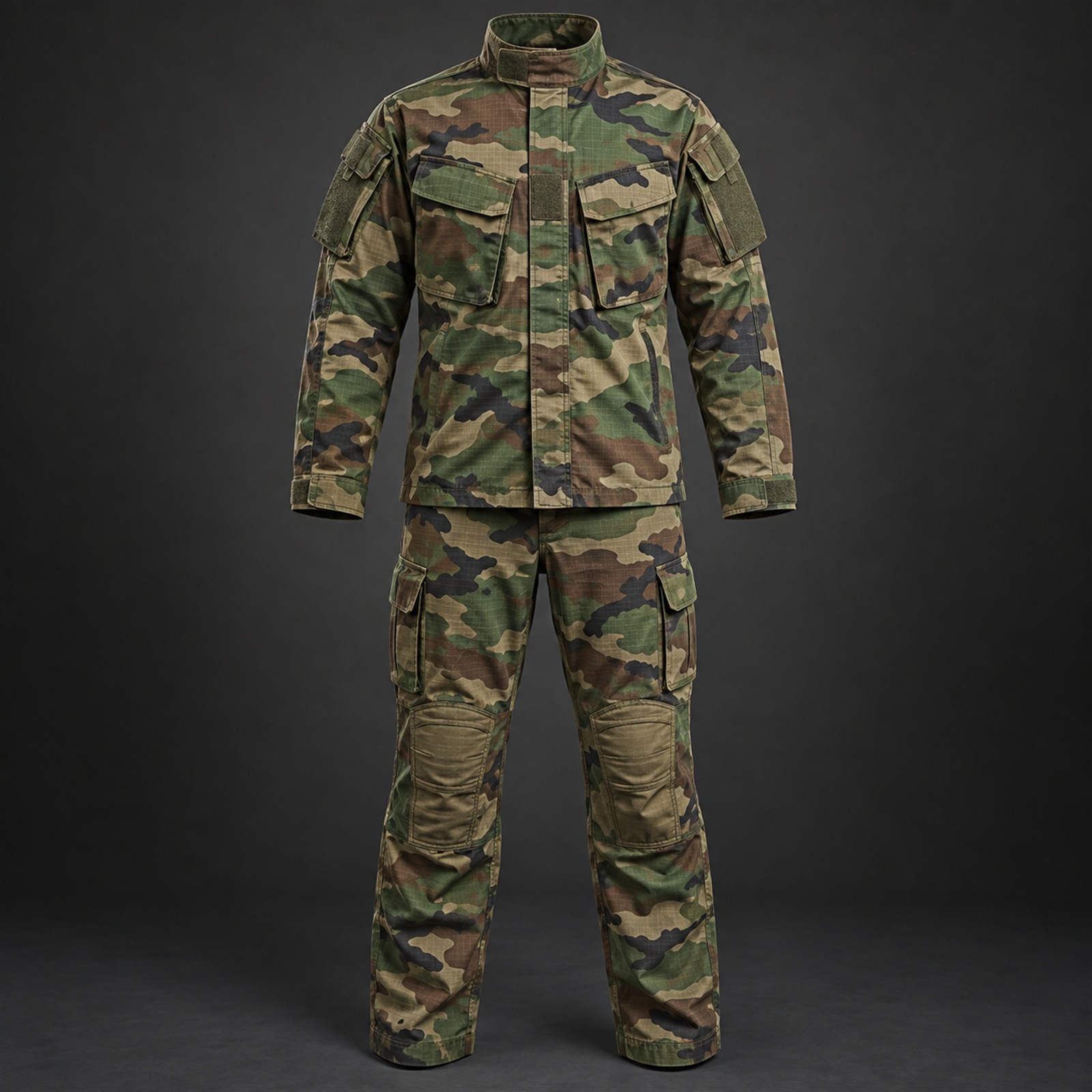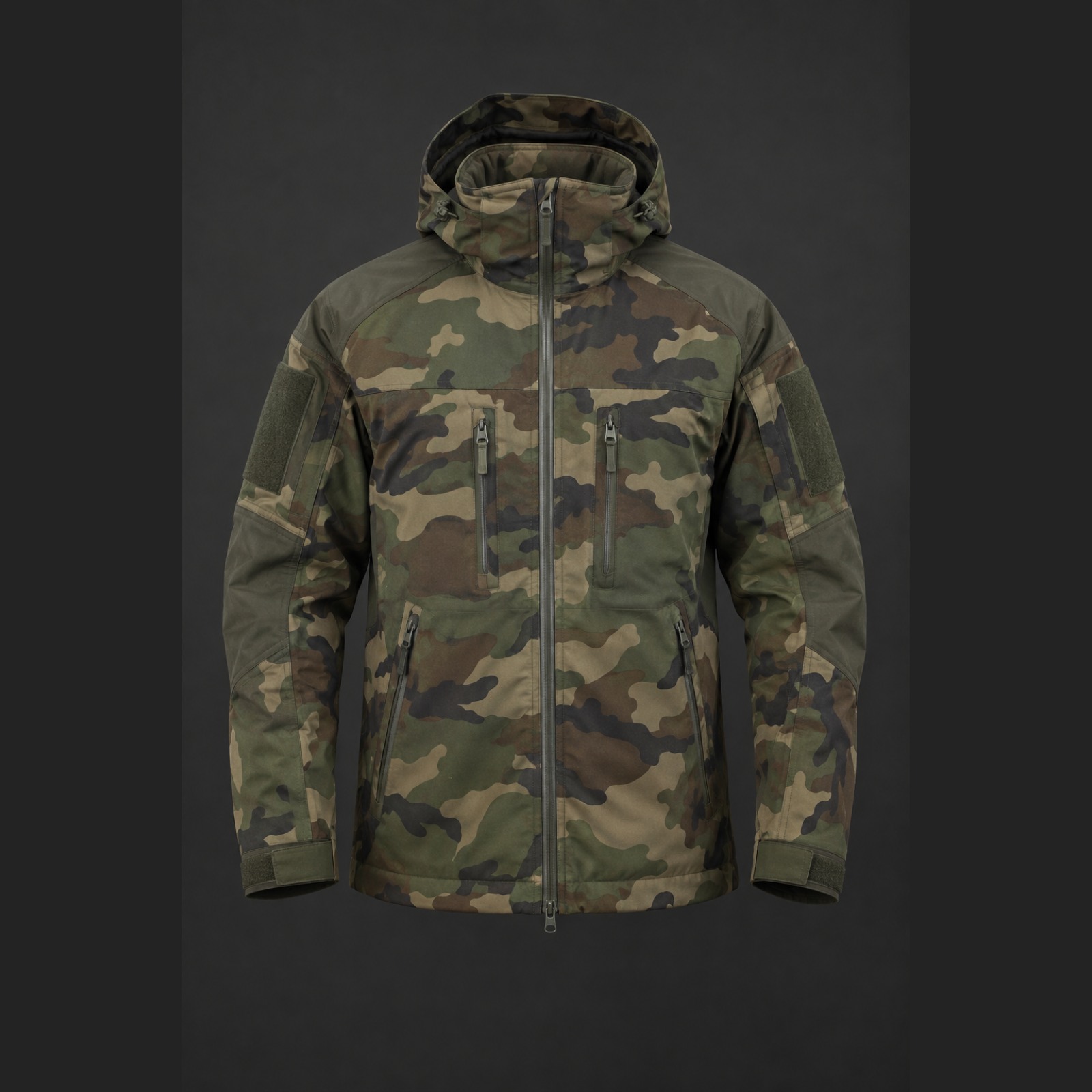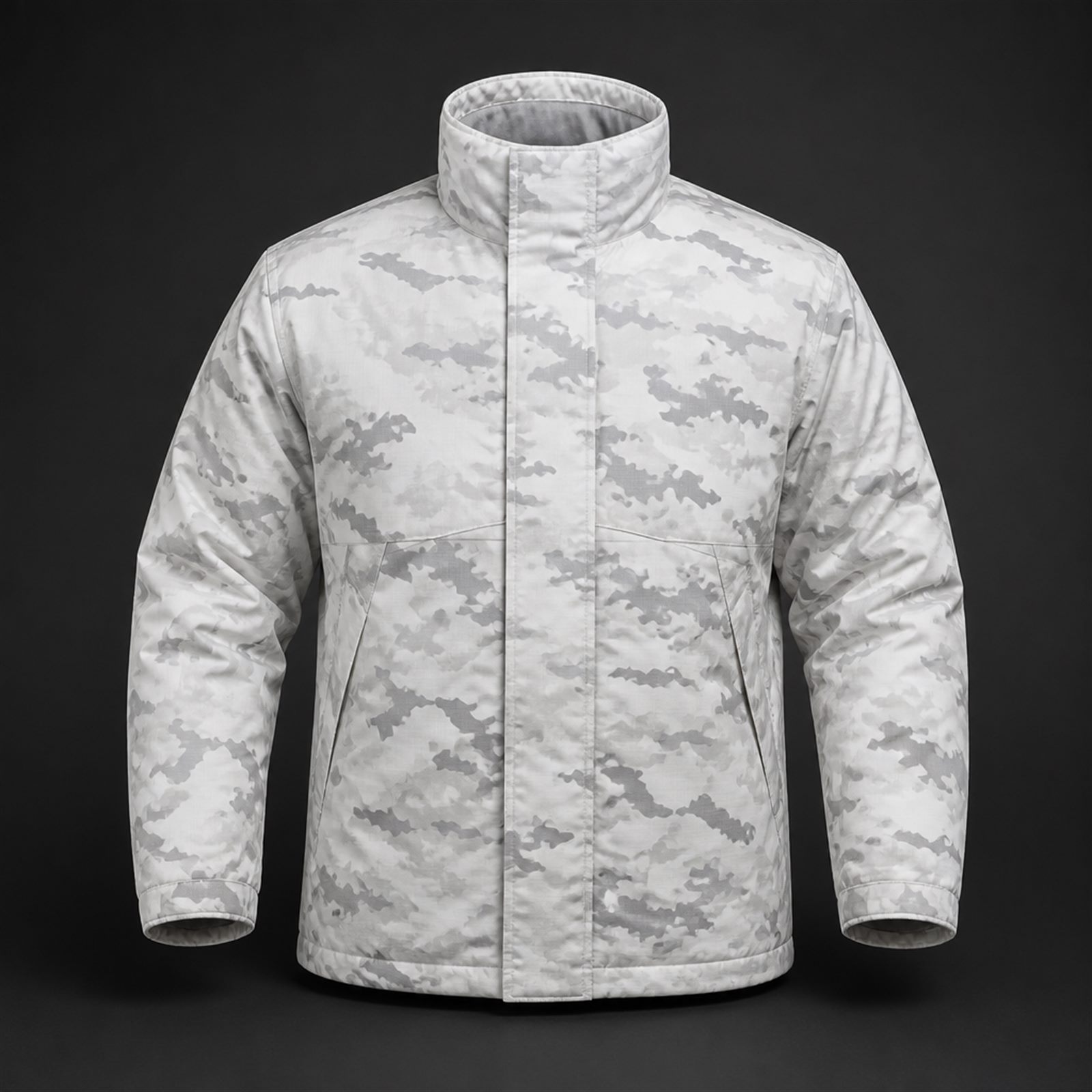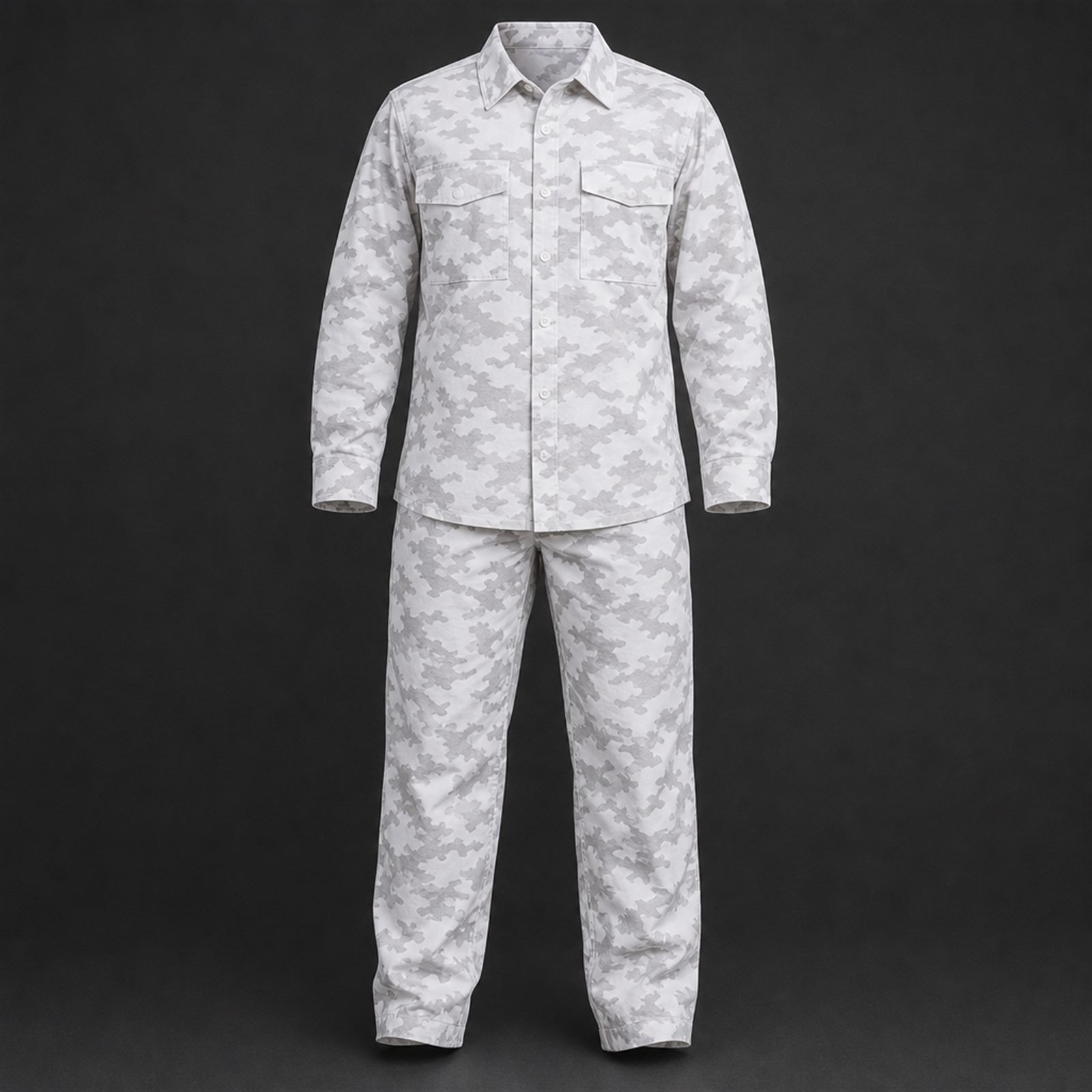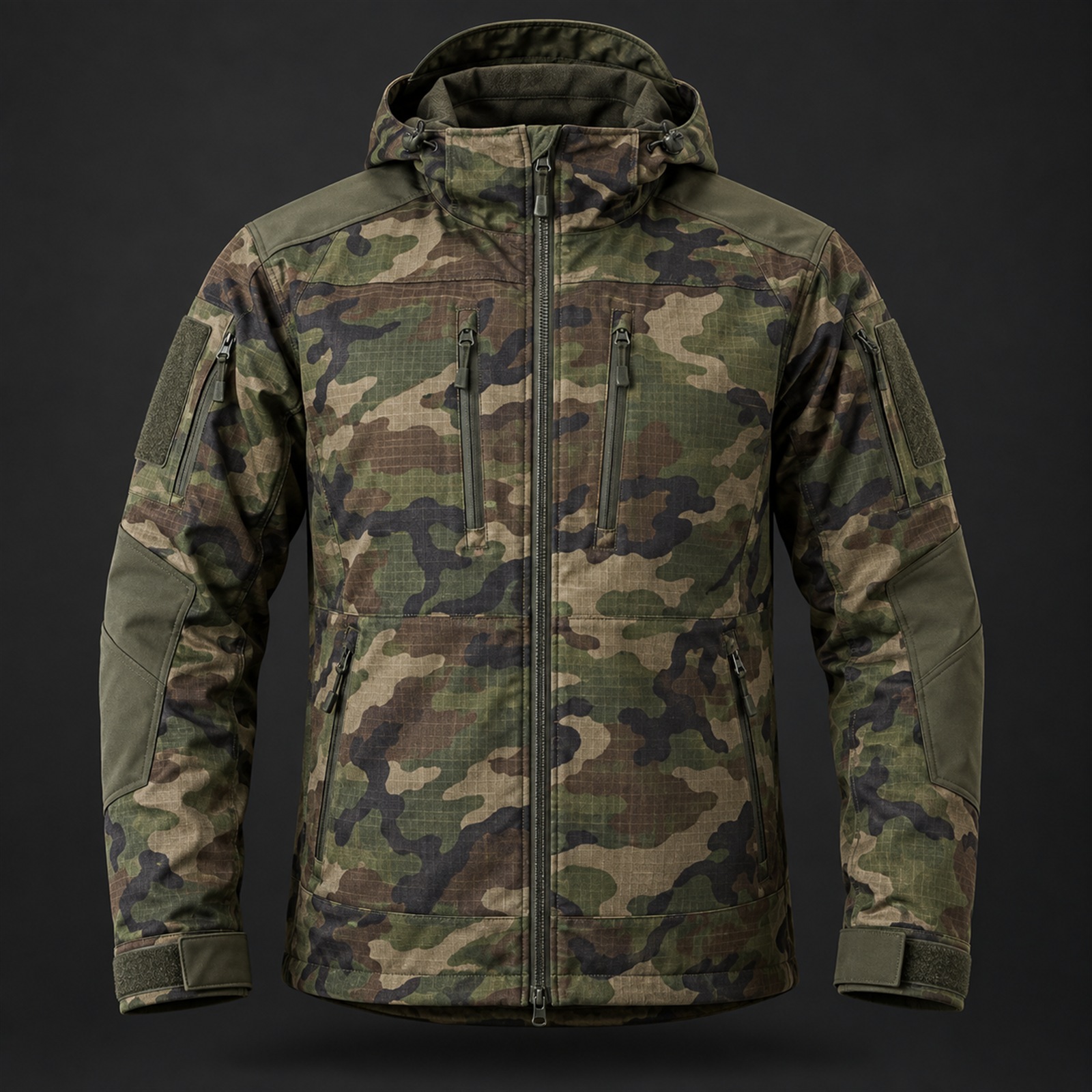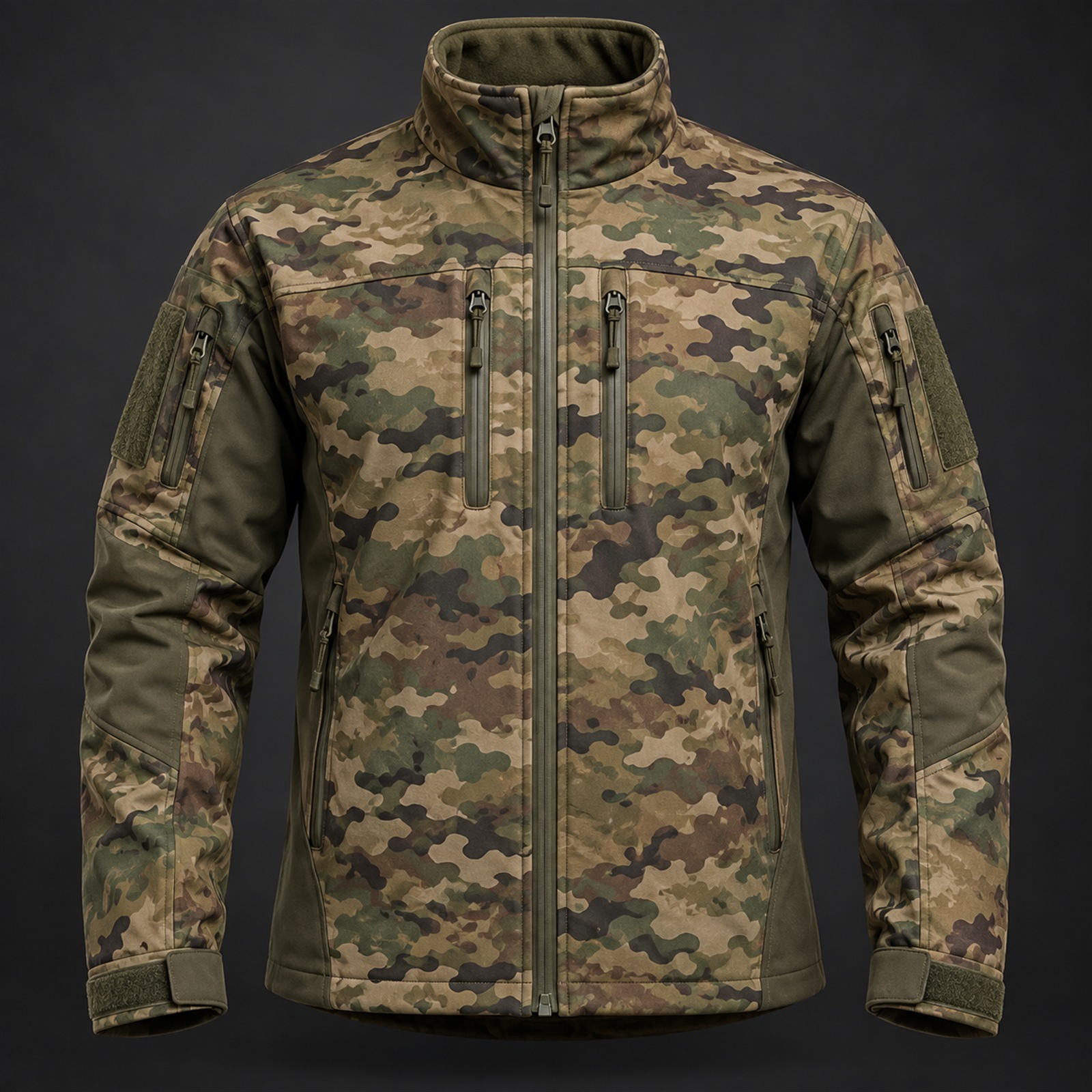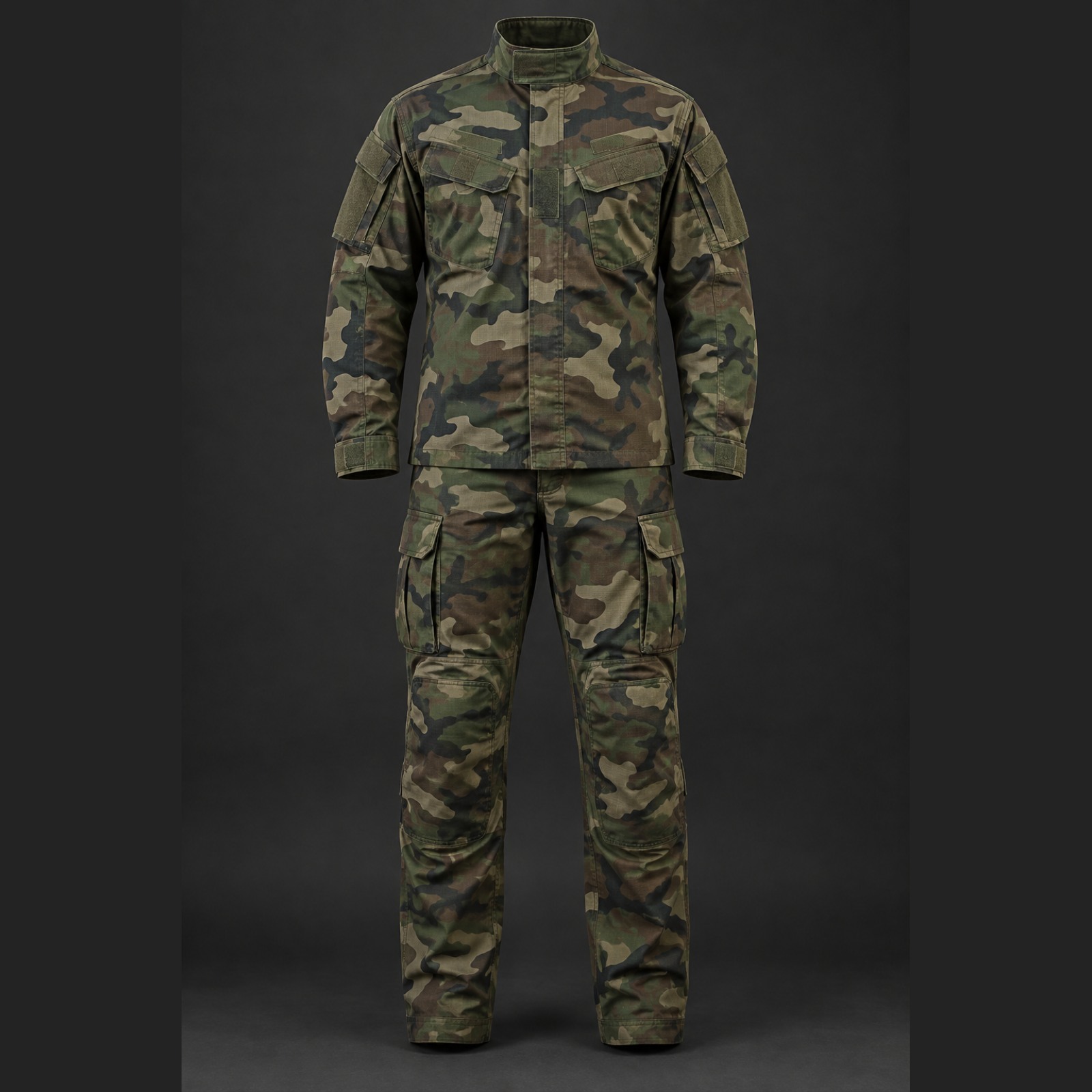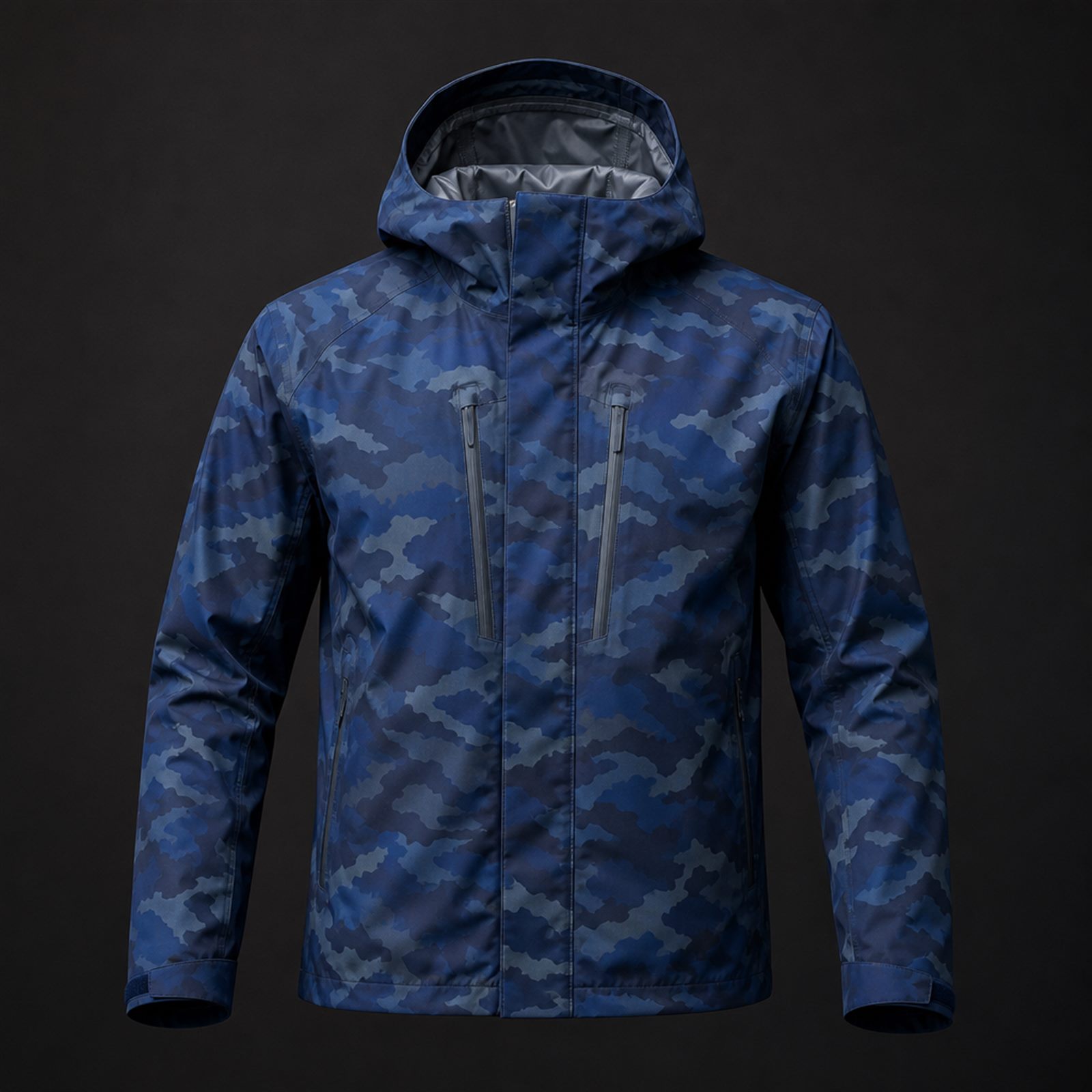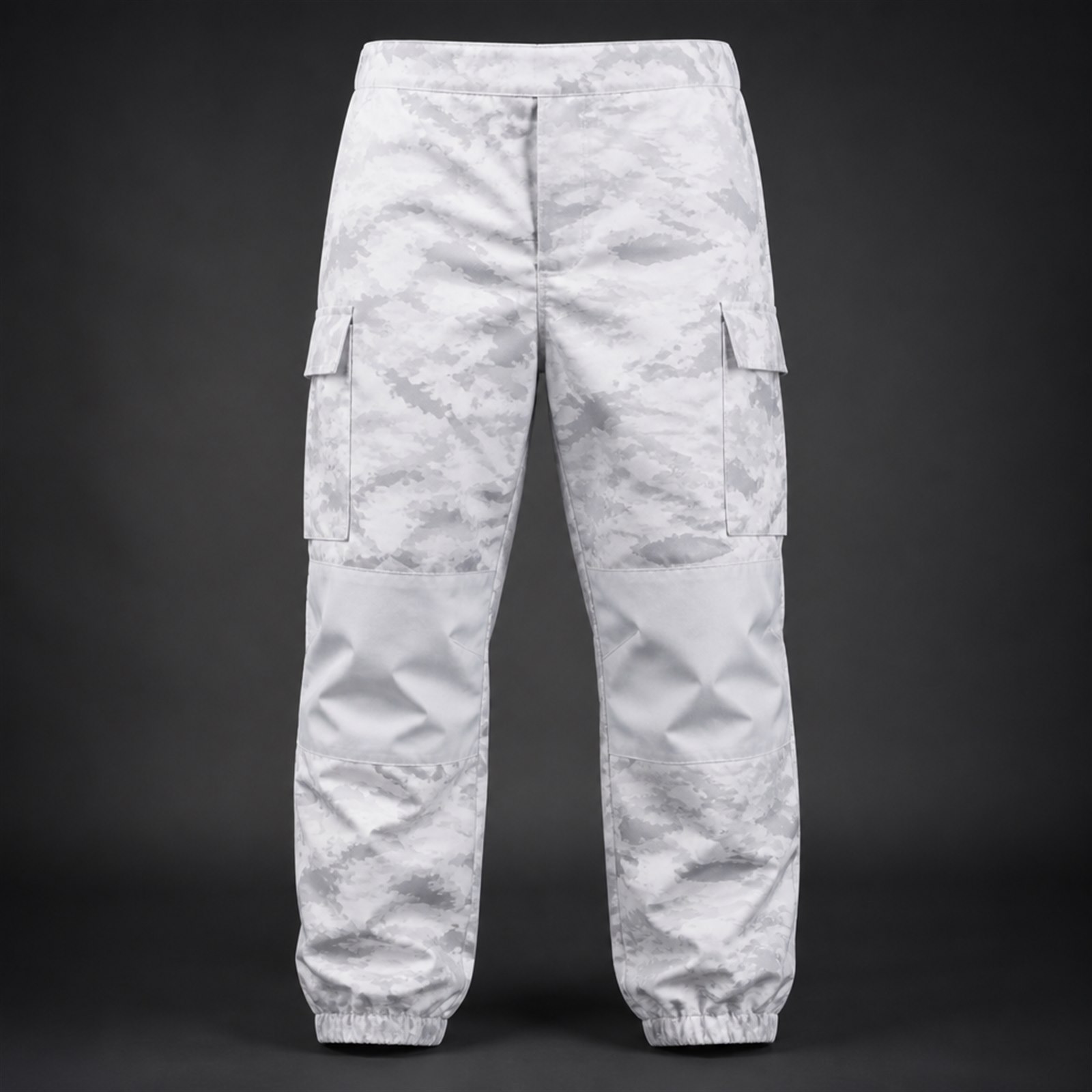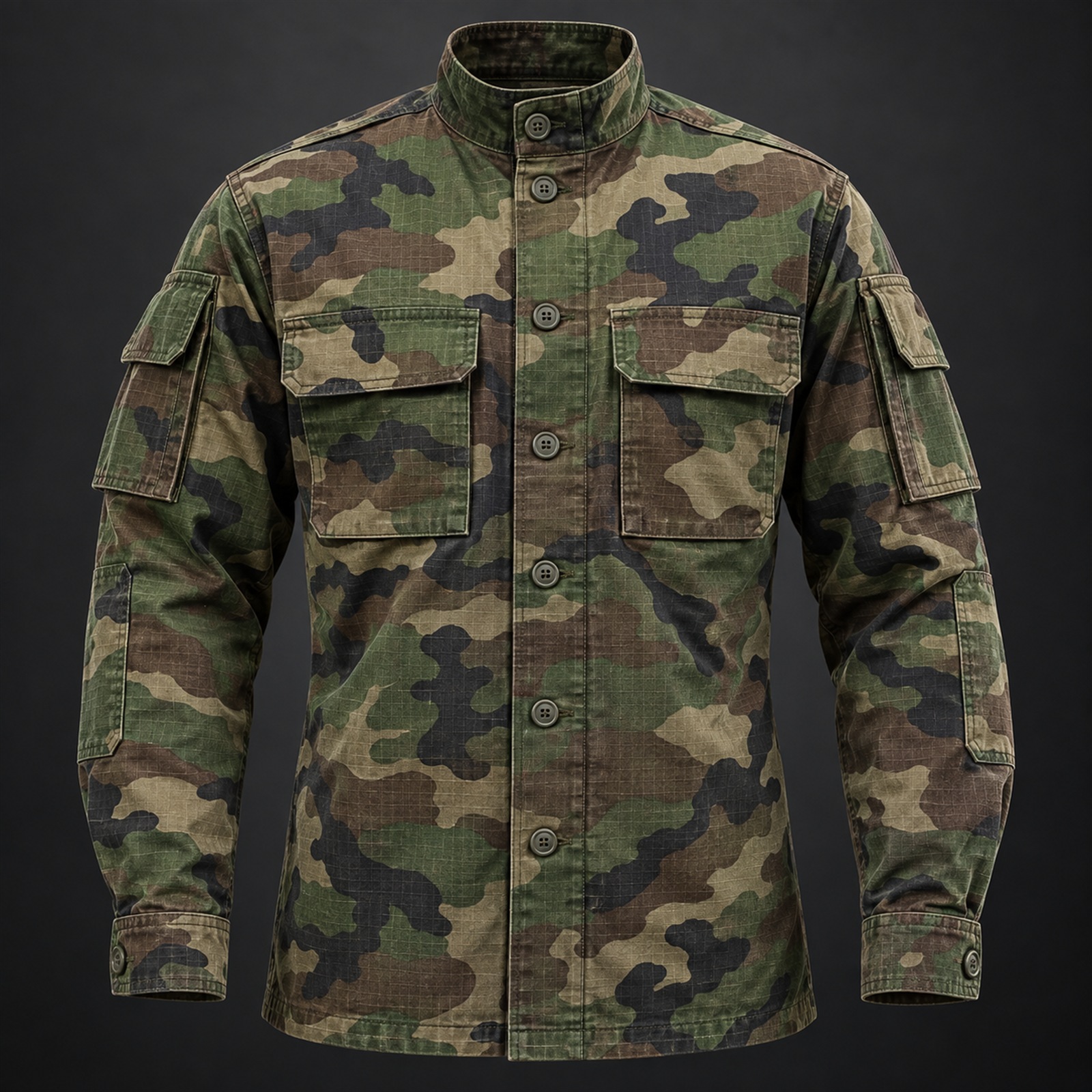
Field / BDU Shirts
BDU Field Shirt
The BDU field shirt earns its place by being the garment a wearer keeps on when conditions change.
TemperateCool to mildLayered under a jacket
View productApplications
Wet weather forces a trade off that cannot be designed away. A layer that keeps rain out also resists letting water vapour escape, so the harder the garment works against rain, the more it traps sweat. Every wet weather specification is therefore a decision about which side of that conflict matters more for the intended use, and how the penalty is managed rather than removed. Two other factors decide how the garment behaves over its service life. The first is durable water repellency, the surface treatment that makes rain bead and run off, which degrades through abrasion, contamination and washing long before the fabric itself fails. The second is seam and structure strategy: how closures, seam sealing and the choice between a coating and a laminate interact with weight, packability and repair. This section covers how those decisions are made and what each one costs.

Gallery
Conditions
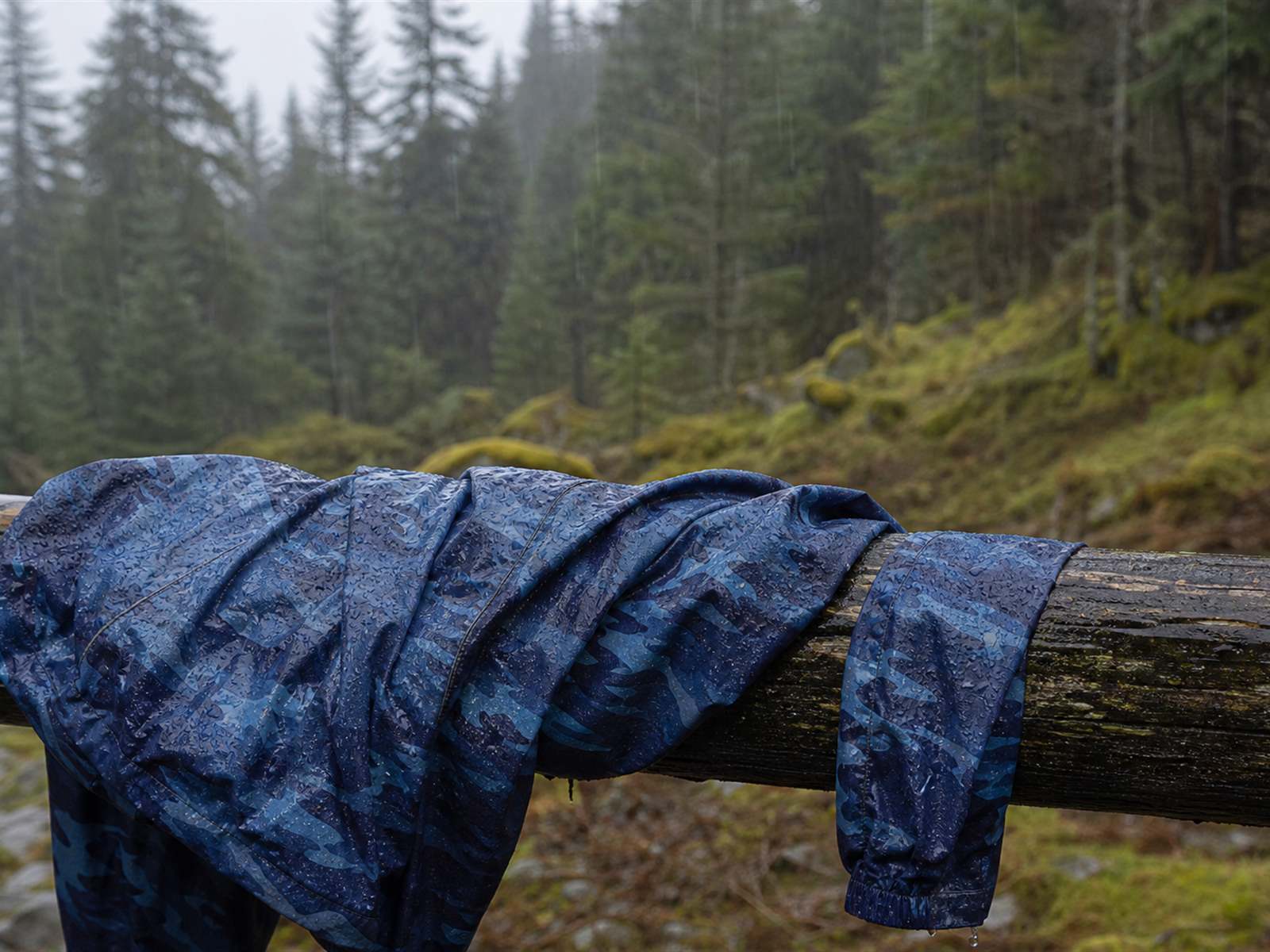
Precipitation is the dominant exposure, ranging from sustained rain to intermittent showers with high humidity between them. Ambient temperature may be mild or cold, but the wearer is usually active, which means sweat generation inside the garment continues even while rain is kept out. Wind is frequently present and increases both the driving angle of the rain and the rate of heat loss through any wet layer.
Design priorities
These are the requirements that drive the specification. When they conflict with each other — and they usually do — the trade-off has to be decided by the buyer, not assumed by the manufacturer.
A garment cannot be maximally resistant to liquid water and maximally permeable to vapour at the same time. The specification states which side is favoured for the intended use, and the result of that decision, including the sweat it will trap, is stated rather than hidden.
The repellent finish is what keeps the outer face from wetting out. It wears with abrasion from shoulder straps and pack straps, and it can be masked by oils and detergent residue, so it is treated as a service item with an agreed care and re-treatment routine.
Water enters at seams before it enters through fabric. Whether seams are sealed, taped, lapped or relocated decides both the protection level and the weight, stiffness and repairability of the garment.
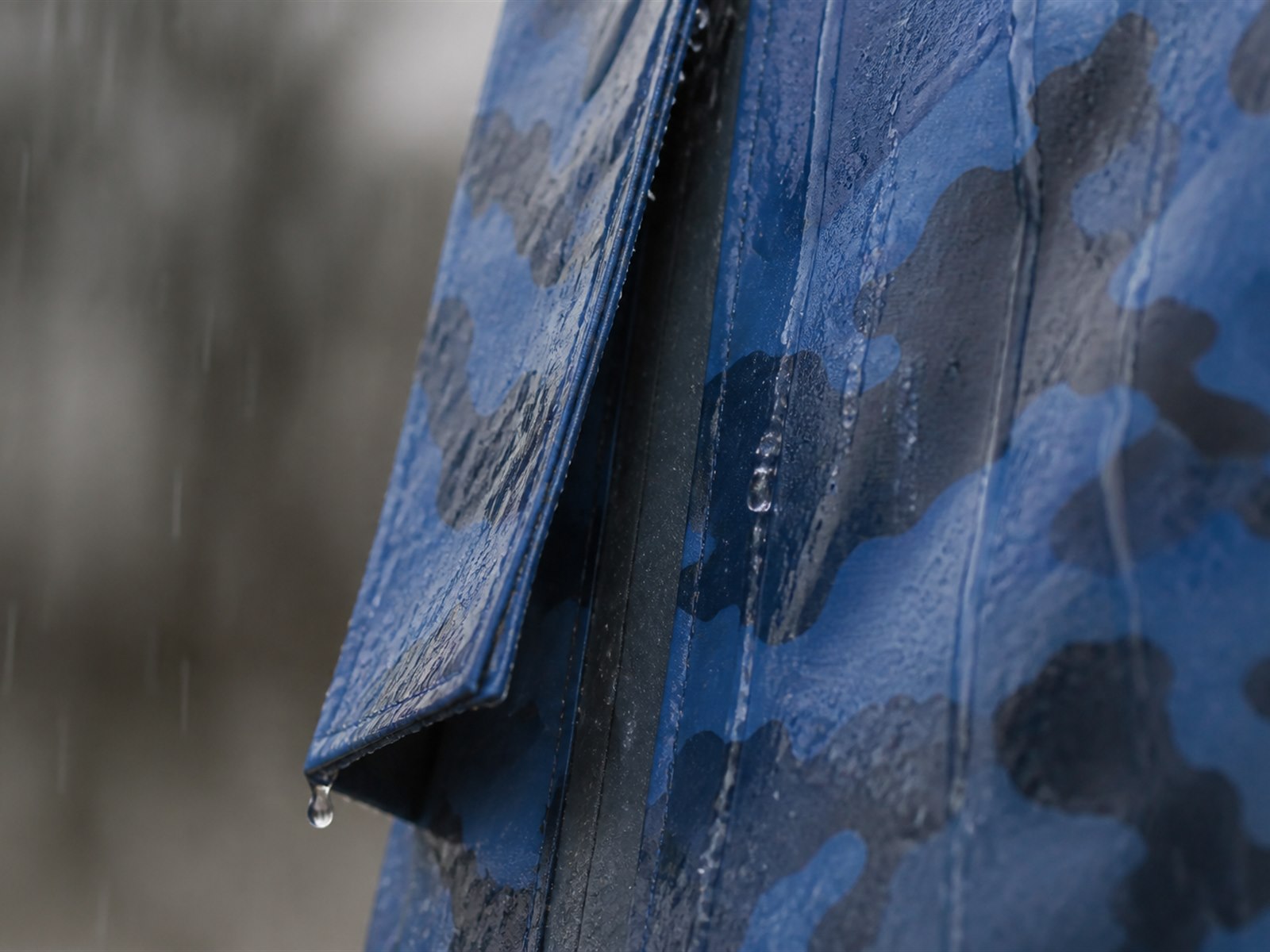
Zips, chest openings and pocket access are the most common leak paths. Storm flaps, drainage paths and where the closure ends all matter, and the degree of protection required at each opening is agreed in the specification.
A shell that is carried more often than worn has to pack small and gain little weight when wet. Structural protection and light weight pull against each other, and the intended carry pattern determines which is prioritised.
An outer shell that fits over a base layer will bind over insulation, and a shell sized for maximum layering is loose and flaps when worn alone. The fit is developed against the layer stack the buyer actually uses.
Buyer problems
These are the complaints that reach us from buyers already selling into these conditions. Every one of them is a specification decision that was made before production, not a manufacturing accident.
Garment strategy
The same category of garment is built differently in each environment. These are the construction decisions that change.
Protect selectively instead of everywhere
The most exposed zones, the shoulder, hood and upper chest, take the highest protection, while areas that are rarely rained on directly can use lighter construction. This keeps weight and breathability loss where they matter least.
Pair a repellent outer with a moisture moving inner
Where the outer layer has to be less breathable, the inner layer has to move sweat away faster. The two are specified as a pair, because a highly protective shell over a moisture holding base layer produces the worst result.
Choose coating or laminate on the use case
Coatings are typically lighter and cheaper but offer less vapour permeability and can be damaged by contamination. Laminates cost more weight and money but hold performance longer. The choice is made against service life and duty cycle, not by default.
Design closures as the primary defence
Storm flaps, drainage at pocket openings, covered or water resistant zips and where openings terminate are treated as the main protection, with the fabric as the second line. This is also where repair access is planned.
Write care and re-proofing into the specification
Performance after washing is part of the product, not an afterthought. The care routine, detergent constraints and re-treatment expectations are agreed so that the repellency the buyer paid for survives the laundering the garment will actually receive.
Fabric strategy
Each material below is recommended for a stated reason, not as a generic option. Open any material to read where it performs and where it fails.
Material
Used for the main shell panels where rain exclusion is the primary requirement, with the permeability level confirmed per programme against the intended activity.
Material
Applied to garments or panels that need to handle showers and spray without the weight and breathability cost of full waterproof construction.
Material
Selected when wind and light rain matter but sustained rain does not, because it keeps more breathability and stretch than a waterproof shell.
Material
Used where a driving wet wind is the real exposure and the garment only needs to resist light moisture at the surface.
Material
Specified for the layers beneath the shell, since the shell limits vapour escape and the inner layer has to do more of the work.
Construction
Where the specification should focus for this environment.
Products
Each product page carries the full material, construction and customization detail for this application.
Field / BDU Shirts
The BDU field shirt earns its place by being the garment a wearer keeps on when conditions change.
Camouflage Uniforms
A camouflage uniform set is judged on the print before it is judged on anything else.
Cold Weather Shell Jackets
The shell carries no warmth of its own, and that is the point of it.
Cold Weather Tactical Clothing
A cold weather jacket has to hold warmth, allow movement and get rid of moisture, and those three requirements pull against each other.
Cold Weather Uniform Sets
A cold weather uniform set is bought as one line on a tender and issued as one outfit, but it is produced as several garments that have to agree with each other.
Hunting & Outdoor Camouflage Clothing
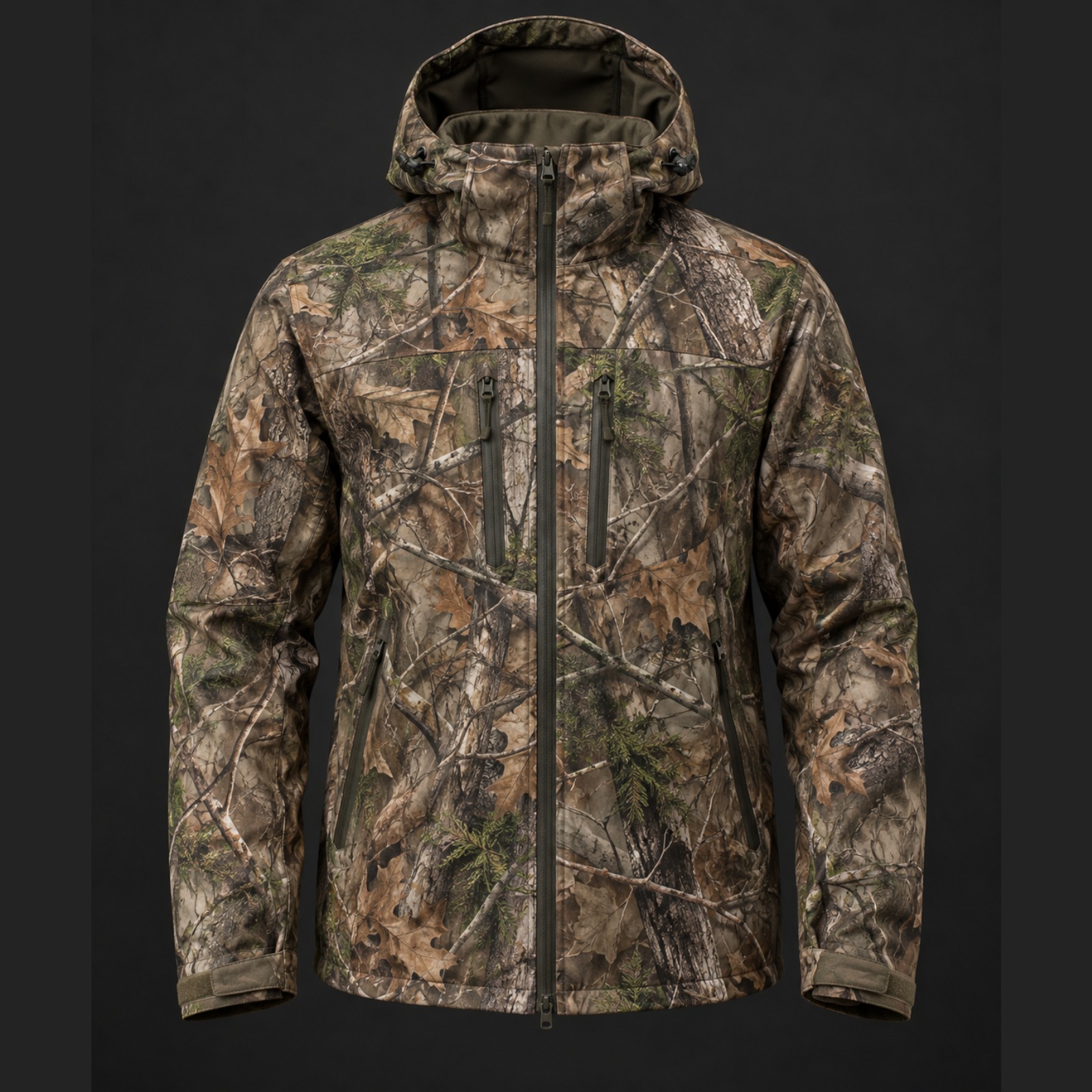
A hunting jacket is judged by two properties that pull against each other: how quietly it moves through brush, and how well it survives that brush.
Hunting & Outdoor Camouflage Clothing
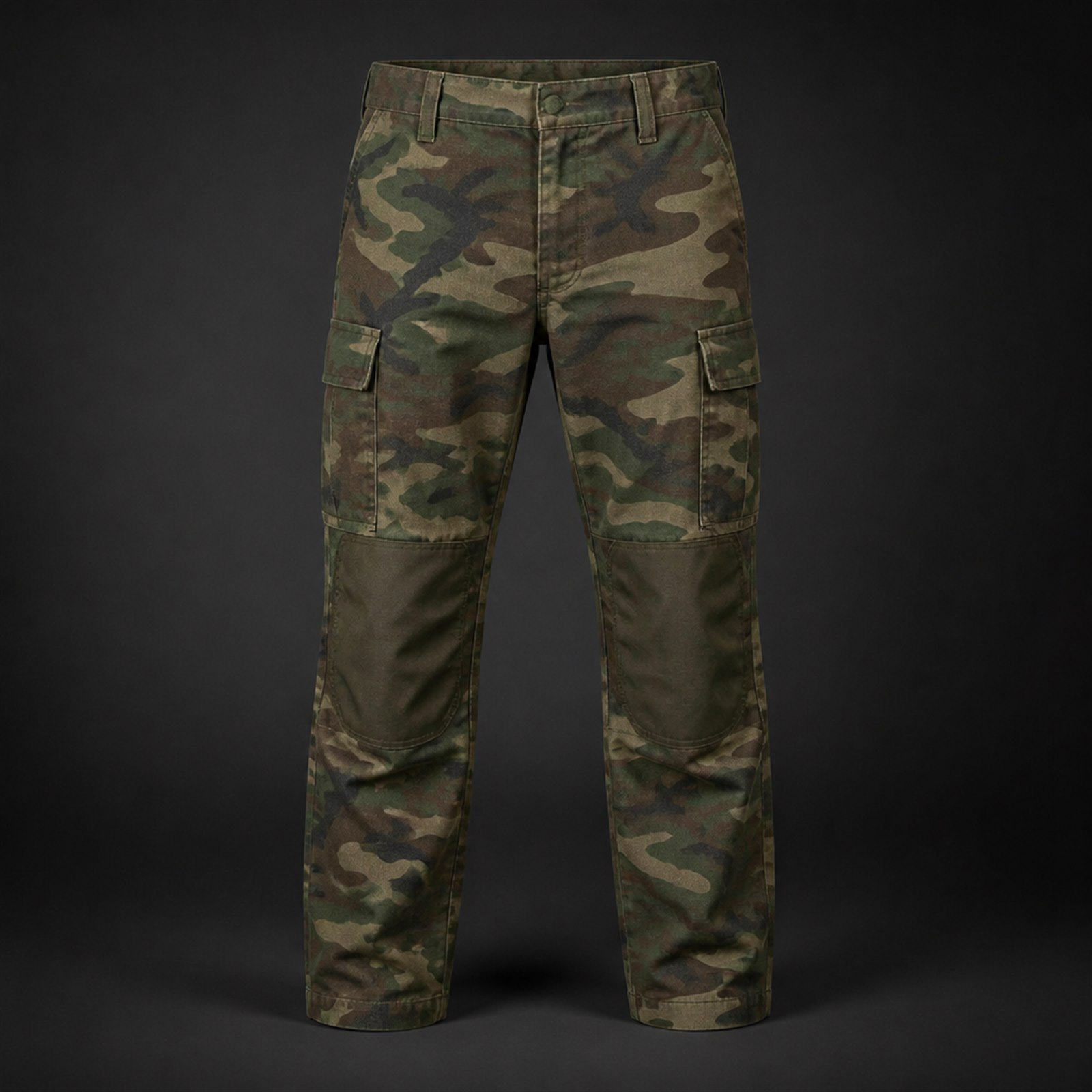
Hunting pants fail in predictable places, and they fail for predictable reasons.
Tactical Bags & Packs
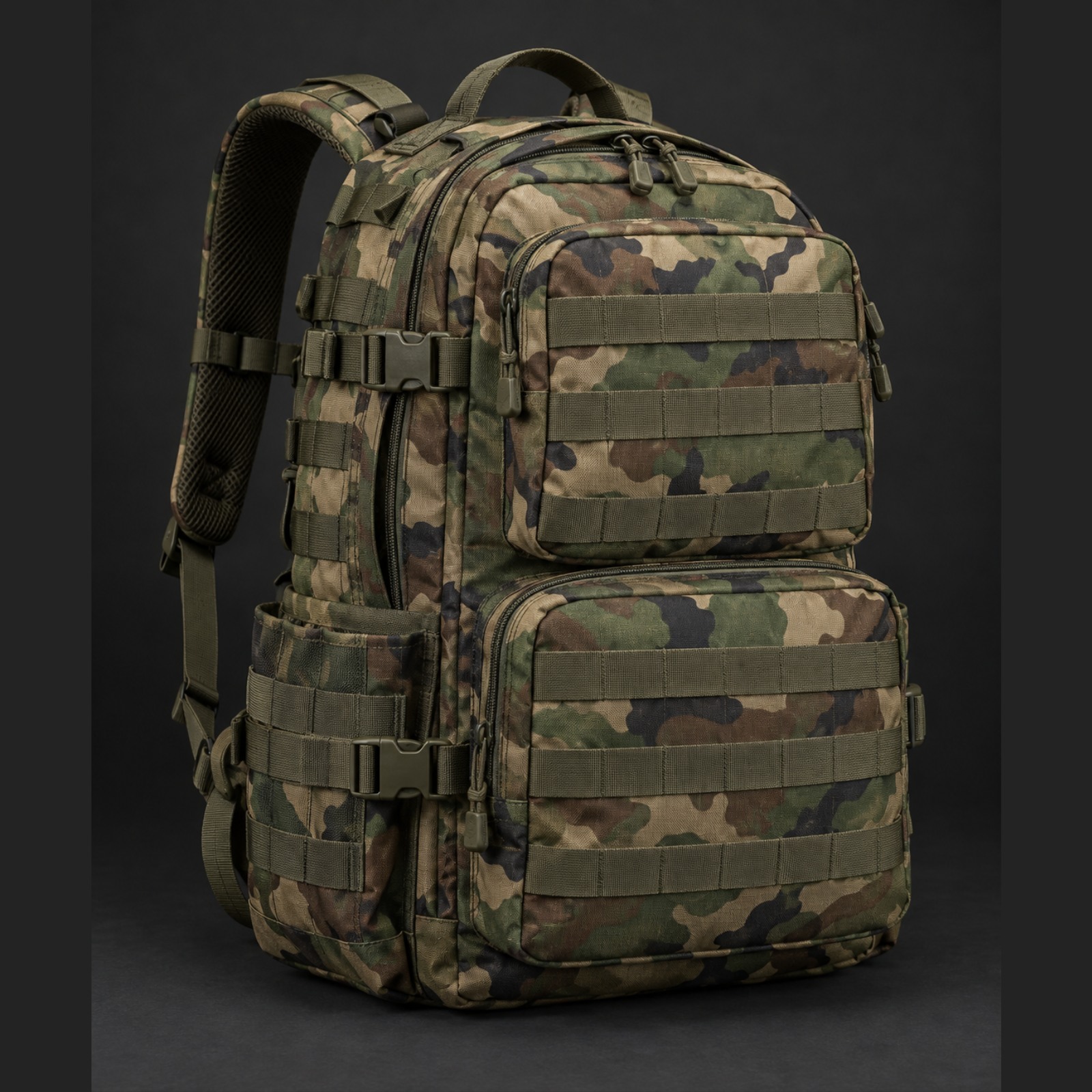
A pack is judged twice: once when the buyer hangs their own pouches on it, and once at the end of a season when the shoulder straps have carried weight every day.
Tactical Boots
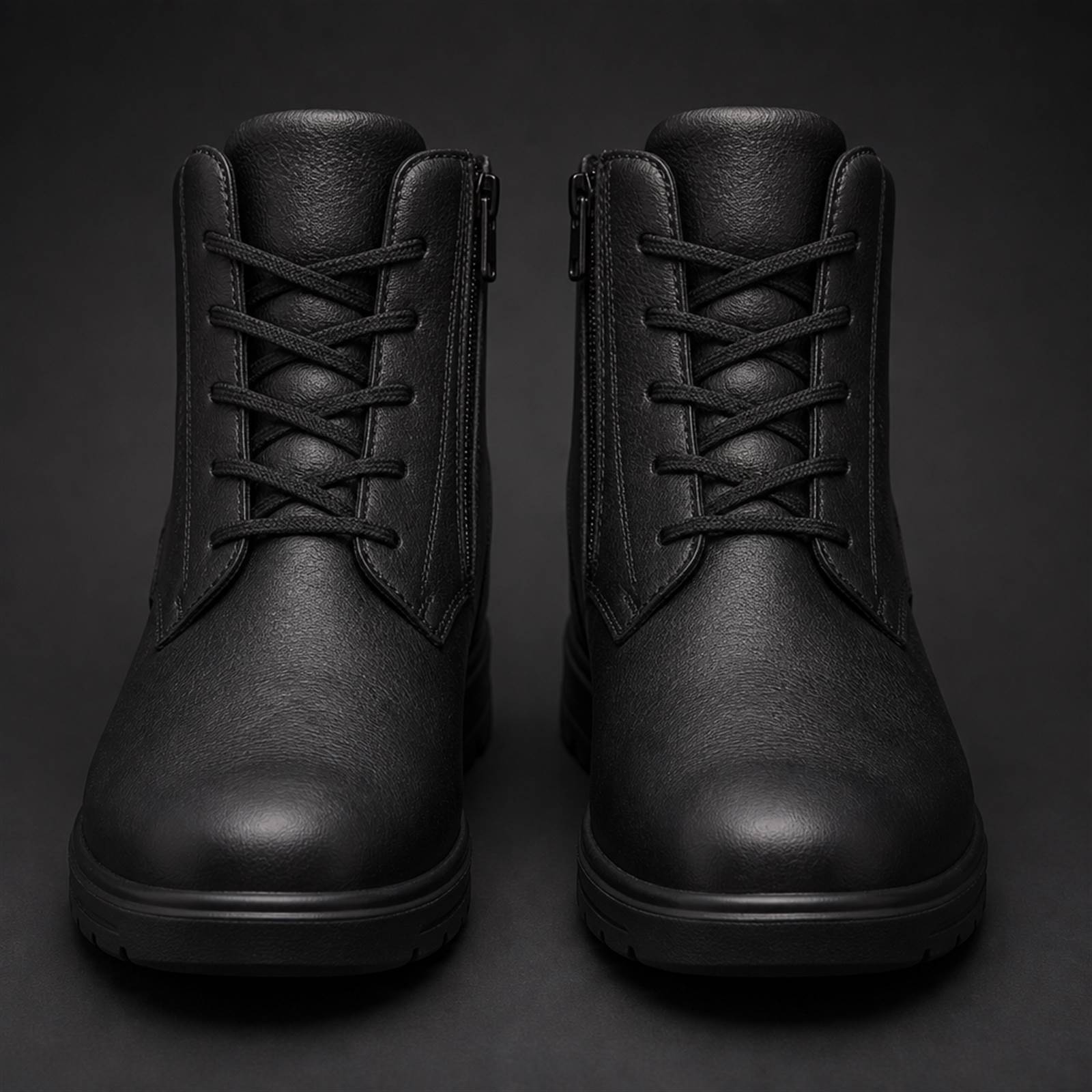
A side-zip boot exists for one reason: a shift worker can lace it once and zip it every time after.
Tactical Jackets
A field jacket is bought for a specific job: it carries what the wearer needs to reach without opening a pack, stays out of the way when the wearer kneels, climbs or drives, and can be worn over a shirt or a fleece without becoming a straightjacket.
Tactical Softshell Jackets
A softshell is a compromise, and buyers who know which compromise they are buying get a better jacket.
Tactical Uniform Sets
A uniform set only performs as a set if the shirt and the trousers behave as one garment.
Wet Weather Tactical Clothing
A waterproof tactical shell is a set of compromises, and a buyer should know exactly which compromises are being made.
Waterproof Winter Tactical Pants
Winter pants do not fail because the fabric on the order sheet was wrong.
FAQ
Because the shell blocks vapour as well as liquid water. When the wearer is active, sweat is produced faster than the fabric can release it, so moisture condenses inside the garment. The fix is not simply a more breathable fabric: ventilation openings, an inner layer that moves moisture away from the skin, and matching the protection level to the actual activity all contribute.
It degrades with abrasion, contamination and washing, and in most cases it wears out well before the fabric fails. Abrasion from shoulder straps and pack straps is the fastest route. This is why repellency is treated as a service item: the care and re-treatment routine is agreed at specification stage and stated in the product documentation, rather than being presented as a permanent property.
It depends on the duty cycle. Coatings are generally lighter and lower cost, with lower vapour permeability and more sensitivity to contamination. Laminates carry more weight and cost but retain performance longer under repeated use. The decision is made against expected service life, the activity level and how the garment will be washed, and the trade off is stated in the specification.
Seams are the most likely leak path, so the protective strategy is defined for each seam rather than only for the main body. Sealing adds weight and stiffness and complicates repair, so the required level is set by where the garment is expected to be exposed. We agree that before construction is fixed, and we mark any requirement that still needs your input rather than assuming it.
Yes. The water resistance and vapour permeability targets are written as requirements to be confirmed per programme, either against a standard you nominate or against the performance of a garment you already use as a benchmark. Where a figure has not been agreed we leave the clause open and say so, so nothing in the specification is invented.
Related Products
Related Applications
Related Capabilities
Related Categories
Send the destination market, the season and how the garment will be worn. We will propose the specification and state the trade-offs, rather than recommending a single fabric with no context.