Skip to content
TACTICALOEM / ODM TACTICAL APPAREL
ENEnglish

Products / Cold Weather Tactical Pants

Cold Weather Tactical Pants Manufacturer

Cold weather tactical pants are the lower half of a layering system, and they are specified differently from the jacket for two reasons. Legs generate heat while moving, so they need less insulation than the torso and more ventilation; and the lower body is where the garment meets the ground, the boot and the seat, so reinforcement and sealing matter more than loft. In the four-layer model these trousers sit across the insulation and shell layers of the lower half, worn over a thermal base layer and, in the coldest programmes, under or instead of a separate shell. The trade is constant: more insulation adds bulk at the seat and behind the knee, which restricts kneeling, climbing and driving; a tighter boot interface seals out snow and traps moisture; heavier reinforcement at the knee resists abrasion and stiffens the articulation. This page covers lining and insulation placement, knee and seat construction, the boot interface and the sizing that layering demands.

custom cold weather tactical pantscold weather tactical pants OEMwholesale cold weather tactical trousersinsulated tactical pants supplier
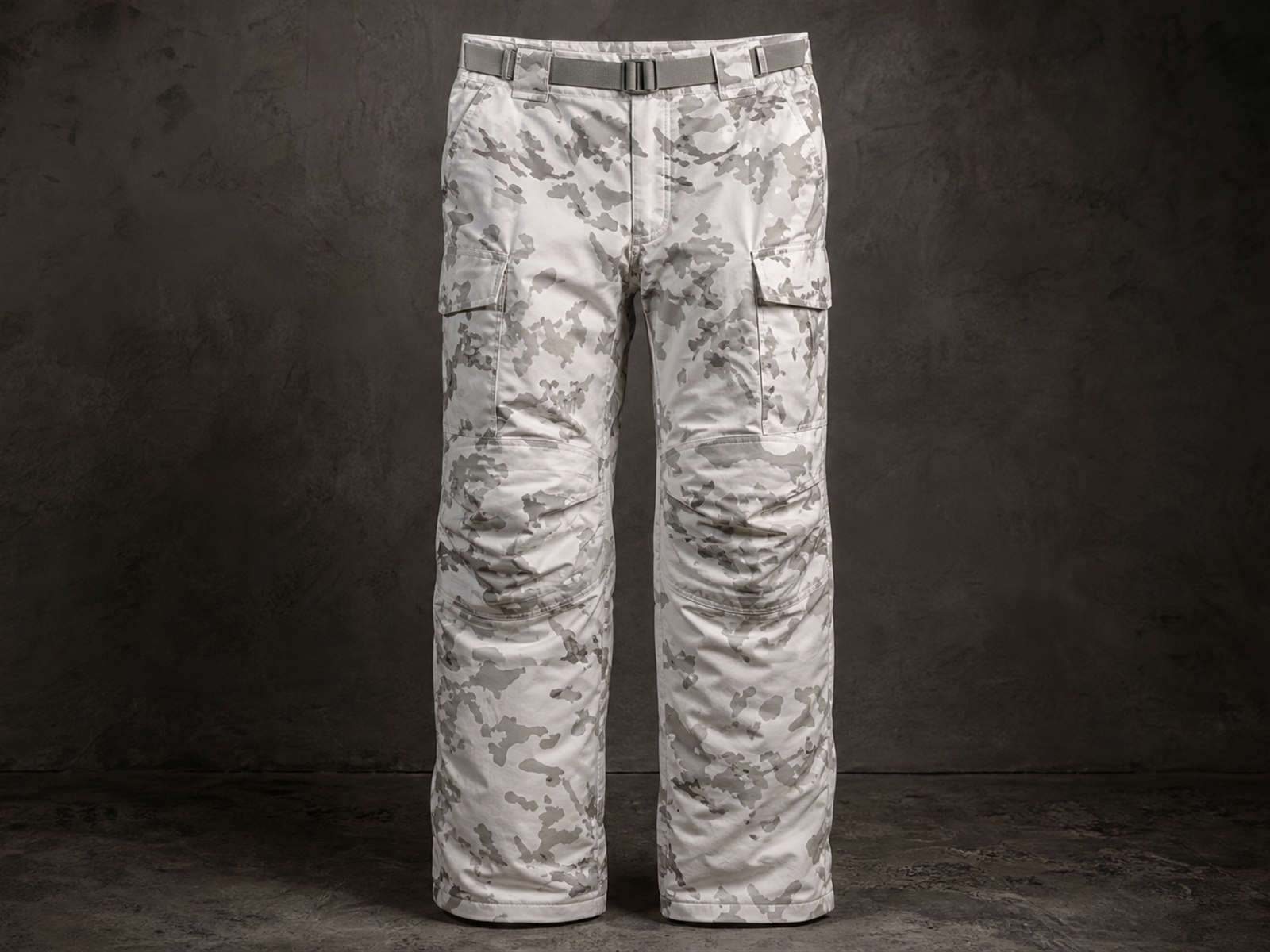
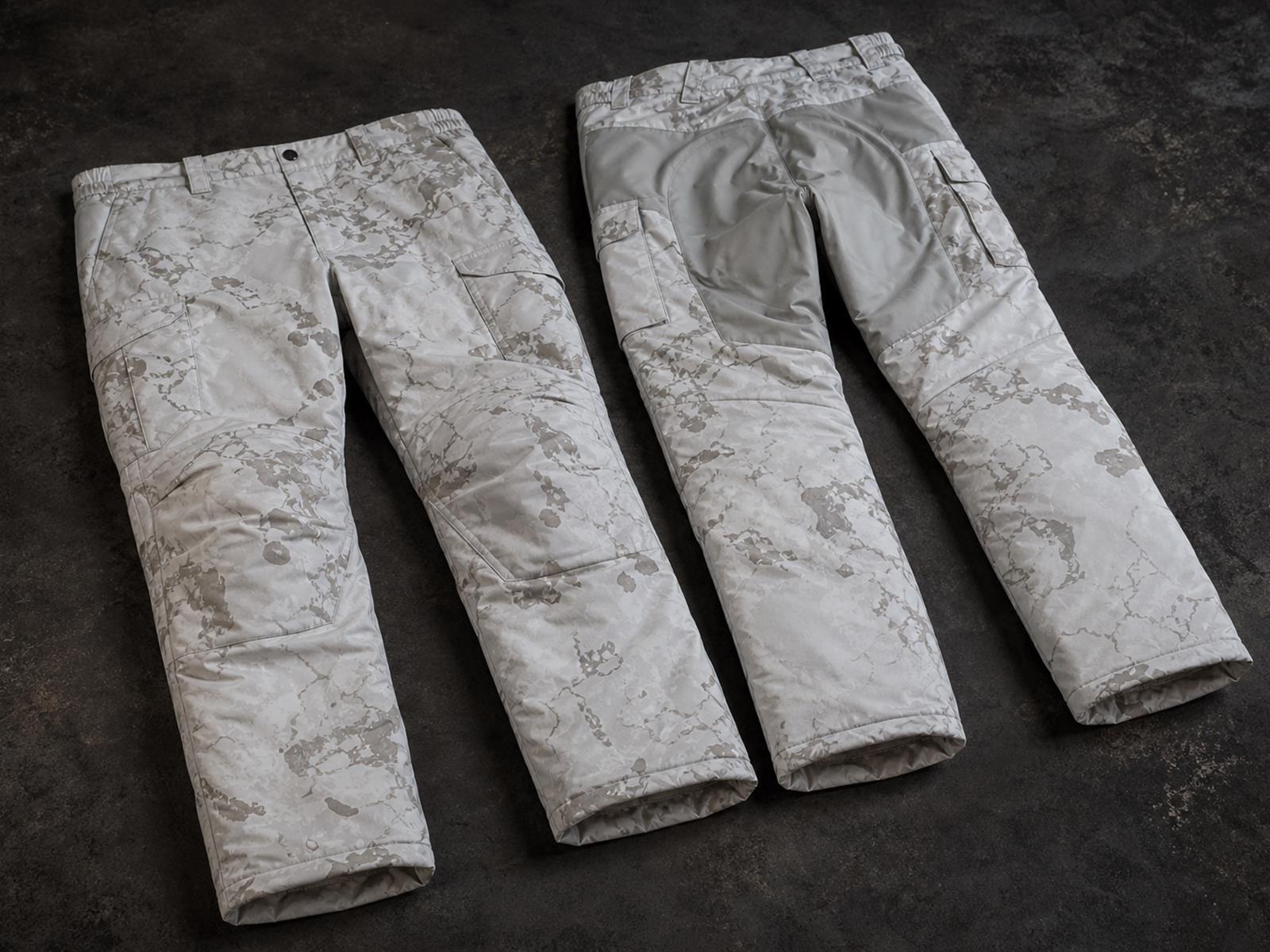
Cold weather tactical pants with articulated knees, insulated lining and reinforced seat made for OEM buyers
Primary keyword
cold weather tactical pants manufacturer
Climate focus
Extreme cold / low activity / static duty · Cold / wind / active use · Cold / duty / standing post
Development input
Tech pack · Reference sample · Sketch · Photo
Cold Weather Tactical PantsCold Weather Tactical PantsCold Weather Tactical PantsCold Weather Tactical Pants

Buyers

Who buys cold weather tactical pants?

Cold Weather Tactical Pants is specified by organisations rather than bought as a single garment, so a quotation has to satisfy all 6 buyer profiles listed below.

Tactical Brands

Cold-zone trousers whose knee reinforcement, lining map and boot interface are documented, so a reorder matches the approved sample in fit and hand feel.

Outdoor & Hunting Brands

Quiet cold weather trousers in camouflage and earth colourways, with a civilian fit over a thermal base layer and their own retail labelling.

Uniform Distributors & Wholesalers

Cold climate trouser size sets in volume, with a written specification and a stable colour standard for catalogue reorders.

Government Contractors & Procurement Companies

Documented lining, reinforcement and boot interface decisions, and inspection records before shipment, with trousers compatible with garments already in issue.

Security Companies

Duty trousers that stay presentable on a static post while allowing movement on foot patrol, with a clean silhouette and insignia where required.

Private Label Brands & Importers

A cold weather trouser range built to their own fit, lining direction and price architecture, delivered with their labels and packaging.

Types

Cold Weather Tactical Pants types

The same category name covers very different garments depending on climate and wear pattern. 3 types of Cold Weather Tactical Pants are covered here, and the type is chosen before the fabric.

Extreme cold / low activity / static duty

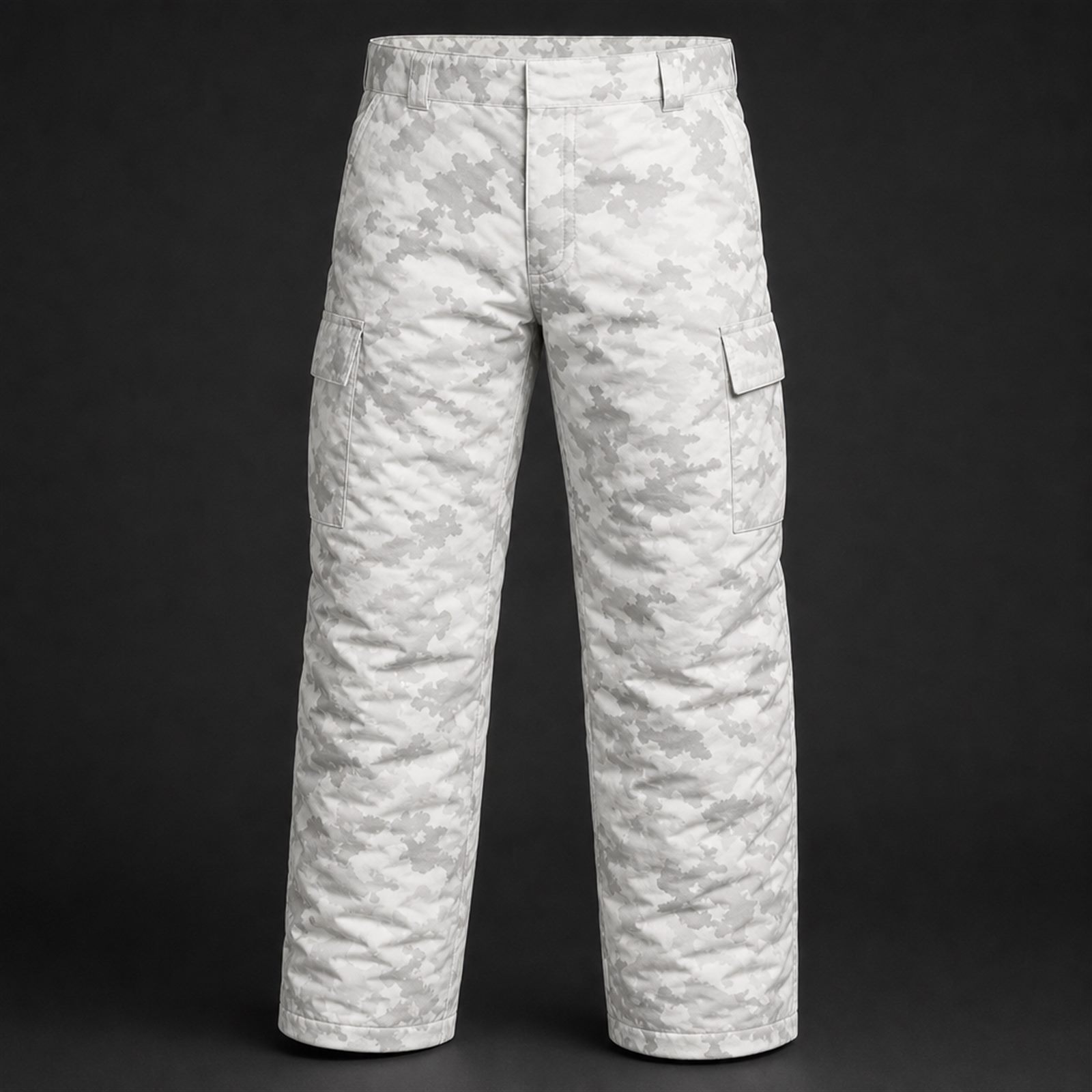
Insulated Cold Weather Tactical Pants

Fill or a lofted liner is placed where the wearer loses warmth without generating much: seat, front thigh and, where the programme requires it, the knee. Insulation is deliberately omitted or reduced behind the knee and at the inner thigh, because those are the areas that compress and drag when the wearer kneels, climbs or drives. The trade is bulk, cost and a longer drying time.

  • Fill or liner at seat and front thigh
  • Insulation reduced or omitted behind the knee for articulation
  • Reinforced knee with a pad interface where required
  • High waist and back rise to prevent drafts when bending
  • Boot interface designed to keep snow out of the leg opening
Cold / wind / active use

Softshell Cold Weather Tactical Pants

A stretch softshell lower body with a brushed inner face, for programmes where the wearer moves constantly and full insulation would be too warm. Wind resistance comes from the face fabric, warmth from the brushed inner face and from the base layer underneath. The trade is lower protection in wet snow and less warmth during long static periods, which is why this type is usually paired with a heavier trouser or a shell.

  • Stretch softshell face with a brushed inner face
  • Thigh vents or mesh-backed pockets for heat release
  • Articulated knee built into the pattern rather than added as a patch
  • Reinforcement at knee, hem and seat in the same family of fabric
  • Waist designed to work with a belt and with suspenders

Cold / duty / standing post

Lined Cold Weather Duty Pants

A presentable cold weather trouser with a brushed or light fleece lining rather than a fill, for security, site and ceremonial duty where appearance and movement matter more than maximum warmth. The cut stays close to the garment so it reads correctly on a post, and the lining is washable without losing its hand feel. The trade is less warmth than a filled trouser of comparable weight.

  • Brushed or light fleece lining without a fill layer
  • Clean, low-profile pocket layout for duty use
  • Reinforced seat and knee in the same face fabric
  • Waistband and hem designed for a presentable drape
  • Colour and finish controlled for uniform issue

Engineering

Construction, part by part

8 construction decisions define Cold Weather Tactical Pants, and each row below is one decision you control at specification stage.

Lining and Insulation Placement

  • Light brushed lining throughout
  • Fleece lining at front thigh and seat only
  • Fill layer at seat and front thigh
  • Insulation omitted behind the knee
  • Lining selected for separate drying

Where warmth is placed on the leg matters more than how much of it there is. Areas that compress or drag during kneeling and driving are the wrong places to add bulk, and a lined map agreed as a drawing is interpreted the same way at sampling and at bulk.

Waist, Belt and Suspender Interface

  • Standard belt loops
  • Reinforced wide belt loops
  • Suspender attachment points
  • High back rise for bending
  • Partially elasticated waistband

A cold weather trouser worn over a base layer sits lower and moves more than a summer trouser, and a waist that shifts lets cold air in at the back. Where the wearer carries load on a belt, the interface is specified together with that equipment rather than assumed.

Seat and Crotch Construction

  • Gusseted crotch
  • Two-piece seat construction
  • Reinforced seat panel
  • Flat-felled seams
  • Panel layout designed around sitting and driving

The crotch and seat are where cold weather trousers fail first, because the fabric is stiffer and the wearer is often stepping up, kneeling or sitting. Gusseting and seam placement do more for durability here than a heavier fabric.

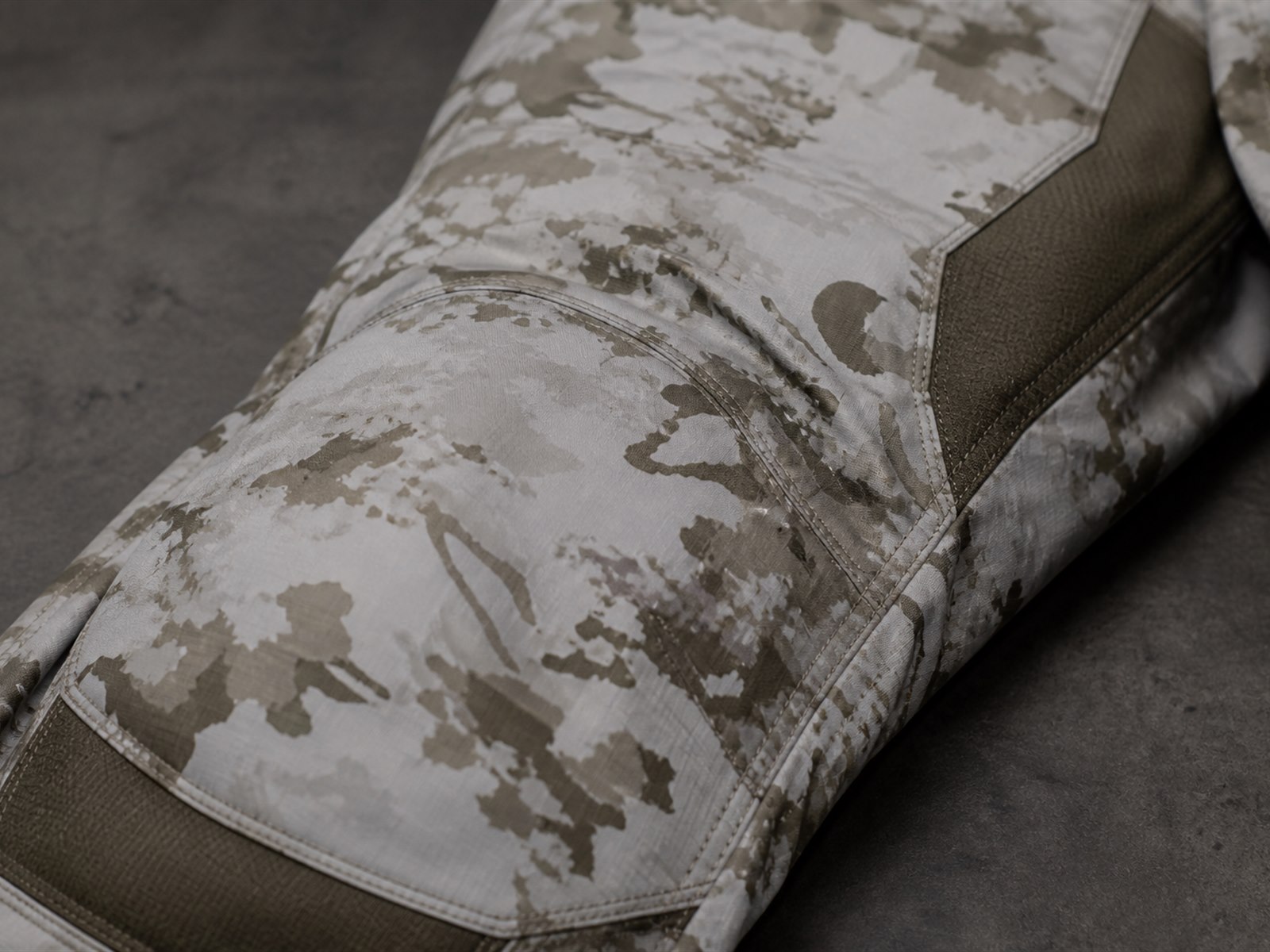
Knee Construction and Pad Interface

  • Articulated knee built into the pattern
  • Reinforced knee overlay
  • External knee pad pocket
  • Internal knee pad pocket
  • Pleated or darted knee for bend allowance

Where knee pads are used, the pad dimensions must be confirmed before pattern development because the pocket geometry changes the knee. Articulation and insulation are then balanced: the more bulk sits behind the knee, the more the pattern has to build the bend in.

Thigh and Cargo Pockets

  • Bellowed cargo pocket with flap
  • Zippered thigh pocket
  • Low-profile utility pocket
  • Reinforced pocket corners
  • Pocket bags sized for the items actually carried

Pocket corners and flaps are among the most common failure points on field trousers, and they are also where a lining or fill layer is interrupted. Pocket layout is specified with the lining map so the two do not fight each other.

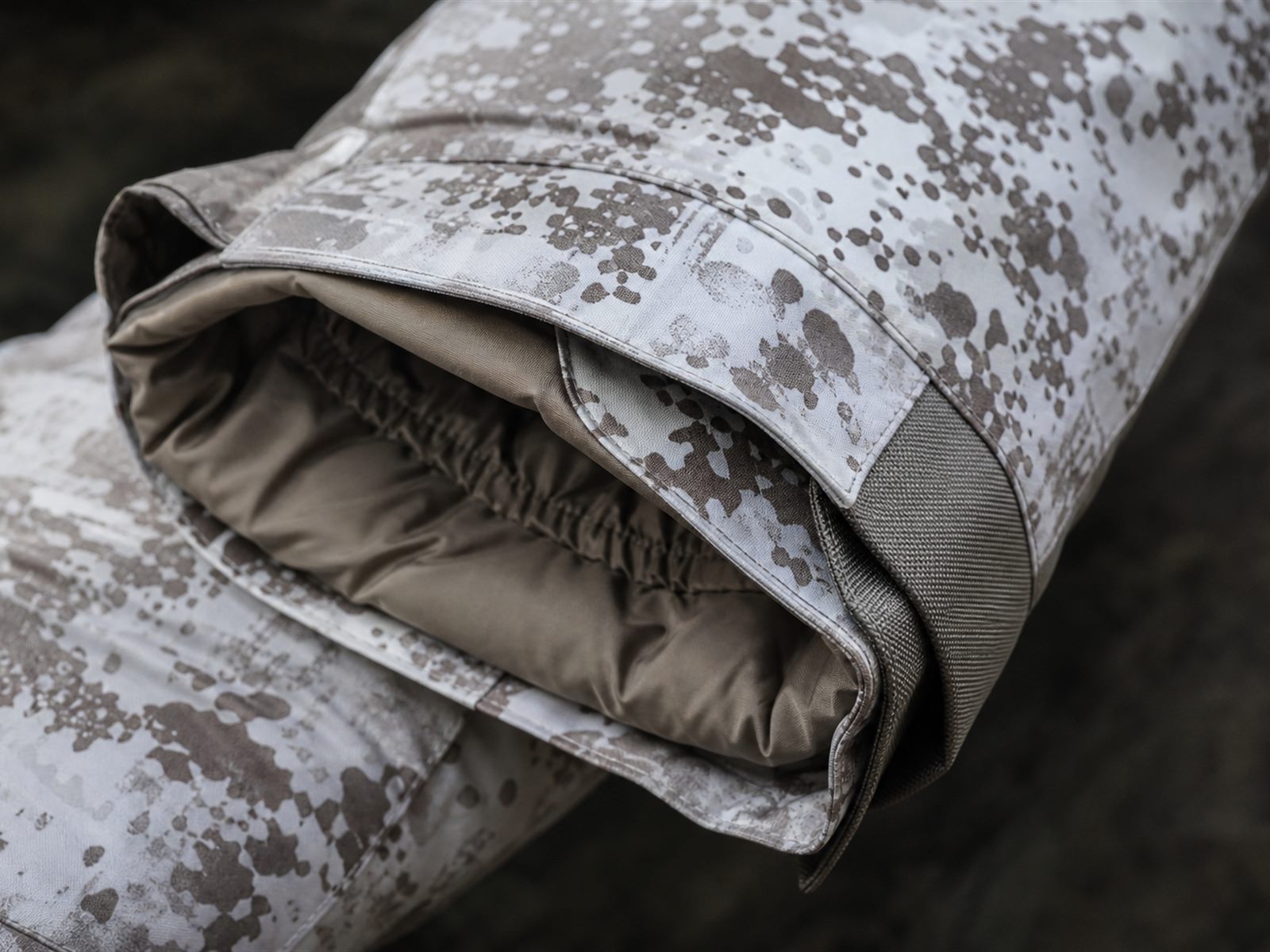
Lower Leg, Hem and Boot Interface

  • Adjustable hem drawcord
  • Elasticated inner gaiter
  • Hook and loop hem closure
  • Zip or gusset leg opening for donning over boots
  • Hem sized against the issued boot height

This is the interface where snow most often enters and where moisture most often gets trapped. It is specified against the boots the buyer issues, because a hem that seals over one boot height will not seal over another.

Fabric and Stretch

  • Stretch ripstop at movement areas
  • Mechanical stretch fabric through the leg
  • Reinforced woven at knee and seat
  • Softshell face for wind resistance
  • Panel combination of stretch and reinforcement

Stretch in the right panels buys movement far more cheaply than removing insulation. Placing stretch at the knee, seat and inner thigh and keeping reinforcement where abrasion occurs is usually the more effective arrangement.

Ventilation

  • Thigh vents with mesh backing
  • Zip thigh vent with storm flap
  • Mesh-backed pocket doubles as a vent
  • No vents on static duty builds

The legs need less retained warmth than the torso and more ability to release it, particularly during movement. Whether vents are appropriate depends on whether the same trouser is worn standing on a post or walking a route.

Available fabrics

Material options by garment area

Face Fabric

Stretch ripstopMechanical stretch fabricSoftshellWind resistant fabricBuyer-specified woven composition

The face fabric carries abrasion resistance, wind resistance and, where required, a degree of water resistance. More of one usually costs some of another, so the balance is set against the dominant ground and weather conditions.

Insulation and Lining

Cold weather insulation materialFleece as a lining at thigh, seat or kneeBrushed lining fabricMesh lining at vented areasQuick dry fabric for the inner face

A lining that holds moisture defeats the base layer beneath it. The inner face of a cold weather trouser is selected for how fast it moves moisture and dries, not only for how warm it feels when put on.

Reinforcement Panels

Ripstop family fabric at knee and seatAbrasion-resistant overlay fabricWater-resistant lower legStretch reinforcement at the knee

Reinforcement stiffens the panel it is applied to, which is a real cost at the knee. Where the buyer requires both abrasion resistance and bend allowance, the pattern has to articulate rather than simply take a heavier patch.

Trim and Hardware

Buyer-specified zip brand and tape widthHook and loop at hem and pocket flapsSnap or button closuresAdjustable hem hardwareDrawcord specification

Hardware on cold weather trousers is operated with gloves or with cold hands. Pull size, closure type and adjustment travel are specified for that, not for how they look on a table.

Customization

What can be customized

13 specification lines are available for Cold Weather Tactical Pants, and where an option changes cost, weight or durability the consequence is stated next to it.

Fabric

Stretch ripstopMechanical stretch fabricSoftshellBuyer-specified composition and weightPanel combination of stretch and reinforcement

Insulation and Lining

Brushed liningFleece lining at seat and thighFill layer at seat and front thighLining map to buyer drawingUnlined version for layering over a base layer

Color

Solid colourwaysBuyer Pantone targetsBuyer lab dip approvalContrast panel colourways

Camouflage Pattern

Buyer artworkWinter and snow styleWoodland styleDigital styleCustom seasonal pattern

Waist

Standard belt loopsReinforced wide loopsSuspender attachment pointsPartially elasticated waistbandHigh back rise

Knee

Articulated pattern onlyReinforced overlayInternal pad pocketExternal pad pocketPleated knee

Pocket

Bellowed cargo with flapZippered thighLow-profile utilityRear pocketsNo thigh pockets on duty builds

Ventilation

Thigh vents with meshZip vent with storm flapVent placement to buyer drawingNo vents

Hem and Boot Interface

Drawcord hemElasticated inner gaiterHook and loop hem closureZip leg openingHem sized to issued boot height

Reinforcement

Knee overlaysSeat panelHem edgesPocket cornersStress point bartacks

Logo

Woven labelPrinted labelRubber patchEmbroideryHeat transfer

Label

Main labelSize labelCare labelCountry of origin label

Packaging

Poly bagPrinted poly bagHangtagHeader cardCustom box

Sizing

Size development

Cold weather trouser sizing is dominated by three measurements that behave differently once layers are added: waist, seat and inseam. A waist that fits over a thermal base layer will be tight over a base layer and a mid layer, and an inseam that is correct over a summer boot will sit wrong over a taller winter boot. Size development therefore begins by agreeing what is worn underneath, the boot height in use and whether the trouser is issued as a standalone garment or as part of a system. We need the buyer target size range, plus either garment measurements from a reference sample or body measurements, and any sizing system already in use in their market. A full size set is produced so waist, seat, thigh, knee position, inseam and hem opening can be confirmed across the range rather than in one size. Tolerances and the measuring method for a lined or filled trouser are agreed in writing before bulk.

How size development works

Branding

Private label

Private label for a cold weather trouser covers the branding the end customer sees and the care instruction that decides whether the lining and any fill survive laundering. Main label, size label, care label and country of origin label are produced to the buyer artwork and content requirements, and care wording is agreed against the lining and face fabric actually used. Branding can be applied as woven label, printed label, rubber patch, embroidery or heat transfer, with insignia or waistband branding at agreed positions. Packaging ranges from a plain poly bag to a printed poly bag with hangtag, header card or custom box. All artwork, label content and packaging are confirmed on the pre-production sample so bulk production works from one approved reference.

Customization capability

Development

Sampling process

Sampling for Cold Weather Tactical Pants runs in 8 stages, each one removing a specific risk before the next stage commits cost.

01

Requirement review

We review the tech pack, reference trouser, photo or sketch and list every open specification, including the base layer and boot the trouser must work with, before any material is cut.

02

Layering and duty brief

The layer stack worn underneath, the boot height in use and the activity pattern are written down first, because they decide waist allowance, knee construction and hem geometry.

03

Material and lining proposal

Face fabric, lining, insulation and reinforcement options are proposed against that brief, with alternatives where the lining map is not yet fixed.

04

Pattern development

The pattern is developed or adapted to the buyer reference, including crotch gusset, knee articulation, pad pocket geometry and thigh pocket placement.

05

Prototype

A first sample is produced in the proposed materials so the buyer can assess bend, kneeling, step-up and fit over the base layer in hand.

06

Revision round

Comments on lining map, knee articulation, waist behaviour, pocket access and hem sealing are consolidated into one revision round.

07

Size set

The full size range is produced so measurements can be confirmed at the extremes, where layering allowance and inseam are most often wrong.

08

Pre-production sample

Final materials, lining map, construction, reinforcement and labelling are locked in a pre-production sample that becomes the bulk standard.

Production

Bulk manufacturing

Bulk production of Cold Weather Tactical Pants runs in 7 stages, which is where an approved specification is either held or lost.

01

Fabric, lining and trim approval

Face fabric, lining, reinforcement, zips, hook and loop, thread and labels are approved against the pre-production standard before cutting.

02

Bulk cutting

Cutting runs against the approved pattern, with markers controlled for shade, for stretch fabric behaviour and for direction-sensitive camouflage prints.

03

Lining and panel preparation

Lining and reinforcement panels are cut and matched to the correct body area before assembly, so a lined trouser is not assembled with the wrong panel in the wrong position.

04

Assembly

Line assembly follows the approved sequence, with crotch gusset, knee articulation, reinforcement, pocket bags and hem closure built in the order the sample was approved.

05

Inline quality control

Work in progress is inspected during assembly so seam quality, gusset integrity, knee articulation and hardware fitting are corrected on the line.

06

Finishing and pressing

Thread trimming, hardware function checks, hem adjustment checks and appropriate pressing are completed before final inspection.

07

Final inspection and packing

Measurement, construction and packing inspection are completed against the agreed standard and documented before shipment.

Quality Control

Quality control for this category

Inspection of Cold Weather Tactical Pants is measured against an agreed standard, and the 7 checks below are listed with what each one is measured against.

01

Incoming fabric and lining inspection

Face fabric, lining and reinforcement are checked on receipt for shade, width, weight, stretch behaviour and defects before entering production.

02

Panel identification control

Lining and reinforcement panels are kept identified so that similar-looking materials intended for different positions are not mixed on the line.

03

Pre-production approval

The pre-production sample is approved by the buyer and becomes the reference standard for bulk, including the lining map.

04

Inline inspection

Work in progress is inspected at defined points, with attention to gusset and knee construction, pocket placement and seam integrity.

05

Measurement inspection

Critical measurements are checked against the approved size set using the agreed method for measuring a lined trouser flat.

06

Construction and function inspection

Zips, hem adjustment, closures, pocket access, knee flex and left and right symmetry are function checked against the approved sample.

07

Final and packing inspection

Finished goods are inspected before packing, and labels, folding, poly bagging and carton marking are checked against the packing instruction.

Choosing a Cold Weather Tactical Pants manufacturer

How to choose a cold weather tactical pants manufacturer

The 6 questions buyers ask about Cold Weather Tactical Pants before committing to a first order.

Insulate the leg less than the torso, and place it deliberately

Legs generate heat while moving, so a trouser built like the jacket usually ends up too warm and too bulky. The better pattern is lighter overall insulation with more where the wearer is exposed and static, meaning the seat and front thigh, and less behind the knee where bulk prevents the leg from bending. Ask for the lining or fill placement as a drawing rather than a description.

Test the trouser by kneeling and stepping up

A cold weather trouser is judged on four movements: kneeling, stepping up, sitting and driving. Each one loads a different panel. Review the sample on a wearer performing those movements in the layers and boots that will be issued, because a trouser that passes a table review can still bind at the knee in use.

Specify the boot interface against the actual boot

The hem is where snow enters and where moisture is trapped. A hem that seals over one boot height will not seal over another, and a gaiter that works with a low boot will not clear a taller one. Send the boot specification or height before the pattern is developed rather than after sampling.

Check the waist under load and in movement

A cold weather trouser sits over a base layer and often carries a belt with equipment on it. Waist height, back rise and belt loop construction determine whether the trouser stays in place when the wearer bends or crouches. Where the wearer carries load, specify the interface together with that equipment.

Buy movement with pattern, not with stretch alone

Stretch fabric helps, but articulation and gusseting give more movement per unit of cost and do not degrade with washing the way stretch can. A supplier who solves knee restriction only by adding stretch is most likely solving it in the cheapest place rather than the right one.

Agree how the trouser is measured flat

Lined and filled trousers measure differently from single-layer trousers, and two suppliers can produce different charts from the same body. Agree the measuring method and the tolerances in writing before the size set is approved, so inspection measures the numbers that were quoted.

Products

Cold Weather Tactical Pants products

Each product in Cold Weather Tactical Pants is a developed specification with its own material options, construction detail and customization map.

Cold Weather Tactical Pants

Insulated Cold Weather Field Pants

A cold weather pant is not a jacket for the legs.

Cold working days with intermittent activity where the wearer alternates between moving and waitingDry cold where wind rather than precipitation is the dominant exposure and the pant does not need to be waterproofInside a layer stack under a waterproof over-pant, where the insulated pant supplies warmth and the shell supplies protection
View product

FAQ

Cold Weather Tactical Pants FAQ

How much insulation should a cold weather tactical trouser have?

There is no correct figure without your brief, but the placement matters more than the amount. Most programmes insulate the seat and front thigh, reduce or omit insulation behind the knee, and rely on the base layer to handle the rest of the leg. The lining map is agreed as a drawing against your activity pattern, the exposure you expect and the boot and base layer in use.

Should we specify knee pads with the trouser?

If pads will be used, their dimensions have to be confirmed before pattern development, because the knee construction, pocket geometry and articulation all change around them. Pads themselves are not part of the garment; what we build is the pocket or interface to the pad you intend to issue.

Can the trouser be worn over a thermal base layer?

Yes, and that is the normal arrangement. What matters is that the waist, seat and thigh measurements are developed for the layer stack rather than for a bare body, and that the inner face of the trouser moves moisture rather than holding it against the base layer. Sizing that ignores the layers beneath is one of the most common reasons cold weather trousers are returned.

How do you stop snow entering at the boot?

Through the hem interface rather than through the fabric: an adjustable hem, an elasticated inner gaiter, a covered leg opening or a zip gusset for donning over boots, specified against the boot the buyer issues. Which of those is right depends on boot height and on how quickly the wearer has to get the trouser on and off.

Is this the same product as waterproof winter tactical pants?

No. This category covers cold-zone trousers where warmth, movement and the boot interface are the design problem, whether or not the face fabric is water resistant. Waterproof winter tactical pants are a separate shell category where keeping precipitation out of the leg is the primary specification. Some programmes use both, with the cold weather trouser worn as the insulation layer under a separate shell.

What information do you need for a quotation?

Target quantity, the base layer and boot the trouser must work with, activity pattern, face fabric and lining direction, knee and pad requirements, pocket layout, hem and boot interface preference, colour or camouflage direction, size range, and labelling and packaging requirements, together with the target market and climate. Where a figure such as MOQ or lead time has not been confirmed with you, we state that explicitly rather than quote a number we cannot hold.

Request a Manufacturing Assessment

Send us your tech pack, reference sample or product idea. We review your requirement, recommend materials and construction, and come back with a development plan you can act on.