Materials
Cotton Ripstop Fabric for Tactical and Field Clothing
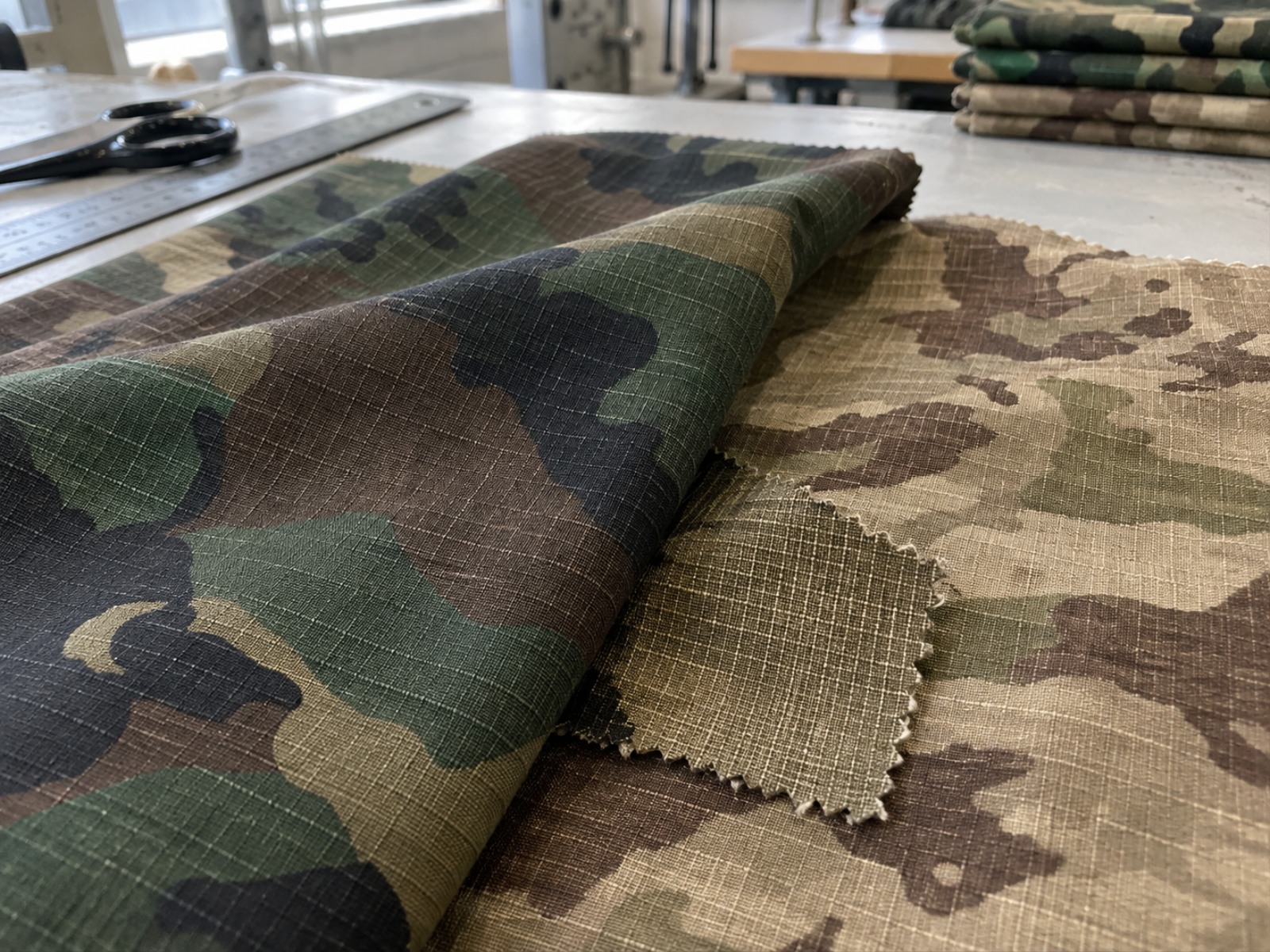
Cotton ripstop is a woven fabric made entirely from cotton, reinforced with a grid of heavier yarns woven at regular intervals. The grid contains tears; the cotton determines everything else. All-cotton constructions are chosen for hand-feel in dry heat, for how they take a topical treatment, and for the way they fade and wear in the field. They are the slowest of the ripstop family to dry and the most prone to shrinkage, which is why many buyers who once specified all-cotton have moved to blends. It remains a legitimate choice where comfort, treatment take-up and appearance in service matter more than drying speed.
- Composition
- DATA REQUIRED
- Weight range
- DATA REQUIRED
- Best applications
- Desert · Hot Weather · Heavy Duty / Field
Gallery
Cotton Ripstop in detail
What it is
What is it?
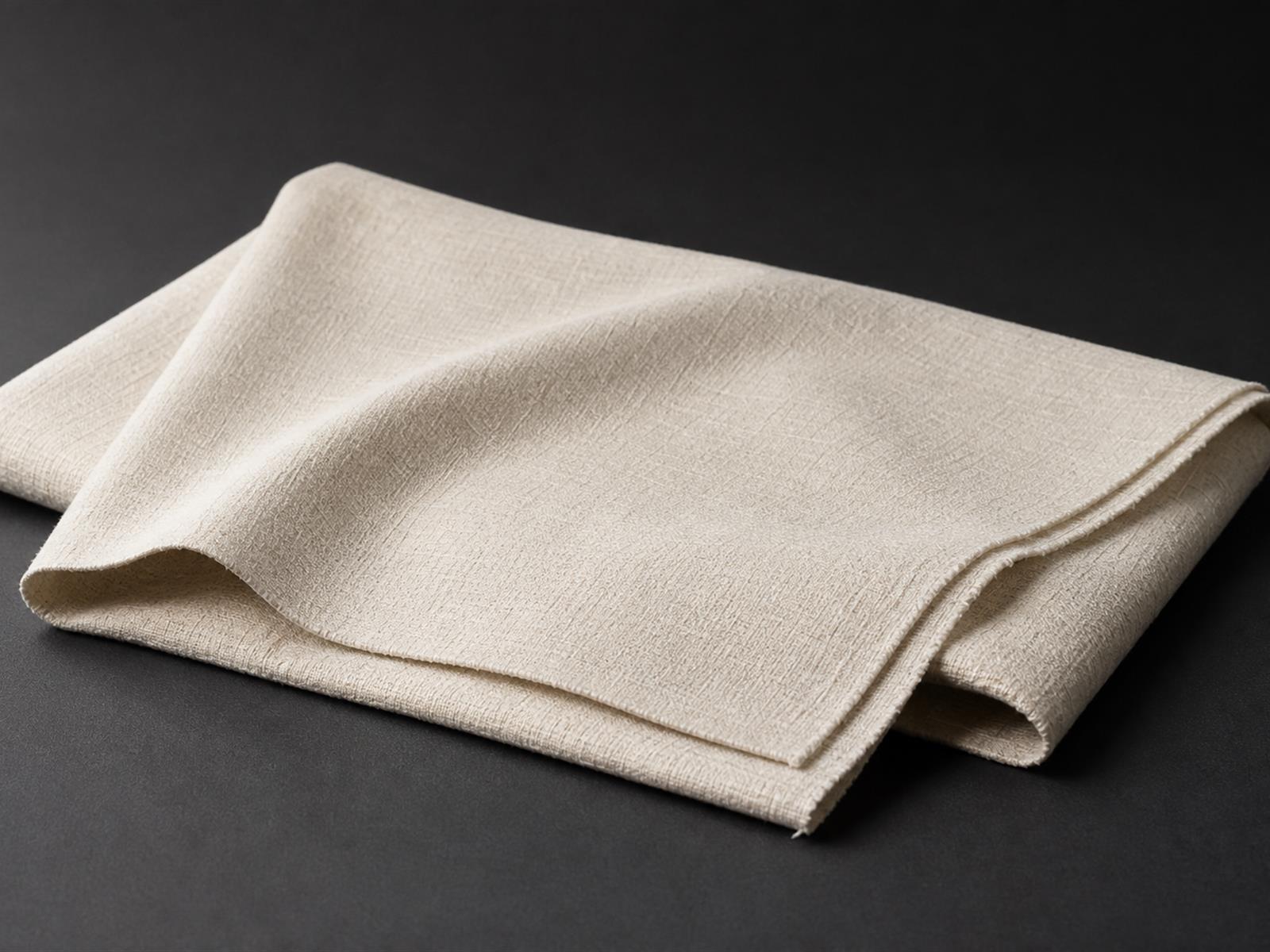
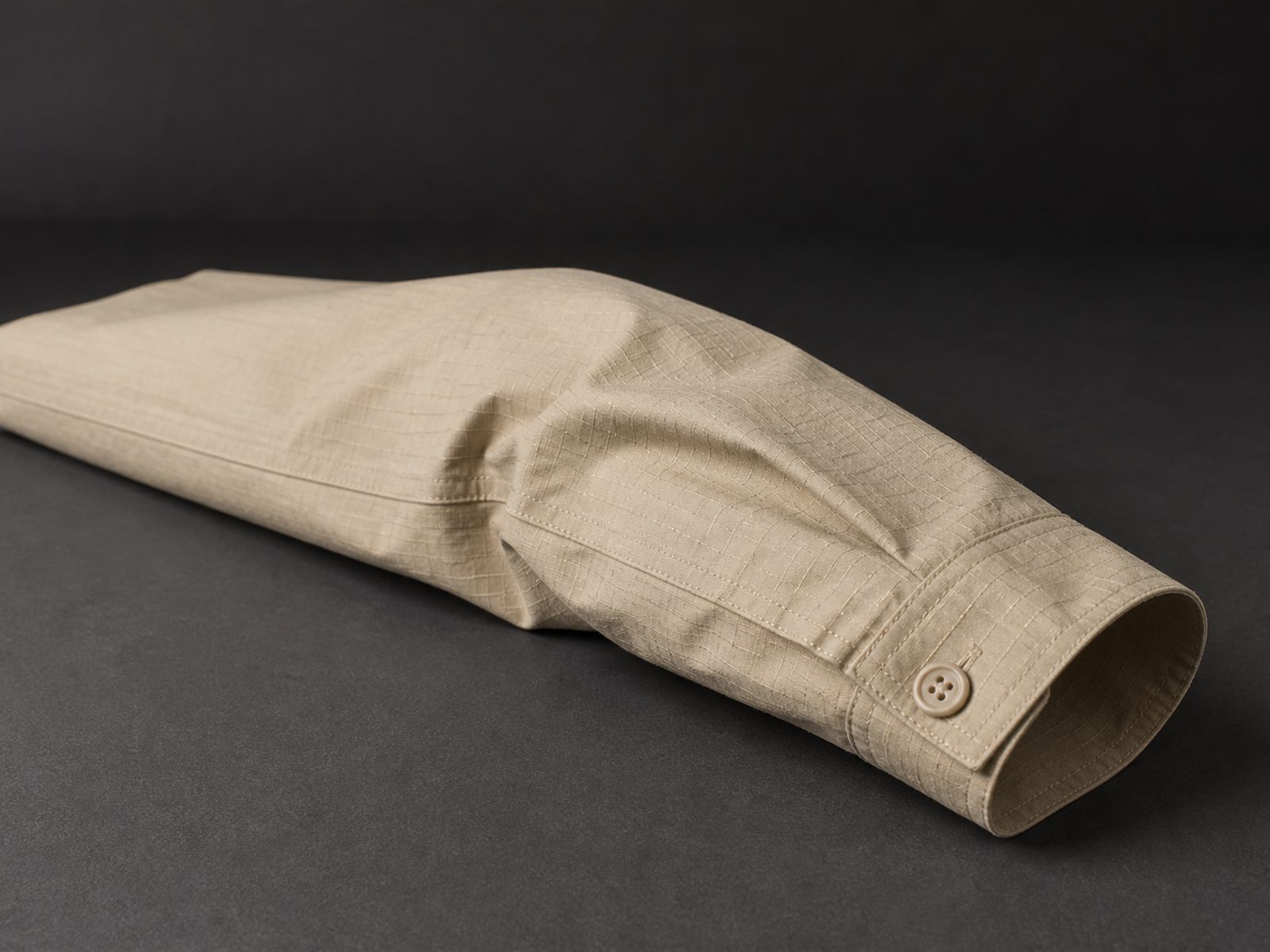
A woven fabric in which a regular network of heavier cotton yarns is woven into the base structure, producing a visible grid that interrupts tear paths. The base cloth provides the weight, drape and hand; the grid provides the tear resistance. Because the fibre is entirely natural and staple-spun, the fabric has a matte surface, takes printing and topical treatment well, and moves more with moisture than any synthetic blend.
Function
How it works
Tear resistance comes from the grid: a tear starting inside one square must break a heavier grid yarn before it can continue, which keeps damage local. The cotton fibre works differently. Each cotton fibre has natural convolutions that interlock with neighbouring fibres, creating friction that holds the yarn structure together and gives the cloth its body. Cotton is also hydrophilic: the fibre absorbs water into its own structure, and a wet cotton yarn swells. Swelling closes the gaps between yarns, which temporarily makes the cloth more resistant to wind and water penetration, but the same effect is why a soaked all-cotton garment dries slowly and feels heavy.
Technical data
| Composition | DATA REQUIRED — not published until confirmed |
|---|---|
| Available weight range | DATA REQUIRED — confirmed per programme |
| Best applications | DesertHot WeatherHeavy Duty / Field |
We do not publish composition or weight figures we have not confirmed for a specific programme. Ask for the figures that apply to your product.
Advantages
Advantages
- Best hand-feel of the ripstop family in dry heat: the cloth feels dry rather than slick against skin
- The hydrophilic fibre takes up topical treatments, prints and dyes predictably, which gives good control over printed camouflage depth and solid colour
- No synthetic content, so the fabric does not melt or glaze when exposed to sparks, embers or hot surfaces
- Matte surface and gradual fading in service are often preferred for field appearance and for lower visual signature
- A mature, widely produced construction with a stable supplier base, which supports repeat orders and simple sourcing
- Abrasion behaviour at contact points is predictable, and a worn all-cotton garment fails by thinning rather than by sudden rupture
Limitations
Limitations
- Wrong choice in wet, humid or tropical conditions: all-cotton holds water in the fibre, dries slowest of the ripstop family, and becomes heavy when saturated
- Shrinkage and growth must be controlled. An all-cotton garment that is not correctly pre-shrunk or specified can change size over its first washes, which is a returns and reorder risk
- Lower tear and abrasion strength than nylon or polyester blends of similar weight, so thinner all-cotton constructions wear through faster at knees, elbows and pocket corners
- Saturated cotton loses insulation value and, in warm humid storage, is more vulnerable to mildew than a synthetic
- Not water repellent or waterproof on its own, and any applied finish has a finite life and needs maintenance
- Poor choice where quick field washing and rapid line drying are part of the user's routine
Performance
Performance profile
The same material can be the right choice in one climate and the wrong choice in another; these are the trade-offs as they affect how Cotton Ripstop behaves in a garment.
Hot weather performance
Comfortable in dry heat, where the fibre's moisture take-up and matte surface keep the garment from feeling clammy. Performance degrades sharply as humidity rises: the fabric cannot move moisture out of the garment efficiently, so the wearer ends up in damp cloth. For hot humid duty the correct specification is a lightweight synthetic or blend, not all-cotton.
Cold weather performance
Not an insulating fabric, though a heavy cotton shell blocks a useful amount of wind and gives a solid outer layer over fleece or insulation. Its main drawback in cold wet conditions is that once saturated it stops being comfortable and dries slowly, which matters when the garment cannot be dried overnight.
Durability
Abrasion and tear performance is lower than nylon or polyester blends of the same weight, and the fibre loses strength when wet. The ripstop grid partly compensates by containing damage, and the garment fails gradually rather than suddenly, which is often acceptable in lighter duty roles.
Drying
The slowest drying option in the ripstop family because the fibre absorbs water rather than shedding it. This is the single reason many buyers have moved away from all-cotton. If rapid field drying is a stated requirement, this material should not be specified.
Comfort
The strongest argument for all-cotton. In dry heat the cloth feels natural, does not cling, and softens with use. It is also the least noisy option, which matters for field and hunting use. The trade-off is weight and dampness once the garment is wet.
OEM options
OEM options for this material
The 6 points that can be specified when Cotton Ripstop is written into your programme.
- Weave and grid scale confirmed before bulk so the grid density suits the intended garment weight
- Shrinkage control agreed in advance and verified on the pre-production sample rather than assumed
- Camouflage printing to buyer artwork with an approved print standard and retained reference for repeat orders
- Solid dyeing to buyer colour targets with lab dip approval, including dull and low-reflectance shades
- Topical finishes such as water repellency or a softer hand, subject to confirming the finish specification and its maintenance requirements
- Hand-feel and surface character developed against a buyer's reference garment or swatch
Care
Care considerations
- Wash according to the buyer's care label, and state the expected shrinkage allowance on the label rather than implying the garment will not move
- Avoid high-temperature drying, which accelerates shrinkage and fibre degradation
- Where a topical finish has been applied, the care instruction must be written to protect it, or the garment's stated performance will drop before its life ends
- Colour fastness and shrinkage figures must be stated by the buyer as acceptance criteria and confirmed on the pre-production sample
Recommended garments
Where this material is used
Products in our range where Cotton Ripstop is a realistic specification option, drawn from 4 candidate builds.
Product
BDU Field Shirt
The BDU field shirt earns its place by being the garment a wearer keeps on when conditions change.
Product
Heavy Duty Field Combat Shirt
This shirt is specified for programmes where the dominant cost is not the garment, it is the replacement cycle.
Product
Camouflage Uniform Set
A camouflage uniform set is judged on the print before it is judged on anything else.
Product
Ripstop Tactical Pants
A tactical pant is judged by three things: whether the crotch survives, whether the knee holds up, and whether the waist still fits the same after a full day of movement.
FAQ
Cotton Ripstop FAQ
Is cotton ripstop stronger than normal cotton?
It is more tear resistant, not more abrasion resistant. The grid stops small tears from running, but the base cotton is the same cotton. If the failure mode you see is thinning and holes rather than long tears, a blend with nylon or polyester is the better answer.
Why does all-cotton ripstop shrink?
Cotton fibre relaxes and swells during washing, and staple yarns can reorient, so the fabric moves unless the construction and finishing are controlled for it. The allowance has to be built into the pattern and confirmed on the pre-production sample.
Is cotton ripstop a good choice for hot humid climates?
Usually not for a garment worn against the skin in sustained humidity. The fibre absorbs and holds moisture, dries slowly and becomes heavy. In dry heat, by contrast, it is comfortable and often the preferred hand-feel.
Should I pre-shrink the fabric before cutting?
That is a production decision that depends on the fabric construction and the finished garment requirement. If you want the garment to hold size through washing, raise it before bulk so it is handled as a specification item rather than a surprise after delivery.
Can cotton ripstop be given a water repellent finish?
Yes, a topical repellent can be applied, and the natural fibre takes it well. It is still not waterproof, the finish has a finite life, and seam construction has to be designed for the intended rain exposure rather than relying on the finish alone.
Related Applications
Related Capabilities
Related Categories
Request this material against your specification
Tell us the garment, the climate and the wear pattern. We will confirm what is available for your programme and state clearly which figures are confirmed and which still need data.