Skip to content
TACTICALOEM / ODM TACTICAL APPAREL
ENEnglish

Products / Cold Weather Tactical Clothing

Cold Weather Tactical Clothing Manufacturer

Cold weather tactical clothing is a warmth against mobility problem. Every layer that holds heat also holds bulk; every shell that blocks wind also reduces the escape of moisture from exertion; every gram added for insulation is a gram the wearer carries on a patrol, in a vehicle or up a slope. The buyer's decision is not how warm a garment can be made, but where the warmth is placed, how the wearer can dump heat when they are moving, and how much weight and bulk the end user will accept. Dry cold, wet cold and wind-driven cold each pull the specification in a different direction. This page covers how we approach cold weather tactical clothing as an OEM/ODM programme: insulation zoning by garment area, shell and lining selection, hood, collar and closure construction, and the cost each performance gain carries. Insulation weight, composition and performance targets are confirmed per programme and to buyer specification.

cold weather tactical clothing OEMcustom insulated tactical jacketswholesale cold weather tactical clothingwinter tactical uniform supplier
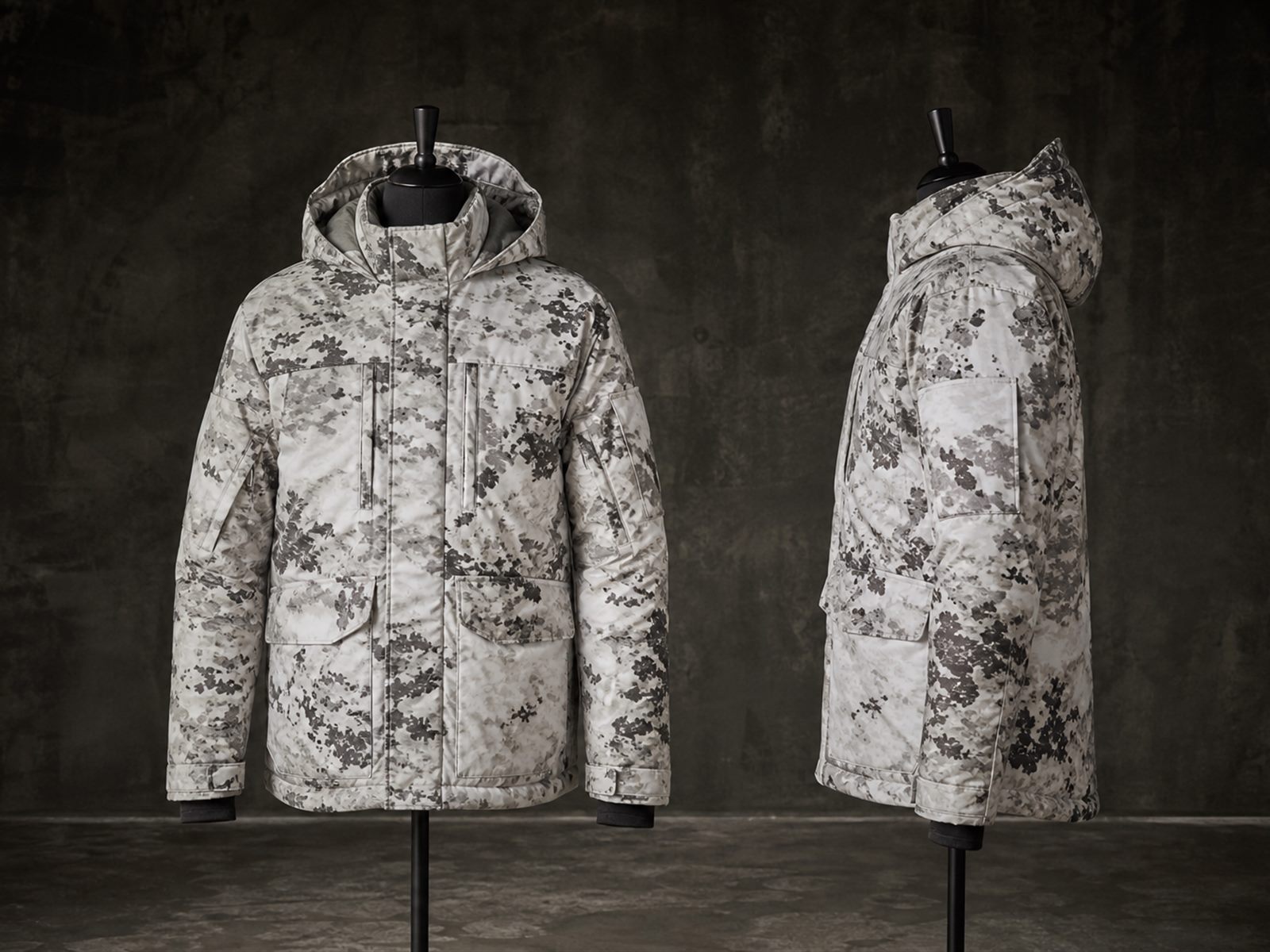
Cold weather tactical clothing with zoned insulation and wind-resistant shell made for OEM buyers
Primary keyword
cold weather tactical clothing manufacturer
Climate focus
Cold / Dry / Low Activity · Cold / Mixed Activity · Cold / Wet / Wind-Driven
Development input
Tech pack · Reference sample · Sketch · Photo
Cold Weather Tactical ClothingCold Weather Tactical ClothingCold Weather Tactical ClothingCold Weather Tactical Clothing

Buyers

Who buys cold weather tactical clothing?

Cold Weather Tactical Clothing is specified by organisations rather than bought as a single garment, so a quotation has to satisfy all 6 buyer profiles listed below.

Tactical Brands

A partner who can hold an insulation map and a layered fit across repeat orders so a reordered winter jacket is the same garment as the approved sample.

Outdoor & Hunting Brands

Quiet, low-bulk insulated constructions in camouflage and earth colourways, with their own labelling and retail packaging.

Uniform Distributors & Wholesalers

Cold climate size sets in volume, sized to layer over existing issue garments, with a written specification for reorders.

Government Contractors & Procurement Companies

Documented material and construction decisions, layering compatibility with garments the buyer already supplies, and inspection records before shipment.

Security Companies

Duty outerwear that stays presentable on a standing post while remaining usable during foot patrol, with insignia at agreed positions.

Private Label Brands & Importers

A winter range developed to their own fit, insulation direction and price architecture, with artwork, labels and packaging on agreed specifications.

Types

Cold Weather Tactical Clothing types

The same category name covers very different garments depending on climate and wear pattern. 3 types of Cold Weather Tactical Clothing are covered here, and the type is chosen before the fabric.

Cold / Dry / Low Activity

Static and Positional Cold Weather Clothing

Built for wearers who stand, sit or observe in the cold, where the body generates little heat of its own. Insulation is heavier and distributed across the torso, and the shell is selected to block wind. The cost is bulk and reduced freedom of movement, which matters less when the wearer is not running, climbing or crawling.

  • Heavier torso insulation for low exertion
  • Wind-resistant outer shell
  • Extended coverage at hip and lower back
  • High collar and full hood coverage
  • Large hand-warmer pockets over the core
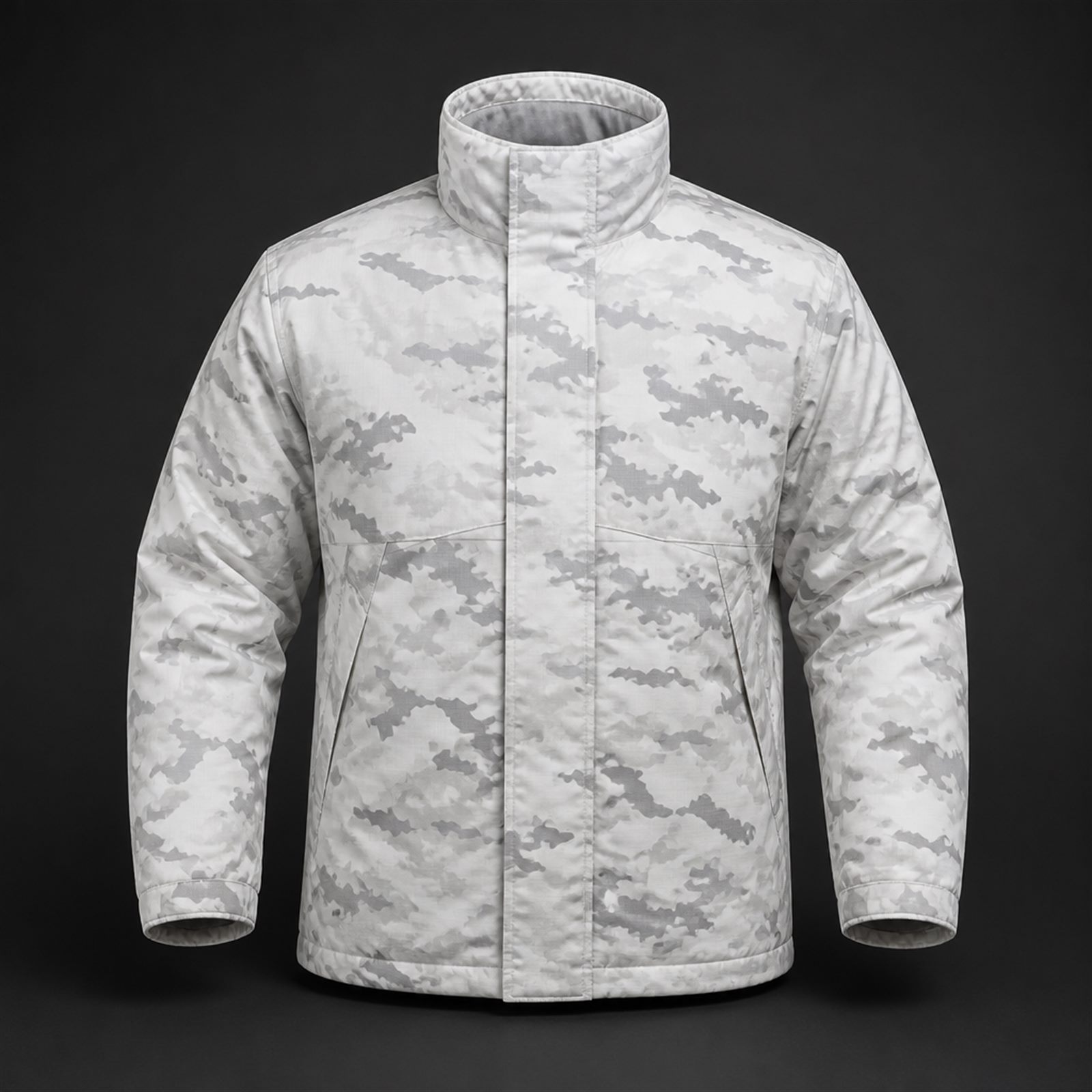
Cold / Mixed Activity

Active Cold Weather Layering Clothing

For wearers who alternate between moving and stopping, the garment has to shed heat quickly and retain it when stationary. Insulation is zoned and kept lighter, ventilation is added under the arms and at the back, and the cut allows a base layer and mid layer underneath. The cost is a shorter comfortable range at rest and a garment that needs the wearer to manage layers actively.

  • Zoned insulation with lighter arms and hood
  • Underarm and back ventilation
  • Stretch or articulated panels for movement
  • Layering allowance over a base and mid layer
  • Adjustable hem and cuff to control heat loss

Cold / Wet / Wind-Driven

Wet Cold and Damp Climate Clothing

Wet cold is the hardest condition because water destroys most insulation value. Here the priority shifts to keeping the insulation dry: a water-repellent or waterproof outer layer, sealed or covered openings, and insulation selected for how it behaves when damp. The cost is reduced breathability, extra weight and longer drying times.

  • Water-repellent or waterproof outer shell
  • Covered or sealed openings and zip protection
  • Insulation selected for damp performance
  • Quick-draining pocket bags and trims
  • Liner construction that can be dried separately

Engineering

Construction, part by part

8 construction decisions define Cold Weather Tactical Clothing, and each row below is one decision you control at specification stage.

Insulation Zoning

  • Uniform insulation throughout
  • Heavier insulation at torso front and back
  • Lighter insulation at sleeves for movement
  • Lighter insulation at hood for hearing and fit
  • Insulation omitted at vented or stress panels

Zoning is the single decision that most affects whether a cold weather garment is wearable while active. The insulation map should follow the wearer's activity pattern and be agreed as a drawing, because a map described only in words is interpreted differently at sampling and at bulk.

Outer Shell

  • Softshell face fabric
  • Water-resistant woven shell
  • Waterproof shell with sealed seams
  • Wind-resistant lightweight shell
  • Reinforced shell at shoulder and elbow

The shell decides how much wind and water reach the insulation and how much moisture escapes. A more protective shell costs breathability, so the balance is set against the dominant condition for the buyer's market rather than against a general idea of protection.

Lining and Inner Face

  • Taffeta lining
  • Brushed inner face
  • Fleece-backed lining
  • Mesh-lined body with lined sleeves
  • Lining designed for separate drying

The inner face controls how the garment feels when it is put on cold and how easily it slides over a mid layer. Brushed linings feel warmer but add weight and grab at the layer underneath.

Hood

  • Insulated fixed hood
  • Insulated removable hood
  • Low-profile hood for helmet compatibility
  • Hood with rear adjustment
  • Hood with wired or stiffened brim

Helmet compatibility, hearing and field of view all constrain the hood. If the wearer wears headgear or a headset, hood dimensions must be confirmed before pattern development, not corrected afterwards.

Collar and Chin

  • High stand collar
  • Fleece-lined collar
  • Zip-through collar with chin guard
  • Dual-layer collar with external flap

The collar is where cold reaches the body fastest and where zips contact the face. Chin guard construction and collar inner face should be agreed with the buyer because they affect comfort more than they affect appearance.

Closure and Ventilation

  • Full-length front zip with external storm flap
  • Two-way front zip
  • Underarm vents
  • Back vent
  • Zip garages and internal draft flap

Ventilation is what makes a warm garment usable during exertion. Buyers should be specific about whether the wearer can stop to adjust layers, because a garment designed for stationary wear does not need vents and a garment designed for movement cannot survive without them.

Cuffs, Hem and Sealing

  • Elasticated cuff
  • Adjustable hook and loop cuff
  • Extended sleeve with thumb loop
  • Drawcord hem with internal adjusters
  • Powder or draft skirt

Heat escapes at openings before it escapes through fabric. Cuff and hem adjustment add hardware that must be usable with gloves, which changes the size and type of the pull and toggle specified.

Pockets and Access

  • Insulated hand-warmer pockets
  • Chest pocket with zip
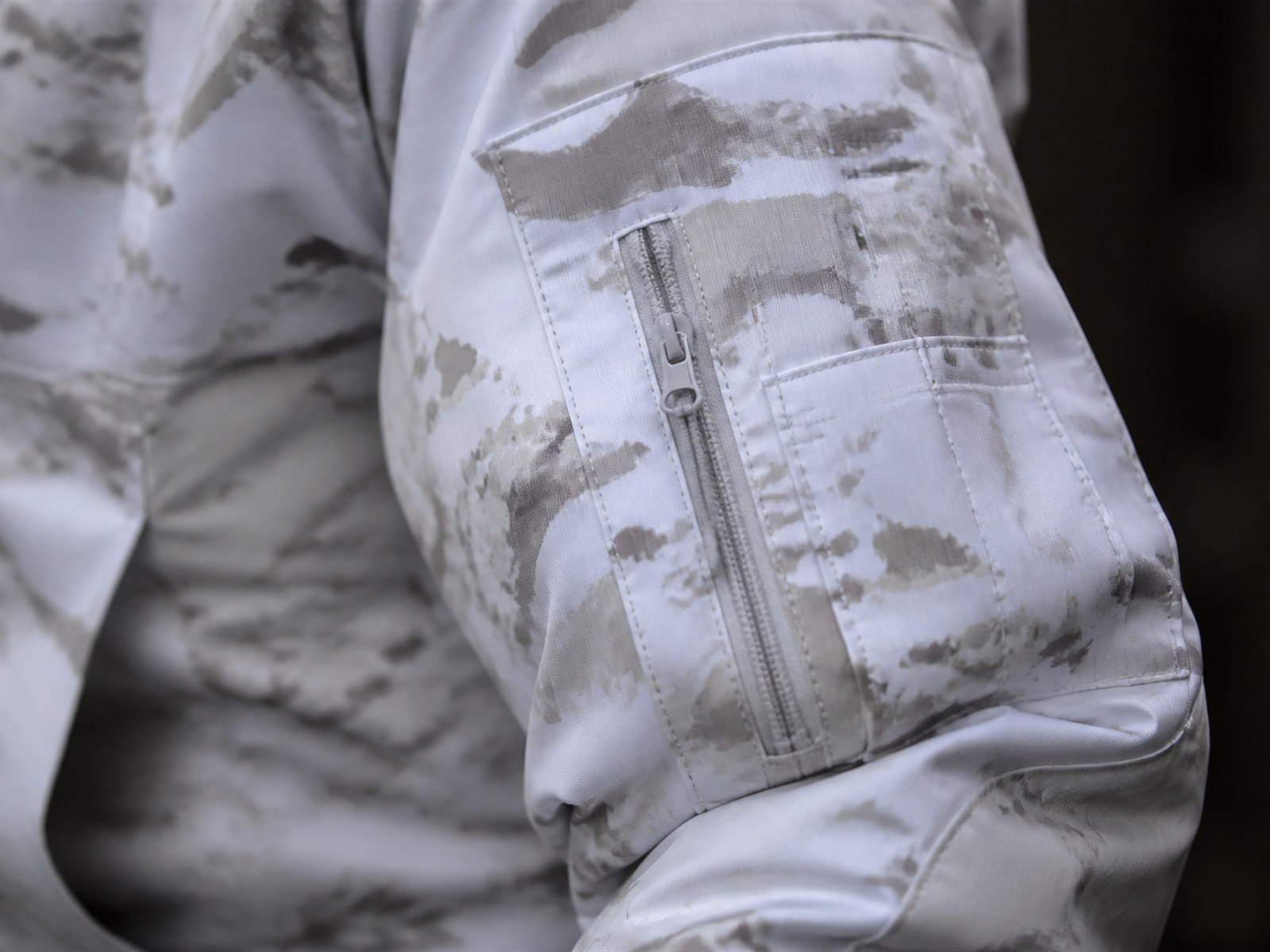
  • Sleeve pocket for small items
  • Internal security pocket
  • Radio or antenna pass-through loops

In cold weather, pockets are reached with gloves on. Opening size, flap design and zip pull type are practical decisions that frequently cause buyer rejections when they are specified for appearance instead of glove access.

Available fabrics

Material options by garment area

Outer Shell and Face Fabric

SoftshellWater resistant fabricWind resistant fabricWaterproof fabric for wet cold programmes

Shell choice is driven by the dominant weather in the buyer's market. Wind-resistant shells are lighter and more breathable; waterproof shells are more protective and less breathable. The choice is a trade, not an upgrade.

Insulation Layers

Cold weather insulation materialFleeceSynthetic insulation layerBuyer-specified insulation type

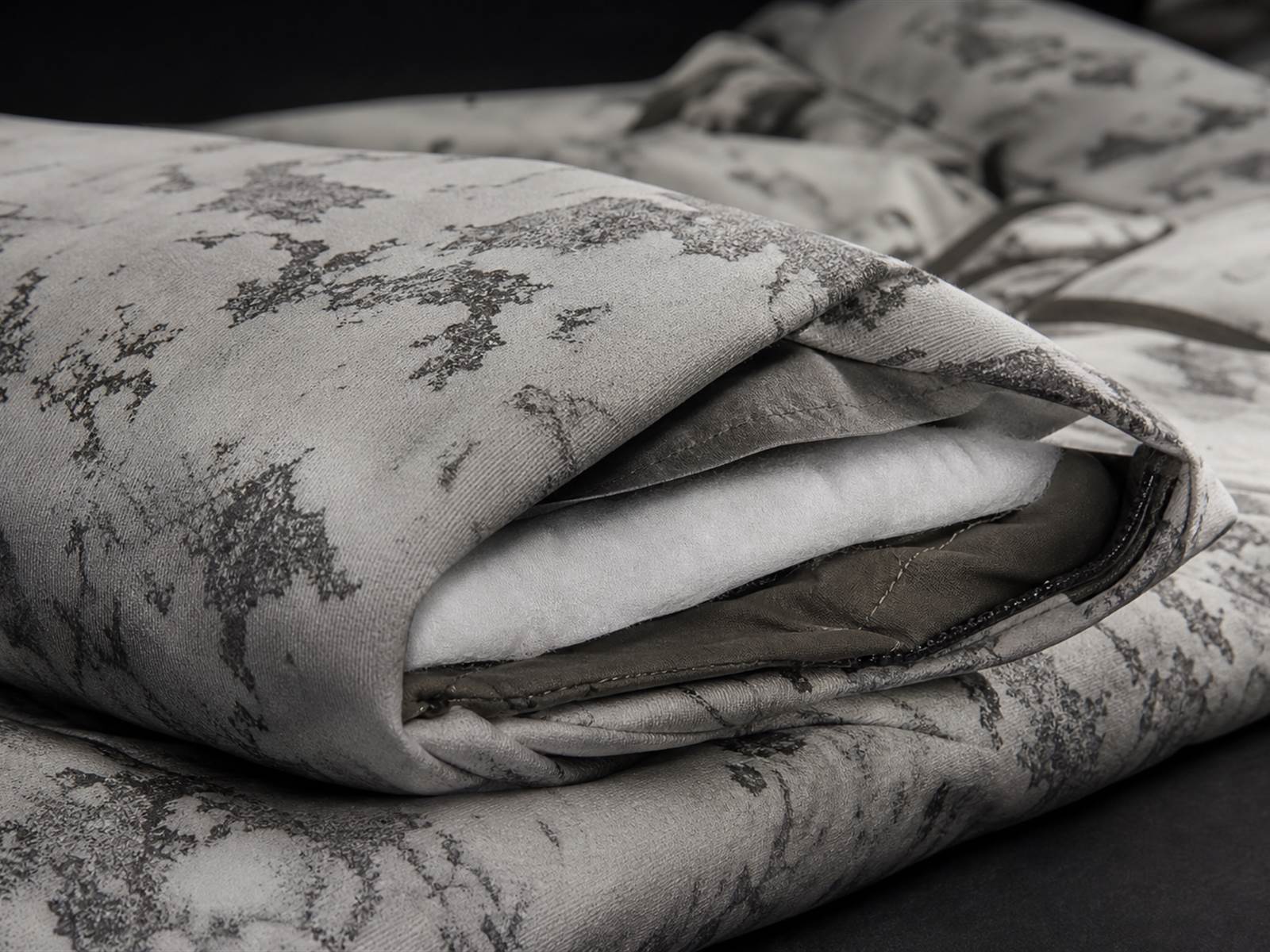
Insulation type determines warmth for weight, packability and how the garment behaves when damp. Insulation weight and composition are confirmed per programme against the buyer's temperature and activity requirement.

Lining and Inner Face

Taffeta liningBrushed inner face fabricFleece-backed liningMesh lining at vented areas

Lining choices are often treated as detail but they change perceived warmth, donning behaviour over mid layers and drying time. They should be specified with the shell, not after it.

Trousers, Seat and Knee Areas

Insulated trouser shellStretch ripstop for movement areasReinforced woven at knee and hemWater-resistant lower leg

Cold weather trousers usually need less insulation than the jacket because the legs generate heat while moving, and more reinforcement at the knee and hem where contact with ground and snow happens.

Customization

What can be customized

14 specification lines are available for Cold Weather Tactical Clothing, and where an option changes cost, weight or durability the consequence is stated next to it.

Fabric

Softshell familyWind resistant fabric familyWater resistant fabric familyBuyer-specified composition and weight

Insulation

Insulation type to buyer directionZoned insulation mapRemovable linerUninsulated shell version

Color

Solid colorwaysBuyer Pantone targetsBuyer lab dip approvalContrast panel colorways

Camouflage Pattern

Buyer artworkWinter and snow styleWoodland styleDigital styleCustom seasonal pattern

Hood

Fixed insulatedRemovable insulatedHelmet compatible low profileAdjustable with rear drawcord

Collar

High standFleece linedZip-through with chin guardDual layer with external flap

Pocket

Hand warmerChestSleeveCargoInternal securityRadio pass-through

Zipper

Full-length front zipTwo-way front zipStorm flap over zipBuyer-specified brand or tape width

Ventilation

Underarm ventsBack ventZip garages and draft flapVent placement to buyer drawing

Cuff and Hem

ElasticHook and loop adjustableThumb loopDrawcord hemDraft skirt

Hook & Loop

Cuff adjustersInsignia panelsStorm flap closureBuyer-specified color matching

Reinforcement

Shoulder panelsElbow overlaysKnee and hem reinforcementStress point bartacks

Logo

Woven labelPrinted labelRubber patchEmbroideryHeat transfer

Label and Packaging

Main, size, care and origin labelsPrinted poly bagHangtag and header cardCustom boxCompression or carry bag

Sizing

Size development

Cold weather sizing is layering sizing. A jacket that fits correctly over a base layer alone will restrict movement when the wearer adds a mid layer, and a garment sized generously for layering looks oversized in a retail setting. Size development therefore begins by agreeing what will be worn underneath and whether the buyer sells the garment as a standalone outer layer or as part of a layer system. We need the buyer's target size range, either garment measurements from a reference sample or body measurements, and any sizing system already in use in their market. A full size set is produced so that chest, across-shoulder, sleeve length, back length, body width and hem opening can be checked across the range rather than in one size. Measurement tolerances are agreed in writing before bulk, along with how the garment is measured flat for a lined and insulated style, because measurement method affects every number on the chart.

How size development works

Branding

Private label

Private label for cold weather programmes covers branding and the functional labelling that buyers in cold markets are expected to provide. Main label, size label, care label and country of origin label are produced to the buyer's artwork and content requirements, and care content matters more on insulated garments because washing behaviour directly affects insulation performance. Branding can be applied as woven label, printed label, rubber patch, embroidery or heat transfer, with insignia panels at agreed positions on the chest, sleeve or shoulder. Packaging ranges from a plain poly bag to a printed poly bag with hangtag, header card, custom box or a reusable carry and compression bag. All artwork, label content and packaging are confirmed on the pre-production sample so bulk production has one approved reference.

Customization capability

Development

Sampling process

Sampling for Cold Weather Tactical Clothing runs in 8 stages, each one removing a specific risk before the next stage commits cost.

01

Requirement review

We review the buyer's tech pack, reference garment, photo or sketch and list every open specification, including the climate band and expected activity level, before any material is cut.

02

Layering and warmth brief

The garments the end user will wear underneath, the expected exertion level and the target temperature band are written down first, because they decide the insulation map and the fit allowance.

03

Material and insulation proposal

Shell, insulation, lining and trim options are proposed against that brief, with alternatives where insulation type or weight is not yet fixed by the buyer.

04

Pattern development

The pattern is developed or adapted to the buyer's reference, including panel geometry for insulated seams, hood dimensions, arm articulation and pocket placement.

05

Prototype

A first sample is produced in the proposed materials so the buyer can assess warmth, bulk, movement and fit in hand rather than on a specification sheet.

06

Revision round

Buyer comments on insulation map, hood and cuff function and fit are consolidated into a single revision round so the specification converges.

07

Size set

The full size range is produced so measurements can be confirmed across the range, particularly at the extremes where layering fit is usually wrong.

08

Pre-production sample

Final materials, insulation map, construction, trims and labelling are locked in a pre-production sample that becomes the bulk reference standard.

Production

Bulk manufacturing

Bulk production of Cold Weather Tactical Clothing runs in 7 stages, which is where an approved specification is either held or lost.

01

Fabric, insulation and trim approval

Shell, insulation, lining, zips, flaps, hook and loop, thread and labels are approved against the pre-production standard before cutting.

02

Bulk cutting

Cutting runs against the approved pattern with markers controlled for shade, for bulky insulation handling and for direction-sensitive camouflage prints.

03

Insulation and panel preparation

Insulation panels are cut to the approved zoning map and matched to the correct body area before assembly, so a zoned garment is not assembled with the wrong fill in the wrong panel.

04

Assembly

Line assembly follows the approved sequence, with baffles, quilting or attachment lines, storm flaps and reinforcement built in the order the sample was approved.

05

Inline quality control

Work in progress is inspected during assembly so insulation distribution, seam integrity and hardware faults are corrected on the line.

06

Finishing and pressing

Thread trimming, hardware function checks, hood and drawcord checks and appropriate low-temperature pressing are completed before inspection.

07

Final inspection and packing

Measurement, insulation distribution, construction and packing inspection are completed against the agreed inspection standard and documented before shipment.

Quality Control

Quality control for this category

Inspection of Cold Weather Tactical Clothing is measured against an agreed standard, and the 7 checks below are listed with what each one is measured against.

01

Incoming fabric and insulation inspection

Shell fabric, lining and insulation are checked on receipt for shade, width, weight, hand feel and defects before entering production.

02

Insulation identification control

Insulation types are kept identified and separated in storage and on the line, because two similar-looking fills with different performance levels are a common source of mixed production.

03

Pre-production approval

The pre-production sample is approved by the buyer and becomes the reference standard for bulk, including the insulation map.

04

Inline inspection

Work in progress is inspected at defined points, with attention to insulation placement, baffle or quilt lines, and seam integrity.

05

Measurement inspection

Critical measurements are checked against the approved size set, using the agreed measuring method for lined and insulated garments.

06

Construction and function inspection

Zips, storm flaps, hood adjustment, drawcords, cuff closures, pocket access and symmetry are function-checked against the approved sample.

07

Final and packing inspection

Finished goods are inspected before packing, and labels, folding, poly bagging and carton marking are checked against the packing instruction.

Choosing a Cold Weather Tactical Clothing manufacturer

How to choose a cold weather tactical clothing manufacturer

The 6 questions buyers ask about Cold Weather Tactical Clothing before committing to a first order.

Start from the wearer's activity, not the temperature

Two garments rated for the same cold perform differently for a soldier standing on a vehicle and a soldier walking a patrol. The active wearer needs ventilation, zoning and lighter insulation; the stationary wearer needs coverage and quiet warmth. Briefing a manufacturer with a temperature only usually produces a garment that is too warm during movement.

Ask for the insulation map as a drawing

Zoned insulation is the main performance feature of a serious cold weather garment, and a map described in words will be interpreted differently at sampling and at bulk. A drawing that shows where insulation is heavier, lighter or absent is the difference between a repeatable product and a lucky one.

Check whether the garment is designed to be layered

Confirm what the end user wears underneath and whether the buyer sells the garment alone or as part of a layer system. Fit, arm articulation and hem length all follow from that answer, and getting it wrong is the most common reason a cold weather sample is rejected.

Weigh protection against breathability deliberately

A waterproof shell keeps water out and moisture in. If the end user is active in wet cold, that trapped moisture is a real performance loss, and a water-repellent softshell may serve better. Ask a supplier to explain the trade they have made and why, rather than presenting one option as universally superior.

Test the details with gloves on

Zip pulls, cuff closures, hood adjusters and pocket openings are used in cold conditions with gloved hands. Review these functions on the pre-production sample with gloves, because a detail that works on a table in a sample room can be unusable in the field.

Fix the measuring method before the size chart

Insulated and lined garments measure differently from single-layer garments, and two suppliers can produce different charts from the same body. Agree how the garment is measured flat, and the tolerances, in writing before the size set is approved.

Products

Cold Weather Tactical Clothing products

Each product in Cold Weather Tactical Clothing is a developed specification with its own material options, construction detail and customization map.

Cold Weather Tactical Clothing

Cold Weather Tactical Jacket

A cold weather jacket has to hold warmth, allow movement and get rid of moisture, and those three requirements pull against each other.

ColdCold and dryCold, wet / mixed
View product

FAQ

Cold Weather Tactical Clothing FAQ

What is the main difference between cold weather tactical clothing and a general winter jacket?

Layering, movement and load compatibility. Tactical cold weather garments are usually worn over other garments and equipment, so the fit, arm articulation, hood dimensions and pocket access are designed around that. They also have to remain usable during exertion, which is why ventilation and zoned insulation matter more than maximum warmth.

Which insulation should we choose?

It depends on the dominant condition and on how the garment is worn. Synthetic fills are commonly chosen where damp conditions and fast drying matter; fleece is used where breathability and low bulk matter. Rather than assuming a fill on your behalf, we confirm insulation type and weight per programme against your temperature band, activity level and laundering conditions.

Can you build a jacket with a removable liner?

Yes. A removable liner adds attachment hardware, extra weight and another set of fit tolerances, so it should be specified at the start rather than added after a single-layer jacket has been approved. Once the attachment system is agreed, it is locked into the pre-production sample.

How do you handle insulation performance figures such as warmth ratings?

We do not publish or assume warmth ratings. Insulation weight, type and any performance target are confirmed per programme and to buyer specification, and where a figure has not been agreed with you it is stated as buyer specification instead of being quoted as a number we cannot verify.

Will the same size fit over the buyer's existing uniform garments?

Only if the layering is defined. Send the garments the end user will wear underneath, or their measurements, and we build the fit allowance into the pattern. This is confirmed during size development so the whole range is checked against the actual layering rather than against an assumption.

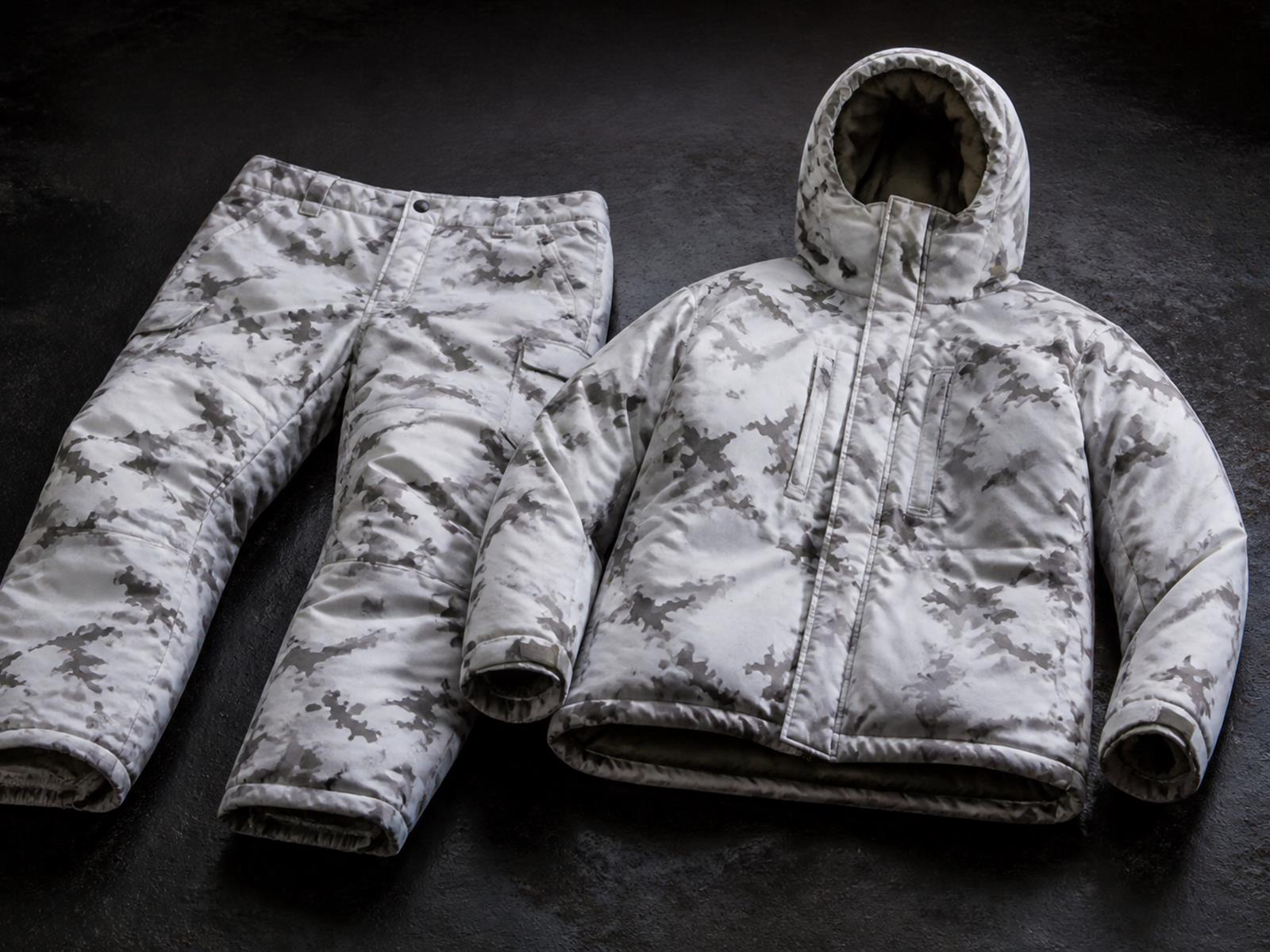
Can cold weather trousers and jackets be developed as one programme?

Yes, and it is usually more efficient because insulation type, shell and colour can be aligned across both. Trousers normally need less insulation and more knee and hem reinforcement than the jacket, so the material plan differs by garment even when the programme is shared.

What information do you need for a quotation?

Product type, target quantity, intended climate band and activity level, the layering the garment must accommodate, shell and insulation preference or direction, required features such as hood type and vents, colour or camouflage direction, size range, labelling and packaging requirements, and the target market. Where a figure such as MOQ or lead time has not been confirmed with you, we state that explicitly rather than quoting a number we cannot hold.

Request a Manufacturing Assessment

Send us your tech pack, reference sample or product idea. We review your requirement, recommend materials and construction, and come back with a development plan you can act on.