Materials
Water Resistant Fabric for Tactical Clothing and Outerwear
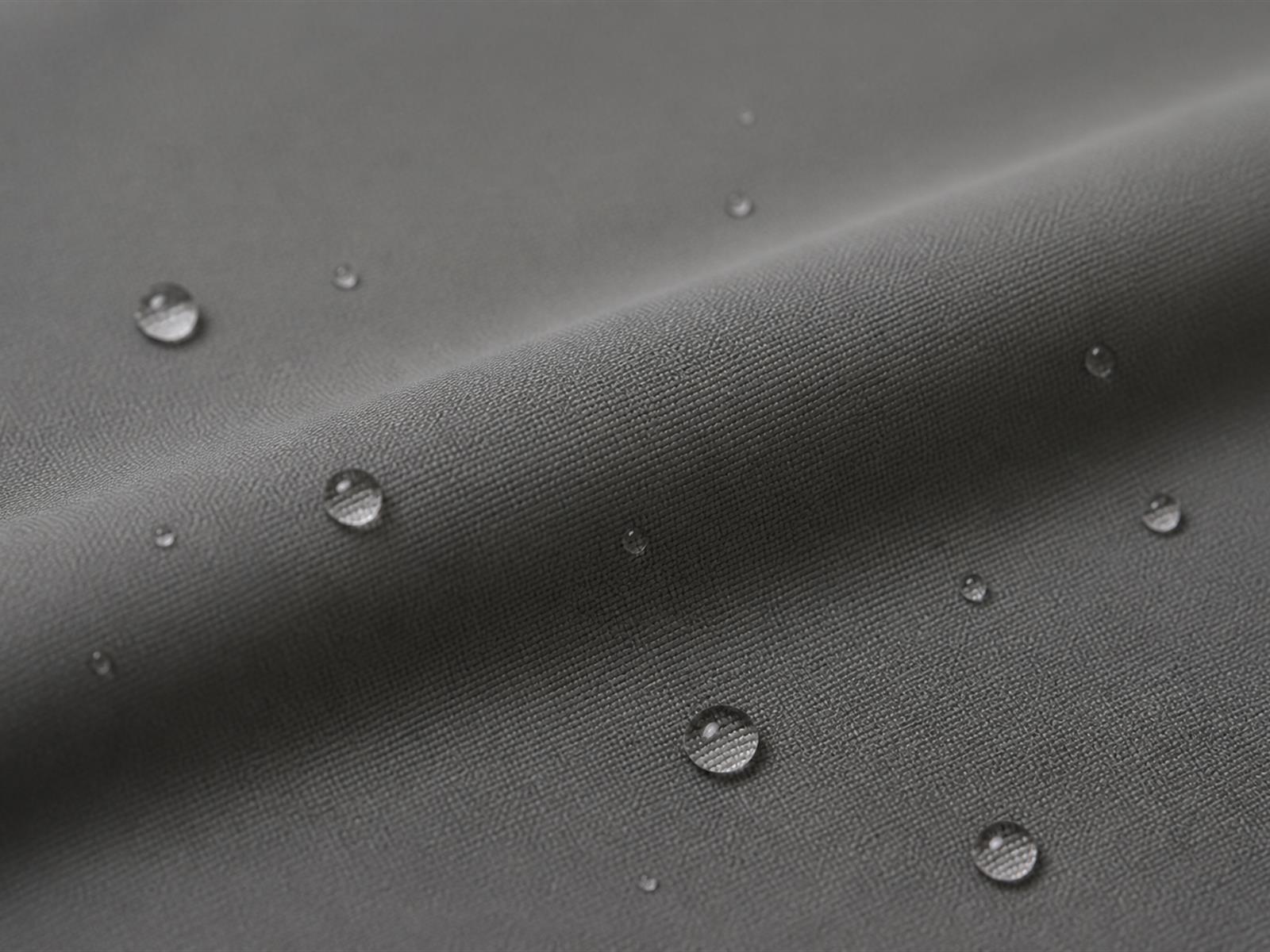
Water resistant fabric sheds light rain and keeps a garment usable in changeable conditions, but it is not waterproof. Resistance comes from a densely constructed cloth combined with a repellent finish that lowers surface energy so water beads and runs off instead of soaking in. There are no sealed seams and no membrane, so resistance is a matter of degree and duration rather than a guarantee. Buyers who treat water resistant and waterproof as the same requirement end up with returns from users who expected the garment to hold out in sustained rain.
- Composition
- DATA REQUIRED
- Weight range
- DATA REQUIRED
- Best applications
- Wet Weather · Cold Weather · Heavy Duty / Field
Gallery
Water Resistant Fabric in detail
What it is
What is it?
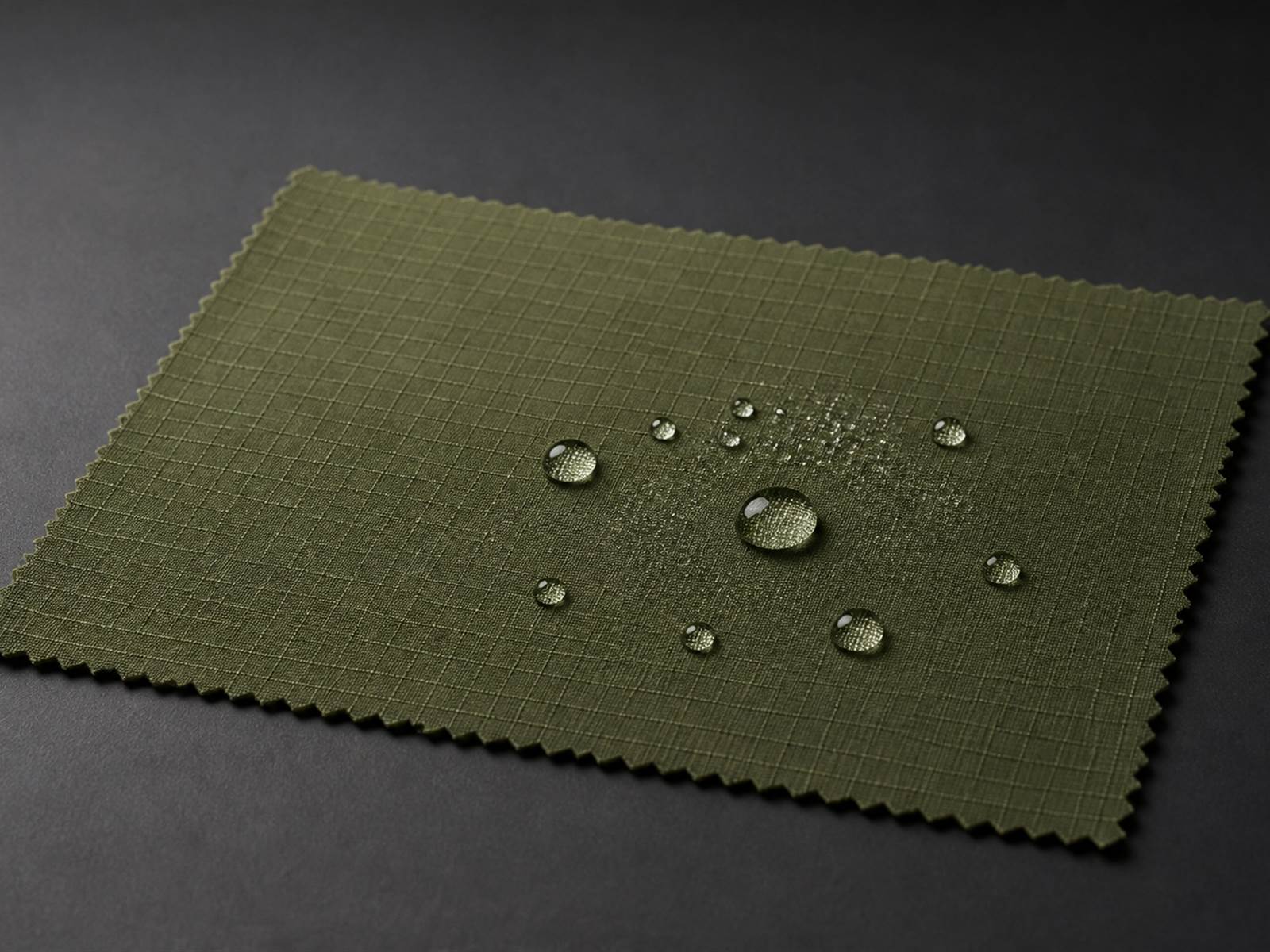
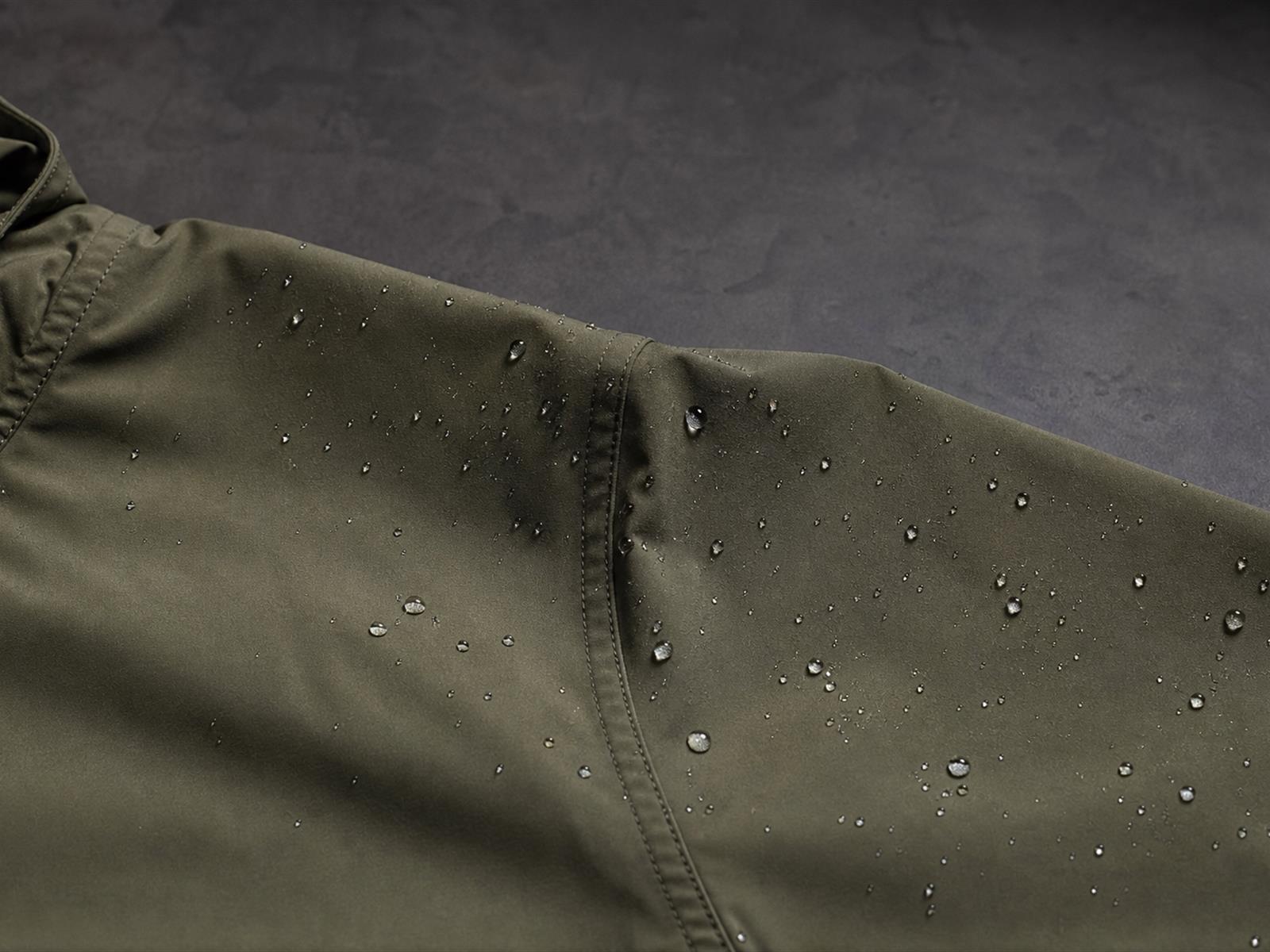
A woven fabric whose construction and surface treatment make it resistant to water penetration under light exposure. Water beads on the face instead of spreading, and the tight weave limits how quickly it can pass through. It differs from waterproof fabric in that it has no membrane or impermeable coating and no sealed seams, and its performance declines with abrasion and with the life of the finish.
Function
How it works
Water spreads on a fabric when the fabric's surface energy is higher than the water's surface tension. A repellent finish reverses that balance, so droplets stay round and roll off rather than wicking into the yarn structure. In parallel, a tight weave with a high yarn cover factor means there are fewer and narrower gaps for water to pass through, and the yarns themselves swell slightly when they take on a little moisture, closing those gaps further. Both mechanisms are limited: abrasion wears the finish off at shoulders and cuffs, oils from hands and skin reduce the effect locally, and continuous rain eventually exceeds what a fabric without a membrane can hold back.
Technical data
| Composition | DATA REQUIRED — not published until confirmed |
|---|---|
| Available weight range | DATA REQUIRED — confirmed per programme |
| Best applications | Wet WeatherCold WeatherHeavy Duty / Field |
We do not publish composition or weight figures we have not confirmed for a specific programme. Ask for the figures that apply to your product.
Advantages
Advantages
- Keeps a garment usable through light rain, drizzle and snow without the weight, stiffness and noise of a waterproof shell
- Air permeable construction allows vapour to escape, so the wearer accumulates less internal condensation during activity than in a sealed shell
- Quiet and flexible, which suits field, hunting and duty clothing where a technical rustle is undesirable
- Abrasion-resistant base fabrics can be given a repellent finish, so protection and durability can be combined in one cloth
- Compatible with solid dyeing and camouflage printing, so a whole range can carry the same construction
- Lower cost and lighter weight than a membrane-laminated alternative for the conditions it is designed to handle
Limitations
Limitations
- Wrong choice where sustained rain is expected: without a membrane and sealed seams, water will eventually penetrate, and the user will perceive the garment as failed
- The finish has a finite life. Abrasion, dirt, oils and repeated washing reduce repellency, and the garment then behaves like an untreated fabric
- Washing with detergent residue or fabric softener can temporarily or permanently reduce repellency, so user habits directly affect the performance the buyer is judged on
- Seams are not sealed, so stitching lines are the first place water gets through under any real load
- No hydrostatic resistance under pressure, which matters if the wearer kneels or leans against wet surfaces
- Performance claims are difficult to defend without a stated test method and a defined acceptance level, both of which should be agreed before bulk
Performance
Performance profile
The same material can be the right choice in one climate and the wrong choice in another; these are the trade-offs as they affect how Water Resistant Fabric behaves in a garment.
Hot weather performance
Useful in warm wet conditions where a waterproof shell would be too hot and heavy, provided the fabric is light enough. The air permeability of a water resistant woven allows vapour and heat to escape, which makes it more comfortable in humid rain than a sealed layer, at the cost of limited rain protection.
Cold weather performance
Works well as a wind and light precipitation layer over fleece or insulation, and it stays flexible in cold conditions where a stiffer shell can become awkward. It is not a substitute for a waterproof layer in sustained cold rain or wet snow, and once wetted out it loses both wind resistance and insulation value.
Durability
Durability is mostly about the base fabric, which can be a hard-wearing woven. The limiting element is the finish, which is a wear item rather than a permanent property, and the point at which repellency has gone should be understood before the garment is specified with a performance claim attached.
Drying
A treated woven dries faster than an untreated one because less water enters the yarn structure, and faster than a membrane construction because there is no layered composite holding moisture. A garment that has wetted out, however, dries like any saturated woven and should not be expected to recover quickly in the field.
Comfort
Comfortable and less clammy than a sealed shell during activity, since vapour can pass through the fabric. The trade-off is that the same construction allows wind through, so in cold moving conditions the garment needs a wind-resistant layer over it or beneath it.
OEM options
OEM options for this material
The 6 points that can be specified when Water Resistant Fabric is written into your programme.
- Base construction selected for the actual rain exposure, from a light shower-resistant cloth to a denser face fabric
- Repellent finish specified as a requirement, with the performance level and the test method agreed before bulk rather than assumed
- Care and re-proofing instructions written into the care label so the buyer's customer can maintain the finish
- Seam and construction planning where water entry at stitch lines is a recognised risk, including seam placement and finishing choices
- Solid dyeing to buyer colour targets with lab dip approval, and camouflage printing with an approved print standard
- Panel planning so the most abrasion-exposed areas use a construction that keeps the finish effective longer
Care
Care considerations
- Wash according to the buyer's care label, and avoid detergent residue and fabric softener, which both reduce repellency
- Repellency should be maintained according to the care label; a water resistant garment whose finish has gone is simply an untreated garment
- Do not use high heat unless the care label permits it, since heat can affect both the finish and the base fabric
- Where a repellency level is a contractual requirement, the test method and the number of wash cycles it applies after must be agreed before bulk
Recommended garments
Where this material is used
Products in our range where Water Resistant Fabric is a realistic specification option, drawn from 4 candidate builds.
Product
Tactical Field Jacket
A field jacket is bought for a specific job: it carries what the wearer needs to reach without opening a pack, stays out of the way when the wearer kneels, climbs or drives, and can be worn over a shirt or a fleece without becoming a straightjacket.
Product
Hunting Camo Jacket
A hunting jacket is judged by two properties that pull against each other: how quietly it moves through brush, and how well it survives that brush.
Product
Tactical Softshell Jacket
A softshell is a compromise, and buyers who know which compromise they are buying get a better jacket.
Product
Security Duty Uniform Set
A security uniform is worn every working day, in front of the client's customers, and is expected to look formal on the last shift of the month exactly as it did on the first.
FAQ
Water Resistant Fabric FAQ
What is the difference between water resistant and waterproof?
Water resistant fabric sheds light rain for a limited time and has no membrane or sealed seams. Waterproof fabric is built to prevent water penetration under pressure and includes sealed seam construction. The two should not be used interchangeably in a specification.
How long does the water repellent finish last?
It depends on abrasion, contamination and washing, and it is not permanent. Treat the finish as a wear item, write re-proofing into the care label, and define the acceptance requirement if the performance claim is part of the purchase contract.
Why does water start soaking in after a few washes?
Common causes are detergent residue and fabric softener coating the surface, oils from skin and hands reducing surface energy, and simple abrasion of the finish. Cleaning and re-proofing according to the care label usually restores most of the effect.
Can I claim waterproof performance on this fabric?
No. A water resistant finish does not make a fabric waterproof, and there is no membrane or sealed seam construction behind the claim. Making that claim is the main source of end-user complaints in this material class.
Is this fabric suitable for a hunting or field jacket?
It is a common and sensible choice for field jackets where quietness, breathability and light rain protection matter, and where the user understands the limits. If the garment will be used in sustained rain, a waterproof shell is the correct specification.
Related Applications
Related Capabilities
Related Articles
Related Categories
Request this material against your specification
Tell us the garment, the climate and the wear pattern. We will confirm what is available for your programme and state clearly which figures are confirmed and which still need data.