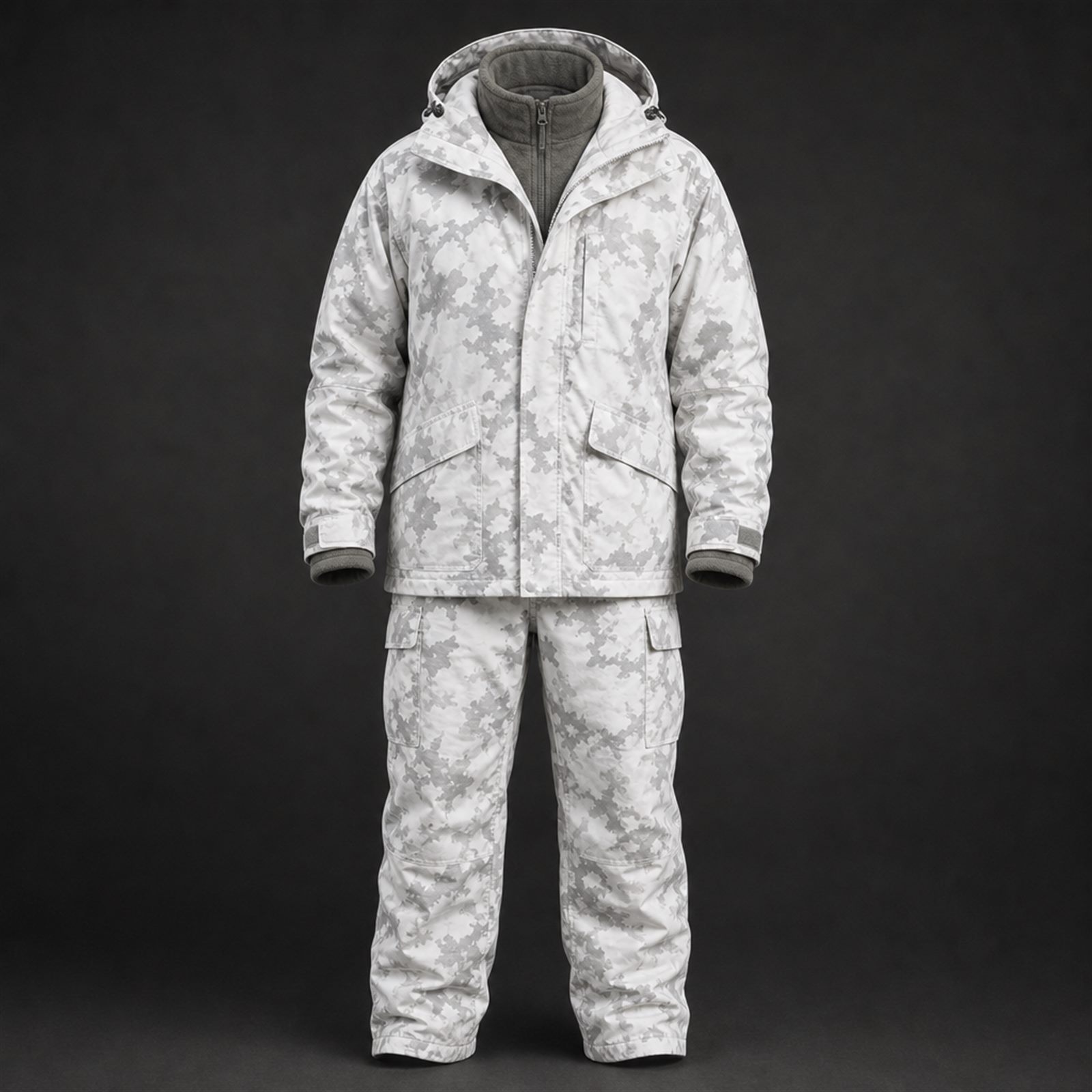
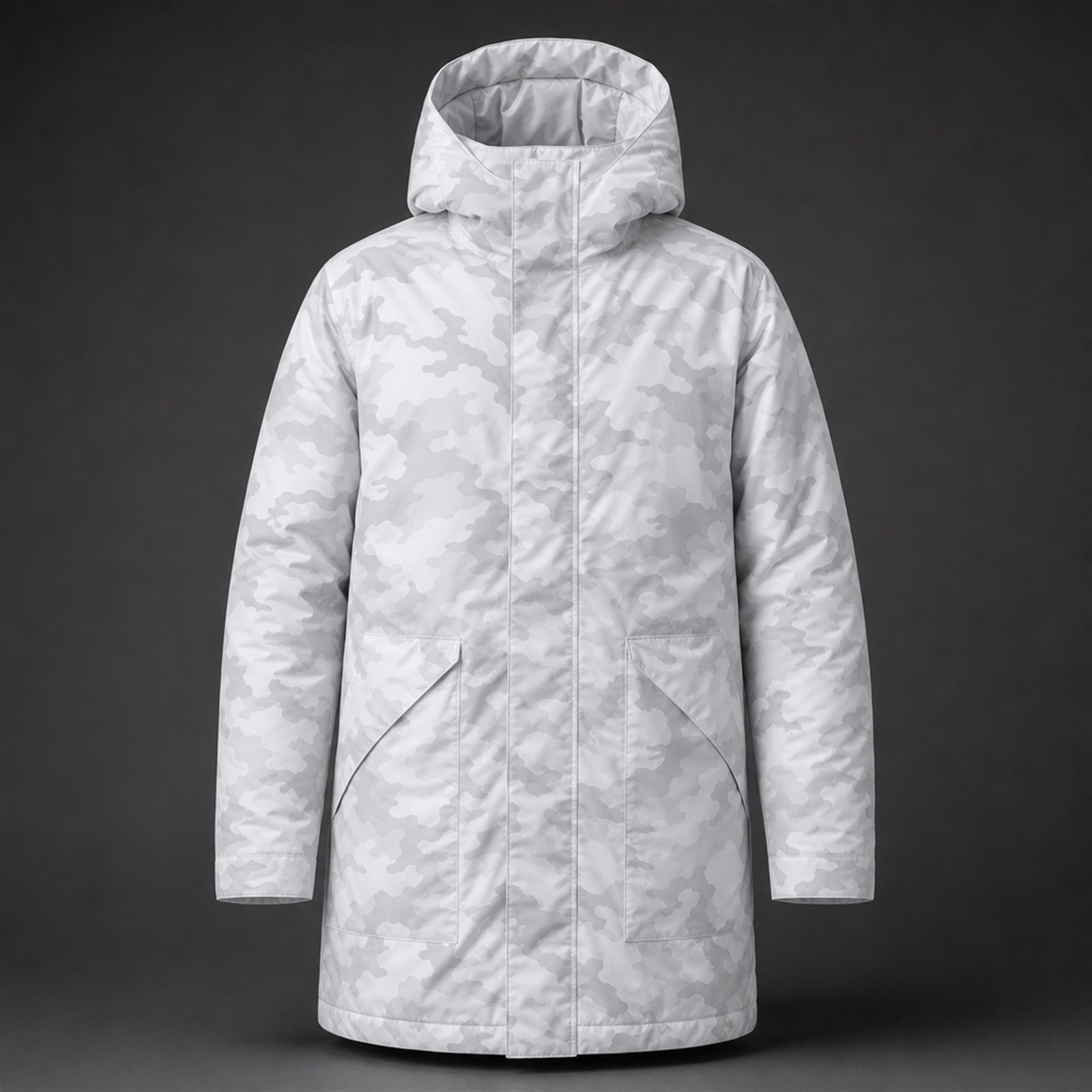
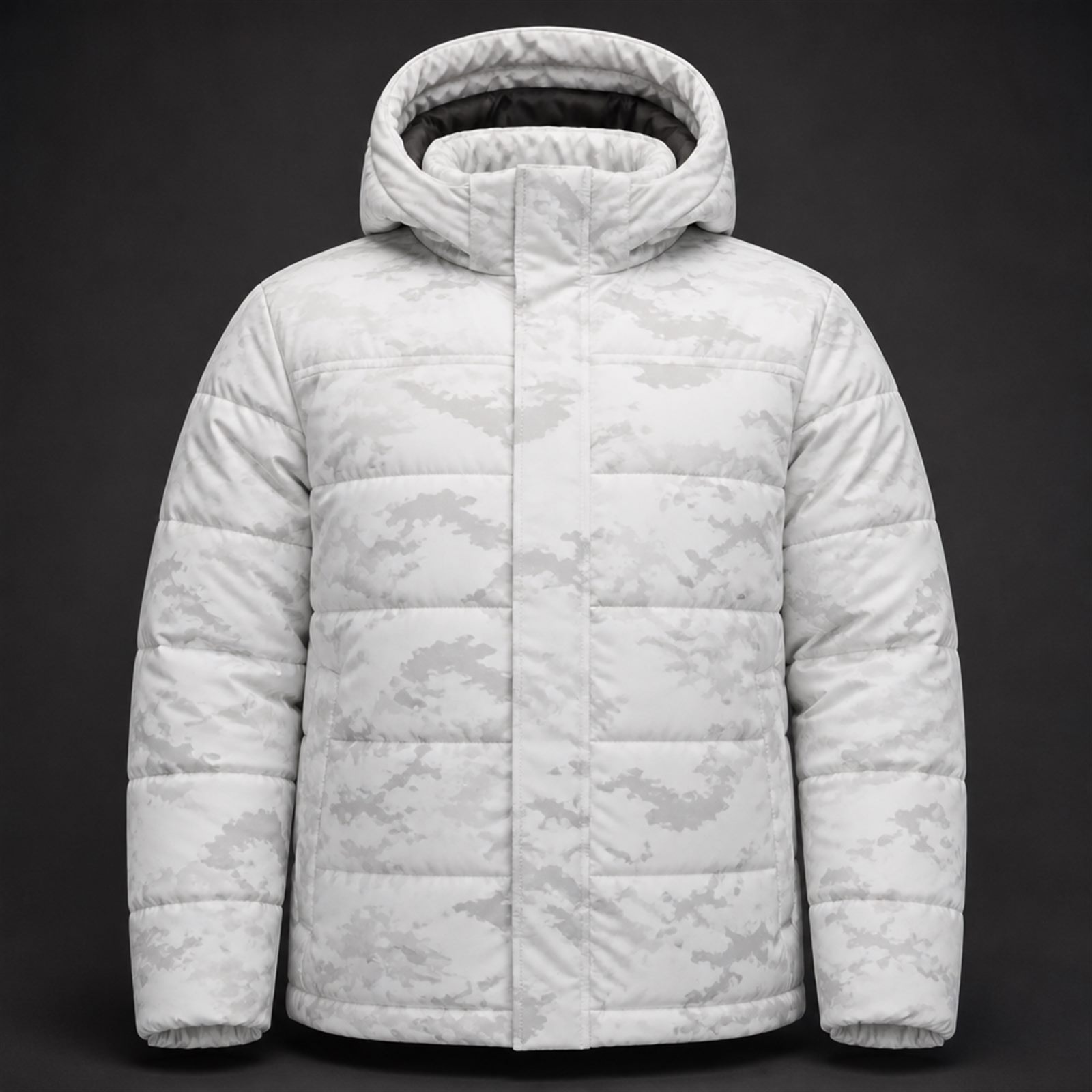
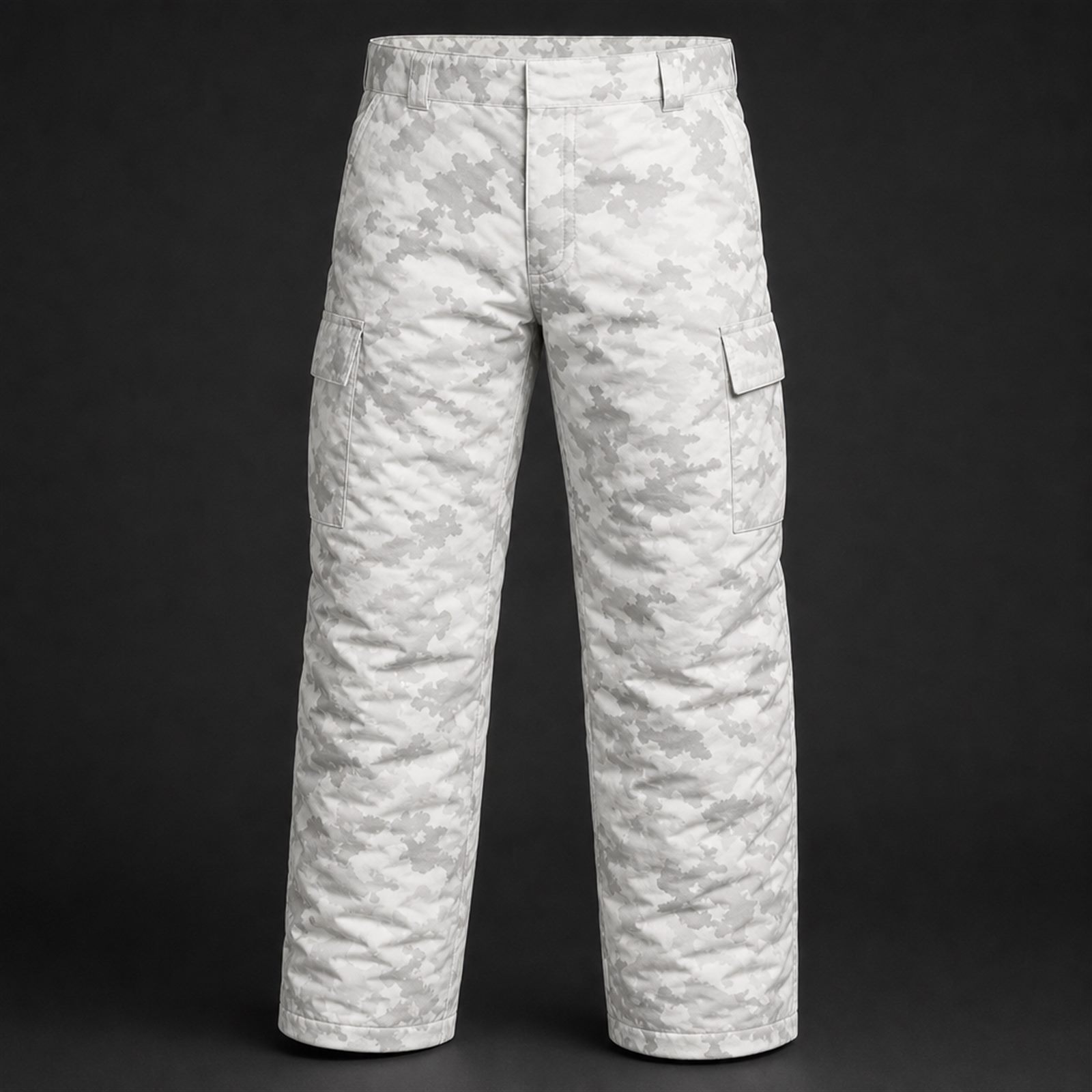
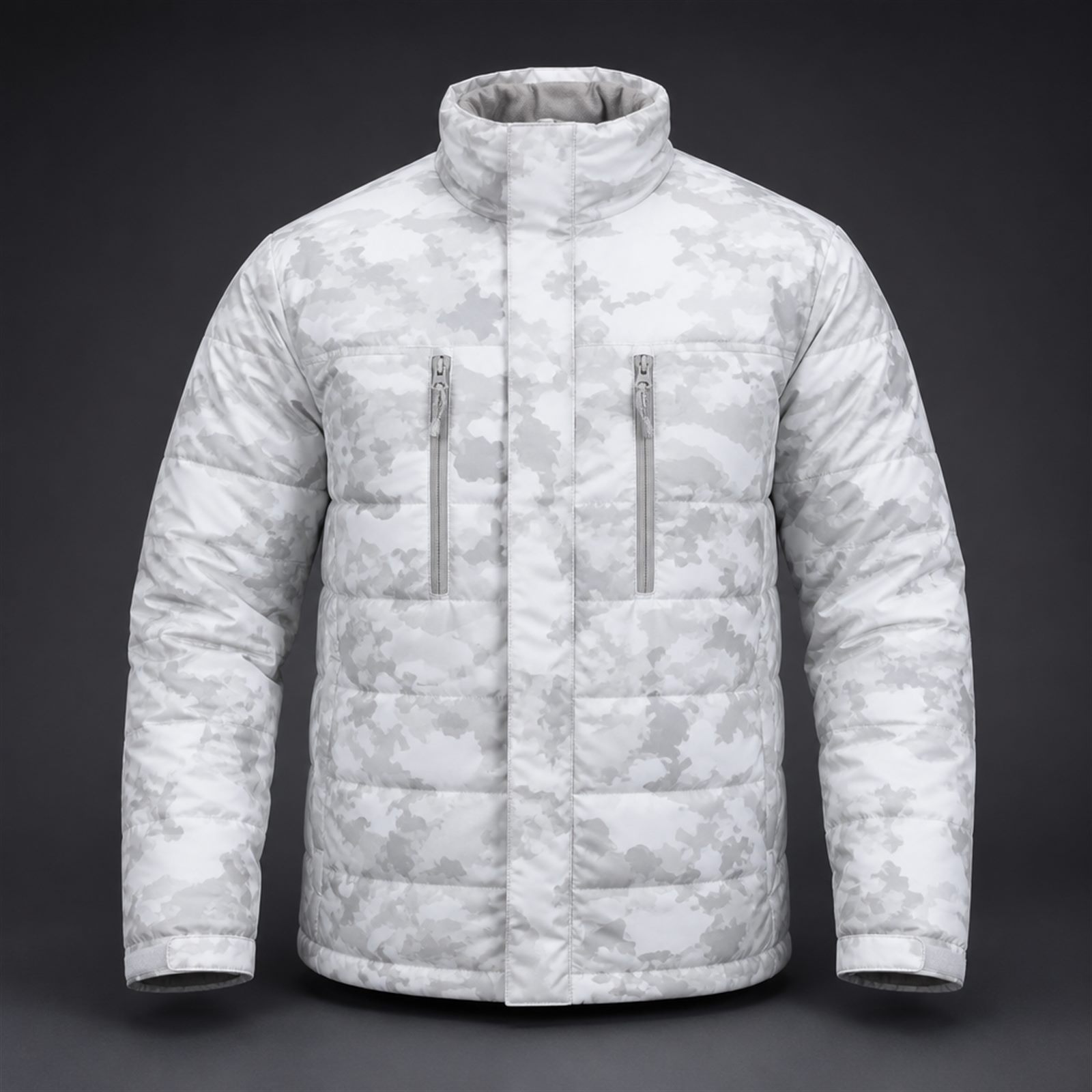
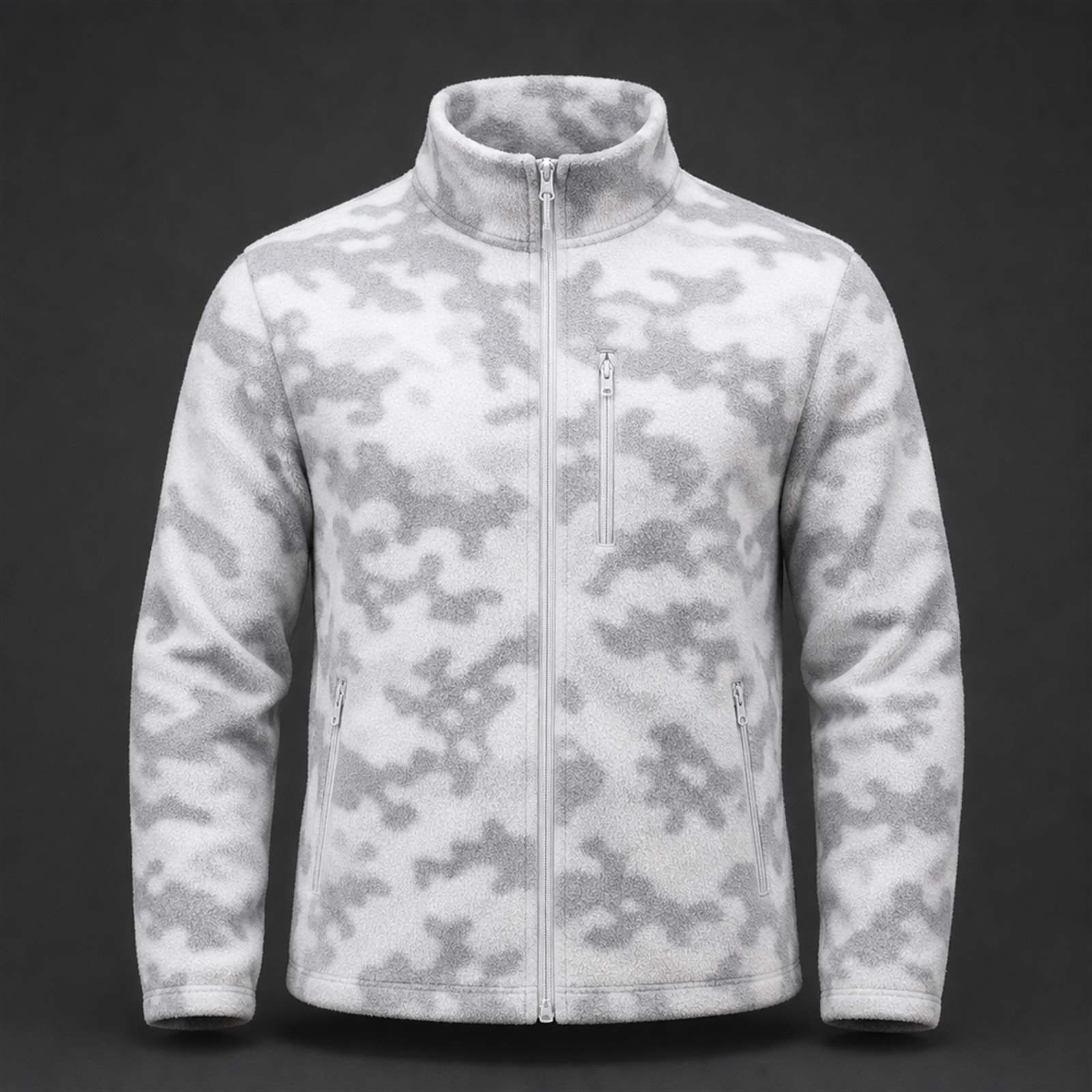
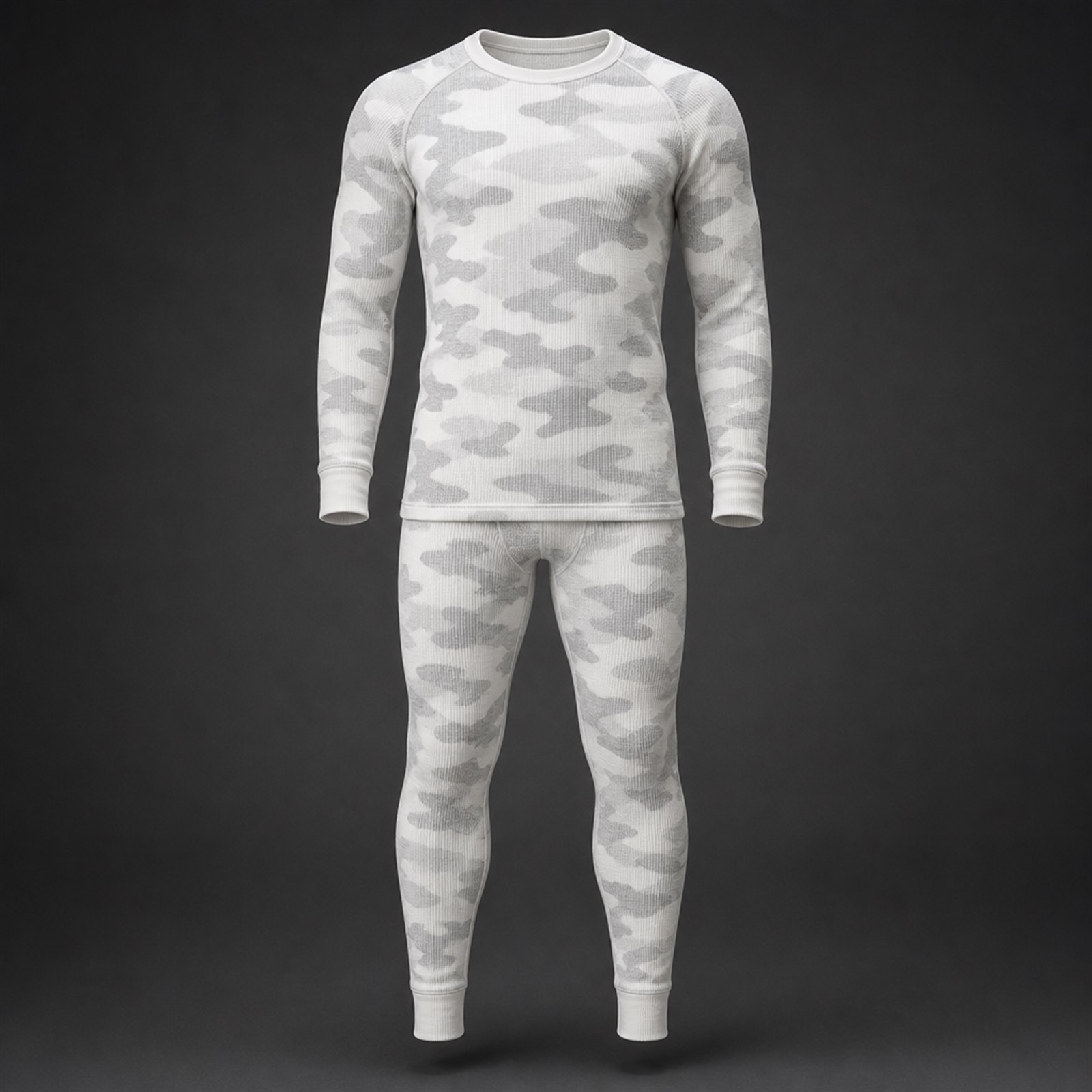
Module 01
Extreme Cold Environment
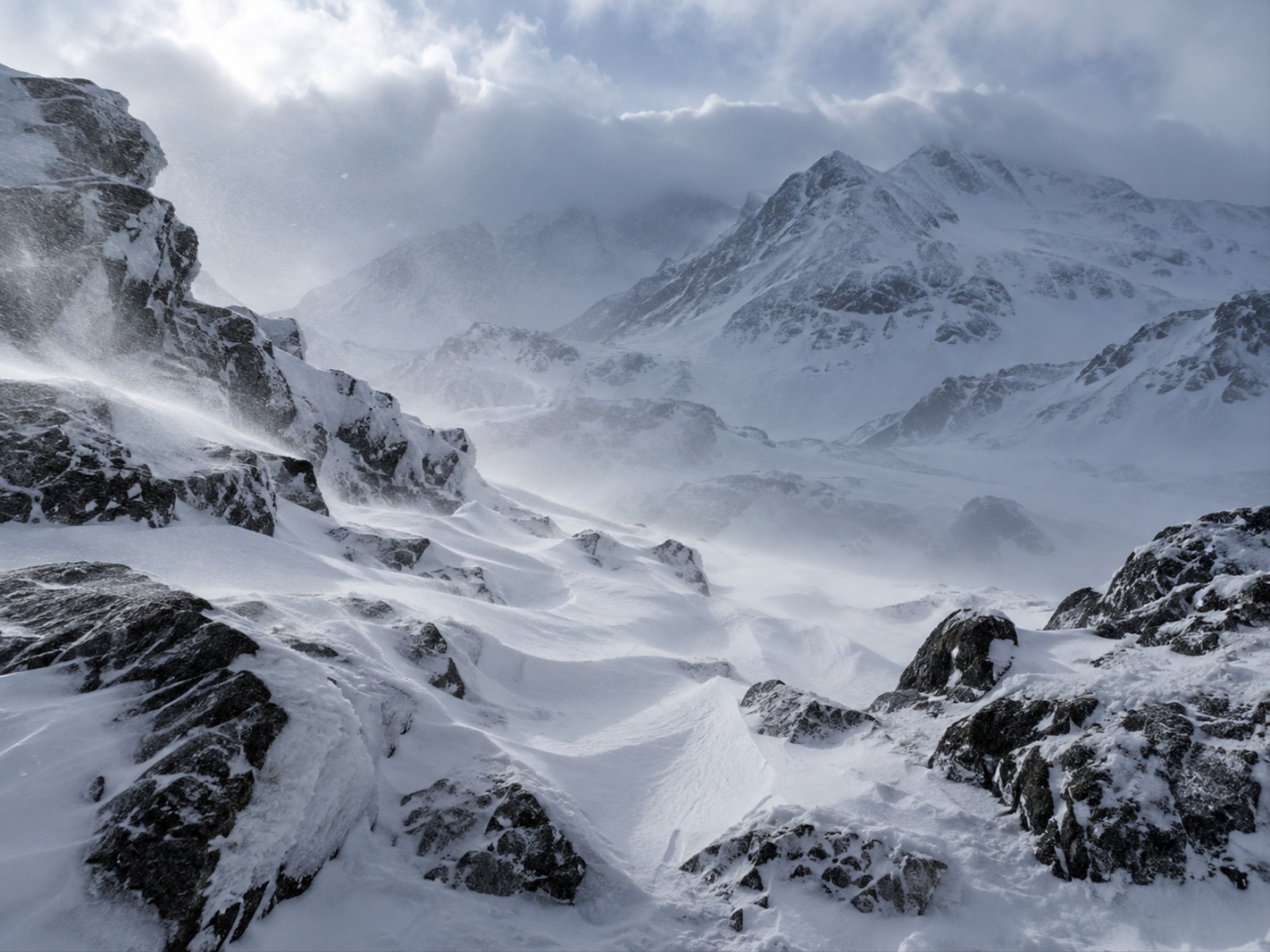
What actually changes when a programme moves into extreme cold, beyond the number on a thermometer.
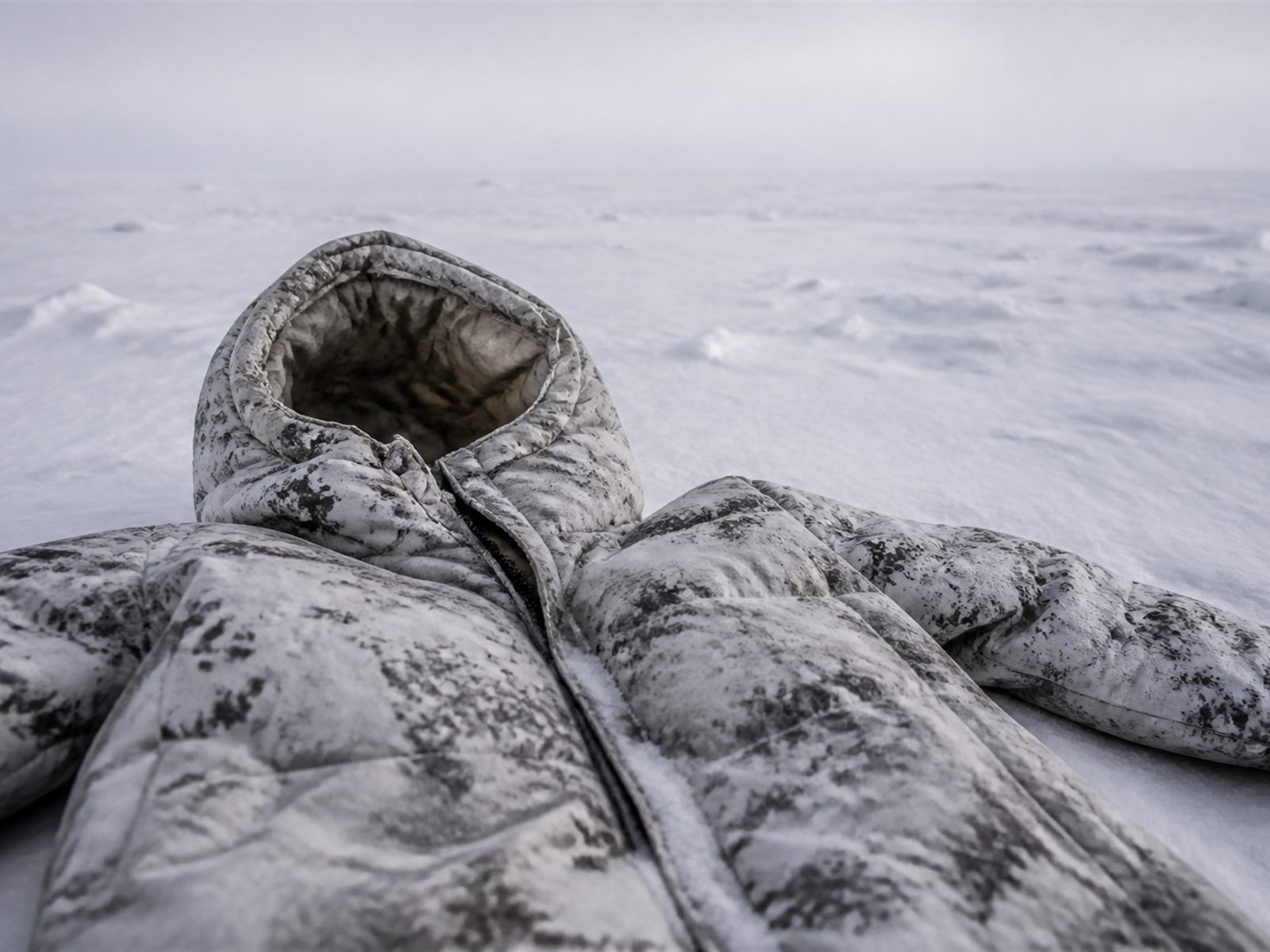
The first change is that the margin for error disappears. In a temperate climate a garment that manages moisture badly is uncomfortable; in extreme cold it becomes a safety issue, because moisture held near the body is the fastest route to losing warmth once activity stops.
The second change is that conditions move during the day. Wind picks up, precipitation starts or stops, and the wearer alternates between exertion and waiting. A specification built for one static condition will be wrong for most of the working period.
The third change is that equipment does not go away. Cold weather clothing is worn with load-bearing equipment, gloves, headwear and footwear, and every interface is a potential point of restriction, cold bridging or snow entry.
Dry cold
Low humidity and little precipitation. Breathability and wind protection usually matter more than full waterproofing, and a softshell is often the better shell.
Wet cold
Sleet, wet snow or freezing rain. Insulation that takes on moisture loses effectiveness and weight increases; shell and seam specification become the priority.
Wind-affected cold
The same garment performs very differently in wind. The outermost layer must stop wind reaching the insulation, particularly at chest, shoulders and closures.
Static exposure
Standing or waiting after exertion. Requires the insulation layer to be present and effective; this is the condition that most often exposes a system that only works while moving.
Because these conditions combine differently in each programme, the working specification has to be agreed with the buyer rather than chosen from a catalogue.
Module 02
Moisture Management
The single most common reason a cold weather system underperforms.
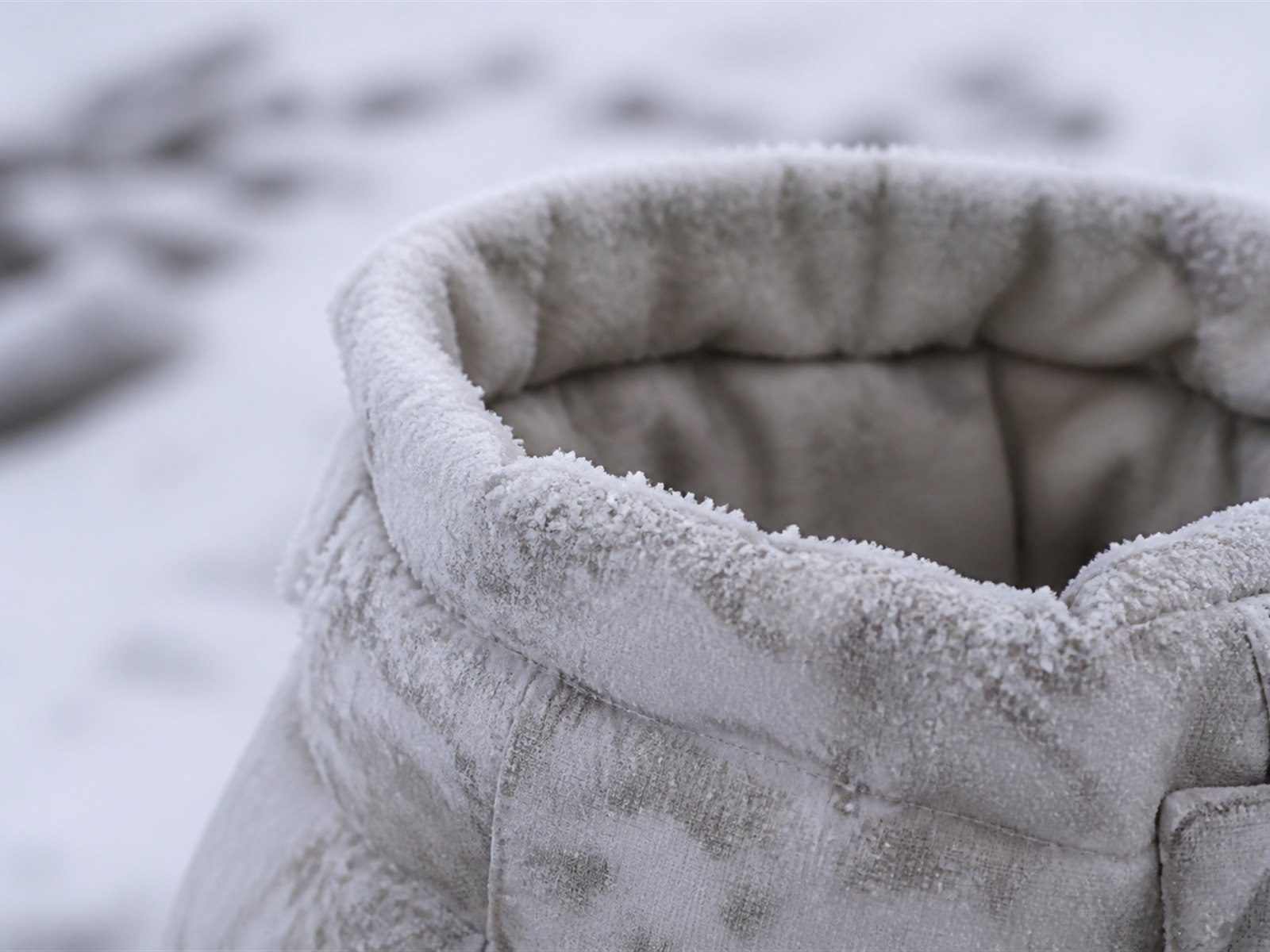
Warmth in clothing is largely a function of trapped air. Water displaces that air. When perspiration cannot leave the system, insulation gradually loses the property it was chosen for, and the wearer feels cold even though the garments are the ones that were specified.
Moisture moves through a system by two routes: it is transported away from the skin by the innermost layer, and it leaves the system through the outermost layer. A gap at either end breaks the path, which is why base layer and shell breathability have to be specified as a pair.
Wicking from the skin
The base layer moves liquid away from the skin to a place where it can spread out and evaporate. Fit matters: a layer that does not touch the skin cannot move anything.
Vapour escape at the shell
Moisture leaves as vapour where the shell allows it, and through ventilation when the design provides it. Fully blocking one route puts more demand on the other.
Ventilation as a design decision
Underarm vents, chest vents and two-way closures let the wearer dump heat during exertion without removing layers in the cold.
The static-after-exertion case
The moment the wearer stops, internal moisture has nowhere to go and insulation is at its most vulnerable. This transition is the case to design for, not the cruising state.
We will not state a moisture vapour transmission figure for a garment unless it comes from a test actually performed on that material and construction.
Module 03
Thermal Insulation
How warmth is created, where it is needed, and what decides whether it survives compression and moisture.
Insulation works by holding still air. That means the decisions that matter are how much air is held, where it sits on the body, and whether it stays in place after the garment has been compressed, packed and worn.
Insulation is therefore mapped by panel rather than applied evenly. Chest and back carry more, inner arms and shoulders carry less so that movement is preserved, and areas exposed to compression in use are handled differently from areas that are not.
Air retention
The insulating value comes from trapped air, which is why loft structure and how it is held in place matter more than nominal thickness.
Panel mapping
Different insulation amounts or constructions at different body zones, so warmth is provided where it is needed without adding bulk where it costs mobility.
Compression recovery
How insulation behaves after being packed and compressed. A garment that insulates when new but not after a season of storage has a specification problem.
Performance when damp
Some insulation types retain more of their function when damp than others. This is a real selection criterion for wet-cold programmes.
We do not publish thermal resistance values. Claiming a warmth figure requires controlled testing on the finished garment construction, not an assumption from the material datasheet.
Module 04
Wind Protection
Wind is the fastest way to lose the warmth the layers below have built up.
Wind accelerates heat loss from any exposed surface and forces precipitation into seams, closures and fabric. Because it acts on the outermost layer first, wind resistance is a shell requirement rather than a property the rest of the system can compensate for.
Air permeability is the number that describes this, and it is separate from water resistance. A shell can be highly water resistant and still let enough air through to make the layers beneath feel ineffective; a shell can be windproof and trap so much moisture that the wearer wets out from the inside.
Air permeability
How much air passes through the fabric. Low air permeability blocks wind, but taken too far it also blocks the escape of internal moisture.
Draft paths
Front closures, cuff openings, hem and collar. The largest heat loss in a wind is usually through an opening rather than through the fabric.
Wind plus moisture
The combination is what makes wet-cold conditions dangerous. Neither property can be specified in isolation.
Module 05
Snow & Water Protection
Where precipitation is kept out, and where it normally gets in.
In practice, water enters a cold weather garment at a small number of predictable places: seams under load, fronts that are not protected behind a storm flap, cuff and hem openings, pocket edges, and hood interfaces. Fabric performance matters, but construction decides the outcome.
Snow behaves differently from rain. Dry snow is often repelled by a water-resistant surface, but wet snow and sleet behave much more like rain and will find the same seams and openings. Where a programme includes wet snow, the shell is specified as waterproof construction with sealed seams rather than water resistant.
Storm flaps
A second layer of fabric behind the front closure. One of the highest-value construction details in a cold weather garment and one of the most commonly omitted.
Seam treatment
Exposed shoulder and hood seams are the first to leak under load. Which seams are sealed, taped or left plain is a specification decision per position.
Protected closures
Pocket and ventilation closures need coverage, not just a zip. Water entering a chest pocket is water inside the insulation.
Cuff and hem interfaces
Adjustable, and specified together with the gloves and footwear the buyer issues, so the seal is closed by design rather than by fit.
We do not quote water column or waterproof rating figures. Where a buyer's tender requires a rating, the correct sequence is to agree the required test method first and have the result produced on the actual construction.
Module 06
Mobility
The constraint that insulation creates, and how it is engineered around.
Bulk reduces range of motion. The areas that suffer first are rotational movement at the shoulders, hip flexion, and knee bend — the three movements a wearer needs most when working, climbing in and out of vehicles or handling equipment.
There are two levers: reduce bulk where it constrains movement, and build articulation where warm must stay. Both are pattern decisions made before sampling, and both need to be assessed on a wearer in the full layer stack rather than on a single garment.
Articulation
Pattern shaping at elbows and knees that builds the bend into the garment instead of relying on extra width.
Gusseting
Added fabric at crotch and underarm where a joint needs to open further than a flat panel allows.
Bulk redistribution
Moving or reducing insulation at inner arms and shoulders so the layer stack does not lock the arms forward.
Sizing allowance
The extra room required for the layers beneath. Getting this wrong is the single most common cause of a system being rejected after delivery.
Module 07
Durability
Cold weather clothing is used hard, packed, and worn against equipment.
The wear pattern in cold weather garments is predictable, and it is not uniform. Elbows, knees, seat and cuffs take the abrasion; shoulders take the load from equipment; hems and cuffs fail at the openings. Reinforcement is specified against these points rather than applied evenly across the garment.
Insulation adds a second durability question that summer garments do not have: whether warmth survives repeated compression. A garment can be intact and still have lost its function.
- Reinforcement placed at the wear points the buyer reports, not at the seams that are easiest to reinforce
- Stitch and thread specification written into the tech pack rather than left to the line
- Abrasion and seam performance treated as testable properties, not as adjectives
- Compression and recovery considered in how the garment is packed and stored
- Repairability considered: whether a damaged panel or liner can be replaced on its own
Module 08
Equipment Compatibility
A cold weather system is worn with other equipment, not instead of it.
Every interface is a place where a garment can fail functionally even when it performs well on its own: a waist that shifts under a belt, a hood that fights headwear, a cuff that will not close over a glove, a shoulder that collects pressure from a strap.
These are specified against what the buyer actually issues. Where that list is not yet fixed, we document the interfaces as open points rather than guessing, because an interface assumed wrong is discovered in the field.
Module 09
Sizing & Layering
Why a size chart from a temperate range cannot be reused unchanged.
A cold weather system is worn over other garments, so the body dimensions the garment covers are not the body dimensions the size chart describes. Chest, shoulder width, back length and sleeve length all need to accommodate the layer stack, and arm length is especially sensitive because two or three insulating layers together shorten effective reach.
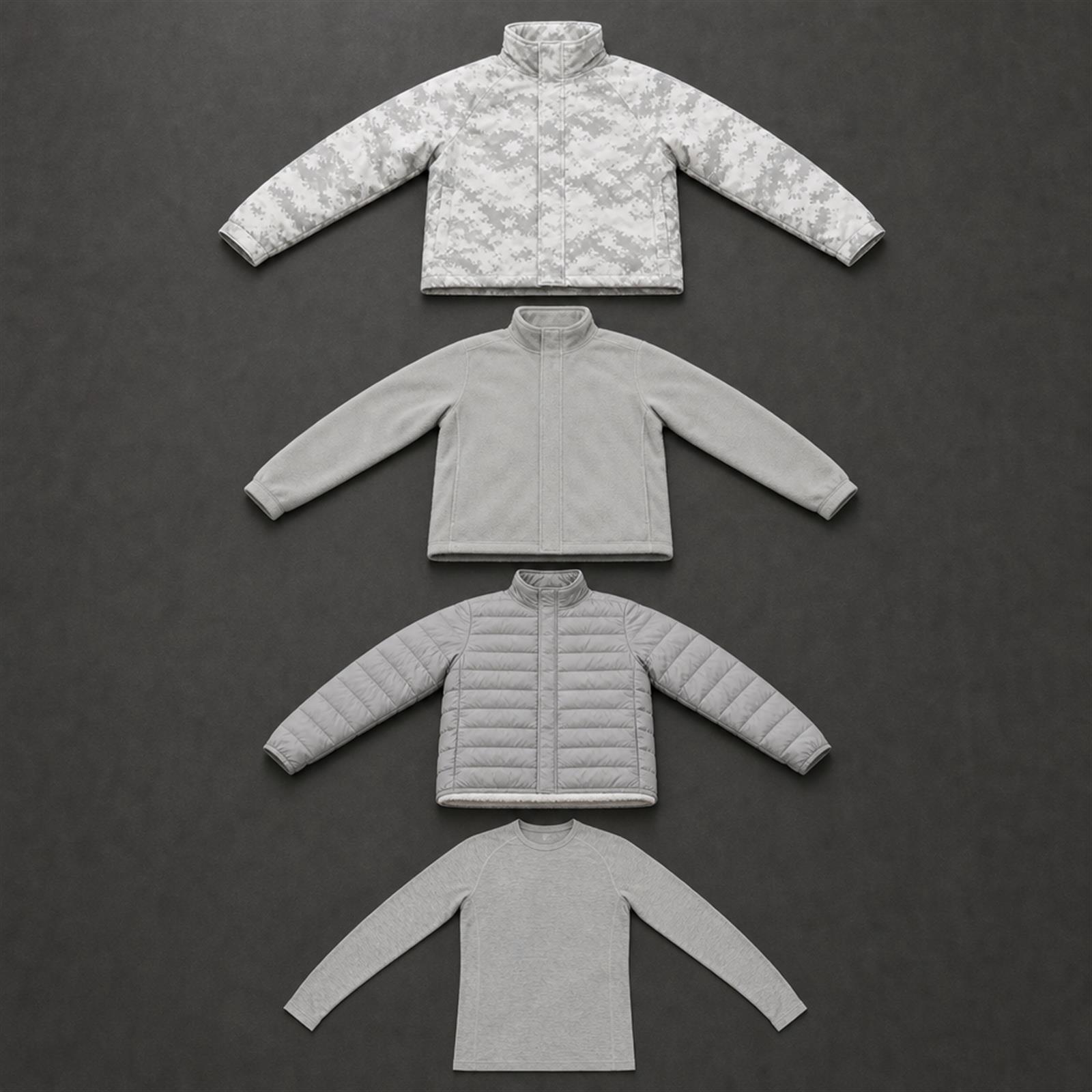
Sizing is therefore developed with the intended composition, produced as a size set, and confirmed on a wearer in the full stack. Where a buyer has an existing uniform sizing standard, we develop against it rather than replacing it, so the cold weather programme stays consistent with everything else issued.
Layer allowance
Extra circumference and length to accommodate the layers the wearer will actually put underneath.
Size set
A set of garments across the size range produced for measurement confirmation before bulk.
Critical dimensions
The measurements that decide whether a system is wearable: chest, shoulder, sleeve length, back length, hip, inseam, cuff and hem opening.
Tolerances
Agreed in writing before bulk, so inline and final inspection measure against the same numbers.
Module 10
Extreme Cold Customization
What a buyer can specify, beyond colour and logo.
In a cold weather programme the specification decisions that matter most are structural rather than cosmetic: how many layers, which of them are removable, where insulation is mapped, how the openings seal, and how the system is labelled and issued.
We develop each of these to the buyer's programme, and document them so the composition can be reproduced. Branding — labels, trims, colour matching across fabric types — is specified at the same time, because it interacts with the fabric choices rather than sitting on top of them.
- Number of layers in the system and which are issued together
- Fixed insulation versus removable liner construction
- Insulation mapping and amount per body zone per garment
- Shell specification: waterproof, water resistant or softshell, by environment
- Ventilation, closure and storm flap configuration
- Hood and collar interface design, including headwear compatibility
- Cuff and hem sealing, specified against the gloves and footwear issued
- Pocket configuration and closure type, around the equipment carried
- Reinforcement placement matched to reported wear points
- Colour and tone matching across different fabric types in one order
- Labelling, care labelling and sizing identification for issue and storage
- Packaging and packing method for compressed storage and transport