Skip to content
TACTICALOEM / ODM TACTICAL APPAREL
ENEnglish

Products / Tactical Boots

Tactical Boots for Uniform and Field Programs — OEM & ODM Manufacturing

Tactical boots are where a uniform programme usually fails last: cloth is easy to re-order, but a boot that changes fit, sole or membrane between production runs breaks the programme quietly. This page is the buying side of that problem — what decides fit and durability, which specification points must be locked before sampling, and what to demand on the fifth order. We build boots as OEM and ODM on your last, your outsole mould and your label, alongside the uniforms they are worn with.

military boots OEMtactical boots wholesale supplierside zip tactical boots manufacturerdesert combat boots factory
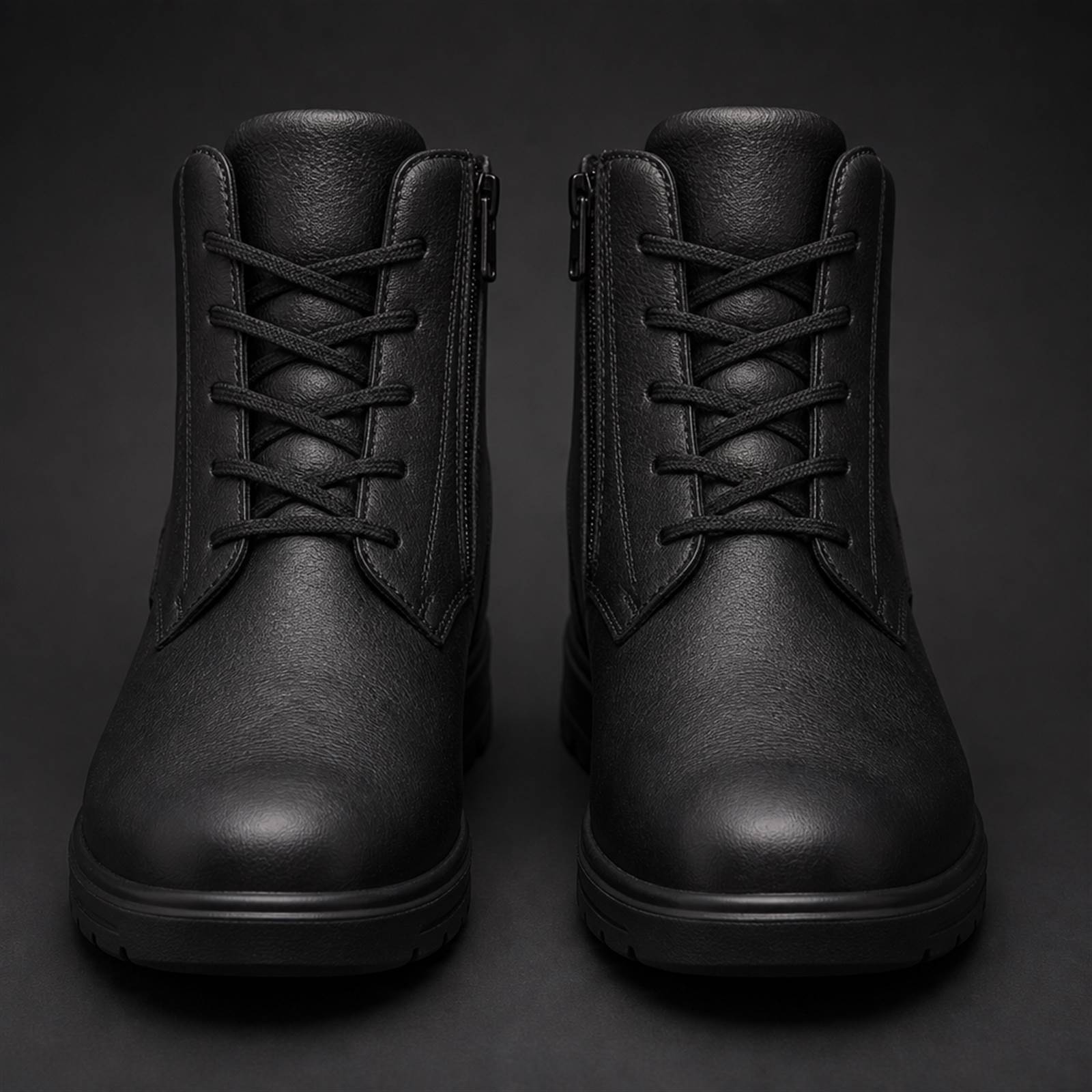
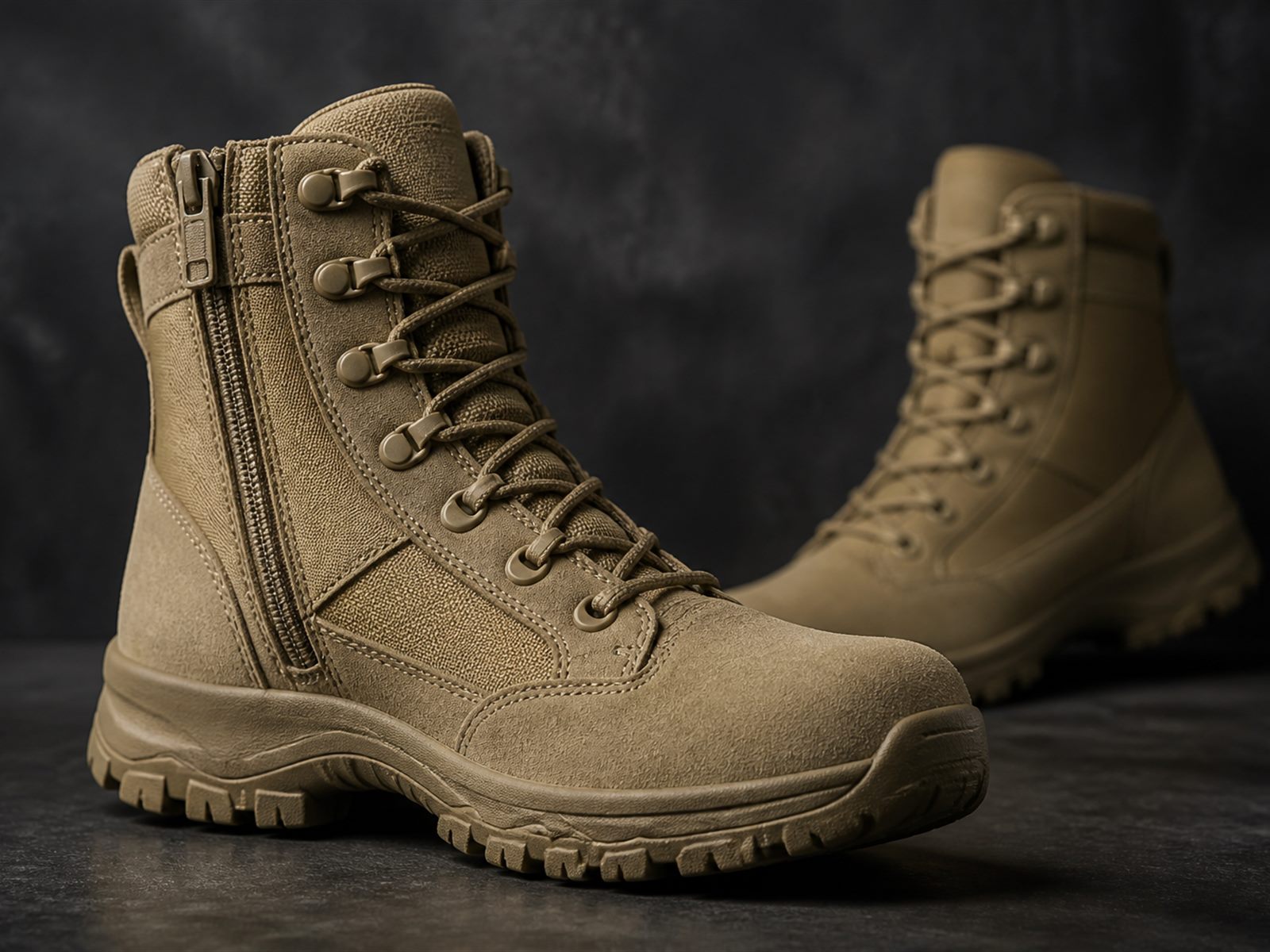
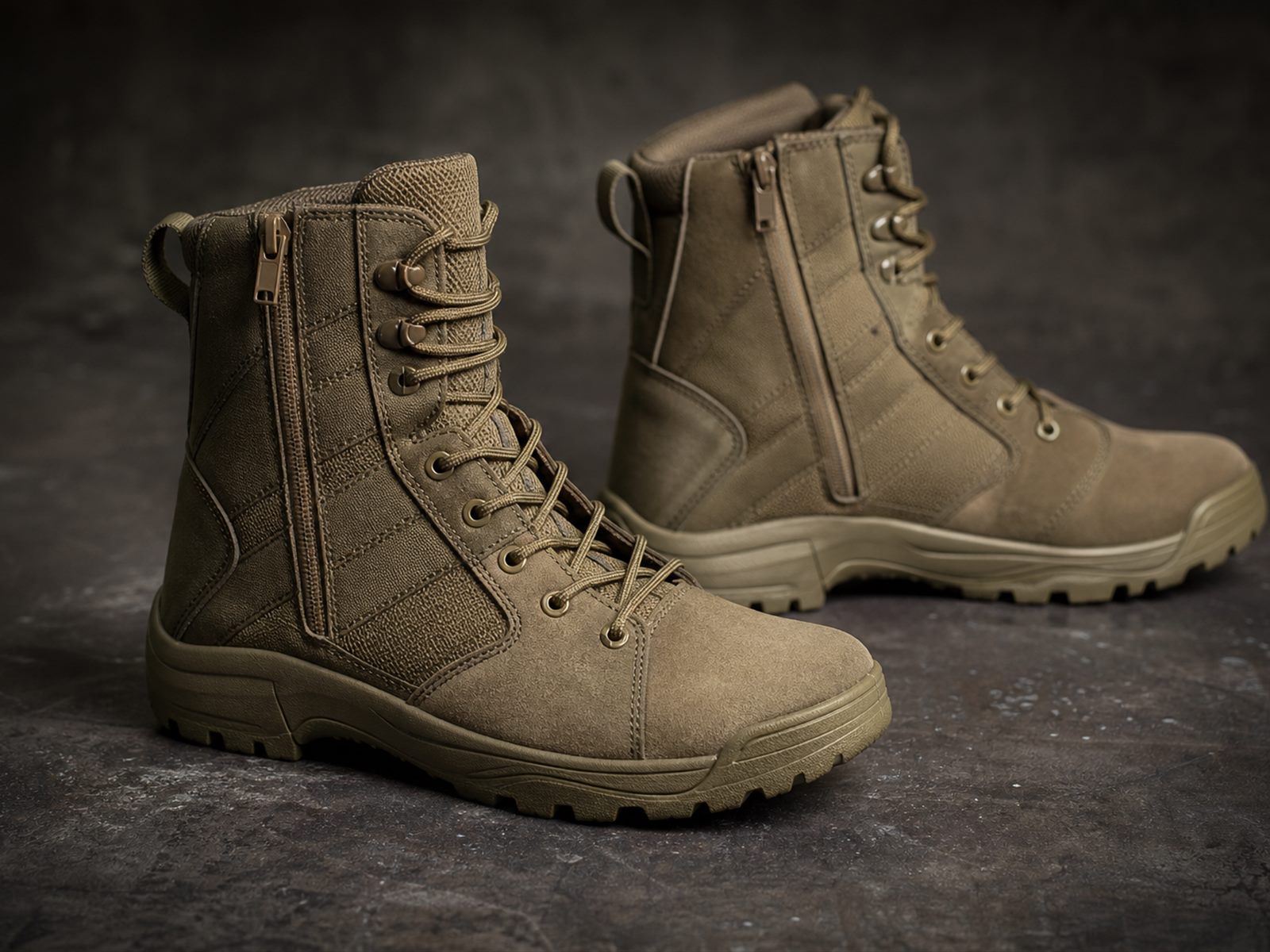
Custom tactical boots with side zip and rubber outsole manufactured for OEM uniform programmes
Primary keyword
tactical boots manufacturer
Climate focus
Temperate / Urban Duty · Hot / Desert / Dry · Cold / Wet
Development input
Tech pack · Reference sample · Sketch · Photo
Tactical BootsTactical BootsTactical BootsTactical Boots

Buyers

Who buys tactical boots?

Tactical Boots is specified by organisations rather than bought as a single garment, so a quotation has to satisfy all 6 buyer profiles listed below.

Uniform distributors

Boots that sit alongside trousers and jackets in one order, in black and desert, without the fit drifting between batches.

Duty and security suppliers

Lightweight side-zip boots a shift worker can put on fast, with a slip-resistant sole that survives polished floors.

Outdoor and hunting brands

Camouflage and earth-tone boots, taller shafts and quieter soles for uneven ground.

Institutional and agency procurement

Repeatable specification: same last, same outsole, same leather thickness, documented inspection records per batch.

Tactical clothing brands

Footwear to complete the head-to-toe range, matched to the fabric and tone of their existing apparel line.

E-commerce and marketplace sellers

A boot range short enough to photograph and stock, but deep enough in sizes to avoid broken size runs.

Types

Tactical Boots types

The same category name covers very different garments depending on climate and wear pattern. 3 types of Tactical Boots are covered here, and the type is chosen before the fabric.

Temperate / Urban Duty

Side-Zip Duty Boot

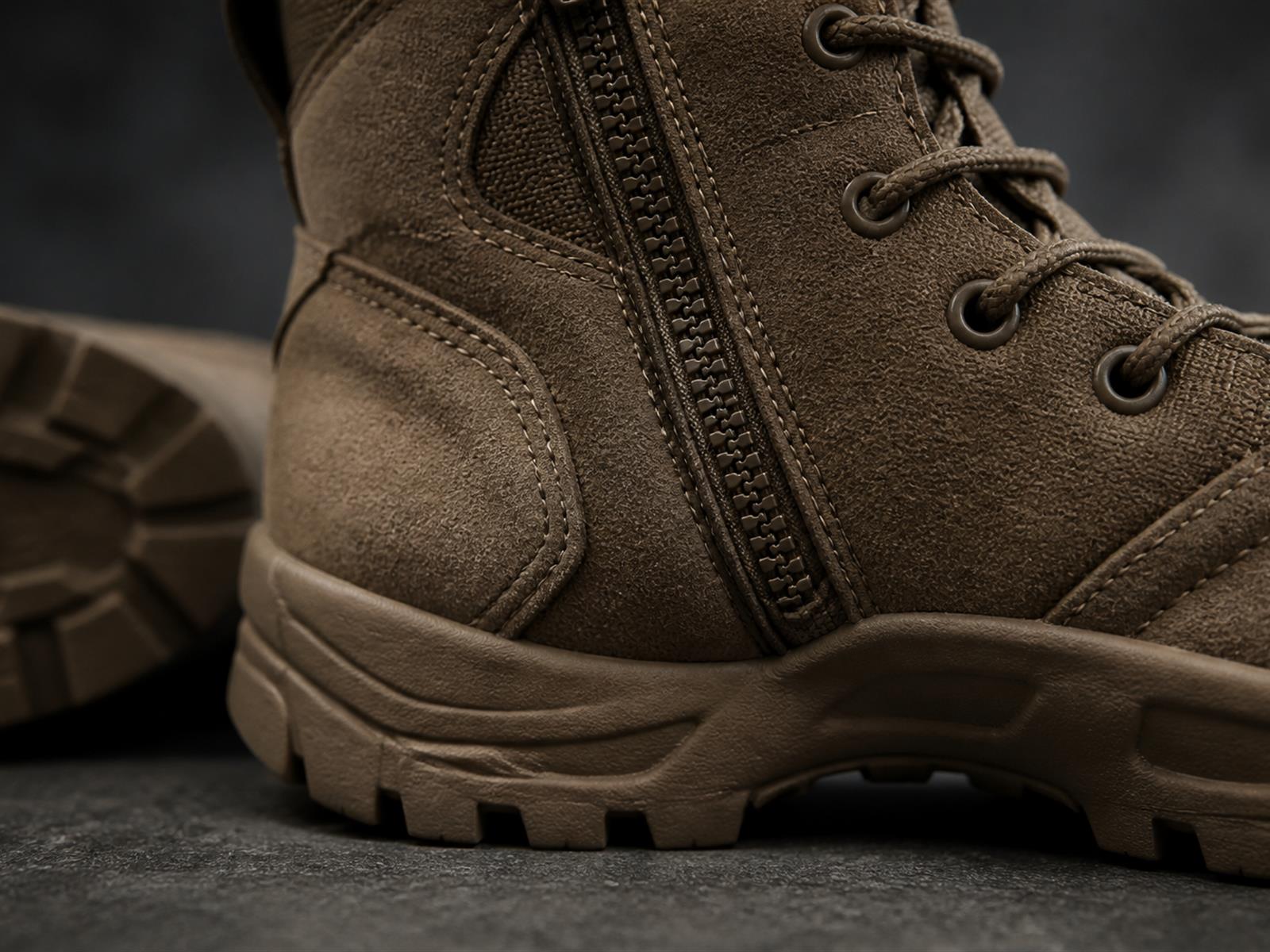
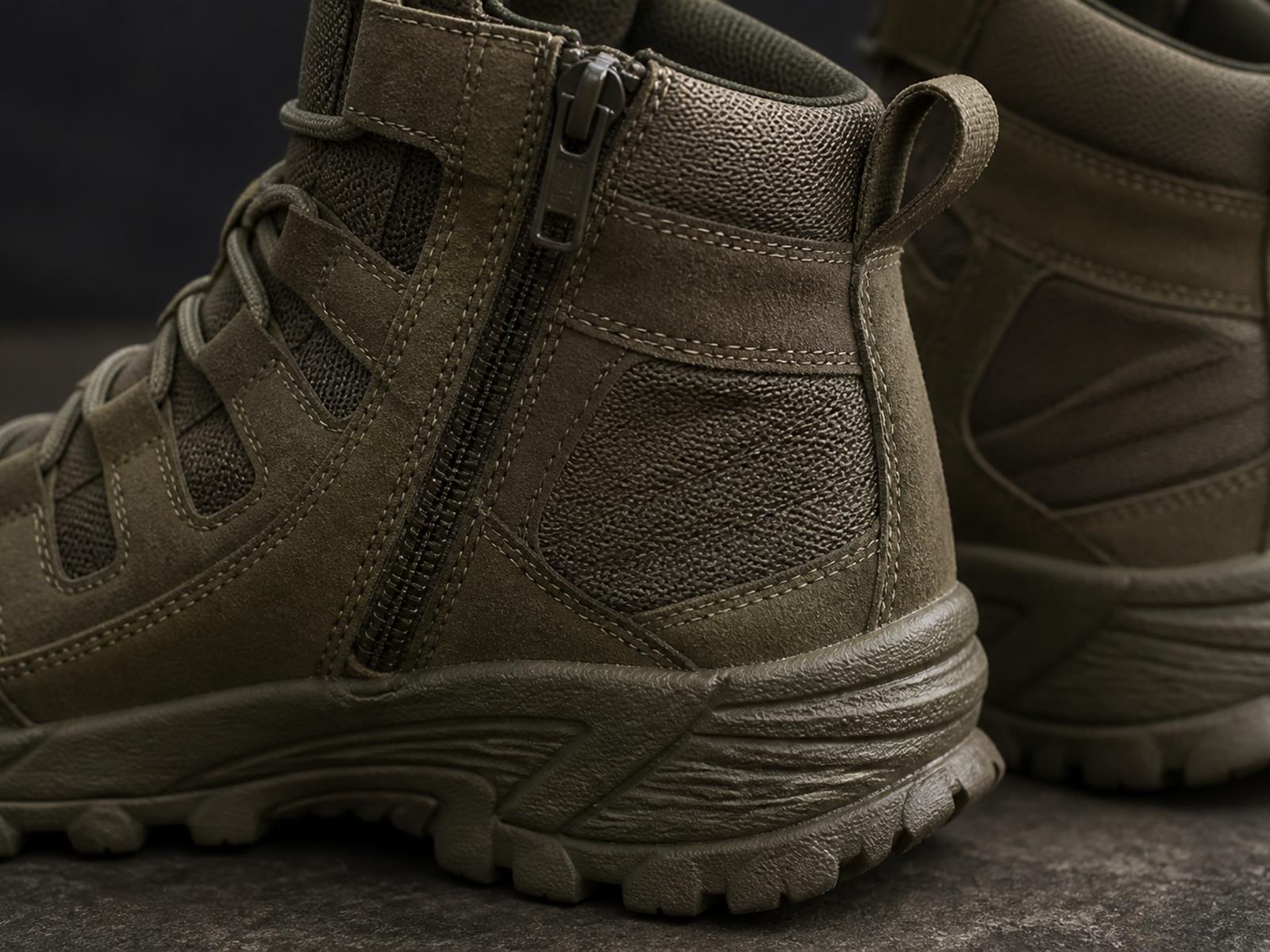
The fast-on boot: a full-lace boot with a side zipper so the wearer laces once and zips afterwards. The design problem is the zipper: it must not pull the shaft off centre or rub the ankle bone, and it must not become the first failure point. Get the zip guard, the gusset depth and the lace lock right and this boot outlasts its outsole.

  • YKK or equivalent side zip behind a leather guard
  • Laced shaft with lock hooks for one-time adjustment
  • Padded collar and tongue to stop heel slip
  • Slip-resistant rubber outsole rated for wet tile and asphalt
  • Antibacterial removable insole

Hot / Desert / Dry

Desert and Warm-Climate Boot

Built to move heat and dust out rather than keep water out. Breathable mesh panels and a lighter suede-and-textile upper drop weight; a closed-cell midsole keeps the foot from cooking on hot ground. Selling this boot into dry markets on a waterproof membrane is the classic specification error — you pay for heat retention the buyer does not want.

  • Breathable mesh and suede upper without a membrane
  • Drainage-aware tongue and collar construction
  • EVA or PU midsole for heat separation
  • Debris-shedding outsole with wide lugs
  • Tan, coyote and desert-camouflage colourways

Cold / Wet

Cold and Wet-Weather Boot

A waterproof, breathable boot is a construction problem before it is a material problem: the membrane has to be bonded at every seam, and the shaft height, the bellows tongue and the collar must keep water out above the boot line. Insulation is added inside the membrane, never outside, or the wearer pays for it in moisture.

  • Waterproof and breathable membrane with fully sealed seams
  • Bellows tongue and high shaft to shed surface water
  • Thinsulate or equivalent insulation positioned inside the membrane
  • Oil-resistant, cold-flex outsole compound
  • Black and dark earth colourways for uniform use

Engineering

Construction, part by part

8 construction decisions define Tactical Boots, and each row below is one decision you control at specification stage.

Last

  • Your own last, scanned and matched
  • Standard fitting profile adjusted per market
  • Wide and narrow width runs
  • Unisex or separate men's and women's lasts
  • Half-size grading certified before bulk

Fit is decided here and nothing later fixes it. Send a physical pair that fits your market and we match the last — this removes the most common cause of first-order rejection.

Upper

  • Full-grain and nubuck leather
  • Suede and textile combinations
  • Ballistic or 1000D nylon panels
  • Coated leather for oil and abrasion resistance
  • Camouflage-printed textile uppers

Thickness and finish must be written into the spec: the same 'full-grain leather' can differ enough in thickness to change both weight and crease behaviour.

Membrane and Lining

  • Waterproof and breathable membrane
  • Moisture-wicking mesh lining
  • Antibacterial lining for duty wear
  • Insulated lining for cold climates
  • No membrane for hot and dry markets

Membrane versus no membrane is a market decision, not a quality upgrade. Dry markets lose more from retained heat than they gain from water resistance.

Toe Box and Protection

  • Standard reinforced toe
  • Composite safety toe
  • Steel safety toe
  • Scuff-resistant toe cap overlay
  • Puncture-resistant board

Safety-toe requirements vary by importing country and by the buyer's own liability rules — confirm the standard before sampling rather than after.

Midsole

  • EVA injection
  • PU direct injection
  • Compression moulded EVA
  • Rubber with EVA insert
  • Antistatic midsole board

The midsole decides the boot's weight and whether it keeps its shape after a year of shifts. PU holds shape better; EVA is lighter and cheaper to re-order.

Outsole

  • Slip-resistant rubber
  • Oil and acid resistant compound
  • Vibram or equivalent branded compound
  • Cold-flex compound
  • Debris-shedding lug pattern

Tread pattern must match the ground the end user stands on: the same outsole that grips asphalt is a liability on wet ceramic.

Closure

  • Lace with eyelets and hooks
  • Side zip with lace lock
  • Boa or dial system
  • Velcro strap over lace
  • Quick-lace with speed hooks

Closure is the highest-frequency failure point on duty boots. Specify the zipper brand, the guard construction and the puller, not just 'side zip'.

Collar and Heel

  • Padded collar with heel lock
  • Water-shedding collar
  • Reinforced heel counter
  • Abrasion-resistant heel lining
  • Removable insole with arch support

Heel slip is what wears out the lining first. Fix it with construction at sampling, not with a thicker sock.

Available fabrics

Material options by garment area

Leathers

Full-grain leatherNubuckSuedeCoated and water-repellent leatherSplit leather for economy builds

Specify thickness in millimetres and the finish (full-grain, nubuck, coated). Unspecified leather is the most common cause of batch-against-sample disputes.

Textiles and Trims

Ballistic nylon 1000DRipstop nylon panelsBreathable meshCamouflage-printed textileCordura or equivalent abrasion-rated fabric

Abrasion rating matters more than the trade name: ask for the test method and the number your buyer will accept.

Customization

What can be customized

12 specification lines are available for Tactical Boots, and where an option changes cost, weight or durability the consequence is stated next to it.

Colourways

BlackTanCoyote brownOlive and green tonesDesert and woodland camouflage

Shaft height

Low / shoe heightMid ankle8 inch10 inchCustom per buyer pattern

Closure

Full laceSide zipDial systemVelcro over lace

Protection

Safety toePuncture boardAntistatic buildReinforced toe overlay

Climate build

Waterproof membraneInsulatedBreathable hot-weatherUnlined

Outsole

Own mould supplied by buyerOur standard duty mouldSlip-resistant duty compoundCold-flex winter compound

Insoles

Removable EVAAntibacterialArch-supportCustom printed top sheet

Lining

MeshAntibacterialInsulatedMoisture-wicking

Laces and hardware

Rust-resistant eyeletsSpeed hooksColour-matched lacesReinforced lace guard

Size runs

EU full and half sizesUK sizingUS men and womenWide and narrow widths

Private label

Woven labelPrinted insole top sheetHeat transfer logoBranded box and hangtag

Packing

Individual boxPolybag and boxRetail-ready boxMaster carton with size marking

Sizing

Size development

Size runs are graded from the confirmed last and checked physically, not only on paper: we build the smallest and largest size of the run and confirm toe volume, heel width and arch position before the full range is cut. Half sizes and width options are part of the grading conversation — adding them later means rebuilding the last mould, which is the single most expensive change in footwear.

How size development works

Branding

Private label

Your label, your spec, your outsole mould and your packaging. We can also stay invisible: no branding on the boot, no marking on the box, so the range ships entirely under your name.

Customization capability

Development

Sampling process

Sampling for Tactical Boots runs in 7 stages, each one removing a specific risk before the next stage commits cost.

01

Specification review

We agree the last, outsole, upper construction, membrane, protection level and size run in writing before any material is cut.

02

Upper and material selection

Leather thickness, textile abrasion rating and colour standards are confirmed against physical swatches, not photographs.

03

Last and pattern confirmation

The last is matched to your reference pair and the pattern is corrected before lasting.

04

First sample pair

One pair built to the agreed spec for fit and construction review, including the closure and collar behaviour.

05

Fit trial and revision

Your wearers test the sample; we adjust collar depth, toe volume or shaft height and rebuild where needed.

06

Wear testing

A short field and floor trial to confirm sole grip, heel hold and seam integrity under real duty conditions.

07

Sealed golden sample

The approved pair is sealed and kept as the reference for every later production run and inspection.

Production

Bulk manufacturing

Bulk production of Tactical Boots runs in 7 stages, which is where an approved specification is either held or lost.

01

Material receipt and inspection

Leather, textiles, membranes and components are checked against the sealed sample before production starts.

02

Cutting

Upper panels are cut to the confirmed pattern with grain and stretch direction controlled per panel.

03

Stitching and upper assembly

Panels, reinforcement, lining and closure hardware are assembled and inspected before lasting.

04

Lasting and sole attachment

Uppers are lasted on the approved last; the outsole and midsole are attached to the agreed method.

05

Membrane and waterproofing check

On waterproofed builds, seams and the membrane are checked before the boot is closed.

06

Finishing and cleaning

Excess cement, thread ends and surface marks are removed; colour and surface finish are matched to the sample.

07

Packing and size-run control

Boots are boxed by size with the run counted against the order, so a shipment never arrives with broken size runs.

Quality Control

Quality control for this category

Inspection of Tactical Boots is measured against an agreed standard, and the 7 checks below are listed with what each one is measured against.

01

Incoming material check

Thickness, abrasion rating, colour and membrane batch are recorded against the specification.

02

In-line inspection

Stitch density, panel alignment and closure assembly are checked during assembly, not only at the end.

03

Fit and last verification

Sampled pairs are measured on the last to confirm size grading and toe volume across the run.

04

Sole bond and flex test

Bond strength and repeated flexing are tested on sampled pairs to catch separation before shipping.

05

Waterproof and seam test

On membrane builds, sampled boots are tested for leakage and seam integrity.

06

Final inspection

Visual and dimensional inspection against the sealed golden sample, with defects recorded per lot.

07

Record keeping

Inspection results are filed per batch so a later dispute can be traced to materials, operator and date.

Choosing a Tactical Boots manufacturer

How to choose a tactical boots manufacturer

The 6 questions buyers ask about Tactical Boots before committing to a first order.

Decide the climate first, not the features

Waterproof, insulated and breathable are not upgrades stacked on top of each other — they trade off. Choose the climate the end user actually works in, then specify. A waterproof boot sold into a dry market is a specification error the buyer blames on the factory.

Lock the last before anything else

Send a physical pair that fits your market. Every later decision — sizing, grading, even the collar height — is measured against the last, and changing it after tooling is the most expensive revision in footwear.

Write the protection level into the spec

Safety toe, puncture resistance and antistatic requirements differ by importing country and by your own liability rules. Naming the standard up front avoids sampling a boot that cannot legally be sold where you intended.

Treat the closure as a component, not a detail

Zippers, hooks and laces fail before leather does. Specify brand, guard construction and puller — this is the difference between a boot that returns at month 3 and one that lasts the contract.

Match the outsole to the ground

Slip resistance on wet ceramic, grip on gravel and cold flexibility are different compounds and different treads. Tell the factory the surface, not just 'durable sole'.

Ask how batch five will be controlled

The real question is repeatability: which sample is sealed, what is measured each run, and what records come with the shipment. That answer decides whether your range is sellable for years or only once.

Products

Tactical Boots products

Each product in Tactical Boots is a developed specification with its own material options, construction detail and customization map.

Tactical Boots

Side-Zip Duty Boot

A side-zip boot exists for one reason: a shift worker can lace it once and zip it every time after.

Temperate duty and urban wearWarm and dry markets without a membraneCold and wet markets with a waterproof build
View product

FAQ

Tactical Boots FAQ

Can you build boots on our own last and outsole mould?

Yes. Send your last or a physical pair that fits your market and we match it; if you already have an outsole mould, we build to it. Matching an existing last is the normal way we start a footwear programme.

What is your minimum order quantity for tactical boots?

MOQ is quoted per last, per outsole mould and per colourway, because tooling and material runs drive the cost far more than assembly. Mixed size runs within one colourway are normal; tell us the size curve you sell and we quote against it.

Can you supply waterproof boots and also non-waterproof for hot markets?

Yes, and we will usually recommend the split. A membrane adds cost and retains heat; for dry or hot markets an unlined breathable build sells better and returns less.

Do you handle safety-toe and protection requirements?

Yes, including composite and steel safety toes and puncture-resistant boards. Tell us the standard the boots must meet in your market and we will confirm feasibility before sampling.

How do you control fit consistency between production runs?

The approved pair is sealed as the golden sample and stays with us. Every later run is measured against it on the last, and the inspection record is filed per batch so a fit complaint can be traced to a specific run.

Can boots be labelled and packed entirely as our own brand?

Yes. Woven labels, printed insole top sheets, heat-transfer logos and retail-ready boxes can all carry your brand, or stay completely unbranded if you prefer.

Request a Manufacturing Assessment

Send us your tech pack, reference sample or product idea. We review your requirement, recommend materials and construction, and come back with a development plan you can act on.