Skip to content
TACTICALOEM / ODM TACTICAL APPAREL
ENEnglish

Products / Tactical Uniform Sets

Custom Tactical Uniform Set Manufacturer

A tactical uniform set is a supply problem before it is a garment problem. When a shirt and a trouser are sold together, the customer judges the pair as one product, and the two most common failures have nothing to do with stitching: the top and bottom arrive in visibly different shades, or they are packed in the wrong size combination so a distribution channel ends up holding trousers it cannot sell. A set programme therefore needs decisions that a single garment does not — how the top and bottom are matched for shade and lot, whether the set is cut from one fabric lot or two, how sizes are paired and packed, and what happens when one piece is reordered later without the other. This page covers set composition, matched fabric and colour control, shirt and trouser construction, size development across both pieces, private label, sampling and bulk production for buyers who sell uniforms as sets rather than as separate garments.

custom tactical uniform setstactical uniform OEMwholesale tactical uniformstactical uniform supplier
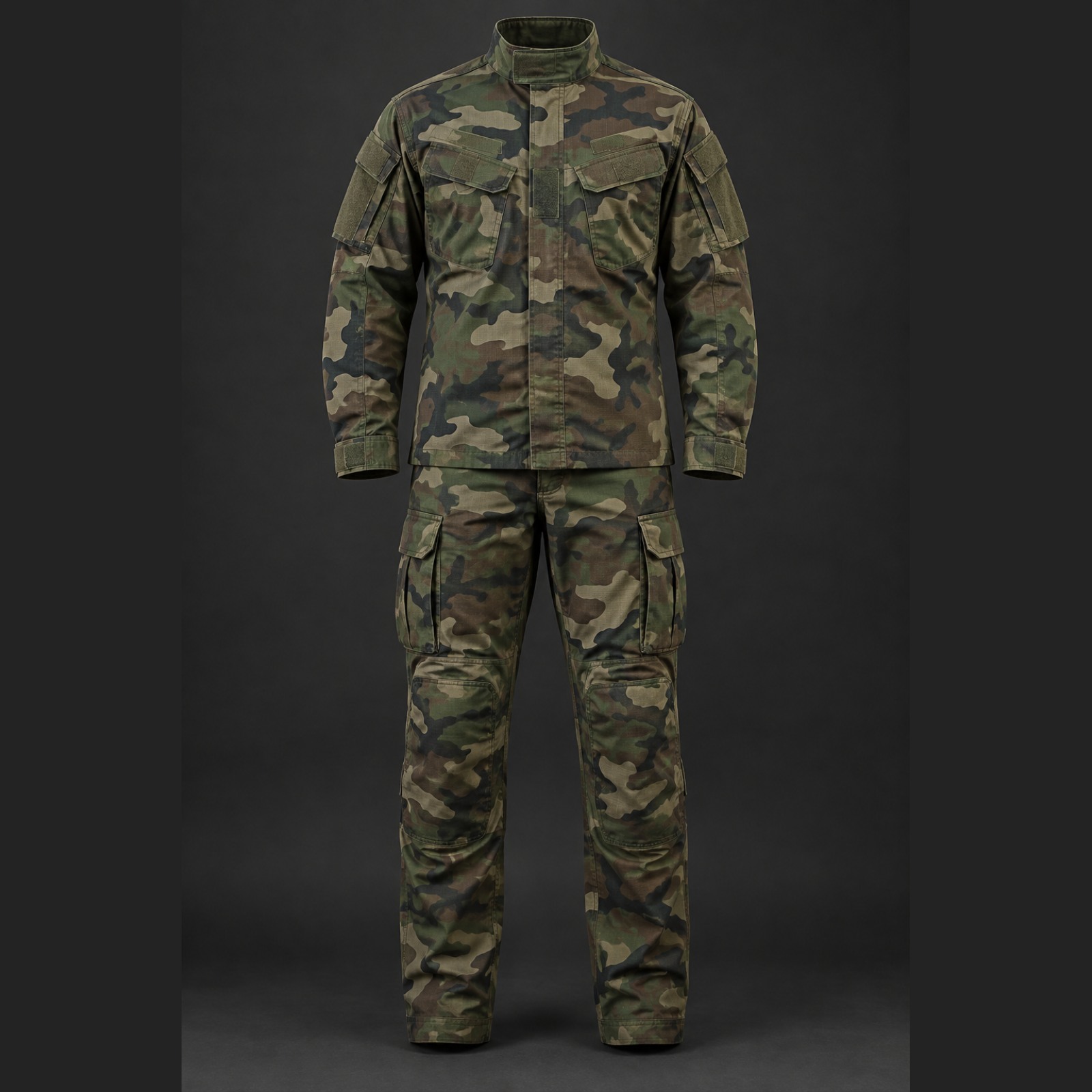
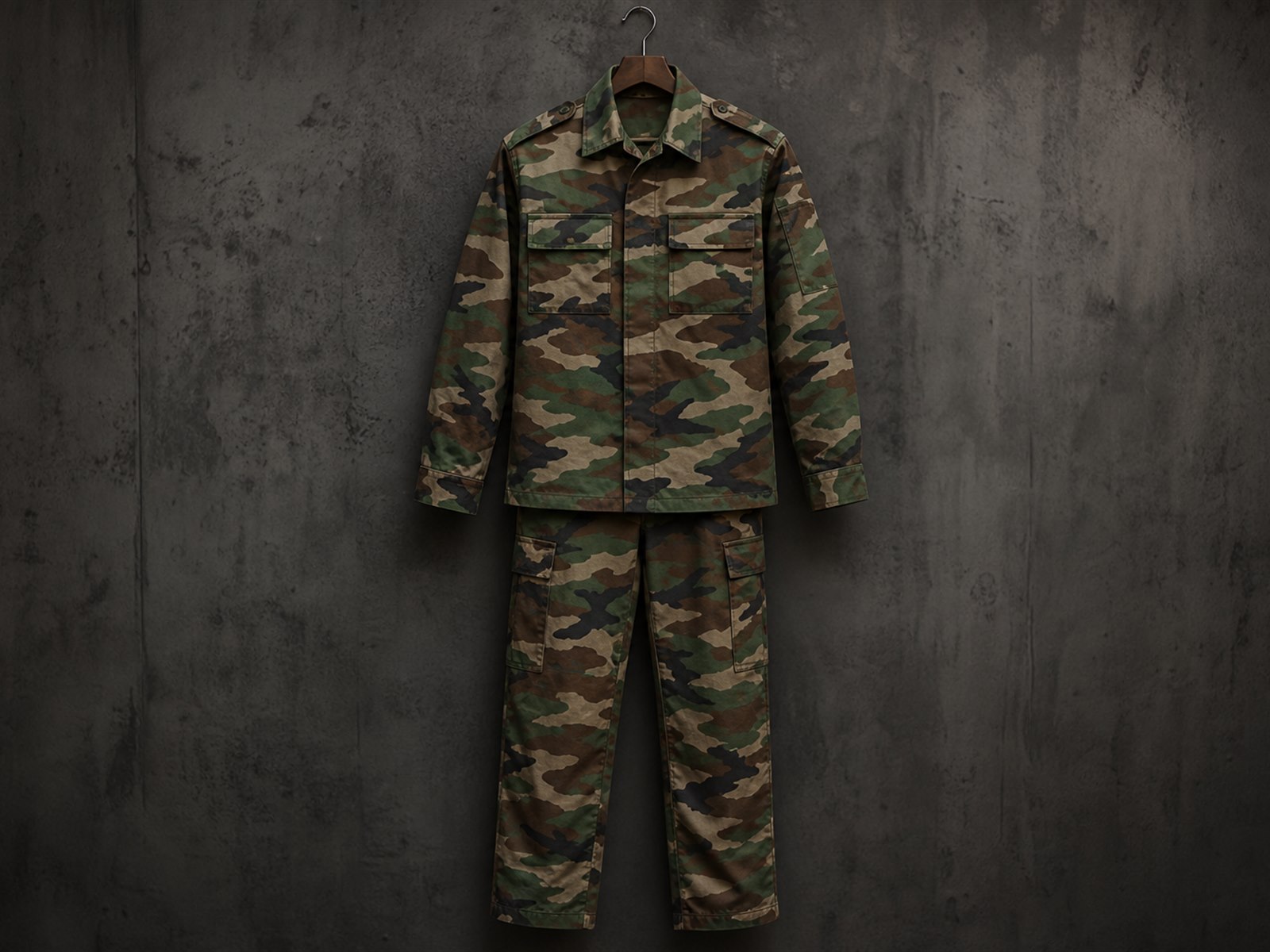
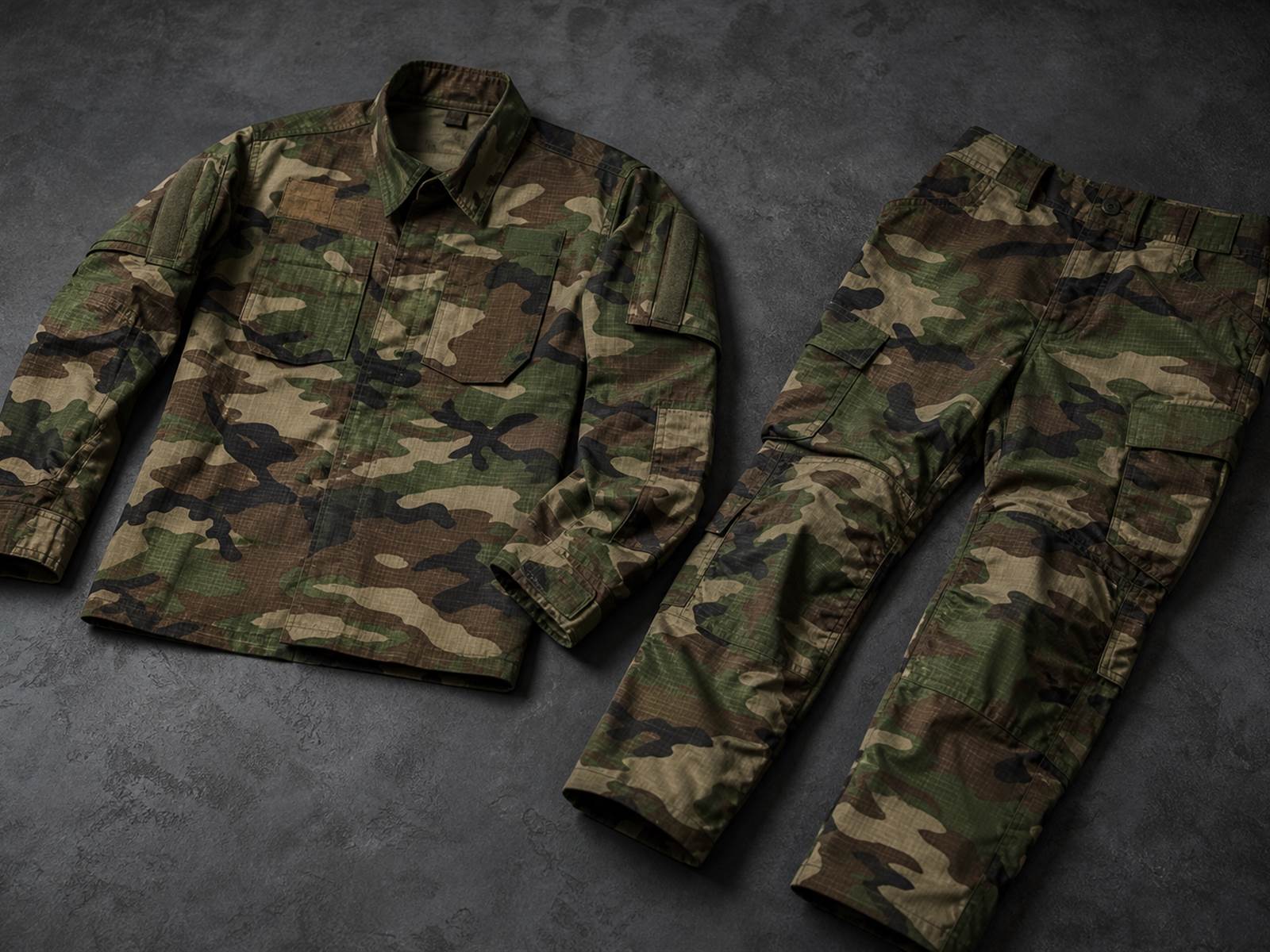
Custom tactical uniform set with matching shirt and trousers manufactured for OEM buyers
Primary keyword
tactical uniform set manufacturer
Climate focus
Hot / Tropical / Desert · Temperate / Cool / Field · Urban Duty / Mixed / All Season
Development input
Tech pack · Reference sample · Sketch · Photo
Tactical Uniform SetsTactical Uniform SetsTactical Uniform SetsTactical Uniform Sets

Buyers

Who buys tactical uniform sets?

Tactical Uniform Sets is specified by organisations rather than bought as a single garment, so a quotation has to satisfy all 6 buyer profiles listed below.

Tactical & Duty Brands

A supplier who can deliver a matched shirt and trouser with consistent shade between the two pieces and across repeat orders, so a set sold as one product stays one product.

Uniform Distributors & Wholesalers

Volume in matched size combinations, packed the way their channel sells, with a documented specification so a reorder matches the stock they already hold.

Security & Facility Management Companies

Duty-appropriate colourways, insignia and rank application on both pieces, and a construction that survives frequent industrial laundering.

Government Contractors & Procurement Companies

Full specification transparency, pre-production sample approval, per-piece measurement documentation and inspection records before shipment.

Outdoor, Hunting & Shooting Brands

Camouflage printed sets with a quieter visual language, their own label and packaging, and a fit that works for a civilian body range.

Private Label Brands & Importers

Buyer artwork camouflage, woven labels, hangtags and retail-ready set packaging on a uniform programme they can present as their own.

Types

Tactical Uniform Sets types

The same category name covers very different garments depending on climate and wear pattern. 3 types of Tactical Uniform Sets are covered here, and the type is chosen before the fabric.

Hot / Tropical / Desert

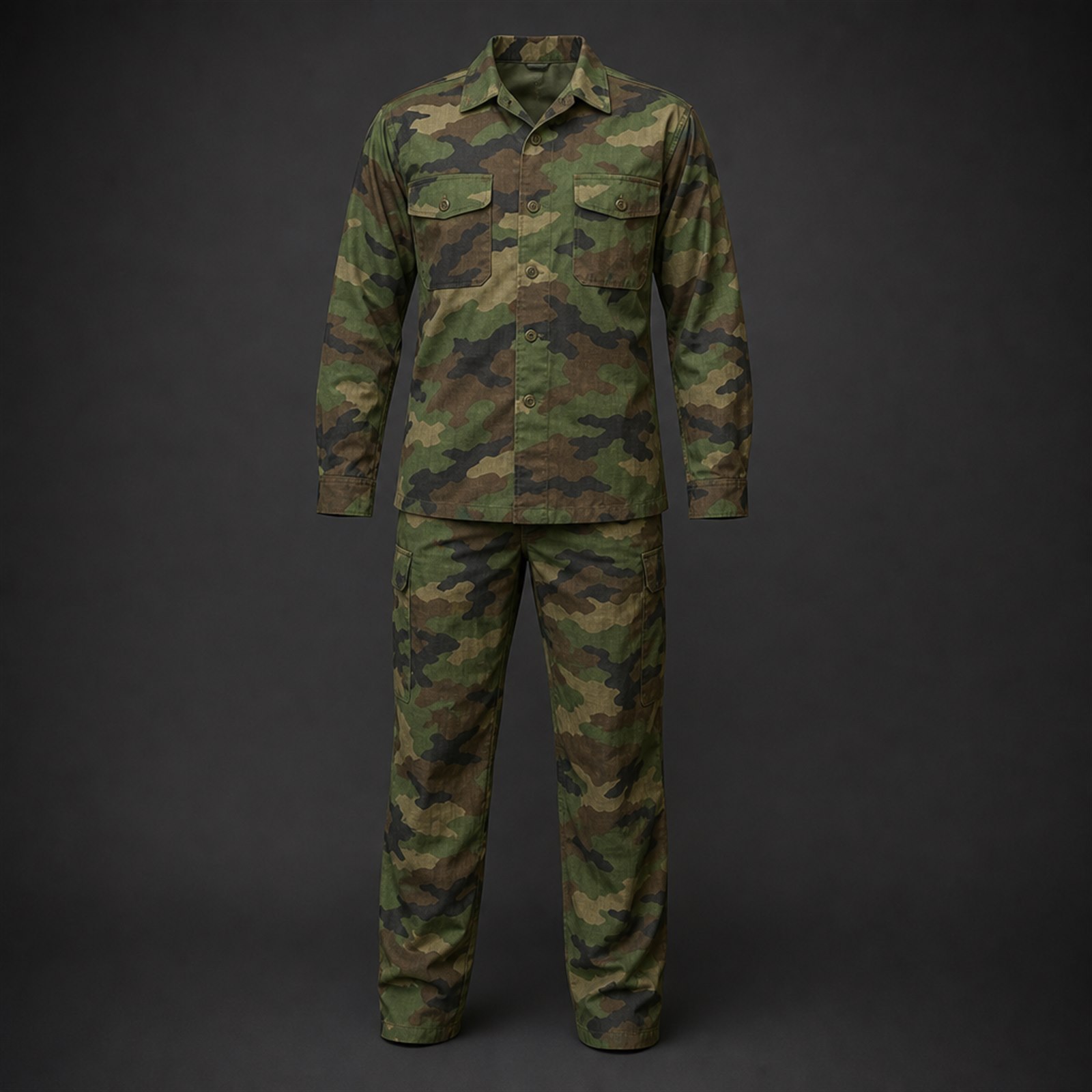
Hot Weather Tactical Uniform Set

Both pieces are built light and fast-drying: a moisture-managing shirt torso with ripstop sleeves, and a trouser with reduced panel count and ventilation. The set problem here is weight balance — if the trouser is much heavier than the shirt, the pair feels mismatched in the hand and dries at different rates after washing, which users notice immediately.

  • Lightweight quick-dry shirt torso with ripstop sleeves
  • Trouser body fabric matched in weight and drying rate to the shirt
  • Reduced panel count on both pieces
  • Ventilation at the shirt placket or trouser inner thigh
  • Low-profile pockets to limit heat build-up
Temperate / Cool / Field

Temperate Tactical Uniform Set

A year-round field set where abrasion resistance and shape retention matter more than weight. Both pieces use a stable ripstop construction, the trouser carries reinforced knee and seat, and the shirt sleeves accept elbow reinforcement. The trade-off is drying time and a stiffer break-in, which is normally acceptable in temperate conditions.

  • Ripstop shirt sleeves with reinforced elbow option
  • Trouser with double knee and seat reinforcement
  • Knee pad pocket compatibility
  • Bellowed or zippered pockets on both pieces
  • Insignia panels on shoulder and sleeve

Urban Duty / Mixed / All Season

Duty & Service Uniform Set

Built for appearance retention as well as wear. Colourfastness under frequent laundering, minimal visible wear at collars, cuffs and pocket openings, and a clean silhouette that accepts insignia, rank slides and ID panels. Comfort features are deliberately restrained because the garment is worn as a public-facing uniform.

  • Colourfast, shape-retaining fabric on both pieces
  • Reinforced collar, cuff and pocket opening areas
  • Insignia and rank attachment points
  • Additional pencil or ID pocket options
  • Consistent appearance after repeated laundering

Engineering

Construction, part by part

8 construction decisions define Tactical Uniform Sets, and each row below is one decision you control at specification stage.

Shirt Torso

  • Lightweight knit torso
  • Quick-dry woven torso
  • Mechanical stretch woven torso
  • Moisture-wicking jersey torso
  • Single-fabric shirt with no torso panel split

Whether the shirt is built with a two-material torso split or as a single-fabric garment changes both the cost and the shade-matching problem. A single fabric makes the top and bottom match easier to control; a torso split performs better under a vest but adds a second material to manage per lot.

Shirt Sleeves, Collar & Cuff

  • Stand collar
  • Zip-through collar with chin guard
  • Fold-down field collar
  • Hook and loop adjustable cuff
  • Elasticated or plain hemmed cuff
  • Roll-up sleeve tab

Collar and cuff are the highest-wear points on the shirt and the most visible on a uniform. Adjustable cuffs and a chin guard are common duty specifications, and both add hardware that must be checked for wash durability.

Trouser Body & Waistband

  • Rigid waistband with belt loops
  • Partial elastic side inserts
  • Full elastic back waistband
  • Zip fly with button closure
  • Zip fly with hook and loop

The waistband and fly specification on the trouser often has to reflect the same equipment the shirt must be worn with, so it is agreed together with the shirt layering rather than in isolation.

Trouser Crotch & Seat

  • Diamond gusset
  • Two-panel gusset
  • Stretch gusset insert
  • Reinforced seat panel
  • Double seat layer

The crotch is the most common single failure point in a uniform trouser, and the repair or replacement cost lands on the whole set relationship. Gusset type is fixed at pattern stage and verified on the pre-production sample.

Trouser Knee

  • Articulated knee dart
  • External knee reinforcement overlay
  • Internal knee pad pocket
  • External knee pad pocket
  • Unreinforced knee (lightweight sets)

If pads are issued as part of the uniform, the pad dimensions must be confirmed before pattern development. A pad pocket built to the wrong pad dimension produces a full-set rejection rather than a single-piece one.

Pocket Layout

  • Shirt chest pockets with flap or zip
  • Shirt sleeve pocket
  • Trouser slash hand pockets
  • Trouser thigh cargo pockets
  • Reinforced tool or knife pocket
  • Interior document pocket

Pocket layout should be consistent across the set so the user reaches for the same position on both pieces. Placement and depth are agreed against what is actually carried — radio, notebook, ID, gloves.

Set Construction Consistency

  • Identical thread colour and stitch type on both pieces
  • Matched hardware finish across the set
  • Aligned reinforcement philosophy on both pieces
  • Common label and care content across the set

A set is judged as one product, so construction details that differ between top and bottom — thread shade, hardware finish, stitching density — read as a quality difference even when both pieces meet their individual specification.

Colour & Shade Matching

  • Cut from a single fabric lot
  • Lot grouping with shade banding
  • Separate lots with pre-approved shade standard
  • Print repeat alignment check between pieces

Shade mismatch between the shirt and the trouser is the most common claim on uniform sets. Where the two pieces use different fabric constructions, an approved master standard for both is needed before bulk, because the same dye recipe on two constructions does not guarantee the same visual result.

Available fabrics

Material options by garment area

Shirt Fabrics

Poly cotton ripstopNYCO ripstopCotton ripstopQuick-dry fabricMoisture-wicking fabric

The shirt fabric is selected against the climate and the layering the set will be worn in. Where the trouser uses a different construction, the buyer should expect a small inherent difference in how the two fabrics reflect light, and plan the shade standard accordingly.

Trouser Fabrics

Poly cotton ripstopNYCO ripstopMechanical stretch fabricLightweight hot weather fabricCold-weather insulation material for lined winter sets

Trouser weight is normally kept close to the shirt weight in the same set so the pair handles and dries similarly. Composition and weight are confirmed per programme rather than assumed from a previous order.

Reinforcement Panels

Heavier ripstop overlayAbrasion-resistant woven overlayDouble-layer self fabricStretch panel at crotch or waist

Reinforcement is placed where the set actually fails. Over-specifying reinforcement on both pieces adds weight and cost without changing how long the set lasts in service.

Customization

What can be customized

15 specification lines are available for Tactical Uniform Sets, and where an option changes cost, weight or durability the consequence is stated next to it.

Set Composition

Shirt and trouserShirt, trouser and capShirt, trouser and jacketJacket and trouser onlyBuyer-defined piece combination

Fabric

Ripstop familyQuick-dry familyStretch woven familyLined winter constructionBuyer-specified composition

Color

Solid colorwaysBuyer Pantone targetsBuyer lab dip approvalMatched shade standard across both pieces

Camouflage Pattern

Buyer artworkWoodland styleDesert styleDigital styleCustom seasonal pattern

Shirt Style

Two-material combat styleSingle-fabric field shirtZip-front shirtButton placket shirtShort sleeve variant

Trouser Style

Straight leg field trouserTapered duty trouserCargo trouserConvertible or roll-up leg

Collar

StandZip-through with chin guardFold-down field collar

Pocket Layout

Chest pocketsSleeve pocketCargo pocketsTool or knife pocketID or pen pocketInterior document pocket

Knee

Reinforcement overlayInternal pad pocketExternal pad pocketArticulation onlyNone

Waistband & Fly

Rigid with belt loopsSide elasticFull elastic backZip with buttonZip with hook and loop

Zipper

Metal zipCoil zipBuyer-specified tape width and slider

Hook & Loop

Cuff adjustersInsignia and rank panelsPocket flapsWaist and cuff adjustersBuyer-specified colour matching

Insignia & Branding Position

Shoulder panelsSleeve panelsChest logoTrouser thigh logoRear waistband logo

Label

Main labelSize labelCare labelCountry of origin labelSet content label

Packaging

Poly bag per pieceSet packed as one unitPrinted poly bagHangtagHeader cardCustom box

Sizing

Size development

Size development for a set has to be done on both pieces at once. Before a size set is built we need the buyer's target size range, either body measurements or garment measurements from a reference set, and the rule for pairing shirt and trouser sizes — whether a size is sold as a matched letter size, or whether the channel sells a combined chest and waist size. From there we build a size set sample so the buyer can check critical measurements on both pieces across the range rather than only in the middle size: chest, shoulder, sleeve length and back length on the shirt; waist relaxed and stretched, hip, rise, thigh, knee position, inseam and leg opening on the trouser. Where the buyer sells a national uniform sizing standard, the chart is built to that system. Measurement tolerance is agreed in writing for each piece before bulk so that inline and final inspection are measured against the same numbers.

How size development works

Branding

Private label

Private label on a set covers both pieces and the way they are presented together. Main label, size label, care label and country of origin label are produced to the buyer's artwork and content requirements for the shirt and the trouser, with content and care instructions matched so the set is consistent for the end user. Branding can be applied as woven label, printed label, rubber patch, embroidery or heat transfer, and insignia or rank positions are agreed on the pattern so they sit correctly in every size. Packaging can be as simple as a poly bag per piece or as complete as a set packed as one unit with printed bag, hangtag, header card and custom box, which is common for private label brands selling uniforms as a single retail product.

Customization capability

Development

Sampling process

Sampling for Tactical Uniform Sets runs in 8 stages, each one removing a specific risk before the next stage commits cost.

01

Requirement review

We review the buyer's tech pack, reference set, sketch or photo and list every open specification for both pieces before any fabric is cut — including pad dimensions, pocket sizes, insignia positions and the pairing rule between sizes.

02

Material selection

Shirt and trouser fabrics are proposed as a matched pair against the intended climate and use, with alternatives supplied where a specification is not yet fixed.

03

Shade standard development

Where the two pieces use different fabric constructions, a shade standard is developed and approved for both so the set can be judged as one product rather than per piece.

04

Pattern development

Patterns are developed or adapted to the buyer's reference for both the shirt and the trouser, including gusset, knee, pocket and waistband construction.

05

Prototype set

A first sample of both pieces is produced in the proposed materials so the buyer can assess fit, movement, shade match and material feel as a set.

06

Revision

Buyer comments on both pieces are consolidated into a single revision round so the specification converges instead of drifting across multiple samples.

07

Size set

The full size range is produced for both pieces so measurements, knee position and pairing between shirt and trouser sizes can be confirmed across the range.

08

Pre-production sample

The final approved construction, materials, shade and labelling for both pieces are locked in a pre-production sample that becomes the bulk standard.

Production

Bulk manufacturing

Bulk production of Tactical Uniform Sets runs in 7 stages, which is where an approved specification is either held or lost.

01

Fabric approval as a pair

Bulk fabric for the shirt and the trouser is approved together against the shade standard, along with zips, hook and loop, thread and labels.

02

Single fabric lot or shade-banded lots

Wherever practical the set is cut from a single fabric lot. Where that is not possible, rolls are shade banded and pieces are matched so a shirt and its corresponding trouser come from visually identical fabric.

03

Bulk cutting

Cutting follows the approved patterns with markers controlled for shade, nap and direction-sensitive camouflage prints, and with piece counts tracked per size and per set.

04

Panel preparation

Reinforcement overlays, pad pockets, insignia panels and any printed or embroidered panels are prepared and checked before assembly.

05

Assembly

Shirt and trouser are assembled to their approved construction sequences, with thread shade and hardware finish controlled so both pieces read as one set.

06

Set pairing and size combination control

Finished pieces are paired by size according to the buyer's rule and checked so no set leaves with mismatched sizes or a visible shade difference between top and bottom.

07

Final inspection and packing

Measurement, construction and packing inspection are completed against the agreed standard, and sets are packed to the buyer's instruction, whether per piece or as one unit.

Quality Control

Quality control for this category

Inspection of Tactical Uniform Sets is measured against an agreed standard, and the 7 checks below are listed with what each one is measured against.

01

Incoming fabric inspection

Fabric for both pieces is checked on receipt for shade, width, weight, print alignment and defects, and compared against the approved shade standard as a pair.

02

Trim inspection

Zips, sliders, hook and loop, elastic, thread and labels are checked for function and colour, with hardware finish compared between the shirt and the trouser.

03

Pre-production approval

The pre-production sample set is approved by the buyer and becomes the reference standard for bulk.

04

Inline inspection

Work in progress is inspected at defined points during assembly on both pieces, with particular attention to the crotch, knee, collar, cuff and pocket attachments.

05

Measurement inspection

Critical measurements are measured on both pieces against the approved size set with agreed tolerances, and the pairing rule between shirt and trouser sizes is verified.

06

Construction and shade inspection

Stitching, reinforcement placement and symmetry are checked against the approved sample, and the shade of each finished shirt is compared with its corresponding trouser.

07

Final and packing inspection

A final inspection is carried out on finished goods before packing, and label content, folding, set pairing, poly bagging and carton marking are checked against the packing instruction.

Choosing a Tactical Uniform Sets manufacturer

How to choose a tactical uniform sets manufacturer

The 6 questions buyers ask about Tactical Uniform Sets before committing to a first order.

Decide early whether the set is cut from one fabric lot

Shade match between the top and the bottom is the single most common claim on uniform sets, and it is decided long before cutting. Ask the supplier how lots are grouped, whether the shirt and trouser fabrics are approved against one standard or two, and what happens if a lot does not match. A supplier who treats the two pieces as separate orders will eventually ship a pair that does not match.

Check how sizes are paired and packed

Ask what happens when a channel sells more medium shirts than medium trousers, and whether pieces can be ordered separately later against the same specification. A set programme that only exists as a fixed pack is difficult to manage in a distribution channel that does not sell sizes evenly.

Test whether they can hold two specifications at once

Send a real tech pack for both pieces and review the questions that come back. A capable manufacturer returns separate lists of genuine specification gaps for the shirt and the trouser, plus the points where the two specifications interact — shade, thread, hardware and label content.

Match the two pieces in weight as well as in colour

A very light shirt with a heavy trouser feels like two products in a box, and the two pieces dry at different rates after washing. Agree the climate first, then keep the two fabric weights within a sensible range of each other so the set behaves as one product in use.

Confirm insignia and rank positions on both pieces

Insignia and rank attachment points are the detail uniform buyers most often need changed after the first sample. Agree the position on the pattern for every size, not just on the sample size, and confirm the attachment method against the insignia the buyer actually issues.

Agree the inspection standard for the set, not per piece

Measurement tolerances, AQL level, shade comparison between pieces and the packing instruction should be in writing before bulk starts. Inspecting a set against a standard agreed after production is a dispute waiting to happen, particularly where the claim is a shade difference rather than a defect.

Products

Tactical Uniform Sets products

Each product in Tactical Uniform Sets is a developed specification with its own material options, construction detail and customization map.

Tactical Uniform Sets

Hot Weather Tactical Uniform Set

A uniform set is a specification problem that two separate garments do not have: the shirt and the pant have to behave as one system.

HotTropical / HumidDesert
View product

FAQ

Tactical Uniform Sets FAQ

Can you produce the shirt and trouser in different fabrics?

Yes, and it is common where the shirt needs a moisture-managing torso and the trouser needs abrasion resistance. The consequence is that the same colour recipe on two different constructions may not produce an identical visual result, so a shade standard is approved for both pieces before bulk rather than assuming a match.

How do you keep the shade consistent between the top and the bottom?

By treating the set as one product in production: approving a shade standard for both fabrics, cutting from a single lot wherever practical, shade banding rolls where it is not, and comparing each finished shirt against its corresponding trouser before packing.

Can we order trousers separately from the shirts?

Yes, provided the specification is documented so later pieces match the ones already supplied. Buyers who expect to reorder one piece at a time should confirm that at the start, because the fabric lot available for a later run may differ from the original and a shade standard has to be re-approved.

Can you develop a uniform set from a reference set we already sell?

Yes. Sending a physical reference set is often the fastest route because measurements, fit and construction details can be taken directly from it. Providing the intended climate, layering and pocket requirements at the same time shortens development further.

How are insignia and rank applied?

As hook and loop panels, direct embroidery, heat transfer or sewn patches, depending on what the buyer issues. The attachment method and position are confirmed on the pre-production sample for every size, because placement that looks correct in the sample size can sit wrong on a larger or smaller garment.

What information do you need for a quotation?

Set composition, target quantity, fabric preference for each piece, colour or camouflage direction, required features such as pad pockets and insignia panels, size range and the pairing rule, labelling and packaging requirements, and the target market and climate. A reference set, photo or tech pack helps most. Where a figure such as MOQ or lead time has not been confirmed with you, we will state that explicitly rather than quote a number we cannot hold.

Request a Manufacturing Assessment

Send us your tech pack, reference sample or product idea. We review your requirement, recommend materials and construction, and come back with a development plan you can act on.