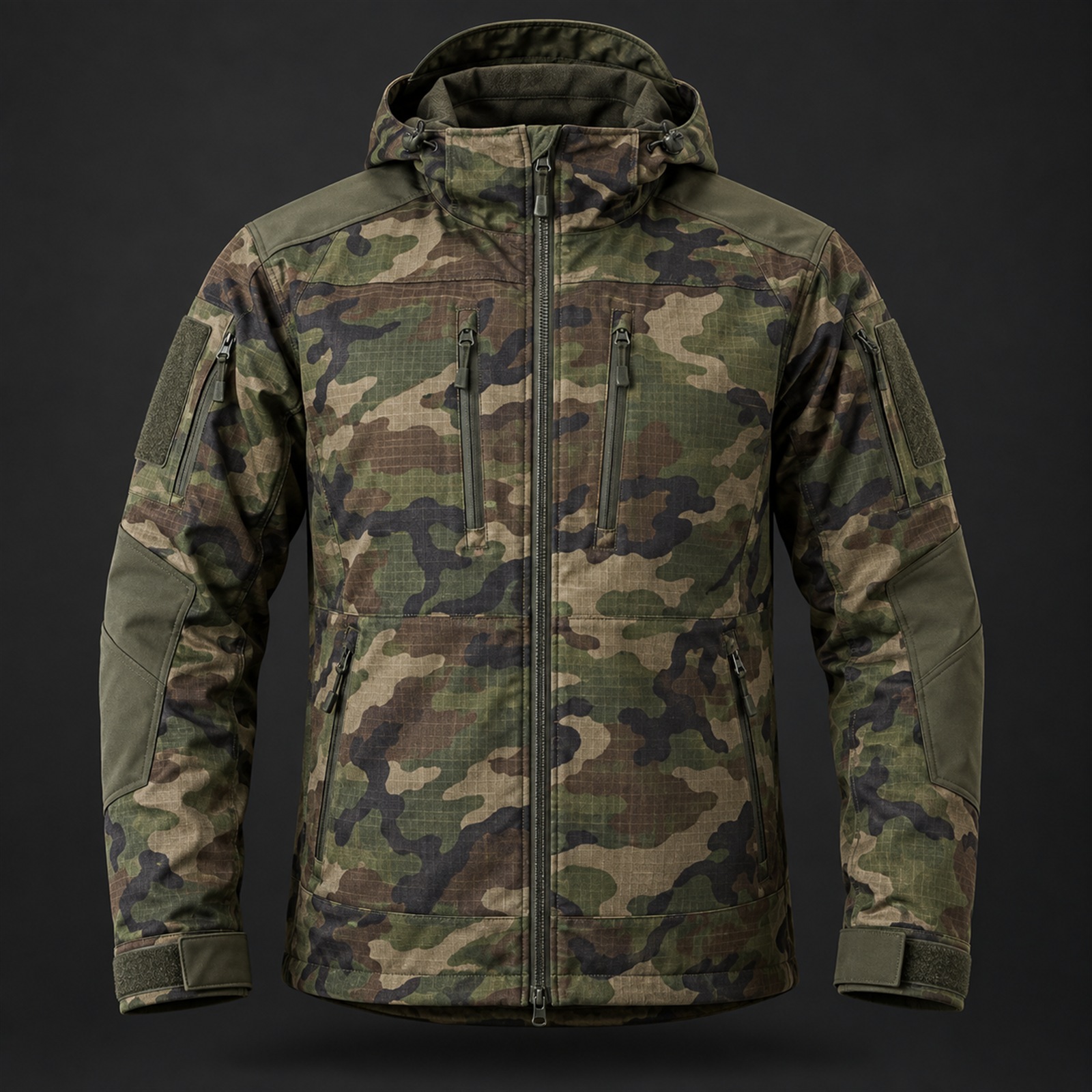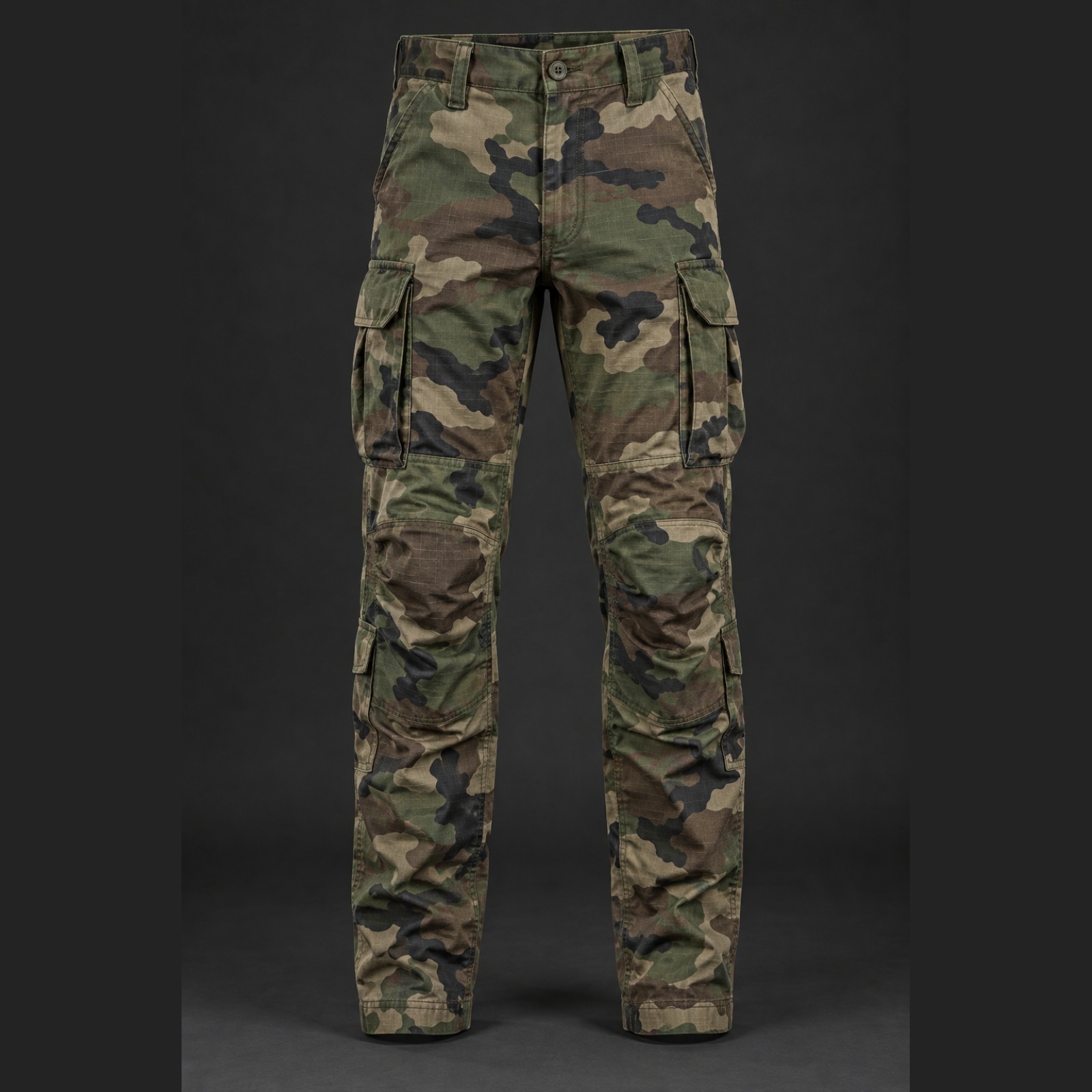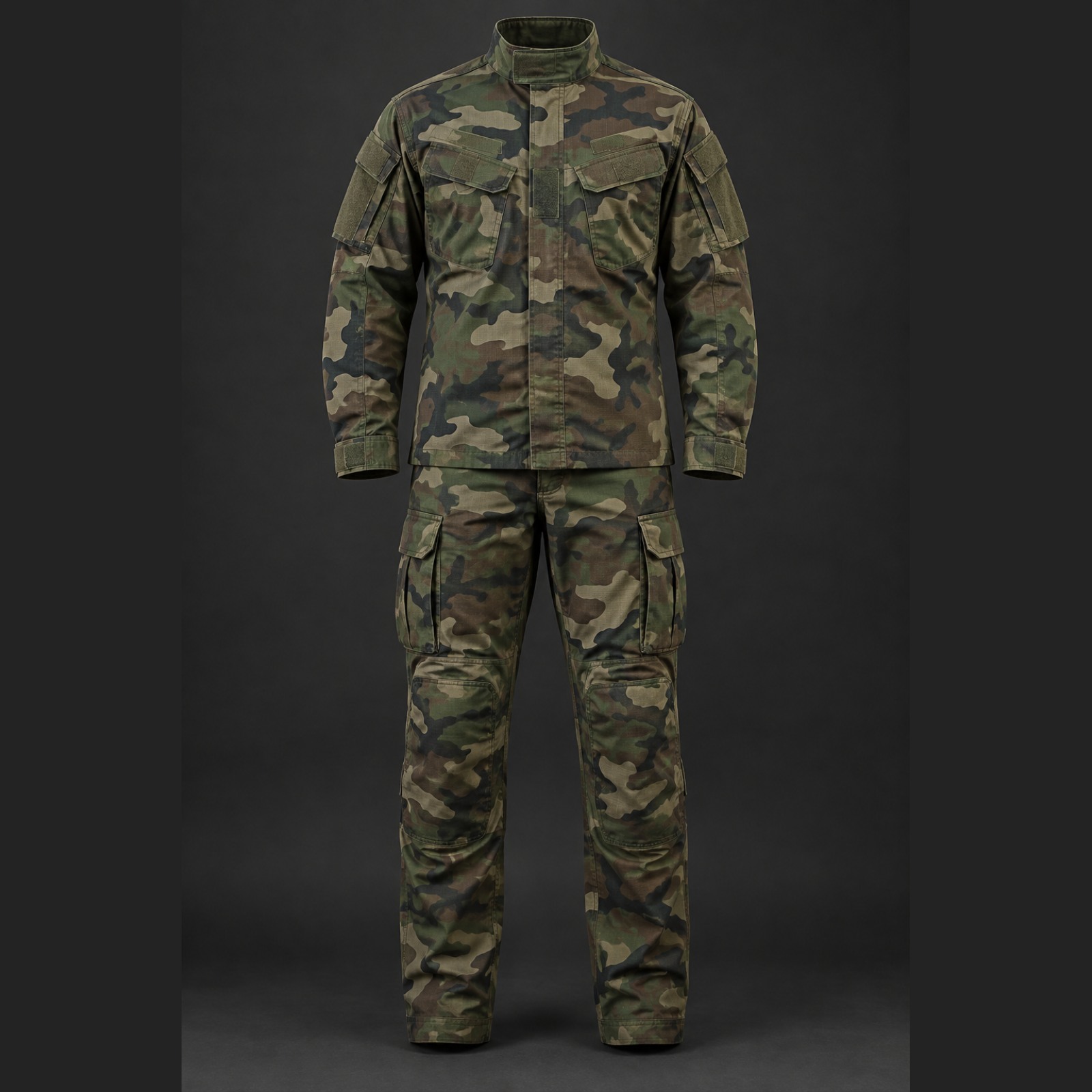
Tactical Uniform Sets
Temperate Tactical Uniform Set
A uniform set only performs as a set if the shirt and the trousers behave as one garment.
TemperateCool to mildVariable / shoulder season
View productProducts / Field / BDU Shirts
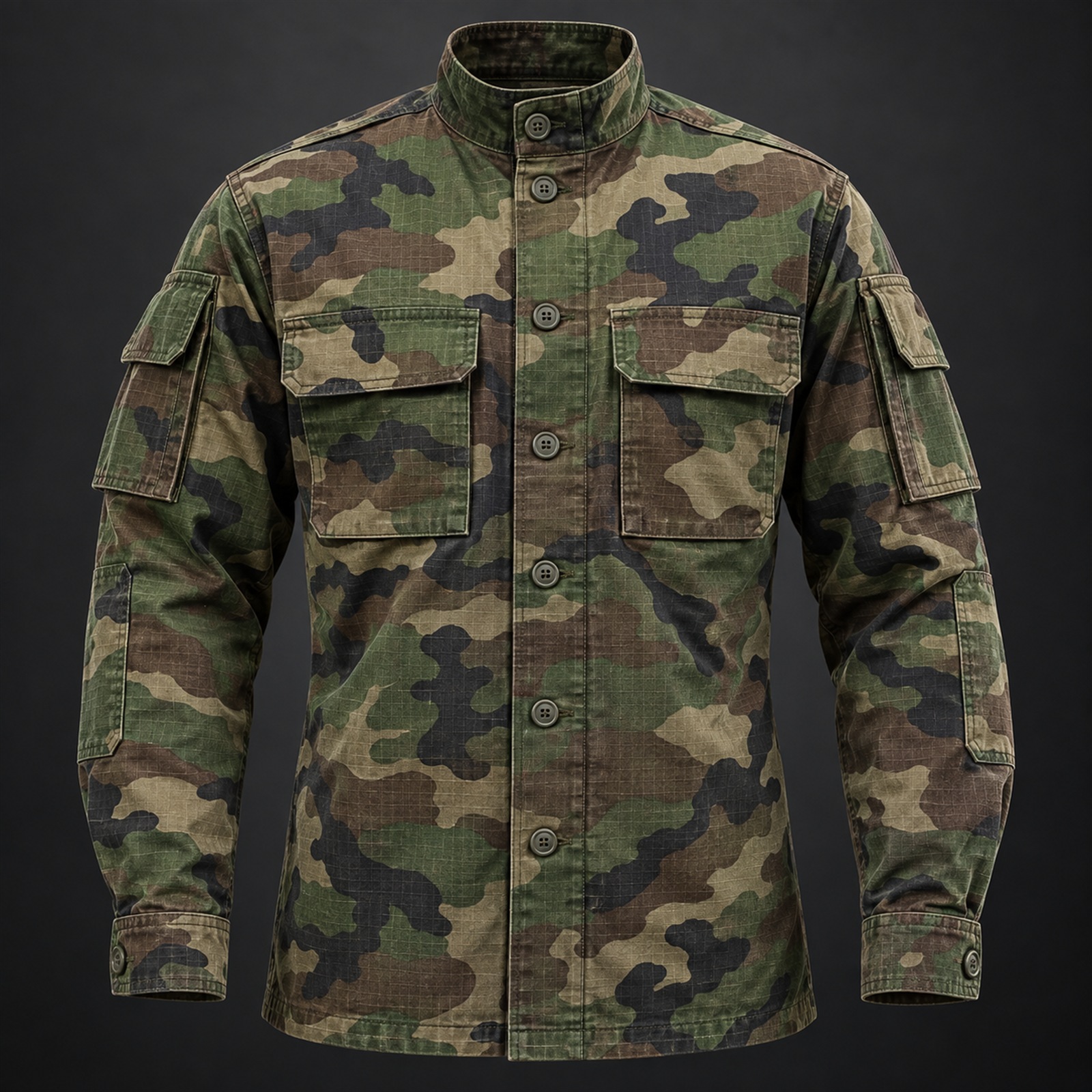
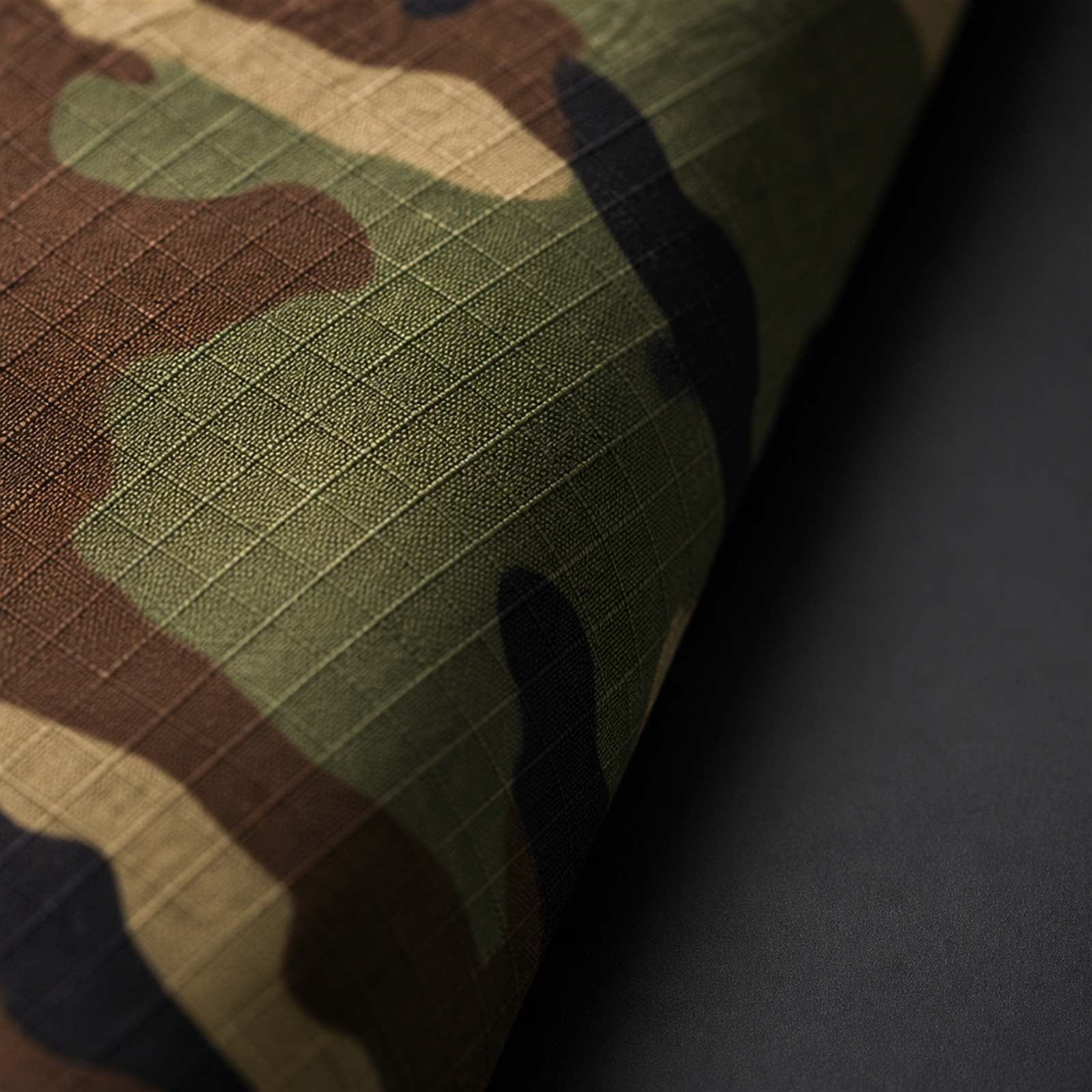
The BDU field shirt earns its place by being the garment a wearer keeps on when conditions change. It is opened at the front when it is warm, closed and layered under a jacket when it is not, and it still has to survive being pulled over webbing, sat on, and used as a rough surface at the elbow. This shirt is developed around that behaviour rather than around a styling reference: a placket that opens and closes reliably with gloves on, chest pockets sized for the items a buyer actually issues, a collar that stands without collapsing, and reinforcement at the elbow and pocket corners where the cloth wears through first. Fabric is a ripstop family selected per buyer requirement, and the entire specification is documented so a reorder reproduces the original garment.
Gallery
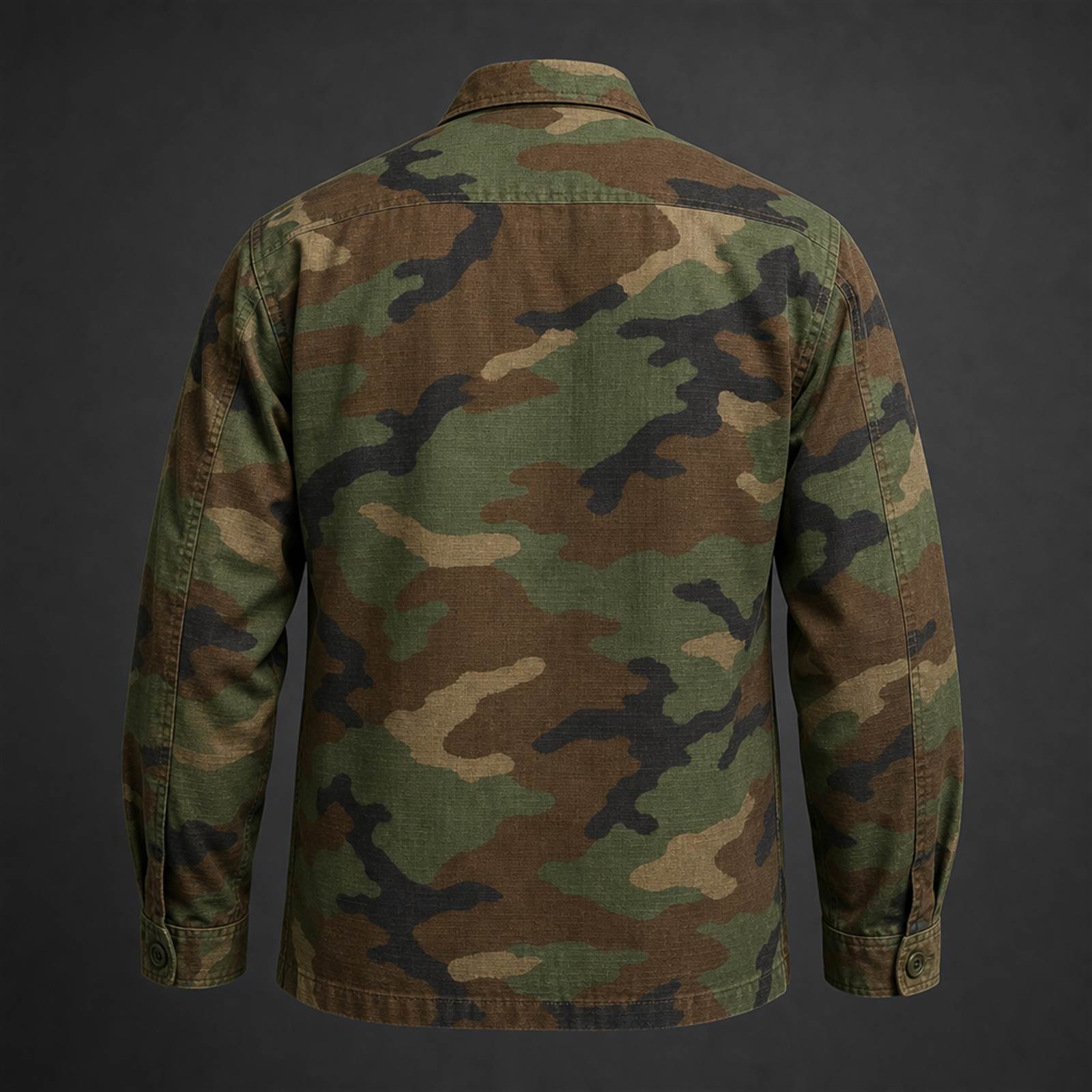
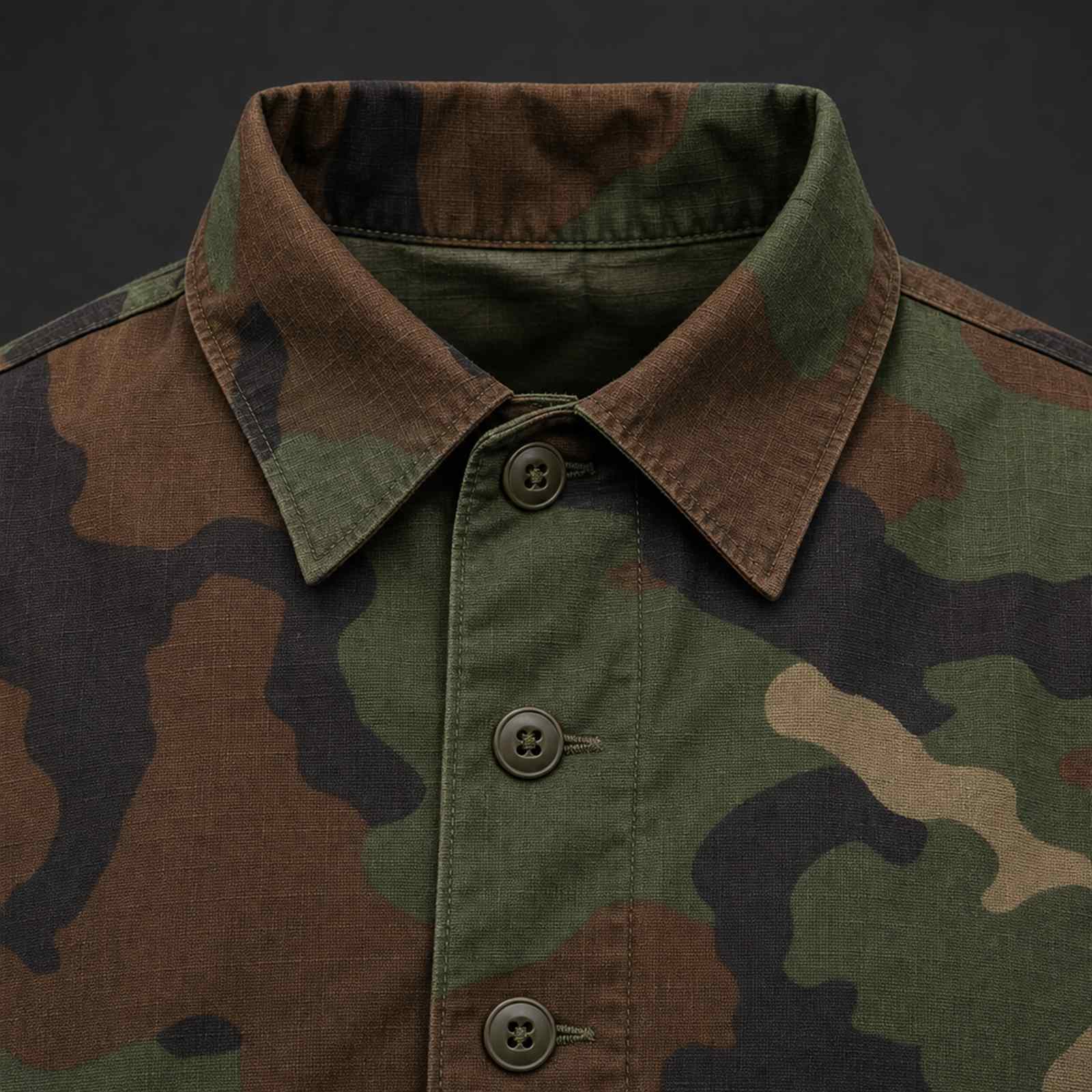
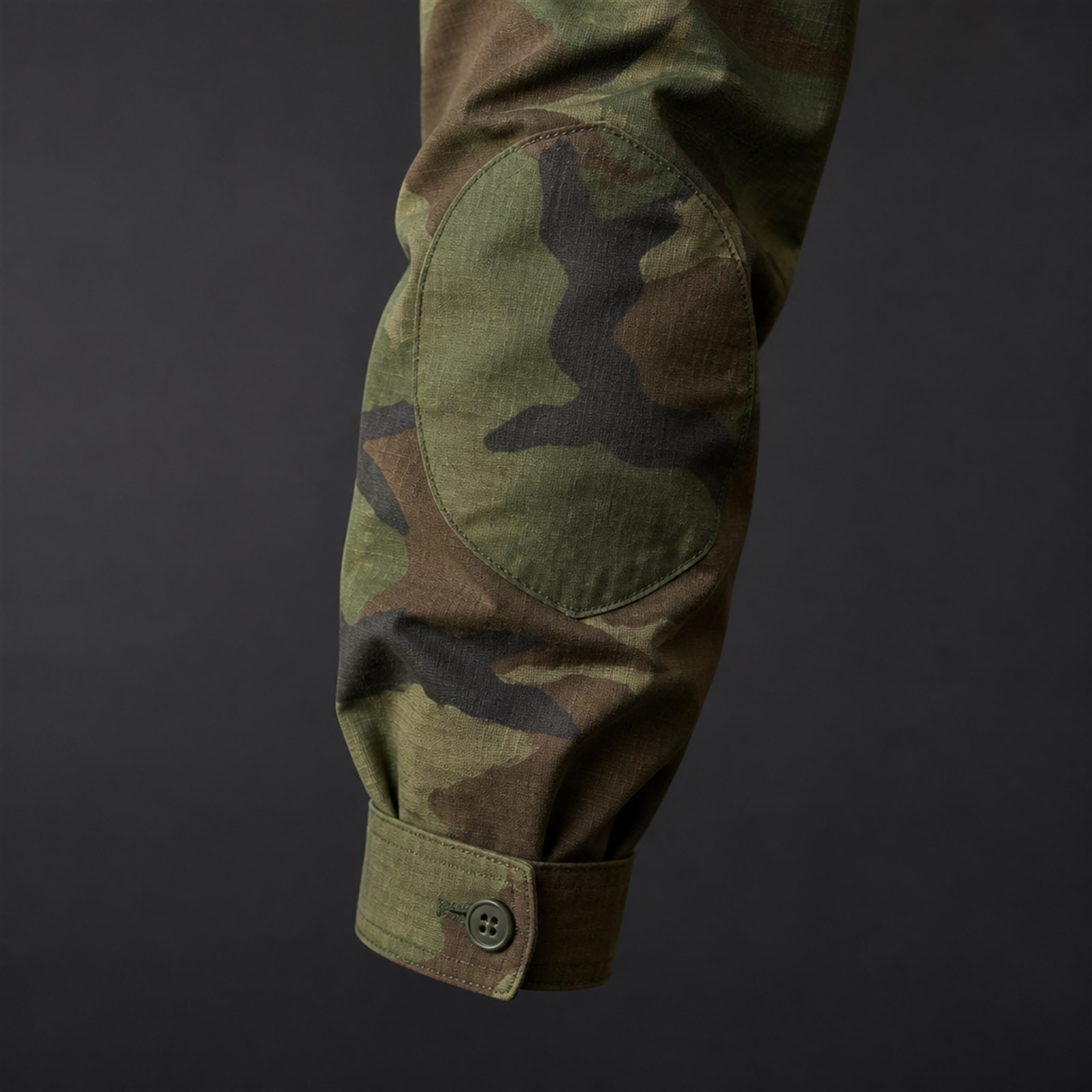
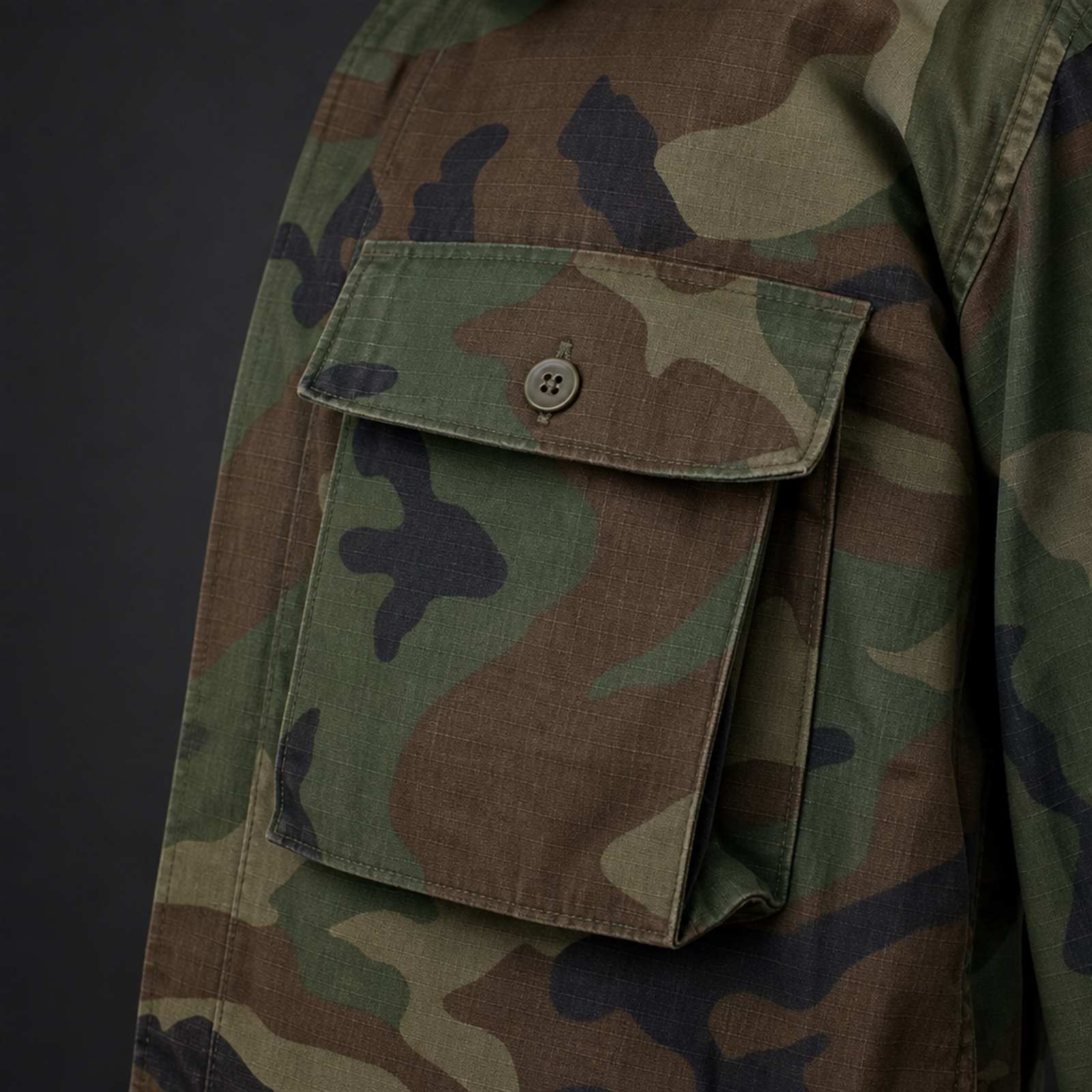
Design purpose
Build a hard-wearing field shirt that works open in mild weather and closed as a mid layer, with a utility pocket layout and reinforcement placed where field use actually wears the garment out.
Applications
Interactive map
BDU Field Shirt: select a marker to see what can be specified at that part of the garment — all 10 mapped areas are also listed in full below the map, so nothing is hidden behind an interaction.
Customization by garment part
Select a marker to see the customization options available at that part of the garment. Every option below is a manufacturing decision you control.
Materials
4 material options for BDU Field Shirt, specified per garment area — a single fabric cannot serve heat management and abrasion resistance at the same time.
Shirt body
The ripstop grid limits how far a tear can travel, which matters on a garment that is regularly caught on structure and equipment. The choice between blends is a trade-off between tear strength, drying speed and hand feel.
Pocketing
Pocket bags are a common failure point. Pocketing is specified rather than assumed so pockets do not tear out at the corners under load.
Reinforcement
Applied only where wear is concentrated, so the shirt does not gain weight and drying time across whole panels for no benefit.
Trims and findings
Closure hardware is selected for use with gloves and for corrosion resistance in humid field conditions.
Construction
How each of the 8 parts of BDU Field Shirt is assembled, and why that choice was made.
Front closure
Button placket, concealed placket or zip front, with the placket faced and bar-tacked at the stress points so it does not gap when the shirt is pulled over equipment.
Collar
Stand collar with an interlined facing so it holds its shape when worn open, plus an optional under-collar tab for closing down in wind.
Chest pockets
Chest pockets built to the buyer's issue items rather than to a generic size, with flap or zip closure, bellows depth confirmed at specification stage and corners bar-tacked.
Shoulder
Plain shoulder or an optional epaulette and insignia panel, with placement agreed because it affects embroidery and print positioning.
Sleeves
Set-in or raglan sleeve with the armhole shaped for forward reach, so the shoulder does not bind when the wearer works with both hands in front.
Elbow
Optional reinforcement layer or internal pad pocket positioned to the buyer's pad dimensions, confirmed before pattern development rather than assumed.
Cuff
Buttoned, hook and loop or elasticated cuff, sized so it can be adjusted while wearing gloves and does not catch on equipment.
Hem and stitching
Shaped or straight hem to buyer specification, with a defined stitch and seam standard recorded in the specification so reorders match the original construction.
Features
The 6 functional features of BDU Field Shirt each exist to solve a specific problem in use, and where a feature is a trade-off rather than a pure gain that is stated.
The placket is faced and bar-tacked at stress points, so the shirt opens and closes cleanly over its service life instead of gapping or losing buttons.
An interlined facing keeps the stand collar upright when the shirt is worn open, with an optional tab for closing the collar in wind.
Chest pocket dimensions are built around what the buyer actually issues, which prevents the common problem of a pocket that cannot take the intended item.
Elbow, pocket corners and collar facing are reinforced; other panels stay light so the shirt dries and packs well.
The shirt is cut with enough room in the body and armhole to be worn over a base layer and under a jacket without restricting movement.
Stitch type, seam allowance and reinforcement positions are recorded in the specification, so a repeat order reproduces the garment rather than reinterpreting it.
Customization
14 customization lines for BDU Field Shirt: branding, colour, camouflage and packaging are all part of the specification, and every item is confirmed on the pre-production sample.
Fabric
Color
Camouflage Pattern
Front Closure
Collar
Chest Pocket
Shoulder
Sleeve
Elbow
Cuff
Hem
Logo
Label
Packaging
Colour
Camouflage
Sizing
Sizes are developed from the buyer's size chart, issue list or uniform sizing standard, including long and short sleeve and back length variants where required. A size set sample is produced so critical measurements — chest, shoulder, sleeve length, back length, cuff opening and hem width — are confirmed across the range. Measurement tolerances are agreed in writing before bulk, so inline and final inspection both measure against the same approved numbers.
Branding
Main label, size label, care label and country of origin label are produced to the buyer's artwork and content. Branding can be applied as woven label, printed label, rubber patch, embroidery or heat transfer, and name tape or insignia panels can be included where the buyer's programme requires them. Packaging ranges from poly bag to printed poly bag with hangtag, header card or custom box. All labelling and packaging is confirmed on the pre-production sample.
Logistics
Sample development
Development of BDU Field Shirt runs in 7 stages, each risk removed before the next step commits cost.
Requirement review
Buyer brief reviewed, and specification gaps around closure type, pocket dimensions and reinforcement returned in writing before any material is cut.
Material proposal
Ripstop options proposed against the intended climate and layering, with the trade-offs between tear strength, drying speed and hand feel stated.
Pattern development
Pattern developed to the approved measurements and construction, including pad pockets and pocket dimensions where required.
Prototype
First sample produced for fit, construction, closure function and pocket usability assessment.
Revision
Consolidated buyer comments applied in a single revision round to keep revisions controlled.
Size set
Full size range produced for measurement confirmation against the agreed chart.
Pre-production sample
Final approved construction, materials and trims locked as the bulk standard.
Bulk production
7 stages of bulk production for BDU Field Shirt — where the approved specification is either held or lost.
Fabric and trim approval
Bulk fabric, buttons or zips, tape, thread and labels approved against the pre-production standard.
Cutting
Cutting performed against the approved pattern, with markers controlled for shade and, where printed, for panel alignment.
Panel preparation
Pockets, flaps, collar facings and reinforcement panels prepared and checked before assembly.
Assembly
Line assembly to the approved construction sequence, with bar tacks at placket and pocket stress points.
Inline inspection
In-process inspection at defined points so faults are corrected on the line rather than at final inspection.
Finishing
Thread trimming, button or zip function check and pressing.
Final inspection and packing
Measurement, construction and packing inspection against the agreed standard, documented per lot.
Quality control
The 7 checks applied to BDU Field Shirt, each measured against an agreed standard rather than against opinion.
Incoming fabric inspection
Shade, weight, width and weave checked, and any roll outside the agreed band quarantined before production.
Pre-production approval
The buyer-approved pre-production sample becomes the reference standard for construction and fit.
Inline inspection
Work in progress inspected at defined points during assembly.
Measurement inspection
Critical measurements checked against the approved size set with agreed tolerances.
Construction inspection
Stitching, placket, pocket reinforcement, hardware and symmetry checked against the approved sample.
Closure function check
Buttons or zips, hook and loop and cuff adjustment operated and checked on every inspected garment.
Packing inspection
Labels, folding, poly bagging and carton marking checked against the packing instruction.
Specifications
19 specification rows for BDU Field Shirt: only confirmed items are listed, so a row that depends on your programme is omitted rather than filled with an estimate.
| Product type | BDU field shirt |
|---|---|
| Fabric family | Ripstop — poly cotton, NYCO, cotton or stretch ripstop confirmed at specification stage |
| Front closure | Button placket, concealed placket or zip front to buyer specification |
| Collar | Stand collar with interlined facing, optional under-collar tab |
| Pockets | Chest pockets sized to buyer issue items, flap or zip closure |
| Shoulder | Plain, epaulette or insignia panel to buyer specification |
| Elbow | Reinforcement layer or pad pocket to buyer pad dimensions |
| Cuff | Button, hook and loop, elasticated or plain |
| Climate | Temperate, cool to mild, layered use |
| Size range | Developed to buyer size chart or uniform sizing standard |
| Labelling | Private label to buyer artwork |
| Packaging | To buyer packing instruction |
FAQ
It depends on the climate the shirt has to work in and whether it will be worn as an outer layer or as a mid layer. Poly cotton ripstop is the usual starting point because the grid limits tear propagation while the blend keeps drying time reasonable. NYCO ripstop trades some drying speed for a stronger, more heat-tolerant hand. Cotton ripstop feels best against the skin but dries slowest. We propose options against your climate and state the trade-offs before the fabric is locked.
Both are produced. A button placket is simpler to repair in the field and cannot jam, but it is slower to operate with gloves. A zip is faster and lies flatter under a jacket, but it introduces a hardware failure point. If the shirt is worn under webbing and opened often, many buyers choose a zip with a storm flap or a concealed placket. Tell us how the garment is used and the closure recommendation follows from that.
Yes, and they should be. Pocket sizing is one of the most common causes of a rejected sample, because a pocket built to a generic dimension often cannot take the item the end user is actually issued. Send us the dimensions of the item concerned and the pocket, flap and bellows depth are built around it.
Yes. This shirt can be developed alongside a matching trouser as one programme, so colour targets, trims and the size system are shared rather than approximated. That is the approach we recommend when the shirt and trouser are issued together, because it removes the risk of the two garments reading as different products.
Yes. The shirt can be produced in printed camouflage to your artwork, with a print standard approved before bulk so shade, repeat and panel alignment are controlled. Solid colourways remain available with lab dip approval for programmes that do not require a pattern.
Both depend on the fabric, pocket configuration, number of colourways and quantity, and we do not publish figures we have not confirmed for a specific programme. Send us your specification and target quantity and we will state the MOQ and timeline that apply to it.
Related Materials
Related Applications
Related Capabilities
Related Articles
Related Categories
More products
Tactical Uniform Sets
A uniform set only performs as a set if the shirt and the trousers behave as one garment.
Tactical Jackets
A field jacket is bought for a specific job: it carries what the wearer needs to reach without opening a pack, stays out of the way when the wearer kneels, climbs or drives, and can be worn over a shirt or a fleece without becoming a straightjacket.
Tactical Pants
A tactical pant is judged by three things: whether the crotch survives, whether the knee holds up, and whether the waist still fits the same after a full day of movement.
Send us your tech pack, reference sample or product idea. We review your requirement, recommend materials and construction, and come back with a development plan you can act on.