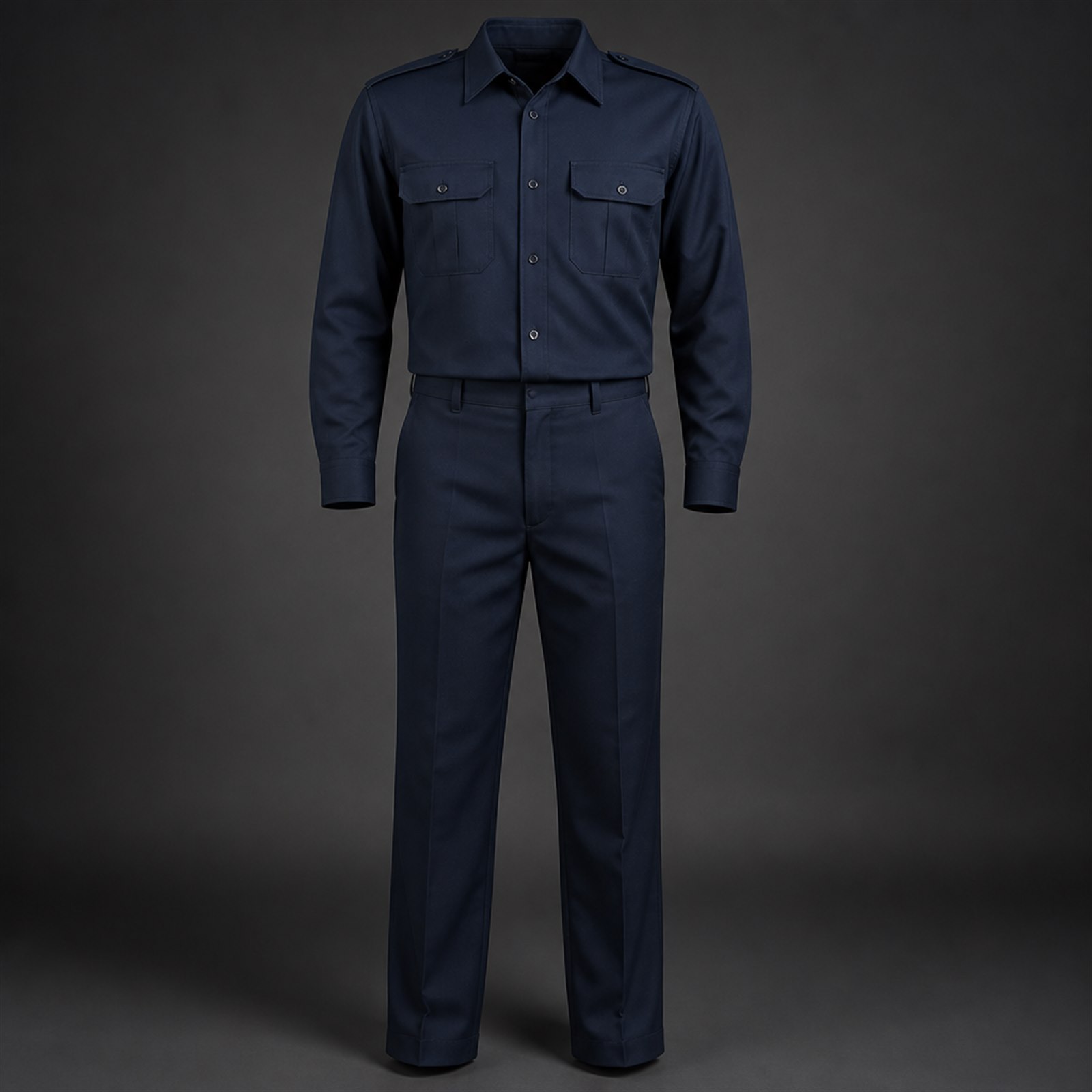
Security / Duty Uniforms
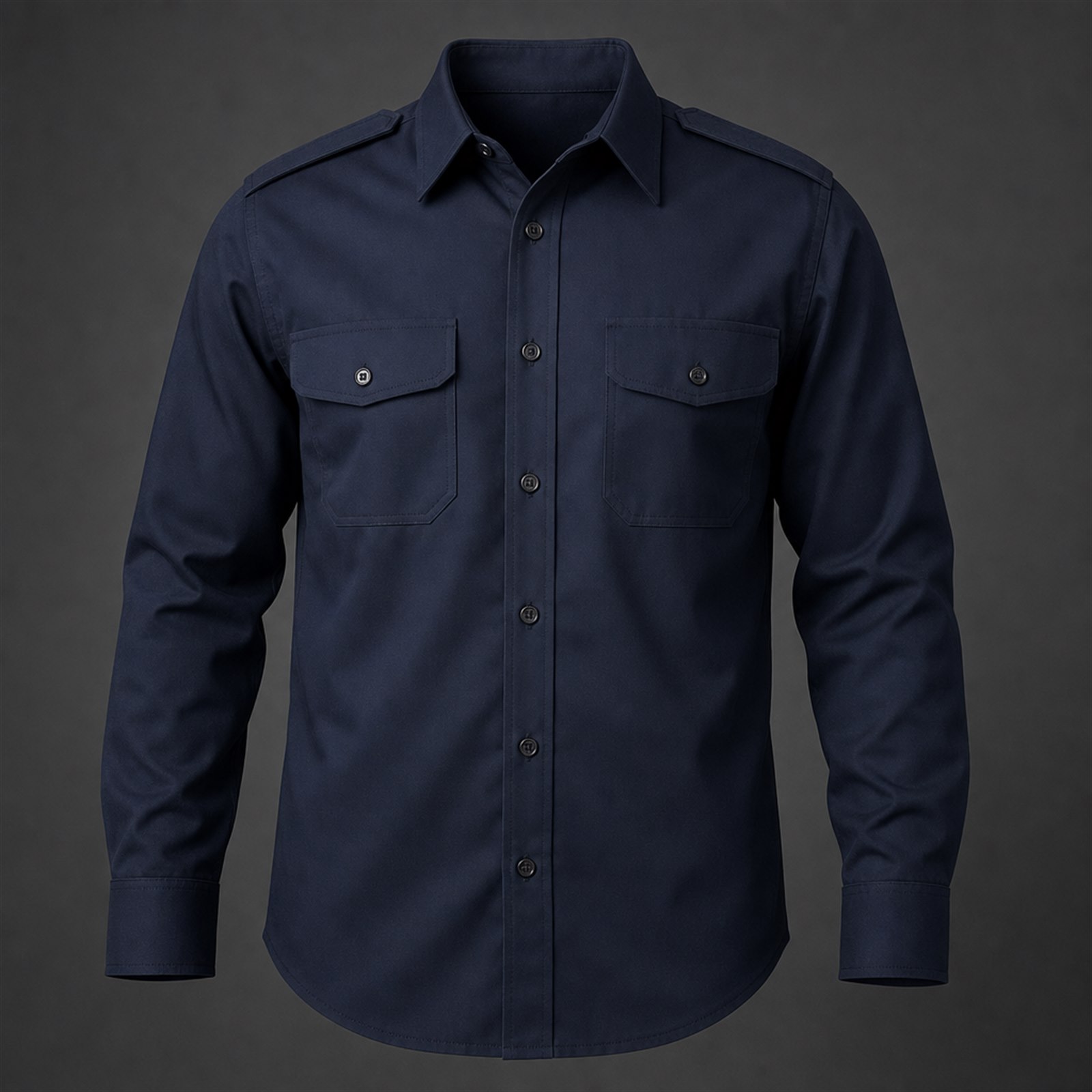
Security Duty Uniform Set
A security uniform is worn every working day, in front of the client's customers, and is expected to look formal on the last shift of the month exactly as it did on the first.
Products / Security / Duty Uniforms
The shirt is the part of a security uniform the public actually reads, and it is also the part washed most often. That combination creates the central problem: the collar has to stand correctly and the placket has to stay straight after dozens of washes, while the cuffs, collar edge and pocket corners quietly wear out first. A shirt that presses beautifully but frays at the collar in a month, or one that survives everything and looks soft and shapeless, is a failure either way. This shirt is developed by separating the two questions — what holds appearance, and what survives the wash cycle — and deciding each explicitly. Colour retention between replacement orders, badge placement, sleeve length and comfort under a vest are all specified with the buyer.

Design purpose
Hold a formal collar and placket through repeated laundering while surviving the wear points a duty shirt actually meets — collar edge, cuffs, pocket corners, elbow and armhole. Colour and shade are controlled so a replacement shirt matches the ones already in service, and company identity is applied so it stays legible for the life of the garment.
Applications
Interactive map
Security Duty Shirt: select a marker to see what can be specified at that part of the garment — all 10 mapped areas are also listed in full below the map, so nothing is hidden behind an interaction.
Customization by garment part
Select a marker to see the customization options available at that part of the garment. Every option below is a manufacturing decision you control.
Materials
4 material options for Security Duty Shirt, specified per garment area — a single fabric cannot serve heat management and abrasion resistance at the same time.
Shirt body
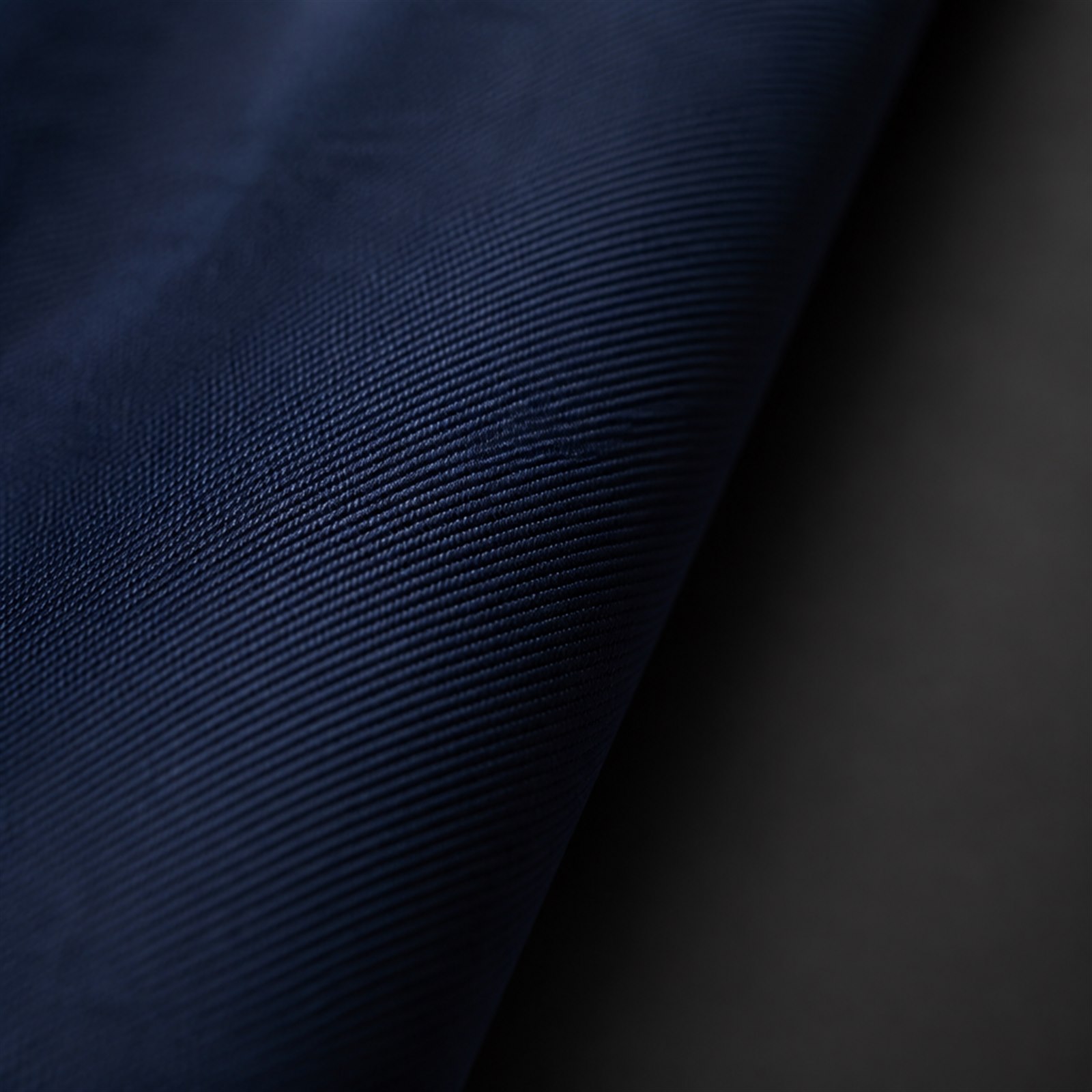
Poly cotton holds colour and resists creasing, which suits high-wash duty use. A higher cotton content presses and feels more formal but fades faster. The choice is made against the buyer's laundry regime, not against a general preference.
Collar interlining
This single component decides whether the collar still stands after a year. Fused interlining holds a sharper shape but can bubble under high-temperature laundering; unfused is more tolerant of heat but softer.
Reinforcement
Applied where a duty shirt visibly fails first, so the garment stays presentable as well as intact.
Identity materials
Selected for legibility and colour retention after laundering, because a faded or curling emblem undoes the purpose of the uniform.
Construction
How each of the 8 parts of Security Duty Shirt is assembled, and why that choice was made.
Collar
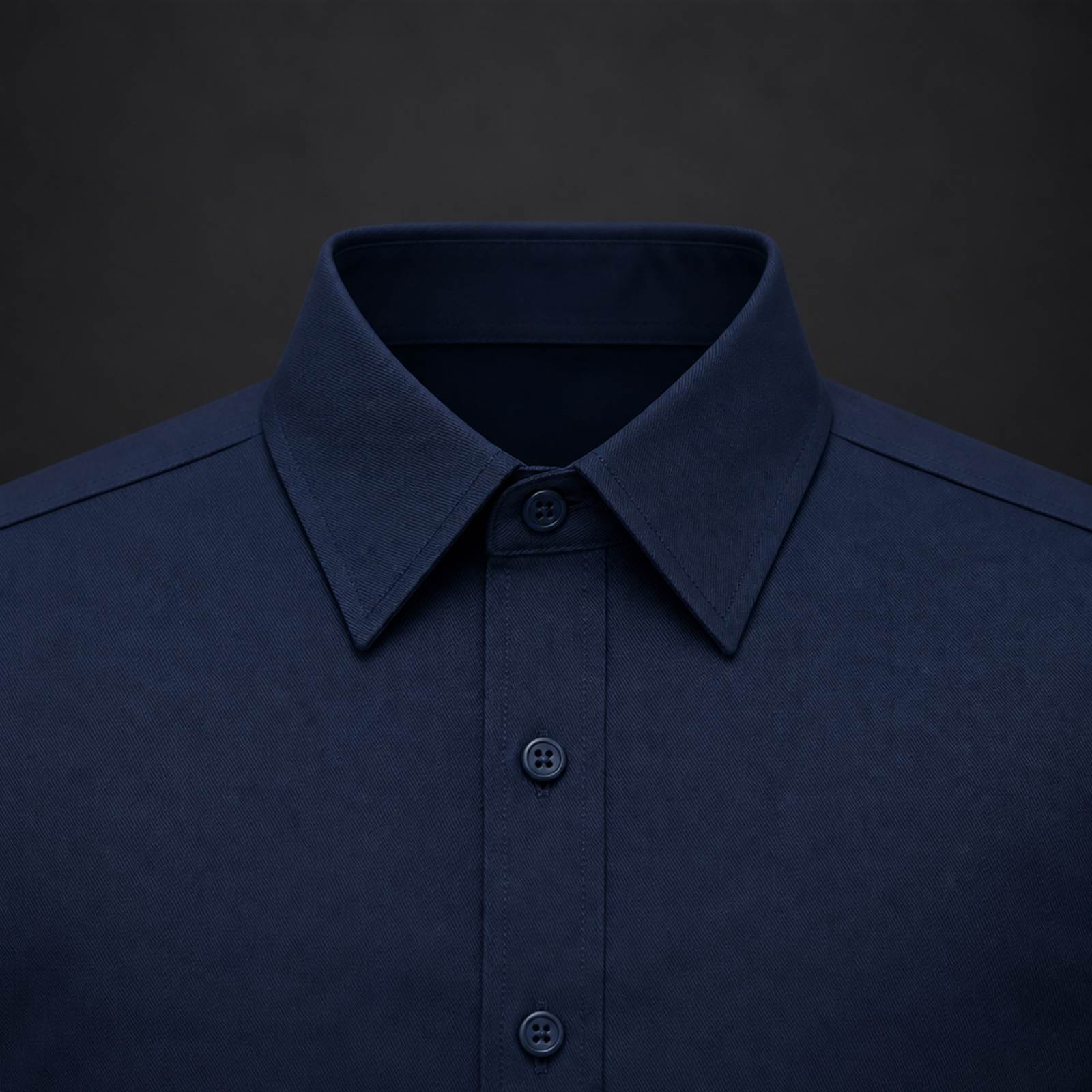
Structured collar with interlining chosen against the buyer's stated laundry regime. Collar height, point length and stand are agreed on the pattern because the collar is the most visible element of the uniform.
Placket
Straight, evenly spaced button placket controlled as a defined operation, with a spare button fitted inside the hem. Placket straightness is the first thing a client contact notices at close range.
Shoulder
Clean shoulder line with an optional epaulette or badge tab, positioned on the pattern so the mark sits identically on every size.
Sleeve
Set-in sleeve with the armhole depth developed for sitting, driving and standing at a post, and sleeve length set so the shirt reads correctly long or rolled.
Cuff
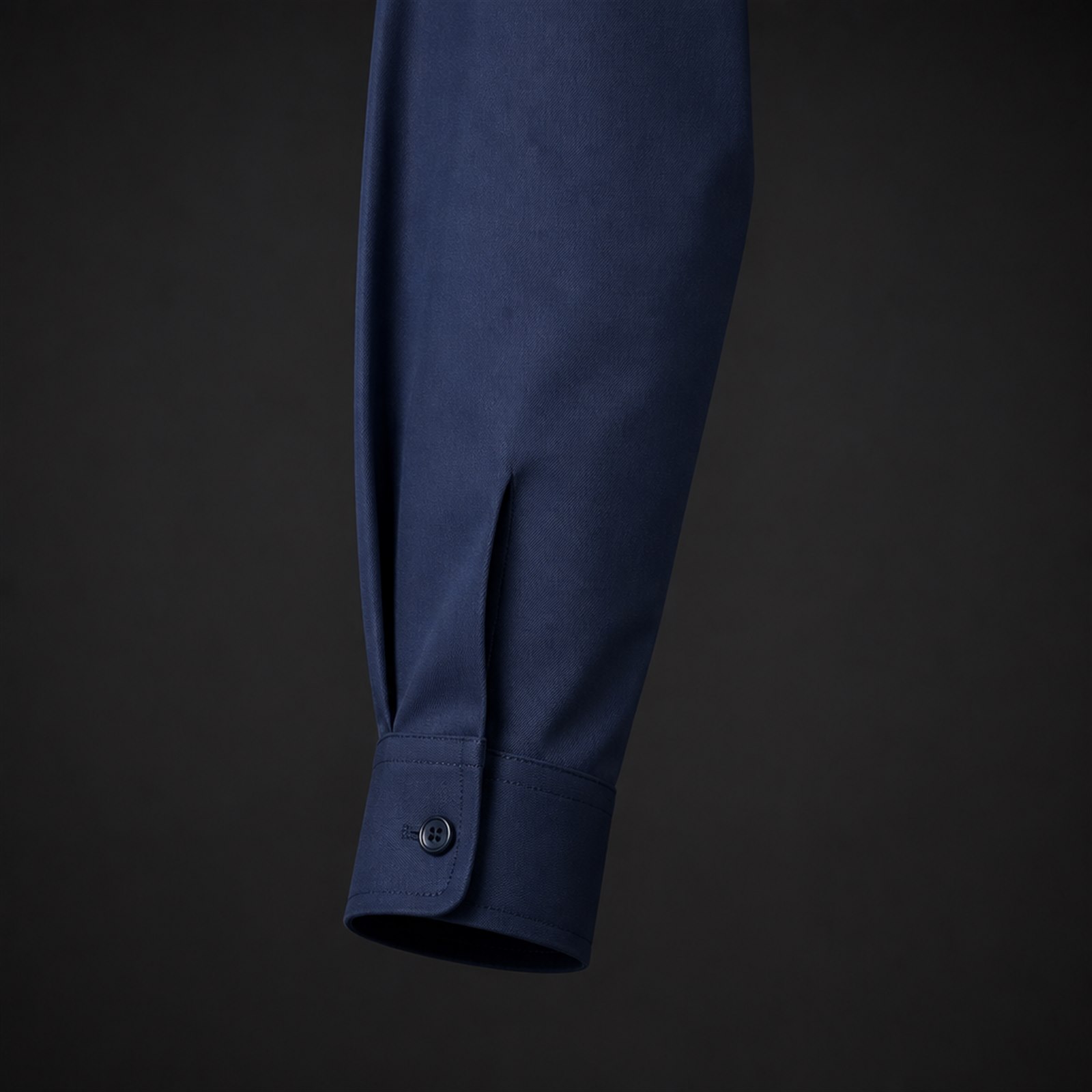
One-button or two-button cuff with a reinforced edge, because a folded and pushed-back cuff is where a duty shirt frays first.
Pockets
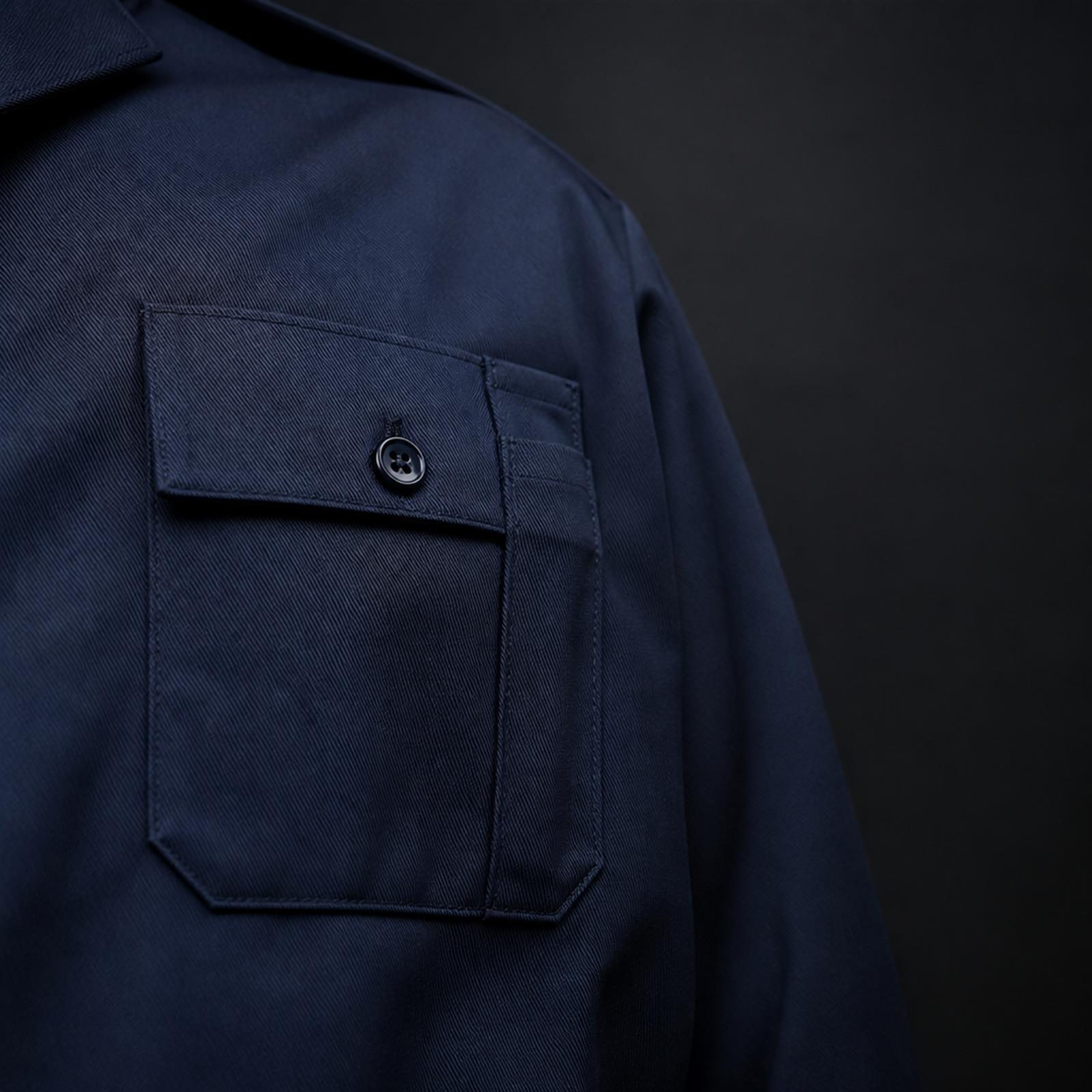
Chest pocket with flap and bar-tacked corners, an optional pen slot, or no chest pocket where a clean front is preferred for identity panels.
Badge and identity placement
Chest panel, sleeve and shoulder placement fixed on the pattern to the buyer's identity specification, then measured against the same marking in inspection.
Hem
Shaped or straight hem to buyer requirement, with the length set so the shirt stays tucked during standing, reaching and driving, and does not ride out when the wearer raises both arms.
Features
The 6 functional features of Security Duty Shirt each exist to solve a specific problem in use, and where a feature is a trade-off rather than a pure gain that is stated.
Interlining is selected against the buyer's laundering method, so the collar keeps standing after repeated washes rather than bubbling with fused interlining or collapsing with an underweight one.
Even button spacing and a straight front are treated as a defined production operation, because this is what makes the shirt read as formal at conversation distance.
Collar edge, cuff edge, pocket corners and elbow reinforced because those are the points a duty shirt degrades at first.
Shade is approved against a lab dip and checked between production lots, so a replacement shirt matches the uniforms already in service.
Armhole depth, sleeve pitch and back length developed for sitting, driving, reaching and standing at a post rather than for a static fit model.
Badge and emblem application chosen for colour retention and edge stability, with placement fixed on the pattern across every size.
Customization
13 customization lines for Security Duty Shirt: branding, colour, camouflage and packaging are all part of the specification, and every item is confirmed on the pre-production sample.
Fabric
Color
Collar
Collar Interlining
Sleeve
Cuff
Placket and Buttons
Company Identity
Hem
Ventilation
Label
Packaging
Colour
Camouflage
Sizing
Sizes are developed from the buyer's target size range and existing size chart or uniform sizing standard, with a collar measurement confirmed separately because a duty shirt is worn closed at the neck. The size set is developed so a reorder or a replacement garment matches the shirts already in service. A size set sample is produced so critical measurements — chest, shoulder, sleeve length, back length, collar and cuff opening — are confirmed across the range, and measurement tolerances are agreed in writing before bulk so inline and final inspection measure against the same numbers.
Branding
Main label, size label, care label, country of origin label and optional name or ID tag are produced to the buyer's artwork and content. Company identity can be applied as woven badge, embroidered emblem, printed transfer, rubber patch, chest panel or sleeve placement, with the position fixed on the pattern so it is consistent across every size. Care labelling is written to match the actual fabric and collar interlining, because laundering a fused collar at the wrong temperature is one of the fastest ways to ruin a uniform programme. All labelling, identity placement and packaging is confirmed on the pre-production sample.
Logistics
Sample development
Development of Security Duty Shirt runs in 7 stages, each risk removed before the next step commits cost.
Requirement review
Duty environment, climate, laundering regime, identity requirements and existing size chart reviewed, and specification gaps returned in writing before any material is cut.
Material and interlining proposal
Body fabric and collar interlining proposed against the stated laundry regime, with appearance and wash-life trade-offs stated for each option.
Pattern development
Pattern developed to the approved measurements, with collar geometry and badge placement fixed on the pattern.
Prototype
First sample produced for fit, collar structure, placket straightness, movement and identity placement assessment.
Revision
Consolidated buyer comments applied in a single revision round.
Size set
Full size range produced for measurement and collar confirmation across the whole range.
Pre-production sample
Final approved construction, materials and identity placement locked as the bulk standard.
Bulk production
7 stages of bulk production for Security Duty Shirt — where the approved specification is either held or lost.
Fabric and trim approval
Bulk fabric, interlining, buttons, thread, badges and labels approved against the pre-production standard.
Cutting
Cutting performed against the approved pattern with markers controlled for shade consistency and for collar and placket panels.
Collar preparation
Collar and interlining prepared and fused or assembled to the approved temperature and pressure settings, since this step decides whether the collar holds shape.
Identity preparation
Badges, emblems or transfers prepared and checked for artwork, colour and dimensions before assembly.
Assembly
Line assembly to the approved construction sequence, with collar setting and placket alignment controlled as defined operations.
Inline inspection
In-process inspection so collar, placket and identity placement faults are corrected on the line rather than at final.
Final inspection and packing
Measurement, construction, identity placement and packing inspection against the agreed standard, documented.
Quality control
The 7 checks applied to Security Duty Shirt, each measured against an agreed standard rather than against opinion.
Incoming fabric inspection
Shade, weight, width and colour consistency checked before the fabric enters production, with each lot compared against the approved standard.
Interlining and trim inspection
Collar interlining, buttons, thread and badge artwork checked against the approved standard before use, because a substituted interlining changes how the collar behaves after washing.
Pre-production approval
Buyer-approved pre-production sample becomes the reference standard.
Inline inspection
Work in progress inspected at defined points during assembly, with collar and placket checked before the front is closed.
Identity placement inspection
Badge, emblem and panel placement measured against the pattern marking on every size, because misplaced identity is the most visible defect on a uniform.
Measurement and construction inspection
Critical measurements checked against the approved size set with agreed tolerances, and stitching, collar structure, reinforcement, button function and symmetry checked against the approved sample.
Final inspection and packing inspection
Finished goods inspected before packing, then labels, size marking, poly bagging and carton marking checked against the packing instruction.
Specifications
20 specification rows for Security Duty Shirt: only confirmed items are listed, so a row that depends on your programme is omitted rather than filled with an estimate.
| Product type | Security duty shirt |
|---|---|
| Body fabric | Poly cotton, cotton or NYCO ripstop family — confirmed at specification stage |
| Collar | Structured stand or convertible collar with interlining to match the buyer's laundry regime |
| Sleeve | Long or short sleeve, with optional epaulette, roll-up tab or sleeve identity placement |
| Cuff | One-button or two-button cuff with reinforced edge |
| Closure | Button placket with spare button fitted |
| Company identity | Woven badge, embroidered emblem, printed transfer, rubber patch, chest panel or sleeve placement |
| Chest pocket with flap, pen slot, or no chest pocket | |
| Hem | Shaped, straight or extended back hem to buyer specification |
| Size range | Developed to buyer size chart or uniform sizing standard, with collar measurement confirmed |
| Laundry regime | To be stated by the buyer so interlining, thread and identity application match |
| Labelling | Private label to buyer artwork, with optional name or ID tag |
| Packaging | To buyer packing instruction |
FAQ
Almost always because of the interlining and the laundry temperature, not the outer fabric. Fused interlining holds a sharper shape but can bubble when washed hot, and an underweight interlining collapses regardless. We ask for your actual washing method and select the interlining against it, then confirm the result on the pre-production sample.
Yes. Chest panel, sleeve, shoulder tab or a combination can be used, and the position is fixed on the pattern so every size carries the mark in the same place relative to the body. The application method — woven badge, embroidery, printed transfer or rubber patch — is chosen for legibility and colour retention after laundering.
A lab dip is approved before bulk and each production lot is checked against the approved standard. Shade drift between lots is the usual reason a replacement garment stands out in a line-up, so the colour is verified rather than assumed. If you have a retained reference garment from an earlier order, send it and we will match against it.
Yes, and that affects the pattern. Armhole depth, collar height and pocket placement are adjusted so the shirt does not bunch under a vest and so chest identity is still visible or deliberately positioned. If the shirt will be worn under load-bearing equipment, tell us before pattern development.
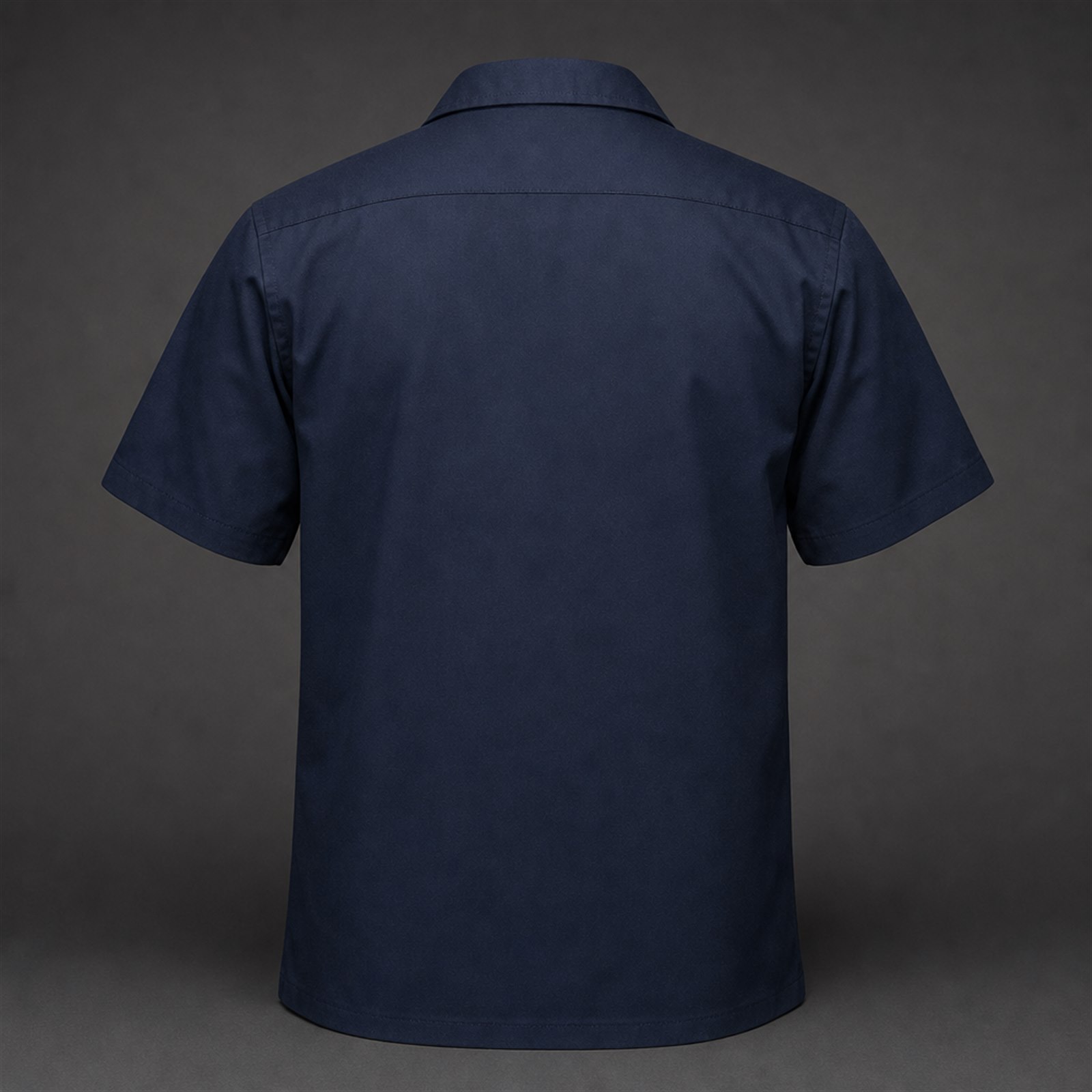
Yes. Both can be produced in the same programme and the same colourway, though sleeve panels are cut separately and this is reflected in the order quantity. Sleeve length is confirmed on the size set for both options.
MOQ and lead time depend on the fabric, the collar interlining, the identity application and the number of colourways, and we do not publish figures we have not confirmed for your specification. Tell us the product, size range and quantity you have in mind and we will state what applies to your programme.
Related Materials
Related Applications
Related Capabilities
Related Categories
More products
Security / Duty Uniforms
A security uniform is worn every working day, in front of the client's customers, and is expected to look formal on the last shift of the month exactly as it did on the first.
Security / Duty Uniforms
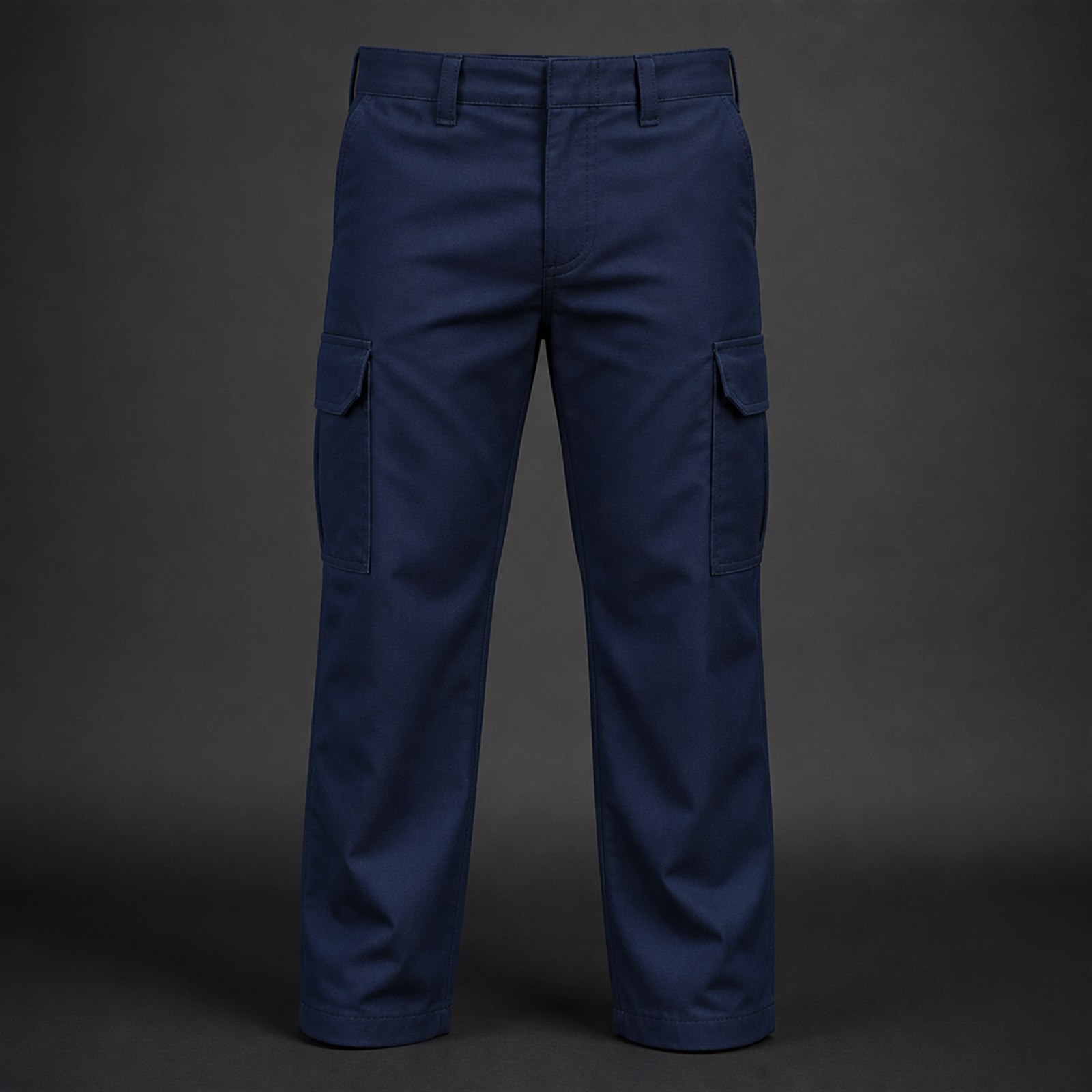
Duty pants are worn longer than any other garment in a uniform, usually with a belt loaded with equipment, and they are judged by whether they still look presentable at the end of a shift as much as by whether they survived it.
Combat Shirts
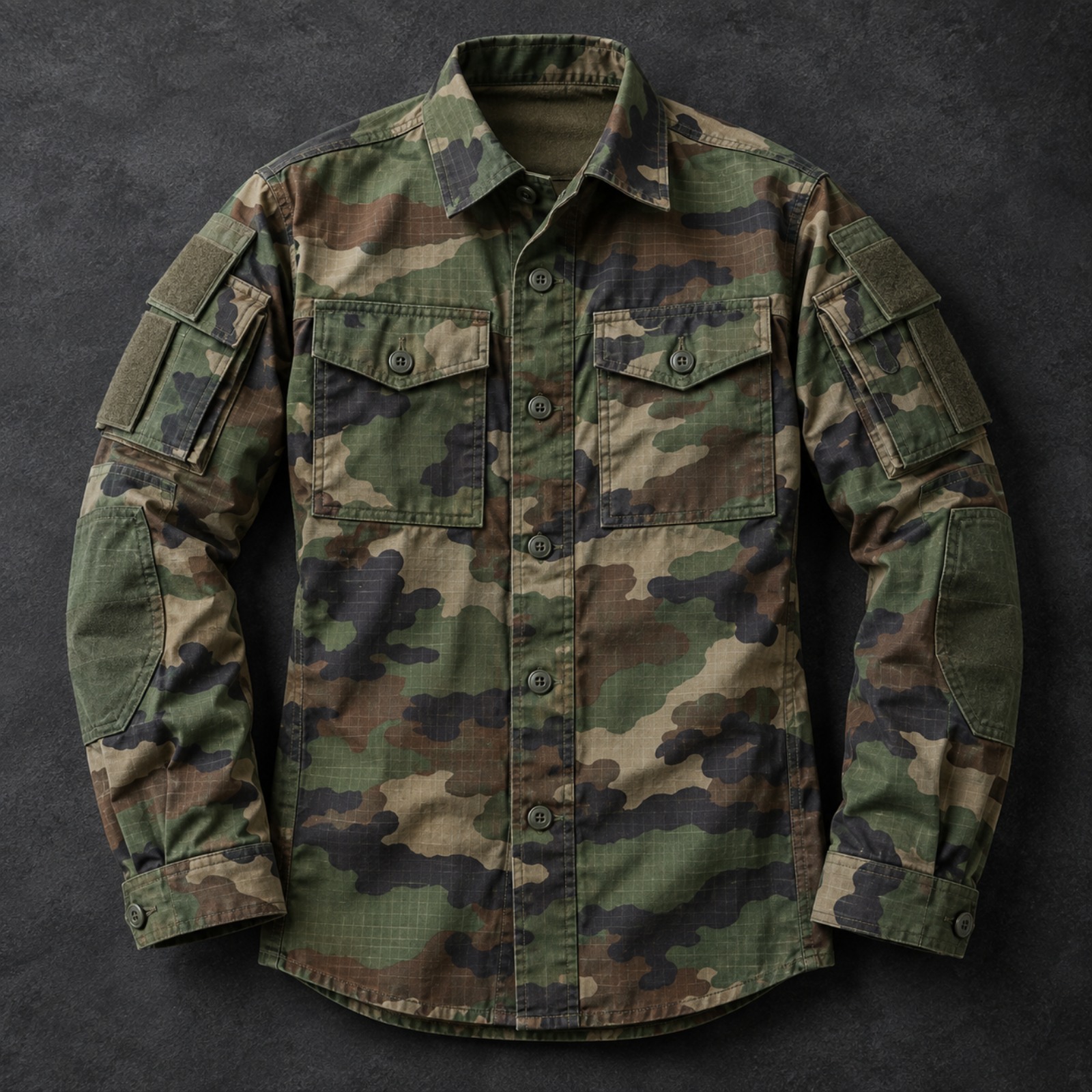
This shirt is specified for programmes where the dominant cost is not the garment, it is the replacement cycle.
Send us your tech pack, reference sample or product idea. We review your requirement, recommend materials and construction, and come back with a development plan you can act on.