Field Lab
Cold Weather Mobility Test
This Field Lab page is the test position for mobility in insulated garments. The question is whether the pattern, articulation and gusseting we build allow the movement range the wearer actually needs once the full layer stack is on: shoulder rotation, forward reach, hip flexion, kneeling and getting in and out of a vehicle. Insulation adds bulk, and bulk that is not accounted for in the pattern restricts movement in exactly the places a wearer needs it, so mobility is treated here as a specification requirement rather than a comfort preference. No test has been completed, so method, observations and result are awaiting test data, and the test method still has to be confirmed with the laboratory and the pattern team. Thermal imaging cannot be treated as formal certification of insulation performance, and a mobility test says nothing about warmth in any case; the two have to be assessed separately.
- Status
- Awaiting test data
- Materials compared
- 4
Gallery
Test bench
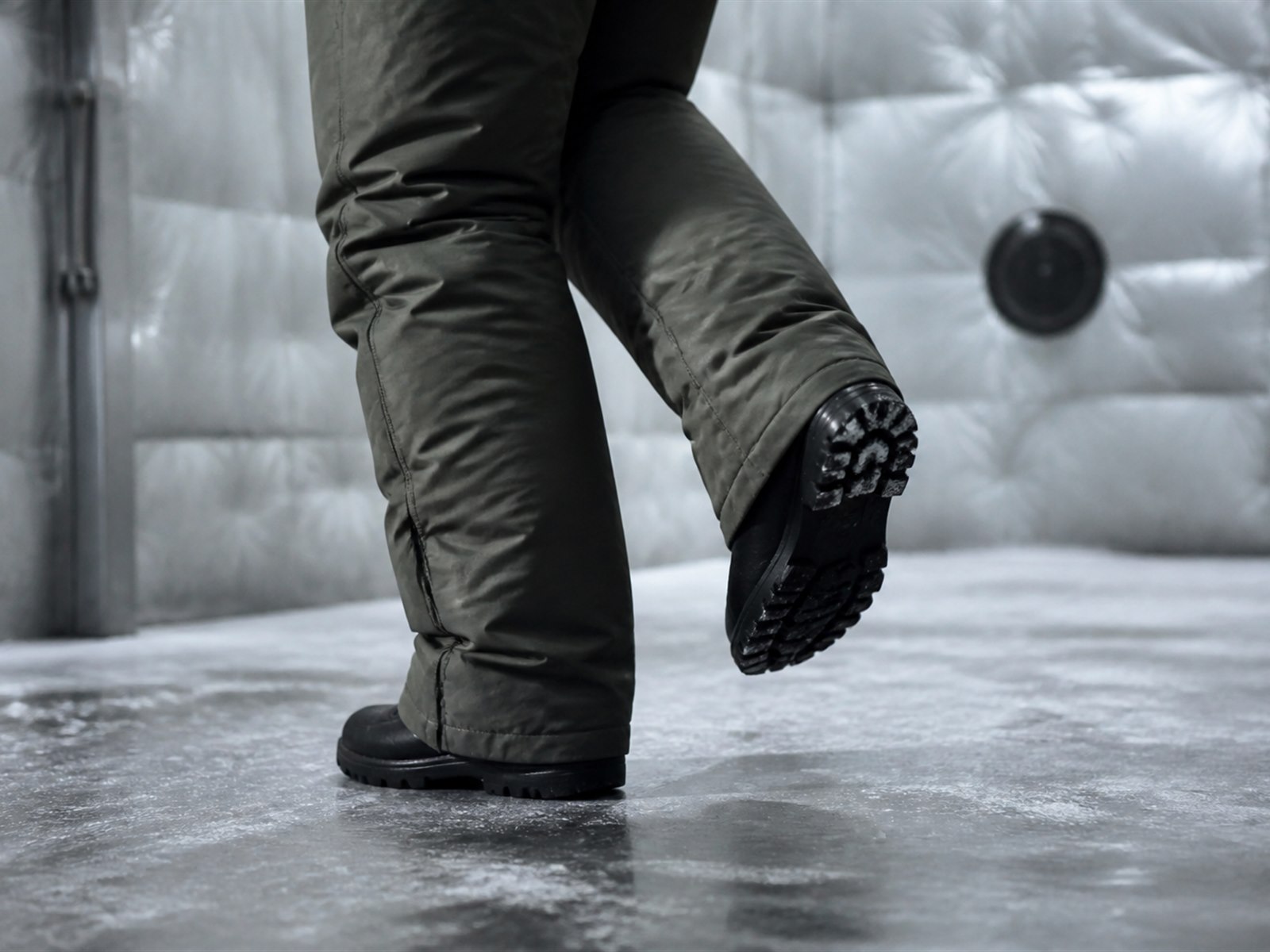
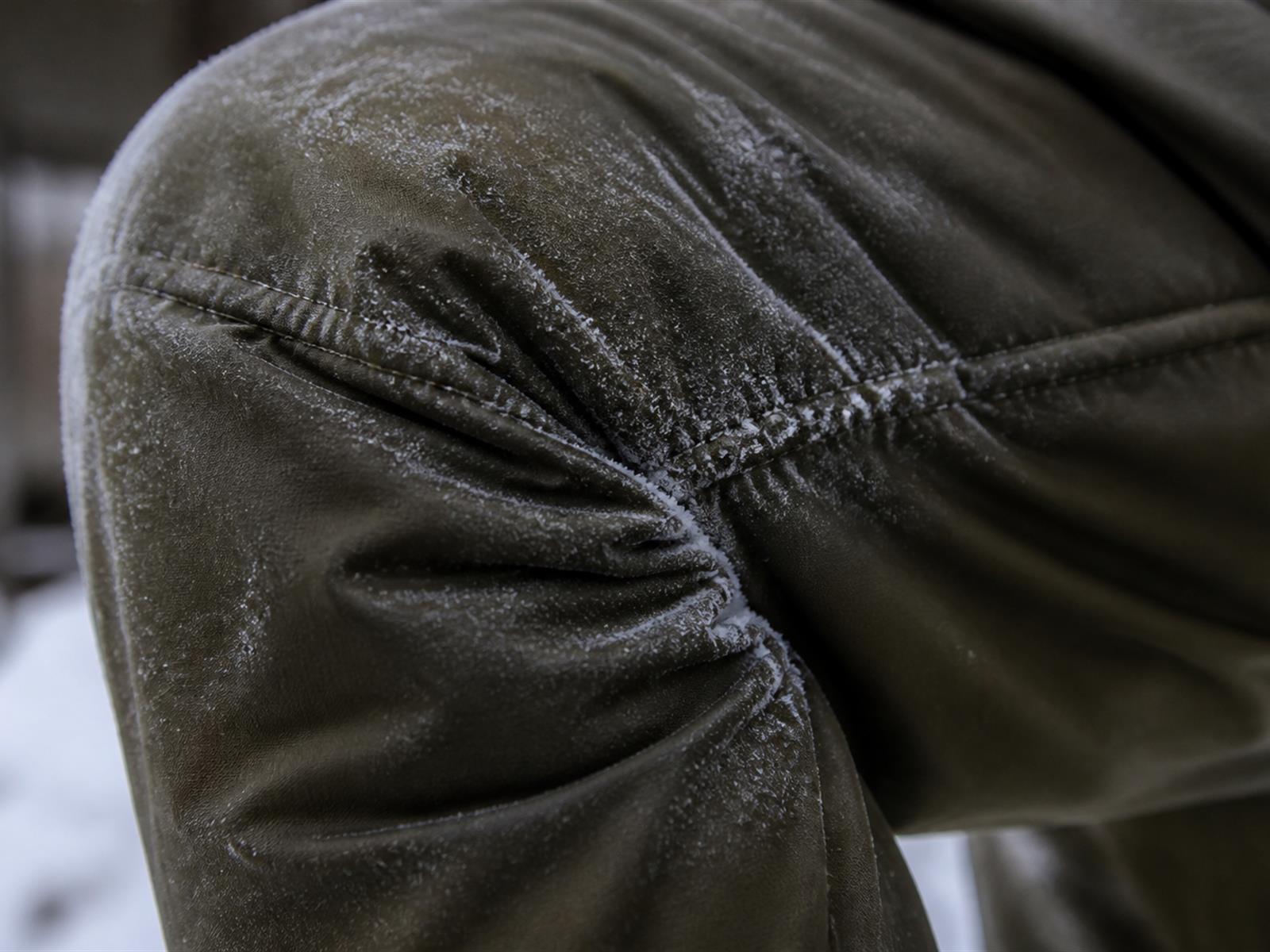
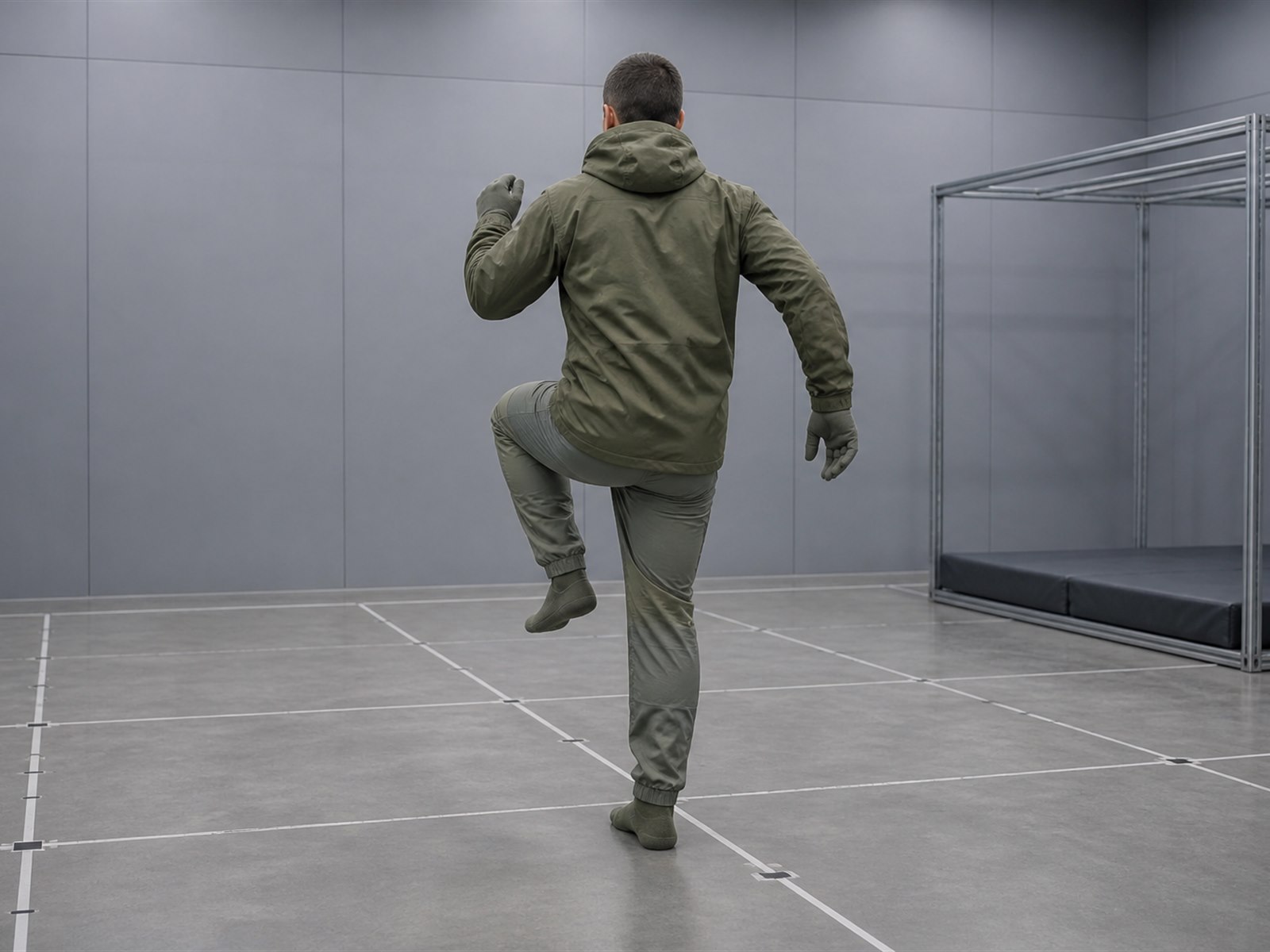
Status: AWAITING TEST DATA — Cold Weather Mobility Test has not yet been run on real material. Method, observations and result will be published once the test has been completed and the output recorded.
Question
What are we testing?
Whether garments built to our patterns preserve the movement range a wearer in a full layer stack needs, and where restriction appears first. Test method: to be confirmed, and likely to combine a defined set of movements performed in a fixed order with measurement at agreed reference points, so that two constructions can be compared on the same movements. Conditions required for a comparison to mean anything: the complete layer composition and the order worn; the garment size and the body dimensions of the wearer, since a mobility result is meaningless without both; the reference points used for measurement and how they are marked; the movement set, the order in which the movements are performed and how far each is taken; whether movement is measured or recorded on video for later assessment; the starting posture and the rest between movements; and the number of wearers tested. Comparing an articulated construction against a plain one requires the same wearer, the same size and the same layer stack, otherwise the difference belongs to the test setup.
Relevance
Why does it matter?
A cold weather garment is rejected for restriction more often than for cold. The wearer cannot reach a control, cannot kneel to work, cannot shoulder equipment, and the garment is left behind or cut down, which is the worst possible outcome for a buyer who has paid for insulation. Restriction is also the failure buyers find hardest to argue with a supplier, because it is not visible in a measurement chart and only shows up when the whole stack is worn together. Articulation, gusseting and layer allowance all add pattern work and cutting cost, and a mobility comparison is what allows those costs to be justified with evidence instead of a claim about fit.
Materials
Materials in this test
Material
Mechanical Stretch Fabric
Mechanical stretch fabric obtains its extension from yarn and weave geometry rather than from elastic fibre.
Material
Stretch Ripstop
Stretch ripstop combines the tear containment of a ripstop grid with the movement of a stretch construction.
Material
Cold Weather Insulation Material
Cold weather insulation material keeps a wearer warm by holding still air in a structure, not by generating heat.
Material
Softshell Fabric
Softshell is a fabric system rather than a single cloth.
Method & result
Method, observations and result
Cold Weather Mobility Test is published only when the underlying work has been carried out, so an empty field means the test has not yet produced that value.
Testing method
Awaiting test data — to be published when the test is complete.
Observations
Awaiting test data — to be published when the test is complete.
Result
Awaiting test data — to be published when the test is complete.
Limitations
What this test cannot tell you
Limitations: this test describes defined movements on a small number of wearers, not how a garment performs over a working day. It cannot predict how a pattern behaves after the garment has been worn, packed and washed, or how it interacts with the load bearing equipment a wearer actually carries, which changes how a shoulder and a hem move. Individual body proportions vary a great deal, so a result on one wearer does not transfer to a population, and a garment that restricts one wearer may be comfortable for another in the same nominal size. The test also cannot answer the warmth question, and it is not a fit guarantee: the sizing that allows for a layer stack has to be developed and confirmed on a size set for the buyer's own wearers. Any conclusion about comfort in a specific programme belongs to the buyer's own field trials. Third-party laboratory position: this test is unlikely to be one that an accredited laboratory performs, which is precisely why its limits need stating; whether any part of it is run with an external partner has not been decided.
Related
Related content
Related Materials
Related Applications
Related Capabilities
Request a sample to evaluate yourself
Send the product type and the application. We will propose the material options for that application and state the trade-offs, so the comparison you run is against the right candidates.