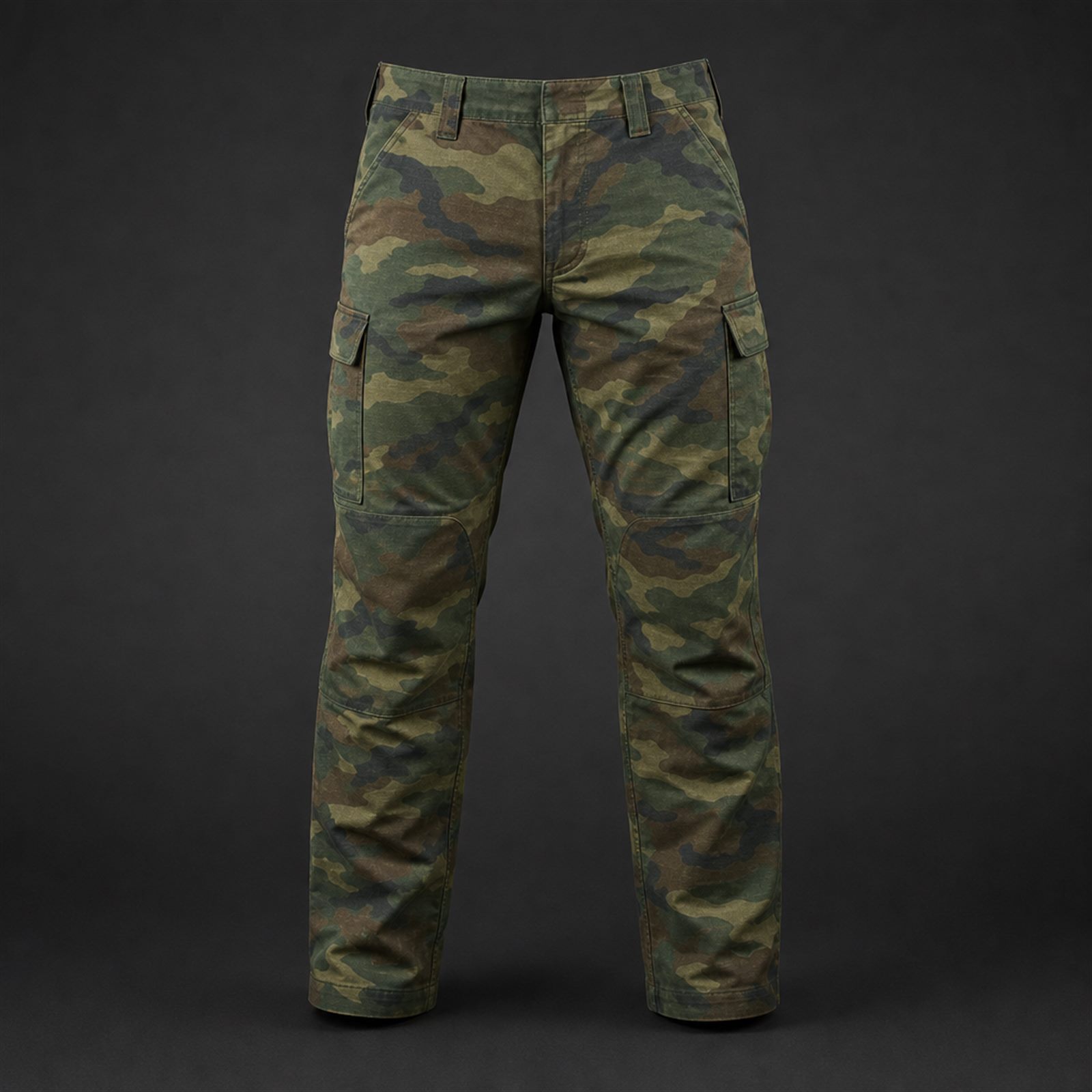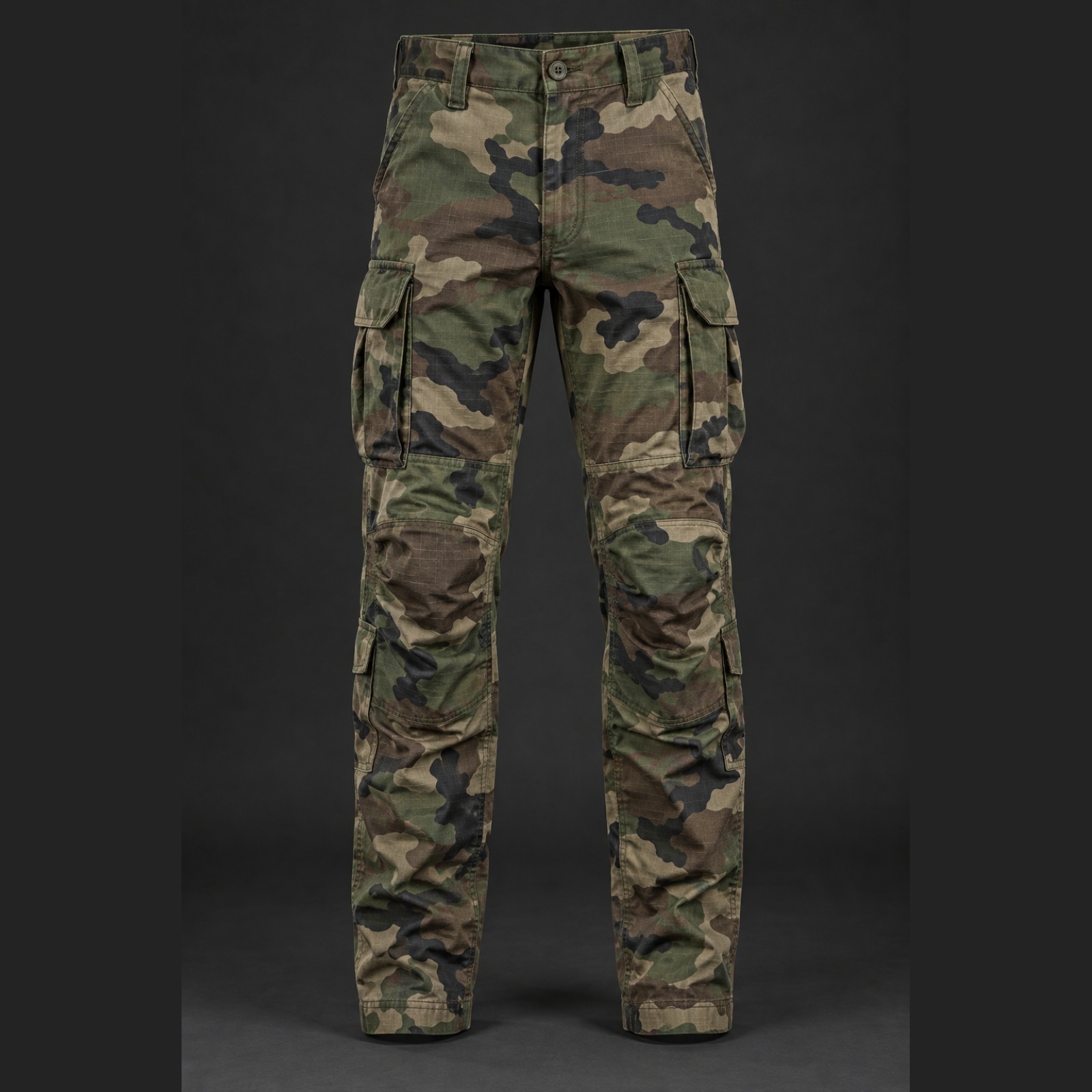
Tactical Pants
Ripstop Tactical Pants
A tactical pant is judged by three things: whether the crotch survives, whether the knee holds up, and whether the waist still fits the same after a full day of movement.
TemperateHotArid / Desert
View productProducts / Tactical Pants
Cold weather changes what a tactical pant has to do. Movement matters less than retention, wind becomes the dominant heat loss mechanism, and the garment has to accept a base layer without binding so the wearer can adjust insulation as the day warms or the activity level rises. This pant is specified around those three realities: a shell selected for wind resistance rather than for maximum breathability, an insulation approach that the buyer chooses as fixed, lined or removable, and a pattern built with extra room through the thigh and knee so the pant works over a base layer rather than compressing it. Every one of those choices costs mobility, weight and drying time, and those costs are stated here so the pant is specified deliberately rather than ordered by assumption.
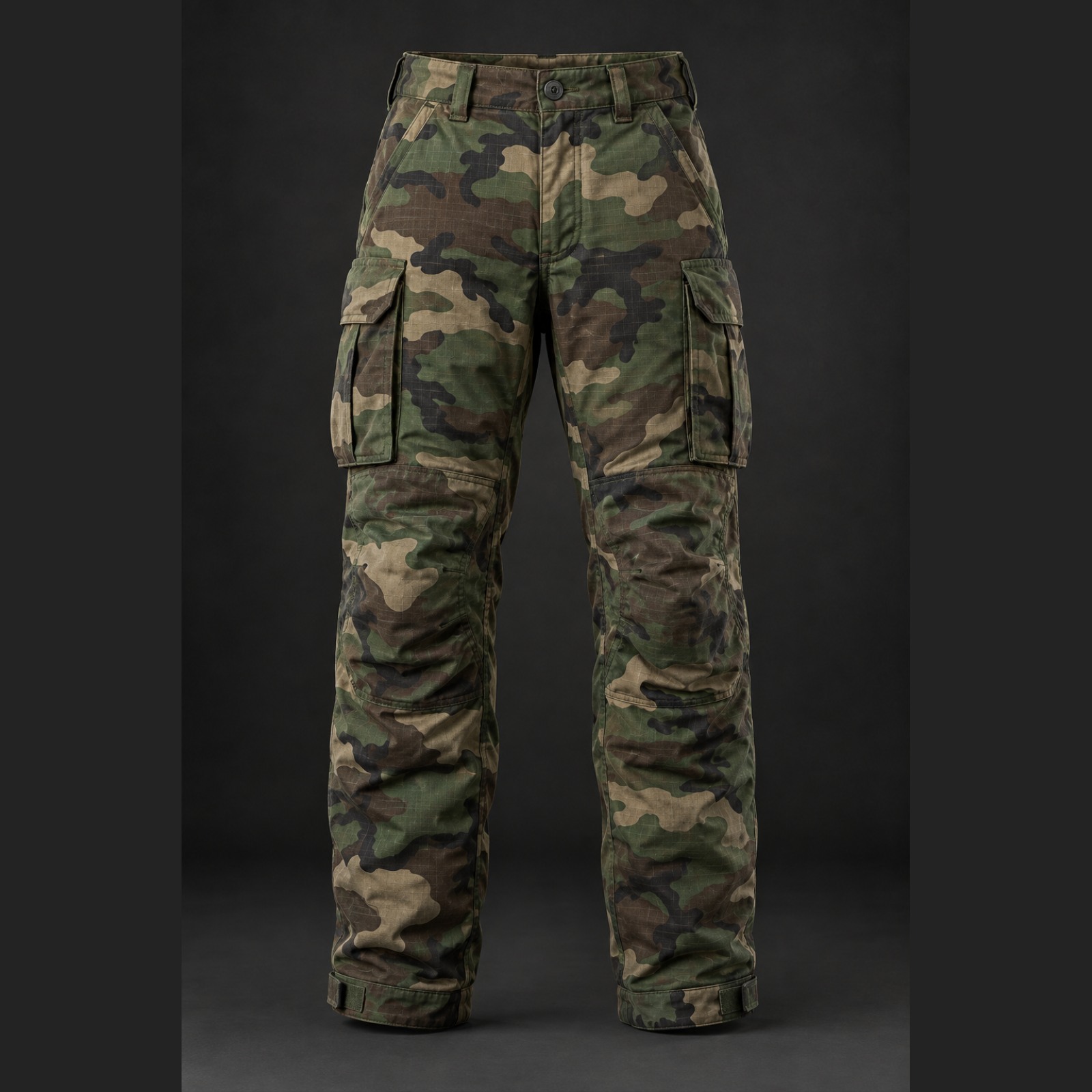
Gallery
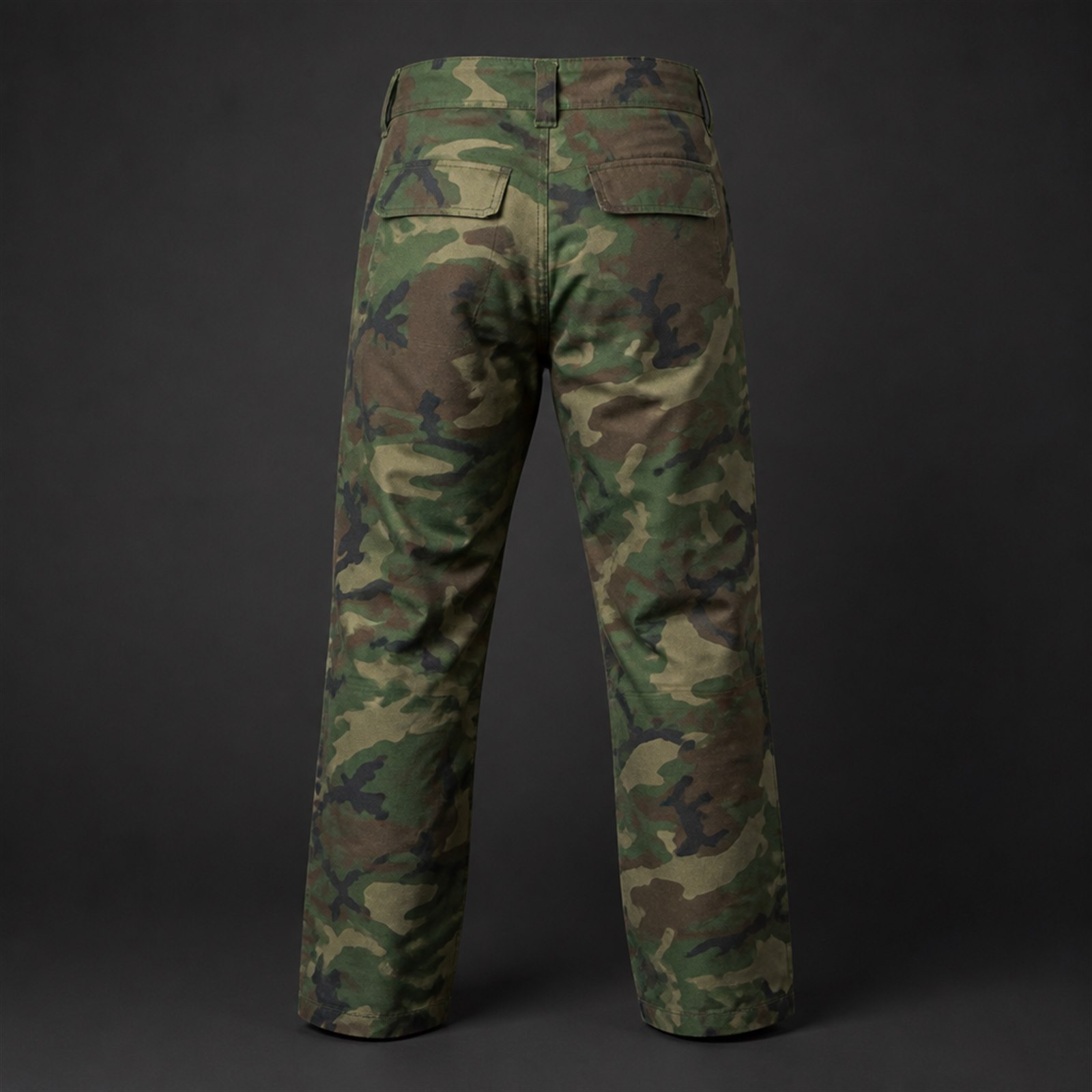
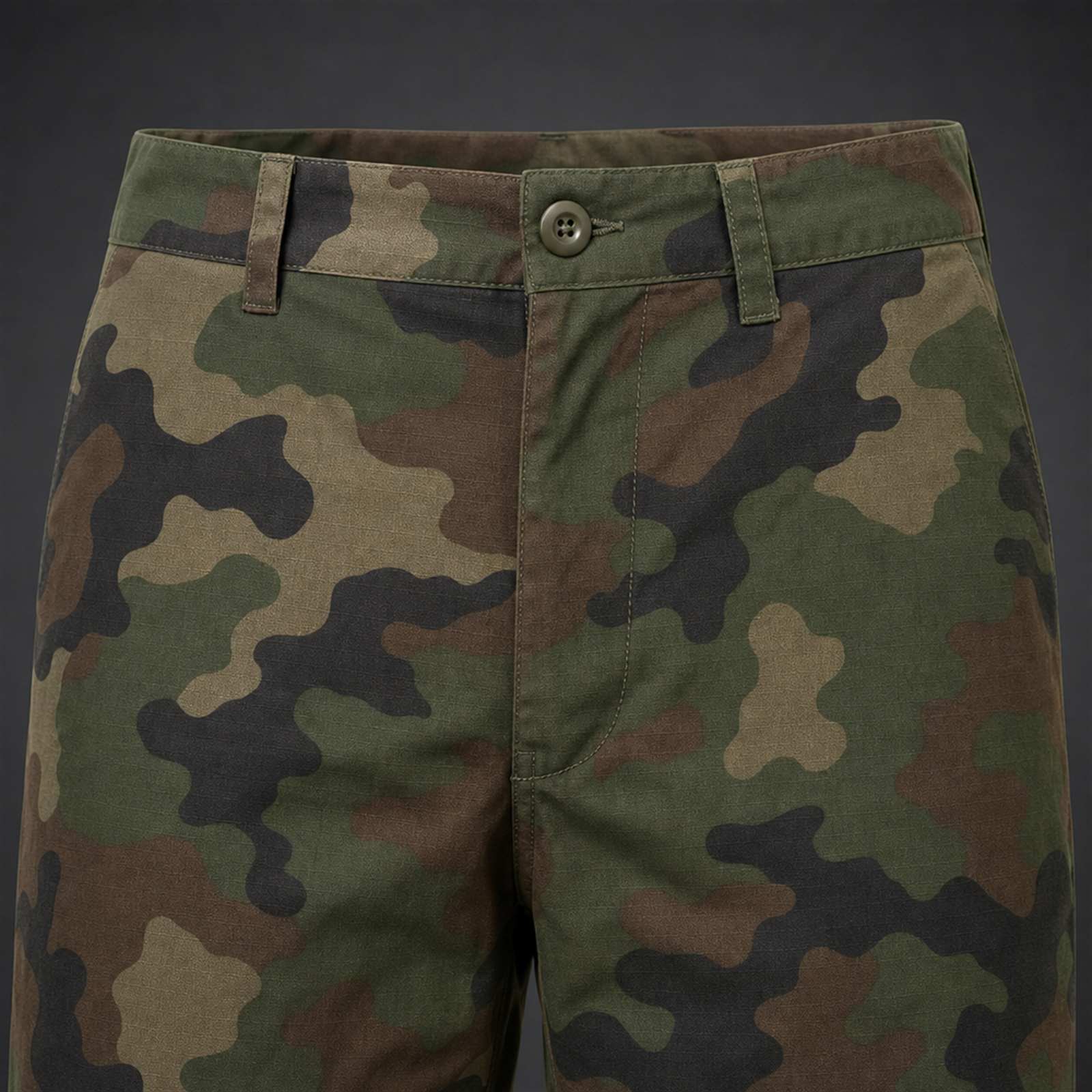
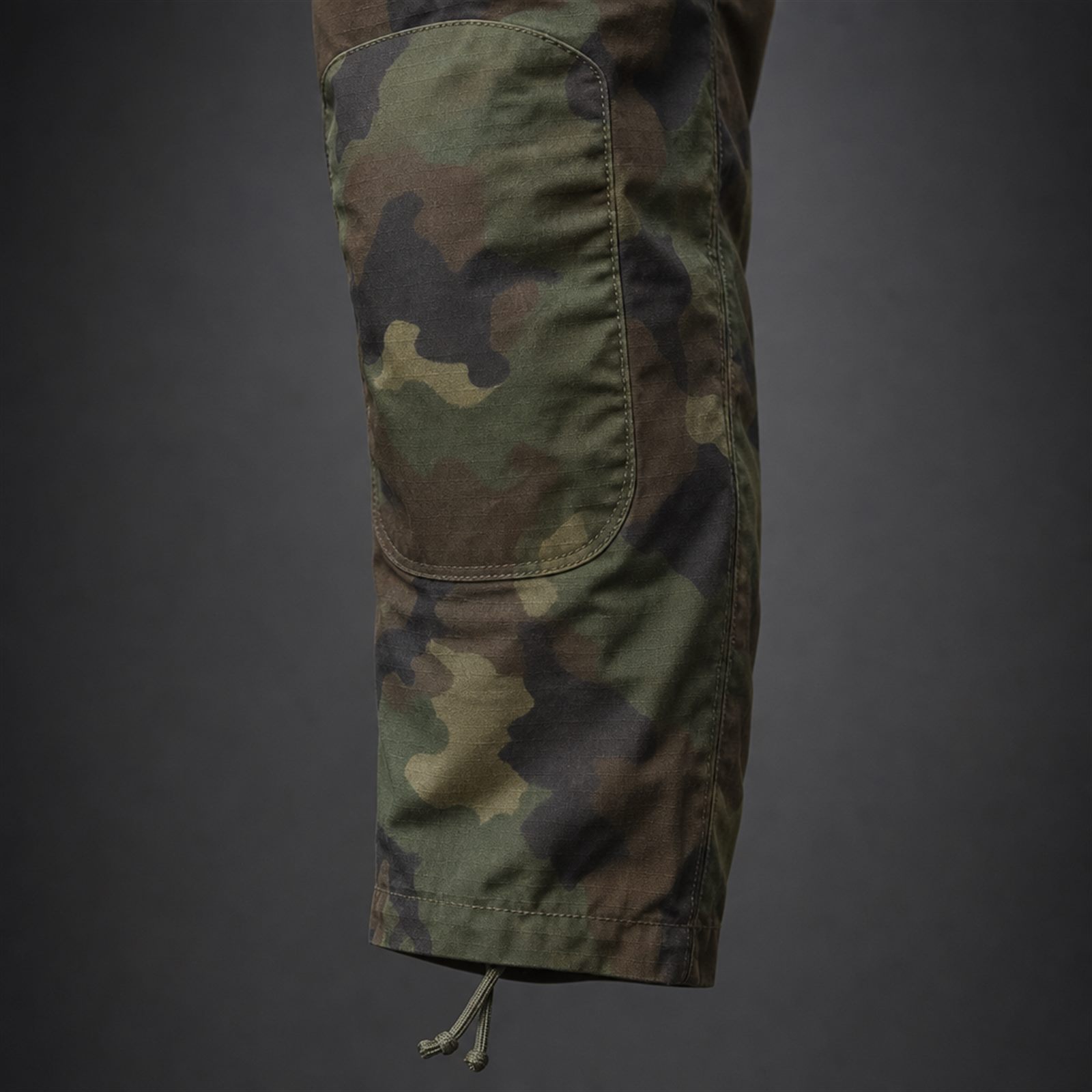
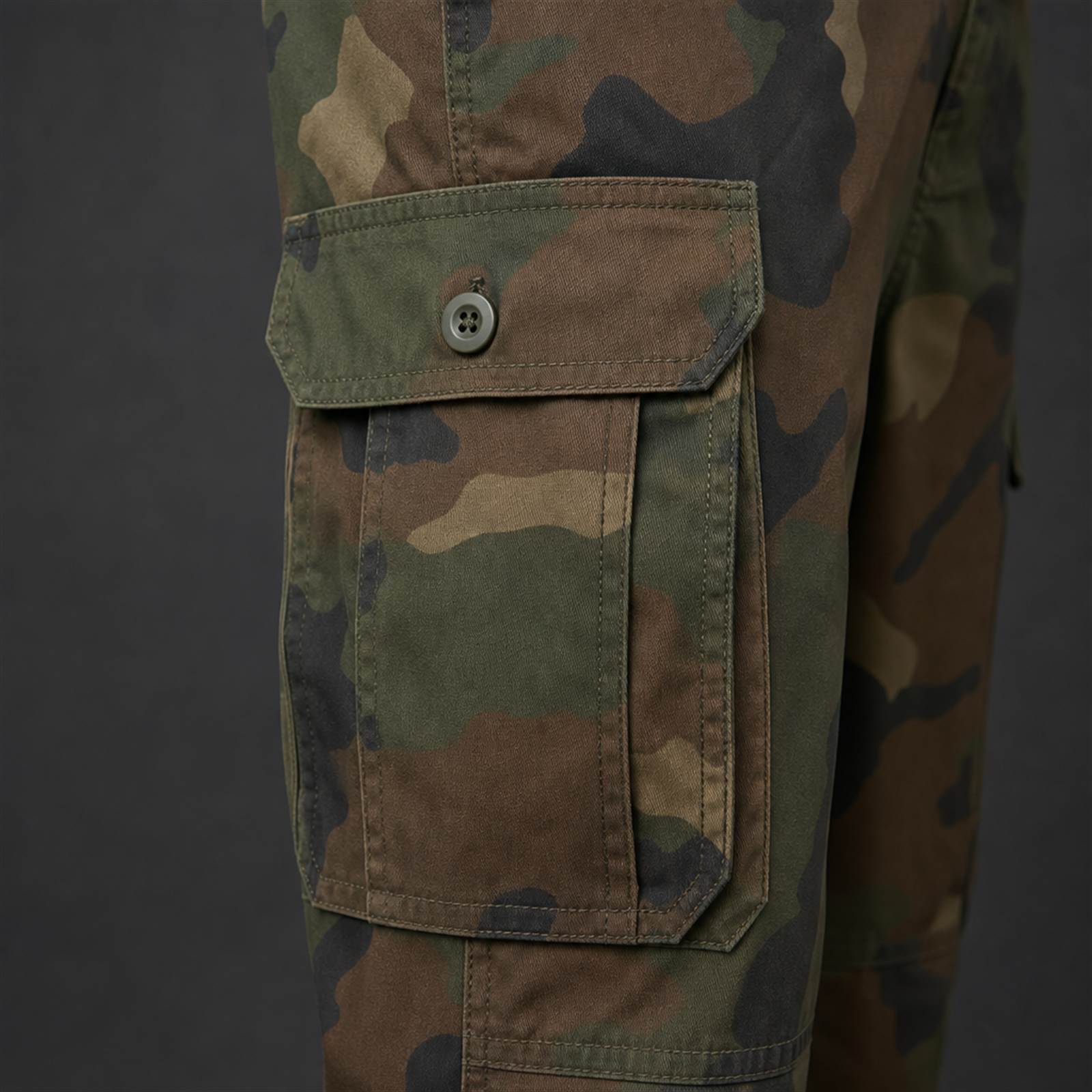
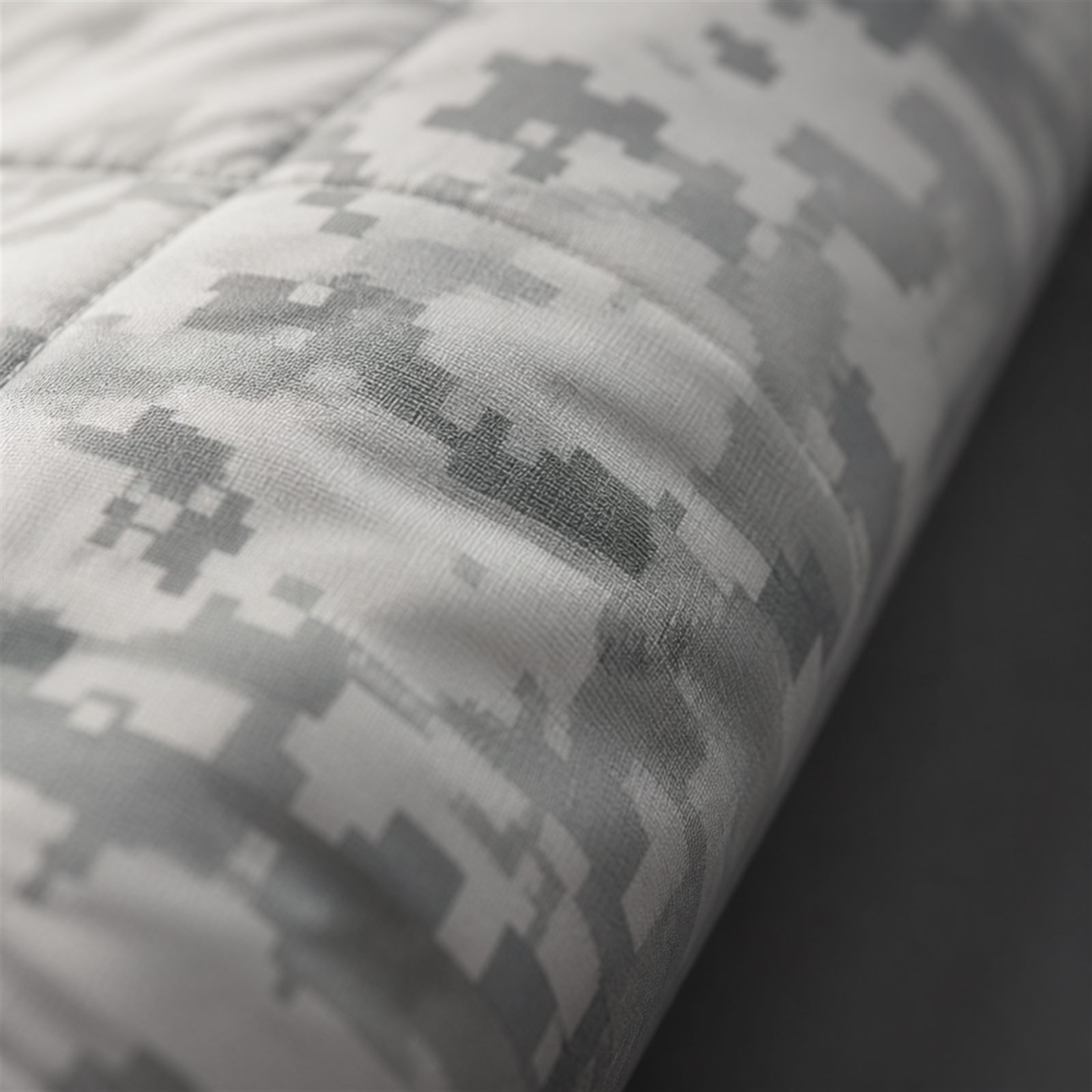
Design purpose
Keep the wearer warm in wind and cold while remaining usable over a base layer and while moving. Wind resistance and insulation are prioritised over drying speed, and the resulting weight, bulk and slower drying time are documented as the accepted cost of that priority.
Applications
Interactive map
Cold Weather Tactical Pants: select a marker to see what can be specified at that part of the garment — all 10 mapped areas are also listed in full below the map, so nothing is hidden behind an interaction.
Customization by garment part
Select a marker to see the customization options available at that part of the garment. Every option below is a manufacturing decision you control.
Materials
4 material options for Cold Weather Tactical Pants, specified per garment area — a single fabric cannot serve heat management and abrasion resistance at the same time.
Leg and seat shell
Wind resistance is the primary heat retention measure, and it also reduces breathability, so a windproof shell worn during hard movement will hold moisture. Where the activity level is high, a more breathable shell with a separate insulation layer is usually the better answer.
Insulation
Full insulation adds warmth everywhere and reduces mobility everywhere. Panel insulation at the seat and knee targets the surfaces that lose heat when the wearer is static or kneeling, at lower cost in bulk. A removable liner adds the most flexibility and the most hardware and weight.
Knee and seat reinforcement
Reinforcement over an insulated panel adds a third layer at the knee, which is the point where the wearer feels bulk most. It is specified where the wearer kneels or rests on the ground, not as a default.
Waistband and trim
A cold weather pant has to be adjustable across the layering range, so the waist is built with more give than a warm weather pant. Venting hardware is heavier and is specified only where the wearer is expected to move hard enough to overheat.
Construction
How each of the 8 parts of Cold Weather Tactical Pants is assembled, and why that choice was made.
Waist
Waistband built with elasticated side inserts and a defined rise that accommodates a base layer without compressing it. Compressing a base layer defeats its purpose, so the waist is sized over the intended layering system rather than over the bare measurement.
Fly
Zip fly with a full facing and an insulated front panel where specified. The fly area is a cold point because it is a gap in the shell, so a storm-style internal facing is offered where wind penetration matters.
Crotch
Gusseted crotch with a low-bulk seam, cut with additional room for a base layer. The gusset is the single most valuable construction feature in a cold weather pant, because the added layers in the upper leg make crotch binding worse rather than better.
Seat
Seat panel with a defined rear rise, insulated where specified and cut so the seam is not loaded in a crouch. The seat is a static heat loss point when the wearer is stationary, which is why it is often insulated even when the rest of the leg is not.
Knee
Articulated knee developed to accommodate a base layer and, where required, a pad. Insulation at the knee helps when kneeling in cold ground but adds bulk at the joint, so it is specified against the wearer's task rather than applied as standard.
Thigh
Cargo pocket placement is set so the pocket works over a base layer and does not press on the leg when loaded. Where thigh vents are specified, they are zipped and positioned to be closed against wind when not in use.
Lining
Lining selection determines how the pant feels and how it dries. A brushed lining feels warmer against the leg and holds more moisture; a smooth lining slides over a base layer and dries faster. The choice is stated to the buyer because it cannot be changed by the wearer.
Hem
Straight hem with a cuff adjustment, plus a storm cuff option where snow ingress matters. A hem that sits over a boot with a closure is warmer than a looser hem, but it also traps moisture and adds weight at the ankle.
Features
The 6 functional features of Cold Weather Tactical Pants each exist to solve a specific problem in use, and where a feature is a trade-off rather than a pure gain that is stated.
The shell is selected first for wind resistance, because wind is the dominant heat loss mechanism in cold conditions, with the breathability cost stated explicitly.
Thigh, knee and waist are developed to fit over a base layer without compressing it, so the wearer can adjust insulation without changing the pant.
Fixed lining, panel insulation at seat and knee, or a removable liner, each with its own cost in bulk, weight and drying time.
Both are more important in a cold weather pant than a warm weather one, because layered fabric binds at the crotch and knee sooner.
Reinforcement is placed at the two surfaces that meet ground and seating, where the added layer is least disruptive to movement.
Zips and closures are specified for operation with gloves and for function when cold and stiff, rather than for minimum trim cost.
Customization
15 customization lines for Cold Weather Tactical Pants: branding, colour, camouflage and packaging are all part of the specification, and every item is confirmed on the pre-production sample.
Fabric
Insulation
Lining
Color
Camouflage Pattern
Waist
Fly Closure
Knee
Crotch
Hem
Ventilation
Logo
Label
Packaging
Colour
Camouflage
Sizing
Sizes are developed from the buyer's size chart or the buyer's uniform sizing standard, with the measurement set taken over the intended layering system rather than over the bare body, so the pant is sized to be worn over a base layer. A size set sample is produced so that waist, hip, front and rear rise, thigh, knee height and leg opening are confirmed across the range. Thigh and knee openings are treated as critical dimensions because a cold weather pant that is tight over a base layer loses most of the benefit of the layer. Where extended sizes are required, they are developed rather than scaled so the layering allowance stays correct.
Branding
Main label, size label, care label and country of origin label are produced to the buyer's artwork and content, including the care instruction that matches the lining and insulation actually used. Branding can be applied as woven label, printed label, rubber patch, embroidery or heat transfer, with placement confirmed on the approved sample. Packaging ranges from a plain poly bag to a printed poly bag with hangtag, header card or custom retail box. Where the buyer specifies care content, it is confirmed in writing before labels are ordered so the printed instruction matches the garment.
Logistics
Sample development
Development of Cold Weather Tactical Pants runs in 7 stages, each risk removed before the next step commits cost.
Requirement review
Specification, expected temperature range, activity level and intended layering system reviewed, with open points returned in writing before material is cut.
Insulation and layering decision
The insulation approach and the base layer the pant must accept are agreed first, because they set the thigh and knee allowances in the pattern block.
Material proposal
Shell and lining fabrics proposed with wind resistance, breathability, weight and drying behaviour described, and the trade-offs of each option stated.
Pattern development
Block developed with the layering allowance, gusset, knee articulation, insulation panels and reinforcement placement.
Prototype
First sample produced for fit over the intended base layer, movement range and insulation position.
Wear assessment
The prototype is checked in a crouch, a kneel and a stride over the intended layering system so that binding and bulk are identified on the sample rather than in bulk.
Revision, size set and pre-production sample
Buyer comments consolidated into one revision round, the size range produced for measurement confirmation, and the approved construction locked as the bulk standard.
Bulk production
7 stages of bulk production for Cold Weather Tactical Pants — where the approved specification is either held or lost.
Fabric and trim approval
Bulk shell, lining, insulation, zips, cord, hook and loop and labels approved against the pre-production standard.
Cutting
Cutting performed against the approved pattern with layer thickness allowed for, and markers controlled for shade and print alignment.
Lining and insulation preparation
Lining and insulation panels cut to the approved pattern and checked for loft, thickness and shade before assembly.
Assembly
Line assembly to the approved sequence, with insulation attachment, quilt lines and vent construction defined as critical operations.
Inline inspection
In-process inspection so that lining distortion, insulation shift and closure faults are corrected on the line.
Finishing
Thread trimming, hardware function check and controlled pressing, since heat and pressure can flatten an insulation layer permanently.
Final inspection and packing
Measurement, construction and packing inspected against the agreed standard and recorded.
Quality control
The 7 checks applied to Cold Weather Tactical Pants, each measured against an agreed standard rather than against opinion.
Incoming fabric inspection
Shade, weight, width and shell integrity checked before the fabric enters production.
Insulation and lining inspection
Insulation loft and thickness, lining shade and shrinkage behaviour checked against the approved standard.
Pre-production approval
The buyer-approved pre-production sample becomes the reference standard for the order.
Inline inspection
Work in progress inspected at defined points, with insulation attachment, lining alignment and closure construction checked as critical items.
Measurement inspection
Waist, rise, hip, thigh, knee height and leg opening checked against the approved size set, with measurements taken over the approved layering allowance.
Construction inspection
Stitching, insulation security, reinforcement placement, closure function and symmetry checked against the approved sample.
Final and packing inspection
Finished pants checked before packing, then labels, folding, poly bagging and carton marking checked against the packing instruction.
Specifications
21 specification rows for Cold Weather Tactical Pants: only confirmed items are listed, so a row that depends on your programme is omitted rather than filled with an estimate.
| Product type | Cold weather tactical pants |
|---|---|
| Shell material | Wind resistant, softshell or water resistant shell — confirmed per programme |
| Insulation | None, brushed lining, fleece lining, panel insulation or removable liner — to buyer specification |
| Lining options | Smooth, brushed, mesh through the thigh, or unlined |
| Crotch construction | Gusseted crotch with layering allowance |
| Knee construction | Articulated knee with optional insulation, reinforcement or pad pocket |
| Waist options | Elasticated side inserts, internal adjusters, suspender attachment points |
| Fly closure | Zip with button, zip with hook and loop, optional storm facing |
| Hem options | Straight hem, hook and loop cuff adjustment, storm cuff, drawcord cuff |
| Climate | Cool / cold, cold / dry, temperate cold season |
| Size range | Developed to buyer size chart or uniform sizing standard, sized over the intended layering system |
| Labelling | Private label to buyer artwork and content |
| Packaging | To buyer packing instruction |
FAQ
It depends on how much the wearer moves. Full insulation keeps a static wearer warm but reduces mobility throughout the leg and dries more slowly. Panel insulation at the seat and knee targets the surfaces that lose heat when the wearer is kneeling or stationary, with less bulk and better movement. Most programmes that involve continuous movement choose panel insulation plus a base layer, and programmes with long static periods choose full insulation or a removable liner.
Because compressing a base layer reduces the insulation it provides. If the pant waist is sized on the bare measurement, it will fit too tight over a base layer and the layering system stops working. The waist, thigh and knee allowances are therefore developed over the intended layering system, and we need to know that system before the pattern is cut.
Yes, and that is the trade being made. A wind resistant shell retains more heat in wind, which is the dominant heat loss mechanism in cold conditions, and it also resists moisture vapour leaving the garment. Where the wearer moves hard enough to sweat, thigh vents or a more breathable shell with a separate insulation layer are usually better. We will state which direction is likely to suit your use before the fabric is locked.
MOQ depends on the shell and lining fabrics, the insulation approach, the number of colourways and the size range. We do not publish a figure that has not been confirmed against your specification. Send the construction and the quantities and we will state the MOQ that applies to that programme.
Development time depends on whether the shell and lining have to be sourced or matched, whether a removable liner is involved, and how many fit revisions the layering allowance needs. We will state a timeline against your confirmed specification rather than a general figure, and we return layering and measurement questions before cutting so the sample is not delayed.
Yes. A removable liner gives the wearer the widest adjustment range, and it also adds weight, hardware and a second garment to track through production and issue. If you specify a liner, tell us whether it attaches by zip, loop or loose layering, because the attachment method determines the pattern work and the inspection points.
Related Applications
Related Capabilities
Related Categories
Referenced By
More products
Tactical Pants
A tactical pant is judged by three things: whether the crotch survives, whether the knee holds up, and whether the waist still fits the same after a full day of movement.
Tactical Pants
Stretch in a tactical pant is a mobility decision with a durability bill attached.
Cold Weather Tactical Clothing
A cold weather jacket has to hold warmth, allow movement and get rid of moisture, and those three requirements pull against each other.
Send us your tech pack, reference sample or product idea. We review your requirement, recommend materials and construction, and come back with a development plan you can act on.