Field Lab
Pocket Load Test
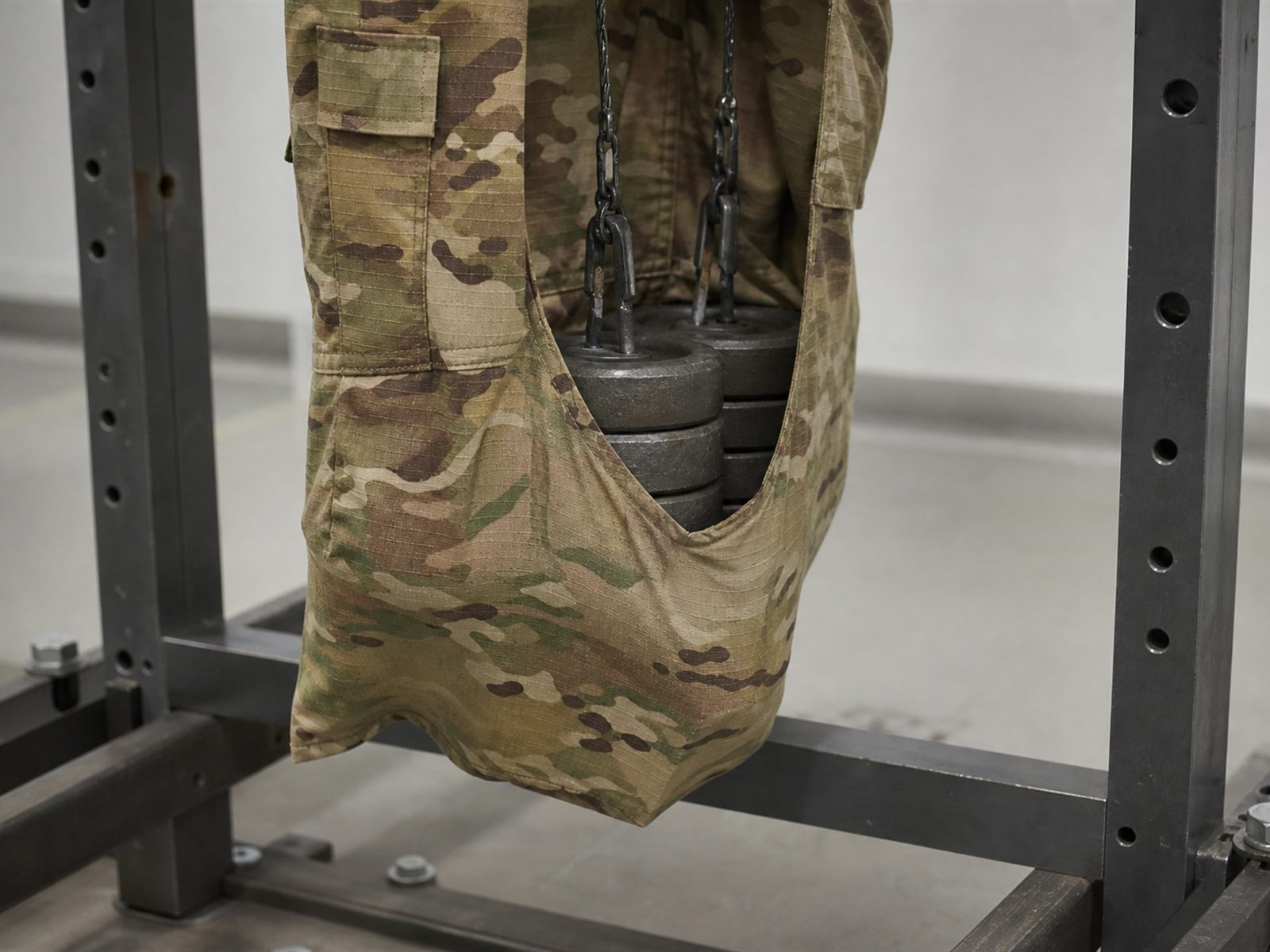
This Field Lab page states test intent before any result exists. The question is what happens to a loaded cargo pocket over time: whether the fabric at the pocket mouth and corner deforms, whether the pocket bag stretches or sags, and how the fabrics we use for trousers and field shirts compare when the same load is applied repeatedly under the same conditions. The test structure, the fabric and construction set, the loading routine and the limits of the method are published here now. Observations and results will be added only when the test has actually been run on real fabric and every observation has been recorded. Until then this page describes what we intend to measure, not what happens in service.
- Status
- Awaiting test data
- Materials compared
- 4
Gallery
Test bench
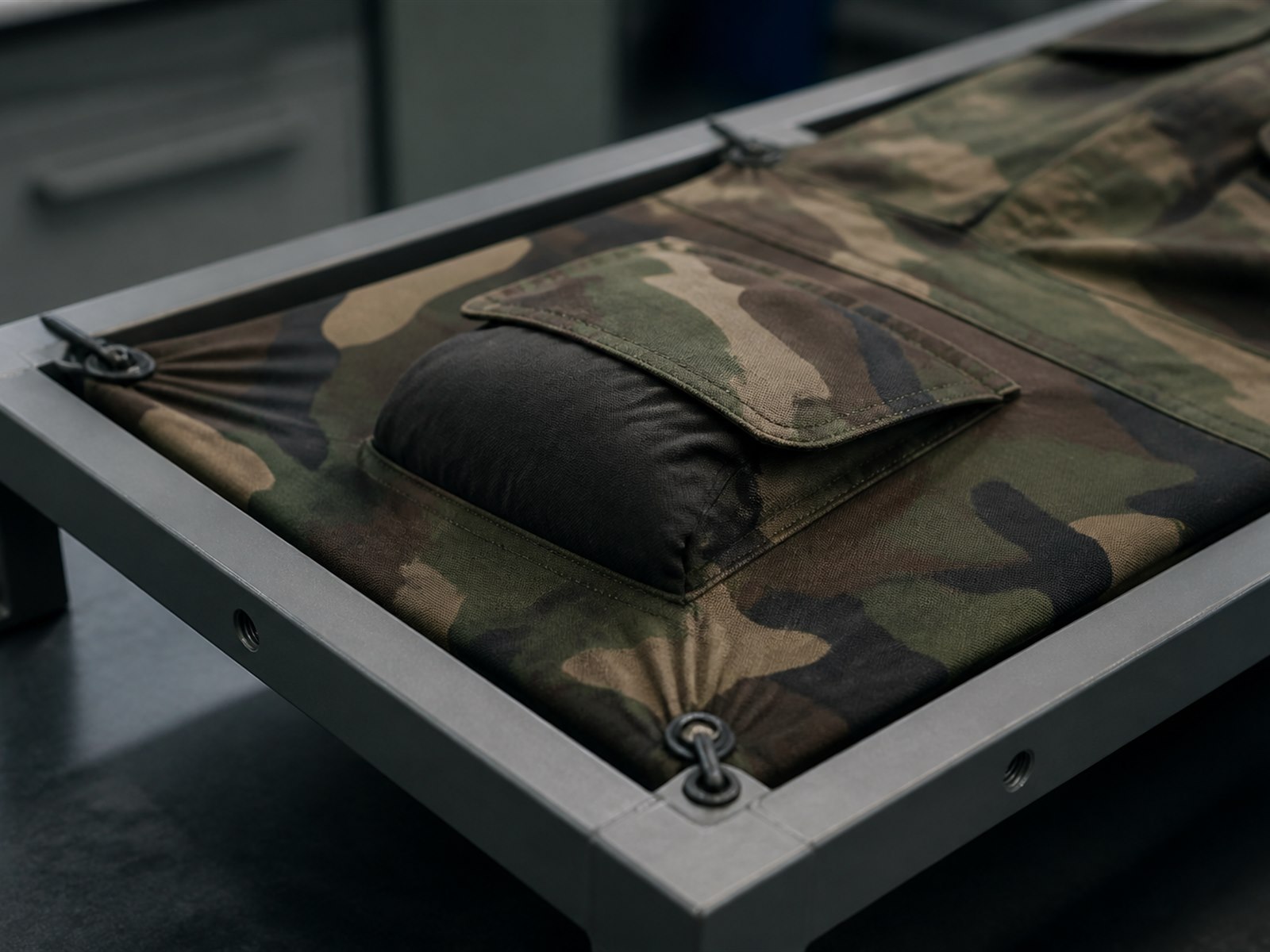
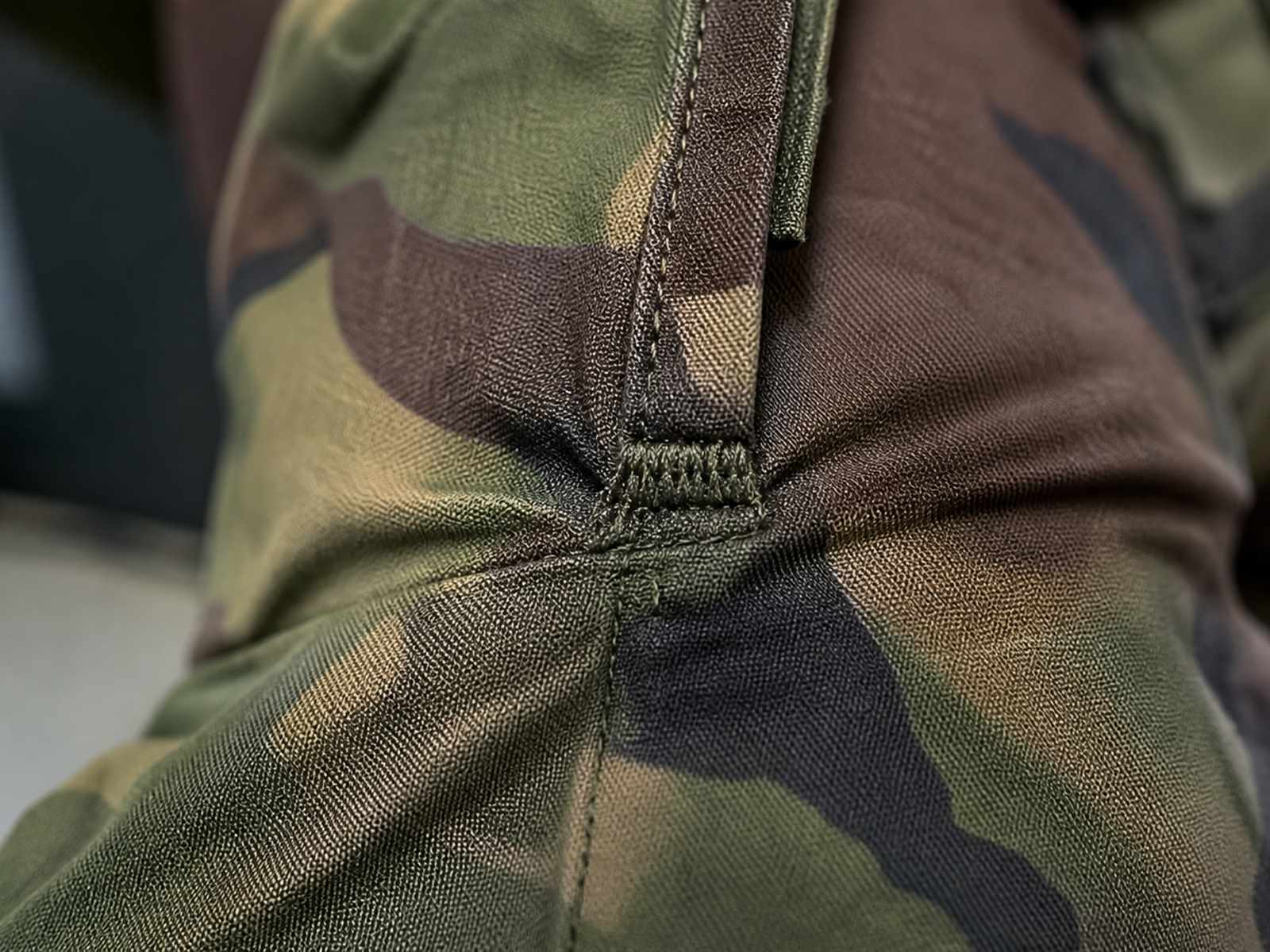
Status: AWAITING TEST DATA — Pocket Load Test has not yet been run on real material. Method, observations and result will be published once the test has been completed and the output recorded.
Question
What are we testing?
Whether the pocket constructions we build into tactical trousers and field shirts behave differently when a pocket is repeatedly loaded and unloaded, and whether the fabric, the pocket bag or the attachment seams are the first part to show change. The comparison is between constructions we make and fabrics we supply, evaluated under one method against each other; it is not a certification of any pocket design against an external standard. It is intended to show where reinforcement is worth adding and where it is decoration.
Relevance
Why does it matter?
Pockets fail at the point where the wearer puts load into them, and buyers do not find out until the order is in service. When a cargo pocket tears at the corner or the bag sags away from the panel, the garment stops being usable for the task it was specified for, and the unit blames the purchasing decision rather than the design. That failure is not visible in a sample review, because a new pocket with nothing in it behaves perfectly. It is also the kind of defect that appears across an entire delivery rather than in one garment, since every unit is built to the same pattern. A measured loading test under one method gives a buyer something concrete to ask for in the specification, and gives us a reason to reinforce a construction before a programme finds the weakness in the field.
Materials
Materials in this test
Material
Poly Cotton Ripstop
Poly cotton ripstop is a woven fabric built from a blend of polyester and cotton, reinforced with a grid of thicker yarns woven at intervals.
Material
NYCO Ripstop
NYCO ripstop is a woven fabric that blends nylon with cotton and reinforces the structure with a grid of heavier yarns woven at regular intervals.
Material
Stretch Ripstop
Stretch ripstop combines the tear containment of a ripstop grid with the movement of a stretch construction.
Material
Cotton Ripstop
Cotton ripstop is a woven fabric made entirely from cotton, reinforced with a grid of heavier yarns woven at regular intervals.
Method & result
Method, observations and result
Pocket Load Test is published only when the underlying work has been carried out, so an empty field means the test has not yet produced that value.
Testing method
Awaiting test data — to be published when the test is complete.
Observations
Awaiting test data — to be published when the test is complete.
Result
Awaiting test data — to be published when the test is complete.
Limitations
What this test cannot tell you
A result published here will apply only to the specific fabrics, patterns and construction lots tested, using the loading routine recorded at the time. Pocket behaviour depends on fabric weight and weave, on how the pocket is attached, on reinforcement, bar-tacking and seam type, and on the size and shape of the pocket itself, so a result for one pattern does not transfer to another made from the same cloth. A bench loading routine also simplifies real use: a wearer loads a pocket unevenly, snags it on equipment, and subjects it to moisture, abrasion and body movement at the same time. This test is not a certification against any external standard, and it does not establish a service life or confirm that a production lot will meet a buyer's own requirement.
Related
Related content
Related Products
Related Materials
Related Applications
Related Capabilities
Related Categories
Request a sample to evaluate yourself
Send the product type and the application. We will propose the material options for that application and state the trade-offs, so the comparison you run is against the right candidates.