Tactical Uniform Sets
Temperate Tactical Uniform Set
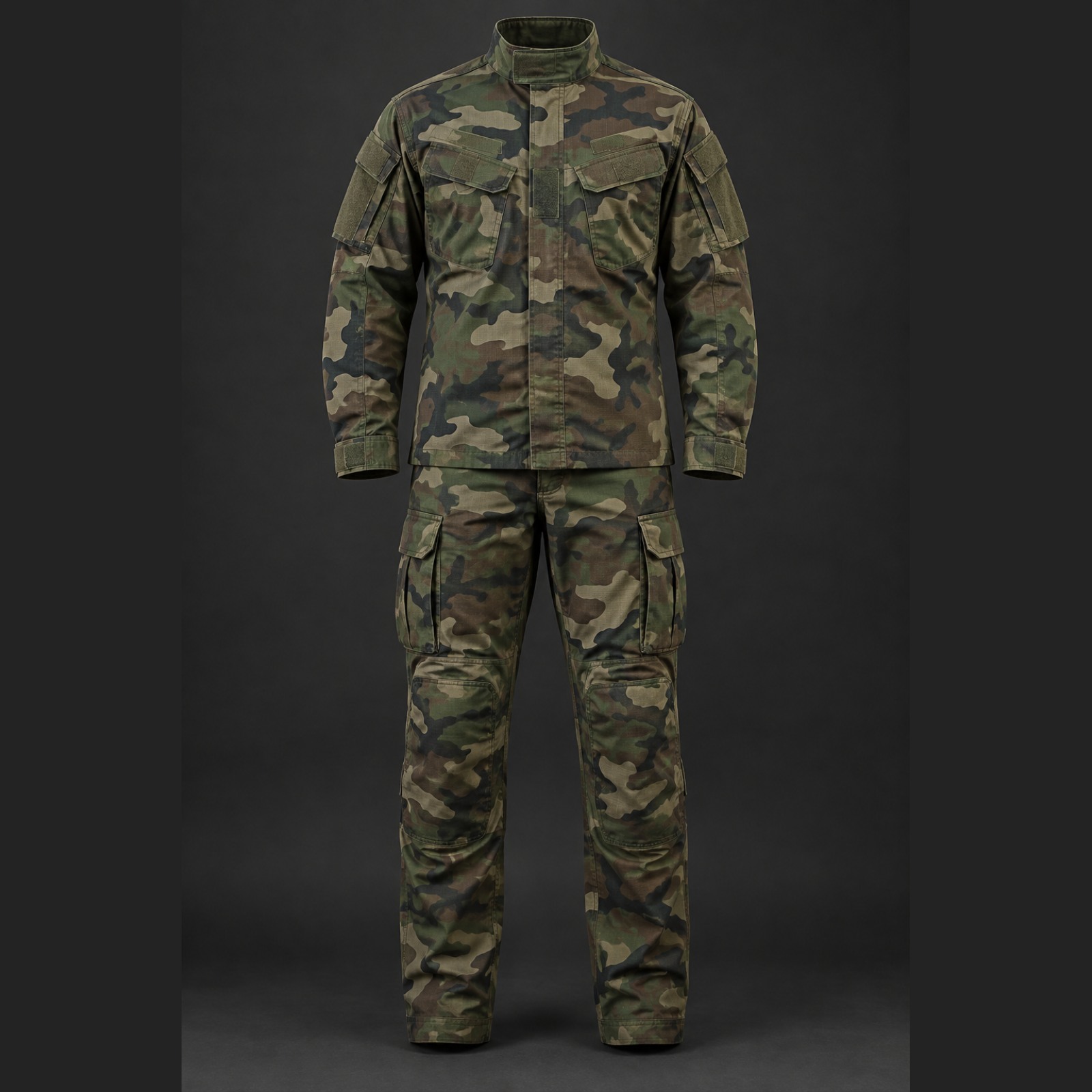
A uniform set only performs as a set if the shirt and the trousers behave as one garment.
TemperateCool to mildVariable / shoulder season
View productProducts / Camouflage Uniforms
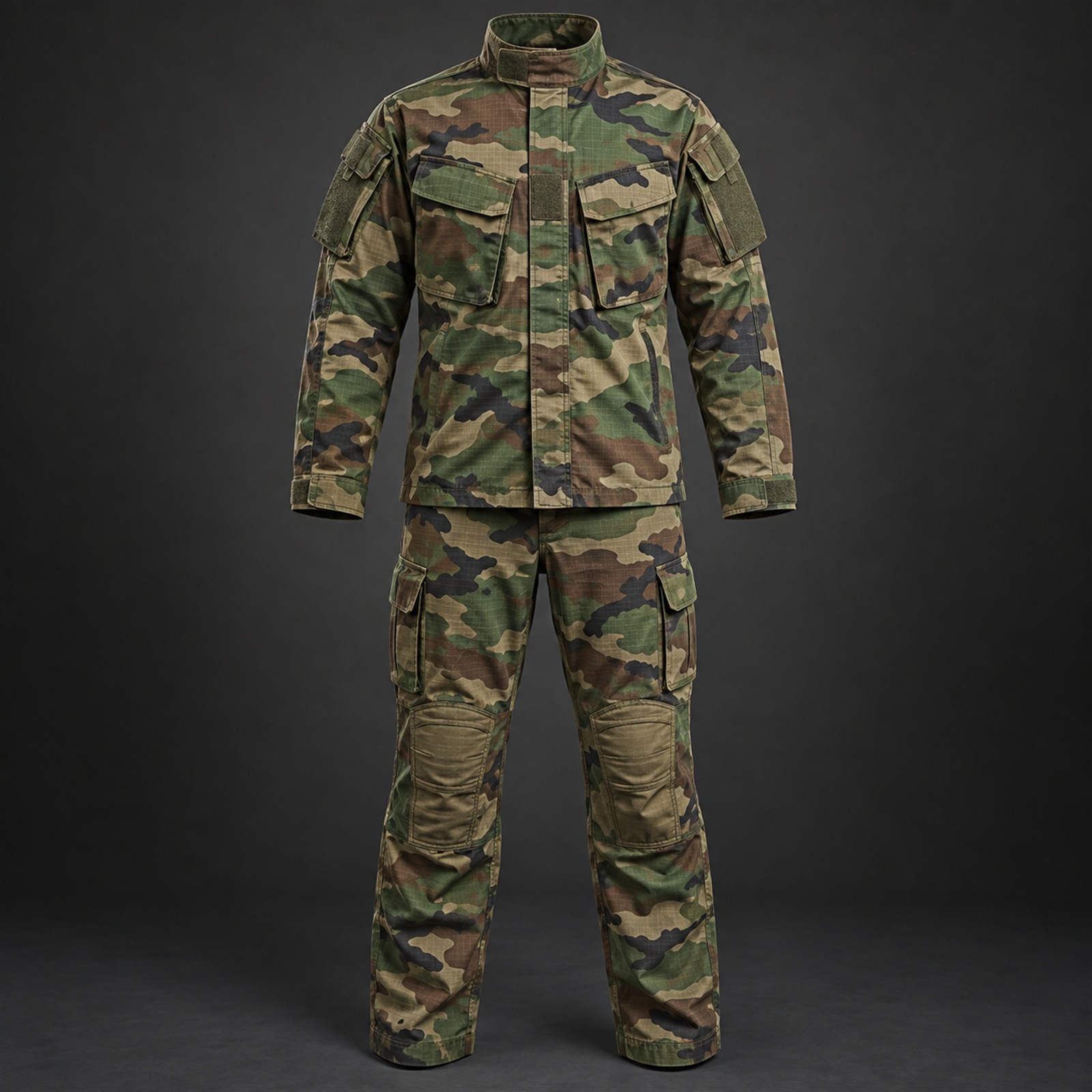
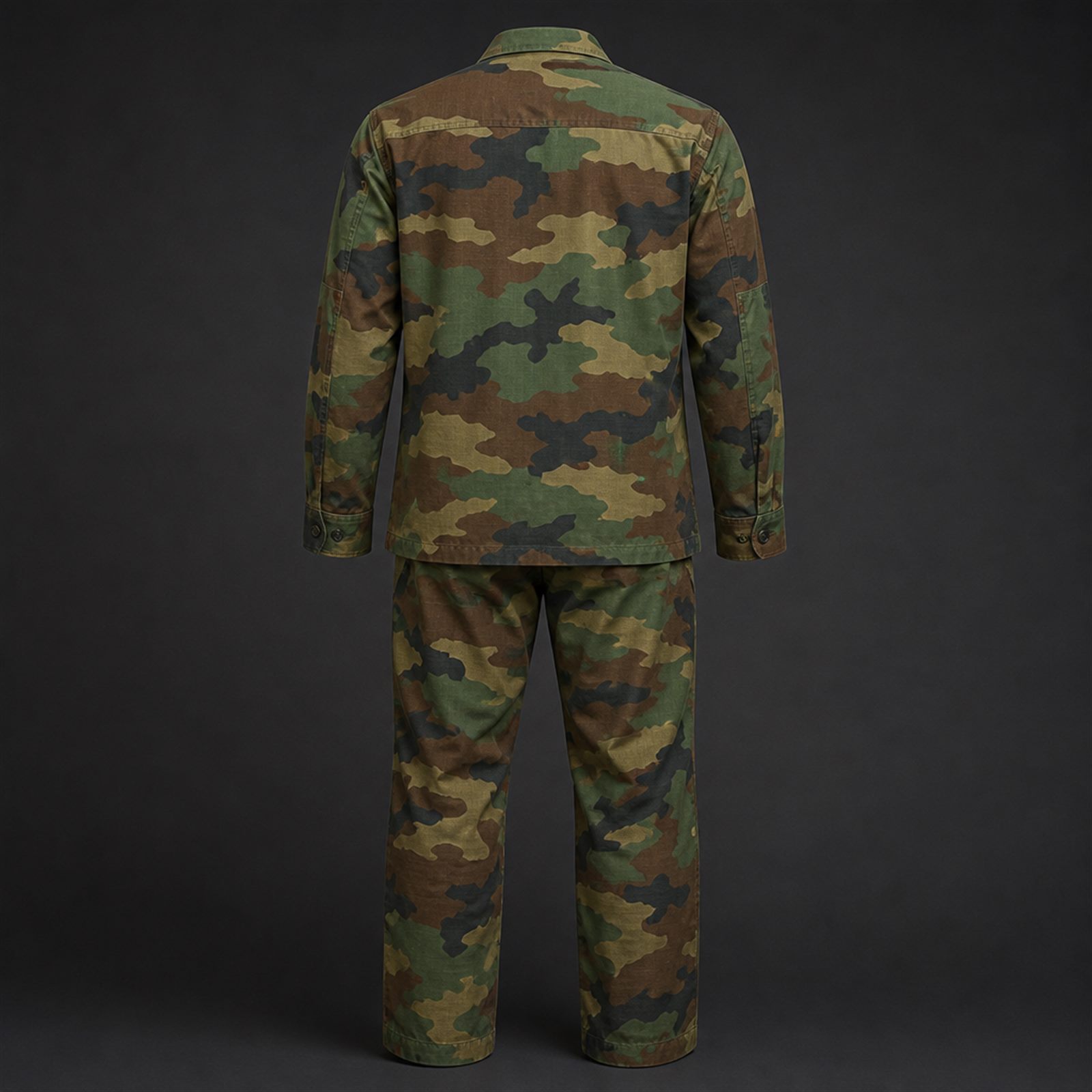
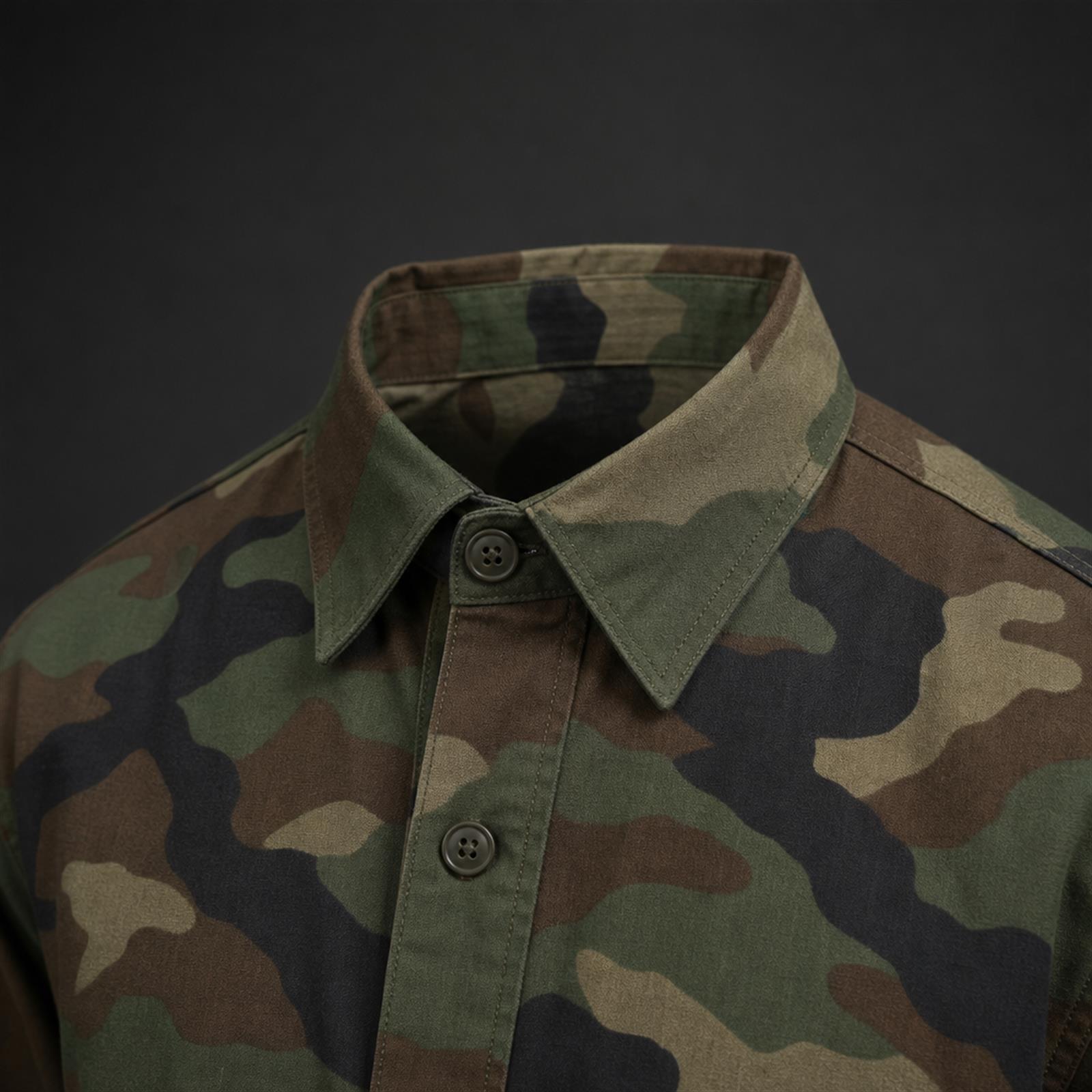
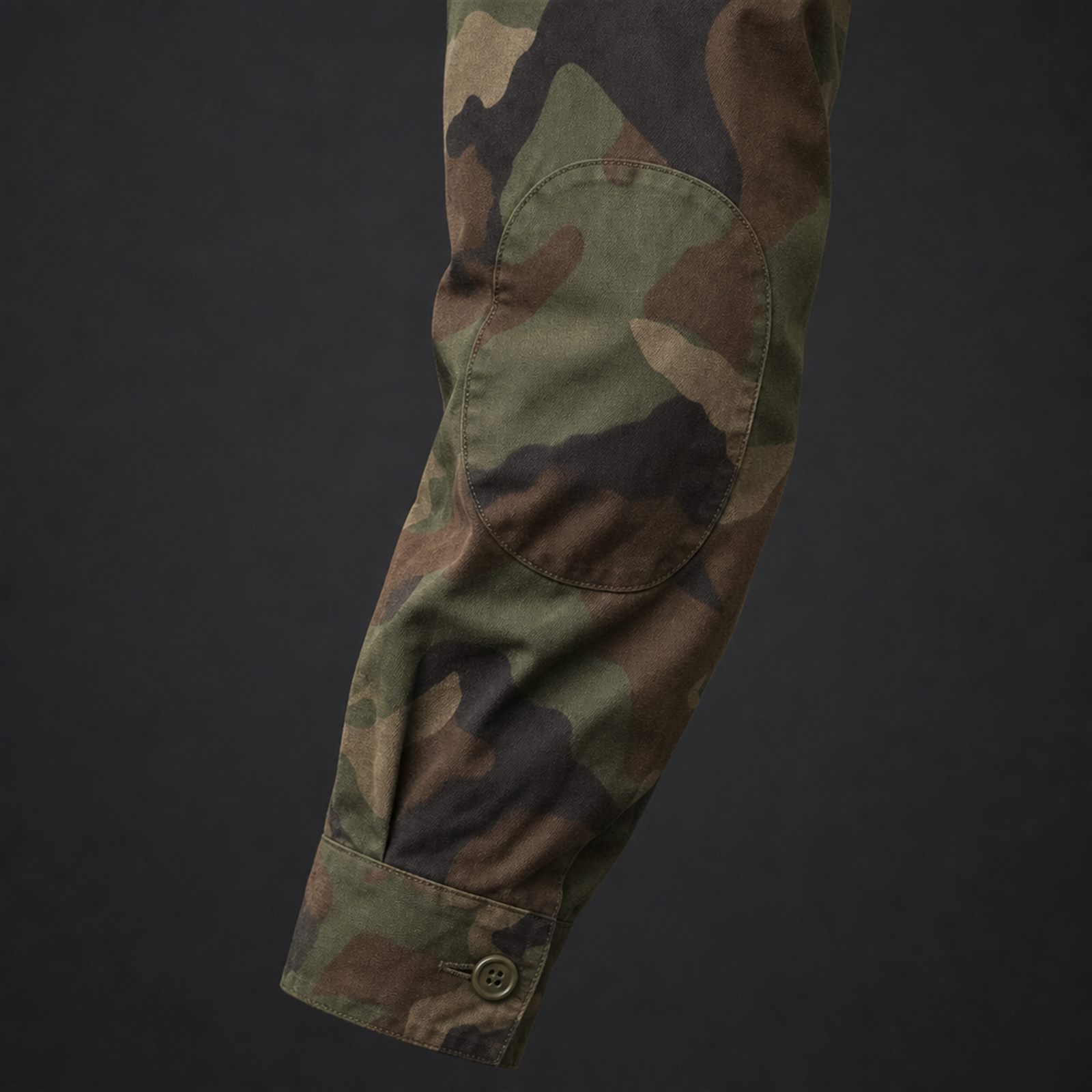
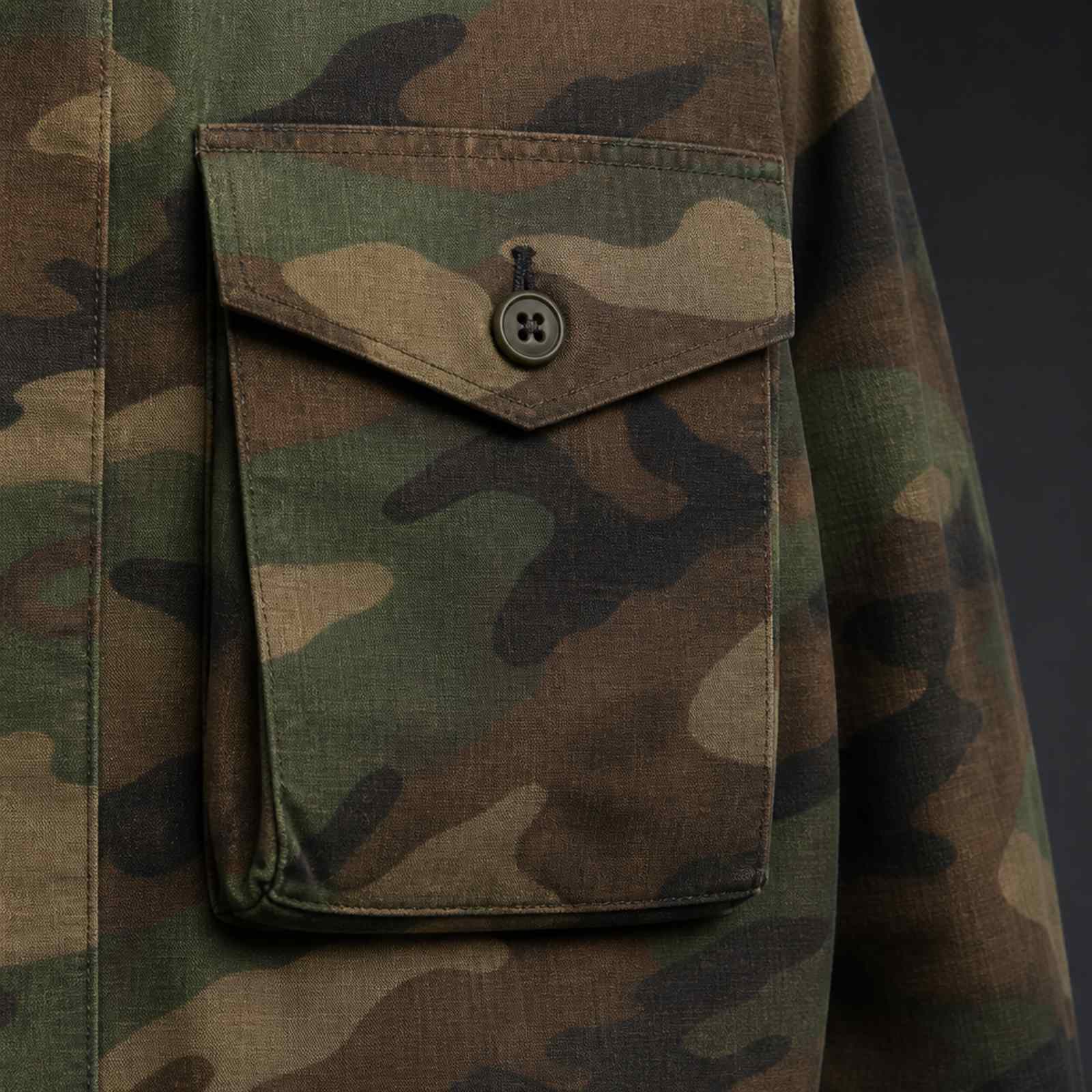
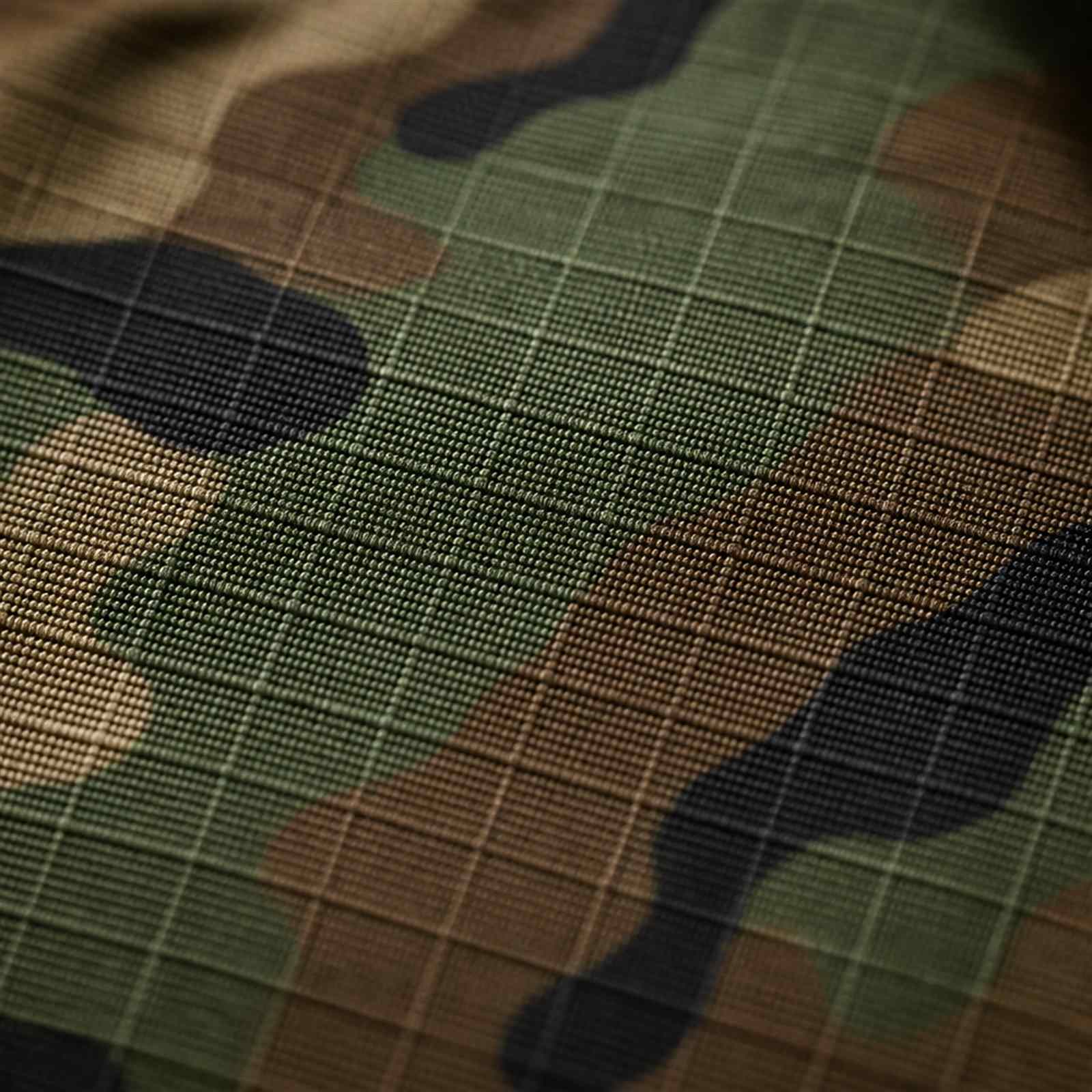
A camouflage uniform set is judged on the print before it is judged on anything else. Shade, repeat and how the pattern sits on the body decide whether the set looks like camouflage or like printed fabric cut into clothing. That means the print standard has to be fixed in writing before bulk, panel placement has to be planned at the marker rather than left to the cutter, and fabric consumption has to be calculated against a pattern repeat rather than against an average. This set is developed around those three problems: one approved print standard, a documented panel alignment plan across the shirt and the trouser, and a consumption estimate built from the actual repeat so quoted lengths are realistic. Construction stays field-oriented, with reinforcement where printed cloth wears through first.
Gallery
Design purpose
Produce a shirt and trouser set in which the camouflage reads as one continuous print across the whole body — same shade, same repeat scale, planned panel placement — while keeping fabric consumption and cutting waste predictable for the buyer.
Applications
Interactive map
Camouflage Uniform Set: select a marker to see what can be specified at that part of the garment — all 10 mapped areas are also listed in full below the map, so nothing is hidden behind an interaction.
Customization by garment part
Select a marker to see the customization options available at that part of the garment. Every option below is a manufacturing decision you control.
Materials
4 material options for Camouflage Uniform Set, specified per garment area — a single fabric cannot serve heat management and abrasion resistance at the same time.
Shirt body
Print base cloth is chosen for how it holds ink as much as for how it wears. A tighter, more uniform weave prints with cleaner edges than a loose one.
Trouser body
Confirmed against the shirt print so pattern scale is identical on both garments. A repeat that is correct on the shirt can look oversized on a wide trouser leg.
Reinforcement
Reinforcement can be printed to match or kept in a plain tone drawn from the pattern. The choice affects both appearance and consumption, so it is agreed before costing.
Trims and findings
Trims are drawn from the pattern's own colour range so hardware does not stand out against the print.
Construction
How each of the 8 parts of Camouflage Uniform Set is assembled, and why that choice was made.
Print standard
The camouflage is approved against a physical print standard — strike-off or bulk swatch — covering shade, repeat size and edge definition, and that standard is held as the reference for every subsequent lot.
Panel alignment
Panel placement is planned at the marker stage: the repeat is positioned so the front, back, sleeve and leg panels relate to each other, and the plan is documented so a reorder reproduces it.
Marker and consumption
Markers are laid to the repeat rather than to the shortest possible nest, and consumption is calculated from that layout so the quoted fabric requirement reflects the print, not an idealised cut.
Shirt torso
Low-bulk seams with pattern-matched panels where the buyer wants continuity across the front, and flat-felled construction so the print is not broken by bulky seam allowances.
Sleeves
Sleeve panels placed from a nominated point in the repeat so left and right sleeves mirror rather than clash.
Collar and placket
Collar and placket cut as a pair from a controlled area of the repeat so the front of the set does not read as two mismatched prints.
Trouser seat and crotch
Shaped seat with gusseted crotch, cut so the repeat continues across the seat rather than pooling in one place.
Knee and pocket
Articulated knee, cargo and utility pockets cut and positioned against the alignment plan so pocket flaps do not bisect the pattern awkwardly.
Features
The 6 functional features of Camouflage Uniform Set each exist to solve a specific problem in use, and where a feature is a trade-off rather than a pure gain that is stated.
Shade, repeat scale and edge definition are approved physically before bulk, which turns a subjective discussion about camouflage into a measurable inspection item.
The repeat is positioned per panel at the marker, so the shirt front, back, sleeves and trouser legs relate to one another instead of each landing wherever the cutter started.
Fabric requirement is calculated from a marker laid to the repeat, including the extra length a print repeat costs, so buyers are not surprised by a shortfall at cutting.
Shirt and trouser are printed in the same programme at the same repeat scale, so the set reads as a set and not as two garments that happen to share a pattern name.
Hardware, tape and thread are nominated from the pattern's own colour range so fittings do not visually cut through the print.
The print standard, alignment plan and marker logic are documented, so a repeat order can reproduce the original appearance rather than approximating it.
Customization
14 customization lines for Camouflage Uniform Set: branding, colour, camouflage and packaging are all part of the specification, and every item is confirmed on the pre-production sample.
Camouflage Pattern
Print Scale
Fabric
Panel Alignment
Shirt Collar
Shirt Pocket
Trouser Pocket
Knee
Waistband
Zipper
Hook & Loop
Logo
Label
Packaging
Colour
Camouflage
Sizing
Sizes are developed from the buyer's size chart or uniform sizing standard, with the shirt and the trouser graded from one body block so measurements stay coherent across the set. A size set sample is produced for both garments and critical measurements — chest, shoulder, sleeve length, back length, waist, inseam, knee and leg opening — are confirmed in writing. Because a printed garment cannot be corrected after cutting, measurement tolerances are agreed before bulk and inspection measures against the approved size set.
Branding
Main label, size label, care label and country of origin label are produced to the buyer's artwork and content and applied to both garments. Branding can be applied as woven label, printed label, rubber patch, embroidery or heat transfer, positioned so it does not disrupt the camouflage where appearance matters. Packaging ranges from poly bag to printed poly bag with hangtag, header card or custom box. All labelling and packaging is confirmed on the pre-production sample.
Logistics
Sample development
Development of Camouflage Uniform Set runs in 7 stages, each risk removed before the next step commits cost.
Requirement review
Buyer brief and artwork reviewed, and specification gaps around print, scale and garment construction returned in writing.
Print standard development
Camouflage strike-off or printed swatch produced and approved physically before any garment is cut, so shade and repeat are fixed early.
Material proposal
Print base cloth proposed per garment with the trade-offs between print clarity, abrasion resistance and hand feel stated.
Pattern and alignment plan
Patterns developed and a panel alignment plan drawn up so the repeat position for each panel is decided before cutting.
Prototype
First printed set produced for fit, print appearance and alignment assessment on a real body.
Revision
Buyer comments applied in a single revision round, including any adjustment to repeat scale or panel placement.
Pre-production sample and marker plan
Approved construction, print standard and marker layout locked as the bulk reference, with consumption confirmed from the final marker.
Bulk production
7 stages of bulk production for Camouflage Uniform Set — where the approved specification is either held or lost.
Printed fabric approval
Bulk printed fabric checked against the approved strike-off for shade, repeat size, edge definition and alignment before cutting.
Marker laying
Markers laid to the approved alignment plan and repeat, with the layout recorded so consumption and placement are reproducible.
Cutting
Panels cut to the marker with shade and print position controlled, and cut bundles kept together so aligned panels stay aligned.
Panel matching and preparation
Print-matched panels paired and checked before assembly, with any misaligned panel pulled out at this stage rather than sewn in.
Assembly
Line assembly to the approved construction sequence with defined reinforcement at stress points.
Inline inspection
In-process inspection at defined points, with particular attention to print continuity across seams.
Finishing and final inspection
Thread trimming, hardware check, pressing, then documented measurement, construction, print and packing inspection.
Quality control
The 7 checks applied to Camouflage Uniform Set, each measured against an agreed standard rather than against opinion.
Print standard verification
Bulk printed fabric compared against the approved strike-off for shade, repeat and registration before it enters production.
Incoming fabric inspection
Base cloth weight, width and print alignment checked, and rejected fabric quarantined before cutting.
Cutting and alignment inspection
Cut panels checked against the alignment plan for repeat position, and misaligned panels removed from the bundle.
Inline inspection
Work in progress inspected during assembly, with print continuity across seams treated as a defect item.
Measurement inspection
Critical measurements for shirt and trouser checked against the approved size set with agreed tolerances.
Construction inspection
Stitching, reinforcement, hardware function and symmetry checked against the approved pre-production sample.
Final and packing inspection
Finished garments inspected for print and construction, then labels, folding and carton marking checked against the packing instruction.
Specifications
19 specification rows for Camouflage Uniform Set: only confirmed items are listed, so a row that depends on your programme is omitted rather than filled with an estimate.
| Product type | Camouflage uniform set (shirt and trouser) |
|---|---|
| Print method | Camouflage print to buyer artwork — method confirmed at specification stage |
| Print standard | Physical strike-off or bulk swatch approved before bulk |
| Shirt material | Printed ripstop or stretch woven — confirmed at specification stage |
| Trouser material | Printed ripstop, stretch ripstop or mechanical stretch woven — confirmed at specification stage |
| Pattern repeat | To buyer artwork, scale confirmed at specification stage |
| Panel alignment | Planned at marker and documented for reorder |
| Climate | Temperate, tropical / humid, layered use |
| Size range | Developed to buyer size chart or uniform sizing standard, one block for the set |
| Labelling | Private label to buyer artwork on both garments |
| Packaging | To buyer packing instruction, set packed together or separately |
FAQ
The print standard is approved physically — a strike-off or bulk swatch — before bulk, and both garments are then printed against that one reference rather than against separate approvals. Bulk printed fabric is checked for shade, repeat size and registration before cutting, and any roll outside the agreed band is quarantined. This matters more on camouflage than on solid colour, because a shade drift in a pattern reads as a different pattern rather than as a slightly different tone.
Yes, and it has to be planned before cutting, not corrected after. We draw up a panel alignment plan that fixes where the repeat sits on each panel — shirt front, back, sleeves, trouser legs — and the marker is laid to that plan. Bear in mind that alignment consumes more fabric than a free nest, because panels cannot be rotated or nested purely for economy. That trade-off is stated in the consumption estimate rather than hidden in it.
Aligning a repeat restrains how a marker can be laid out: panels cannot be flipped or rotated freely, and each panel has to start at a usable point in the repeat. The result is more fabric per set than a garment cut from plain cloth. We calculate consumption from the actual marker laid to your repeat and alignment requirement, and report it as a figure for your programme rather than an average, so your costing is not built on an optimistic number.
Yes. We can work from your artwork and produce a strike-off for approval, and we will tell you at that stage if the repeat or the number of colours creates a production or cost penalty. If you do not have artwork finalised, we can work in woodland, desert, digital or multi-terrain styles as a starting direction, but the pattern you specify remains your responsibility to approve.
Either approach works. Reinforcement can be printed from the same repeat so it disappears into the pattern, or kept in a plain tone drawn from the pattern's own colour range so it reads as a deliberate panel. Printed reinforcement costs more fabric and adds alignment work; plain reinforcement is faster and easier to control. The choice is made at specification stage because it changes both the look and the consumption.
Both depend on your repeat, the number of colourways, the fabric selected and the quantity, and printed programmes carry their own constraints that plain programmes do not. We do not publish figures we have not confirmed against your specification — send us the artwork and the target quantity, and we will state the MOQ and timeline that apply.
Related Materials
Related Applications
Related Capabilities
Related Articles
More products
Tactical Uniform Sets
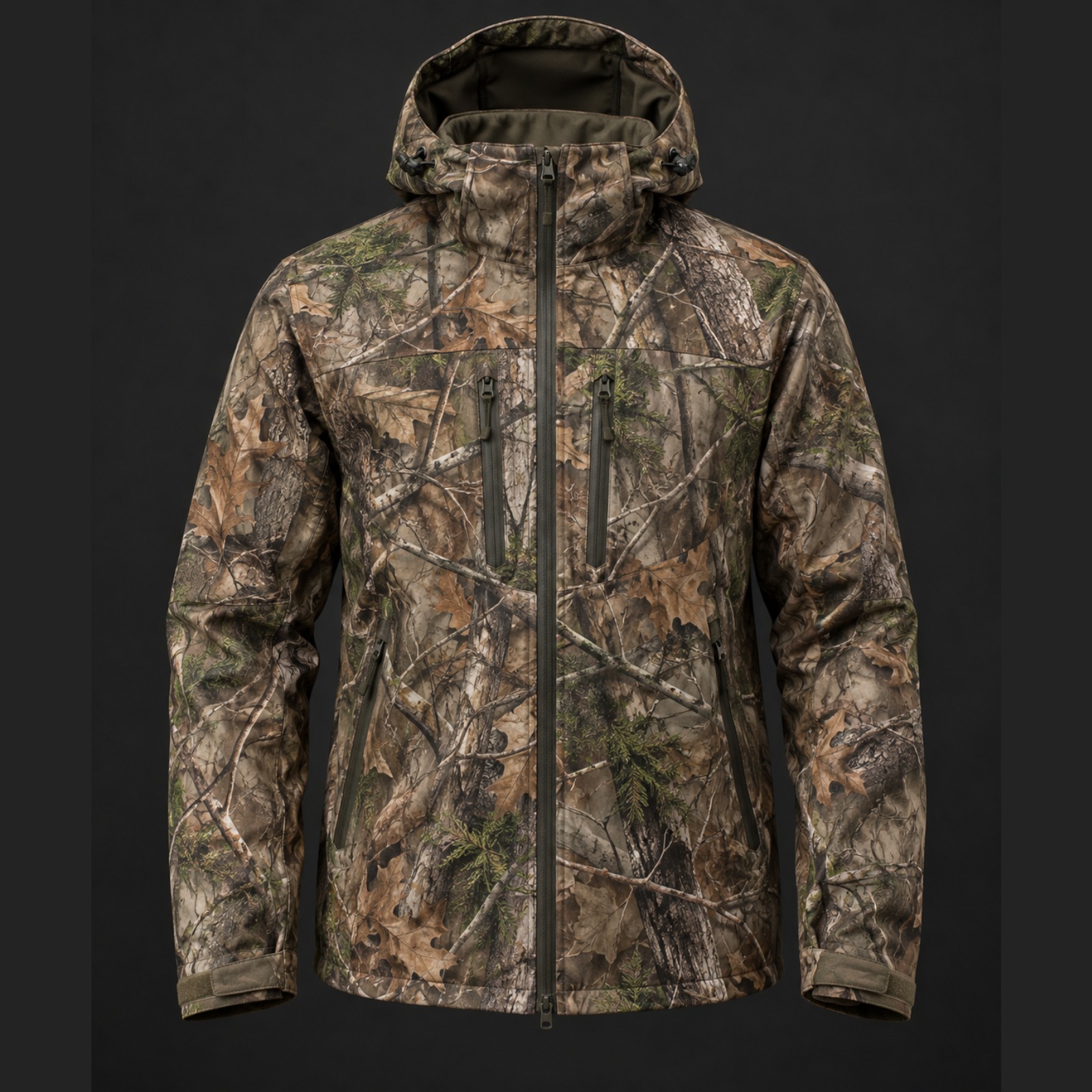
A uniform set only performs as a set if the shirt and the trousers behave as one garment.
Hunting & Outdoor Camouflage Clothing
A hunting jacket is judged by two properties that pull against each other: how quietly it moves through brush, and how well it survives that brush.
Hunting & Outdoor Camouflage Clothing
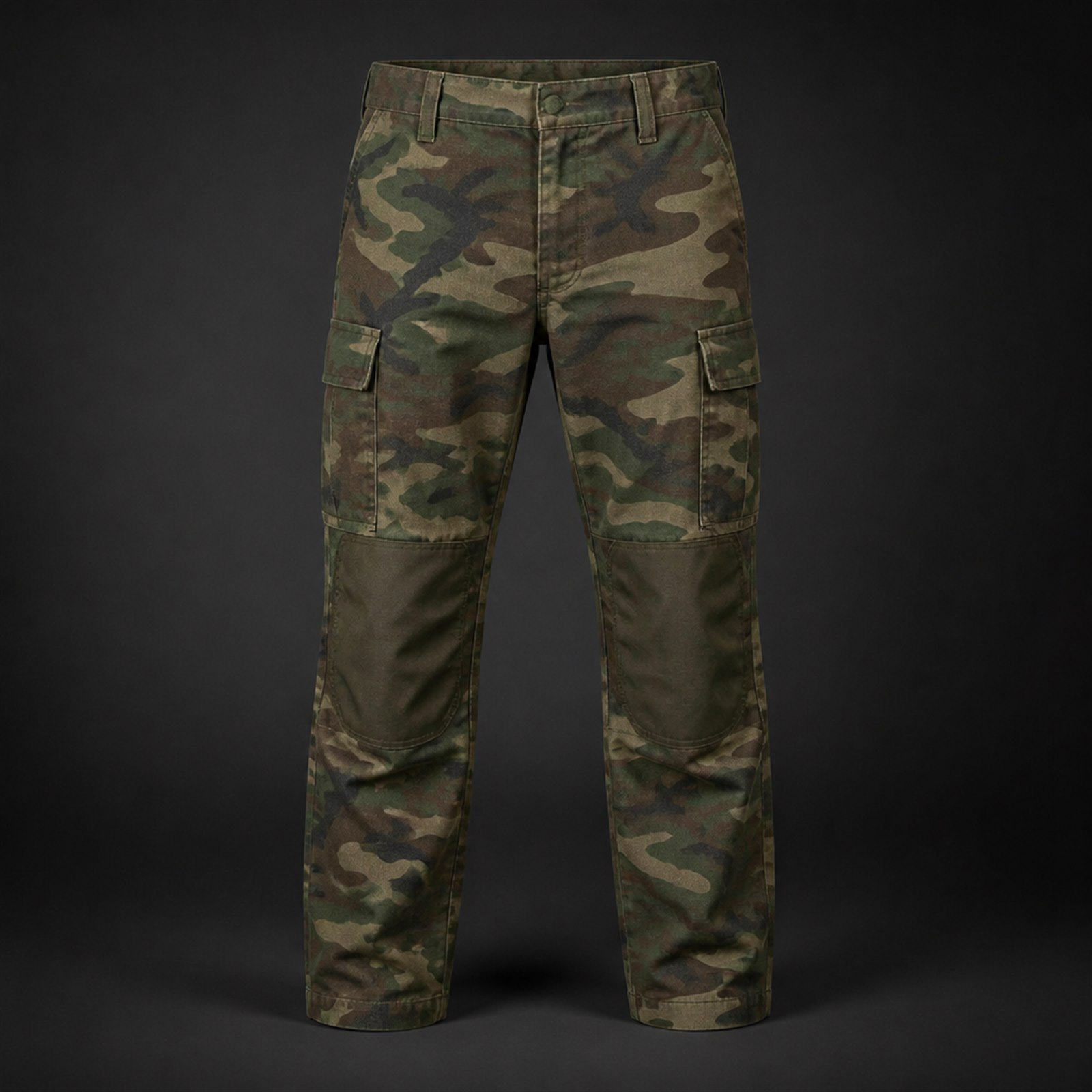
Hunting pants fail in predictable places, and they fail for predictable reasons.
Send us your tech pack, reference sample or product idea. We review your requirement, recommend materials and construction, and come back with a development plan you can act on.