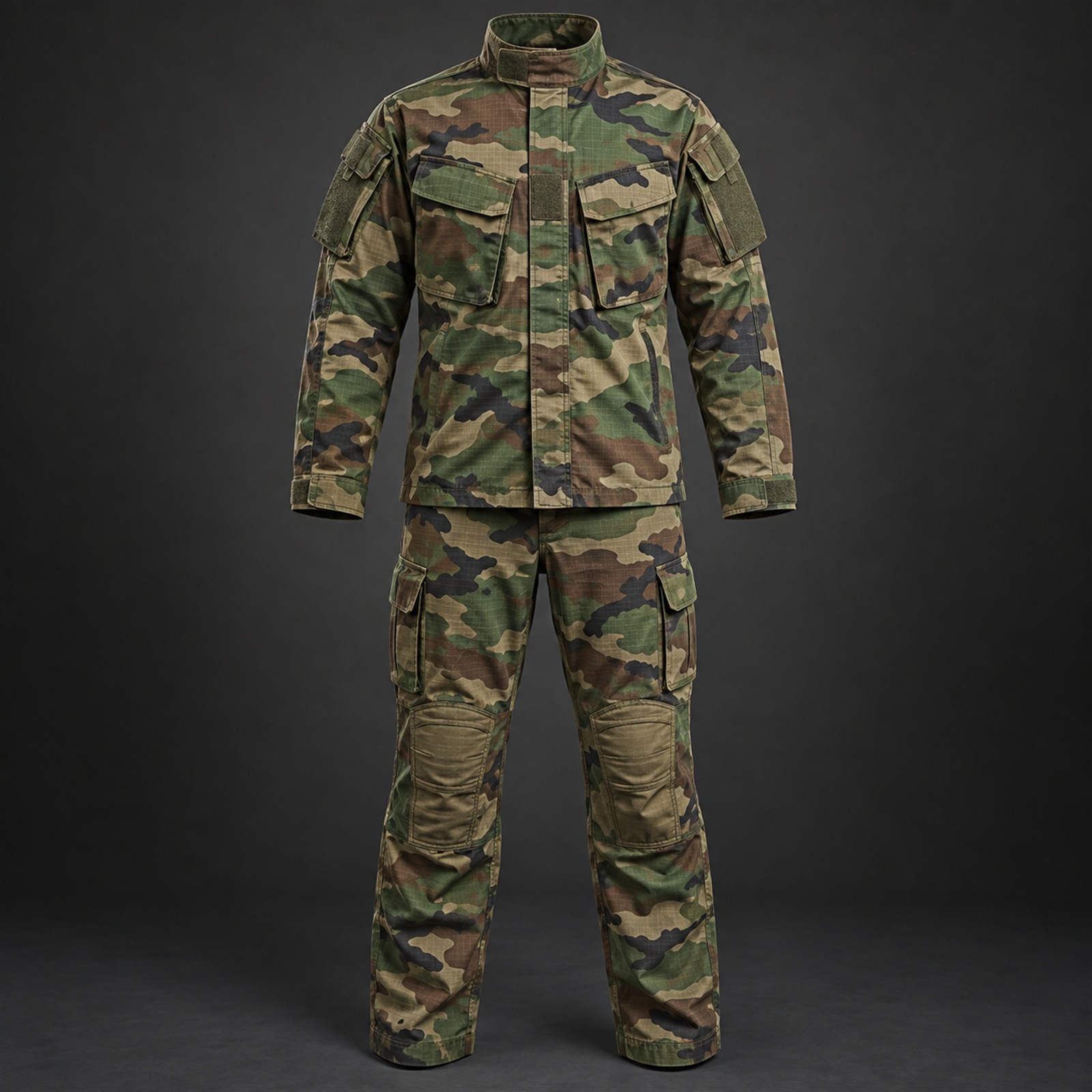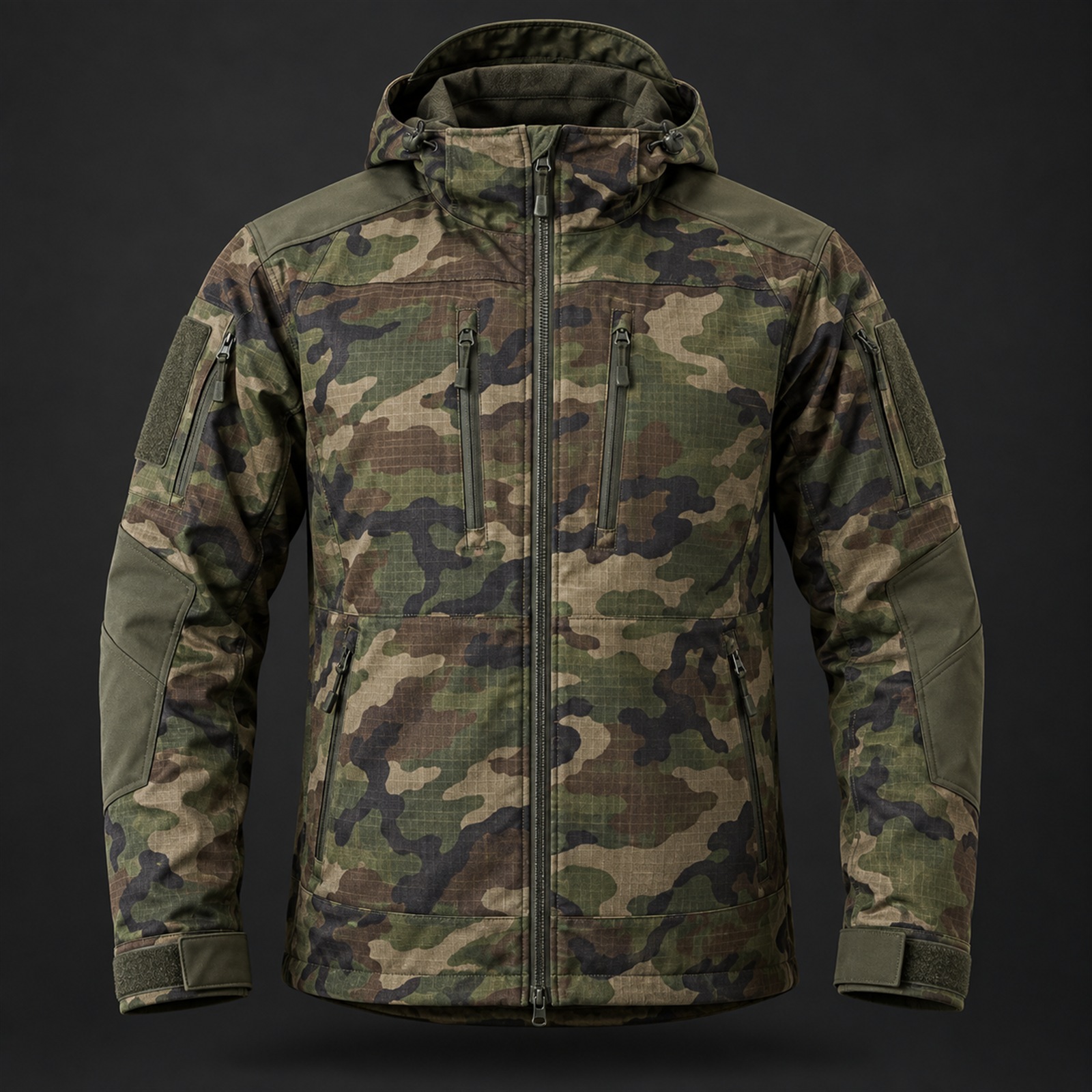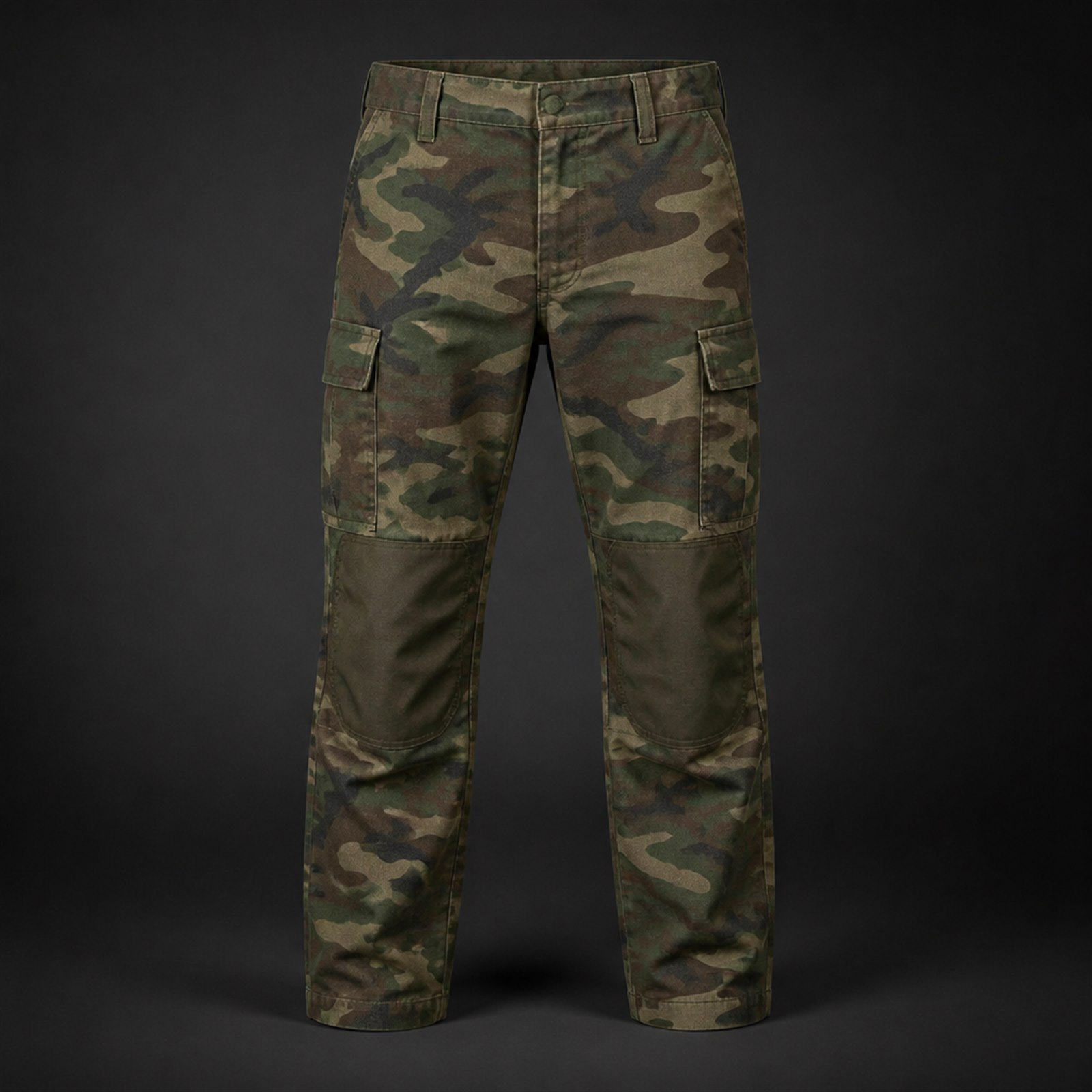
Hunting & Outdoor Camouflage Clothing
Hunting Camo Pants
Hunting pants fail in predictable places, and they fail for predictable reasons.
TemperateColdWet / Rainy
View productProducts / Hunting & Outdoor Camouflage Clothing
A hunting jacket is judged by two properties that pull against each other: how quietly it moves through brush, and how well it survives that brush. Soft, quiet face fabrics are usually the ones that pill, snag and wear through fastest, while the toughest woven fabrics are often the loudest. This jacket is developed by deciding, with the buyer, where on the garment each property matters more. Concealment is treated the same way: a camouflage pattern that hides the wearer in one environment makes them harder for a companion to see in another, and any visibility element is a deliberate trade rather than an added detail. Pattern scale, panel alignment, pocket quieting and scent-aware construction are all specified rather than assumed.
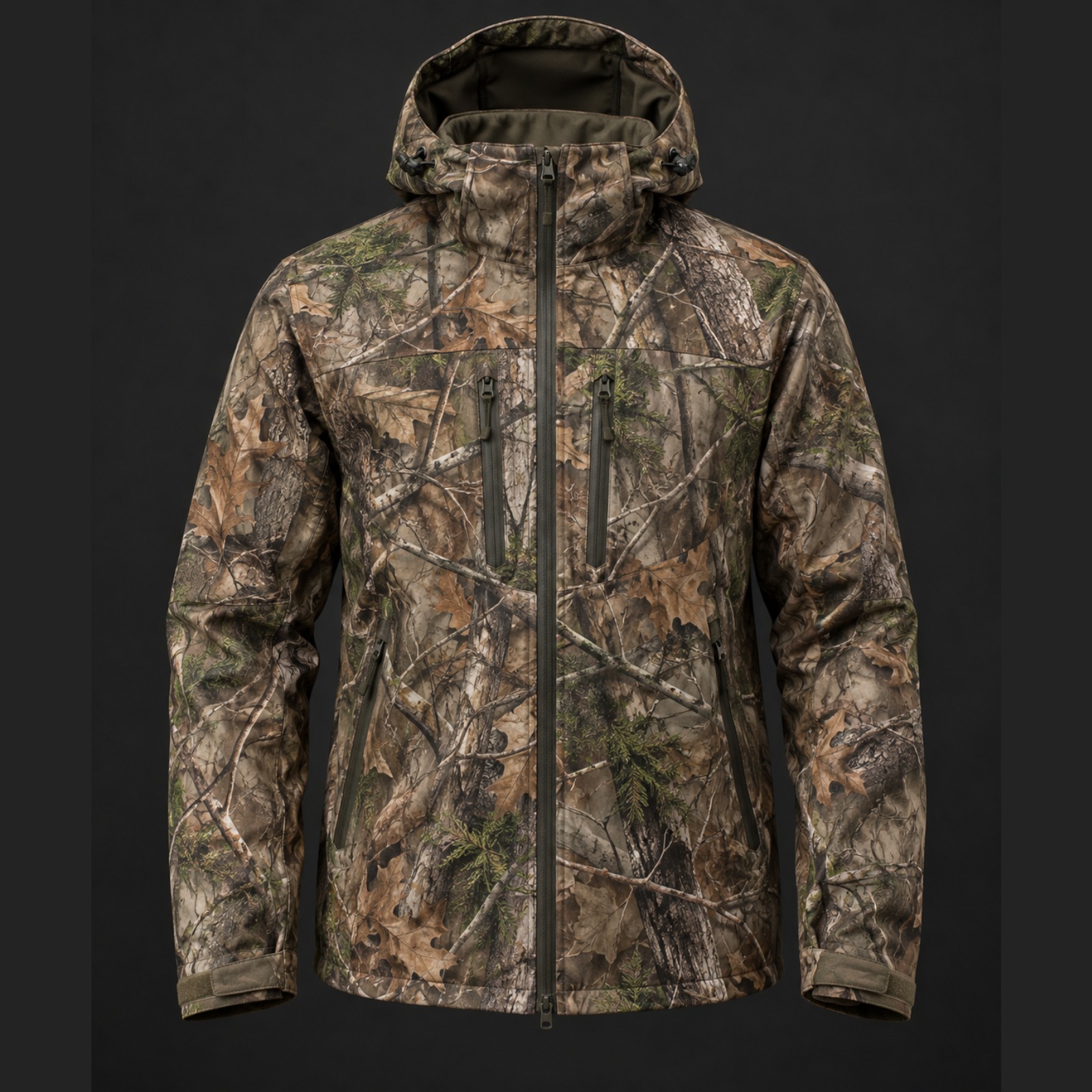
Gallery
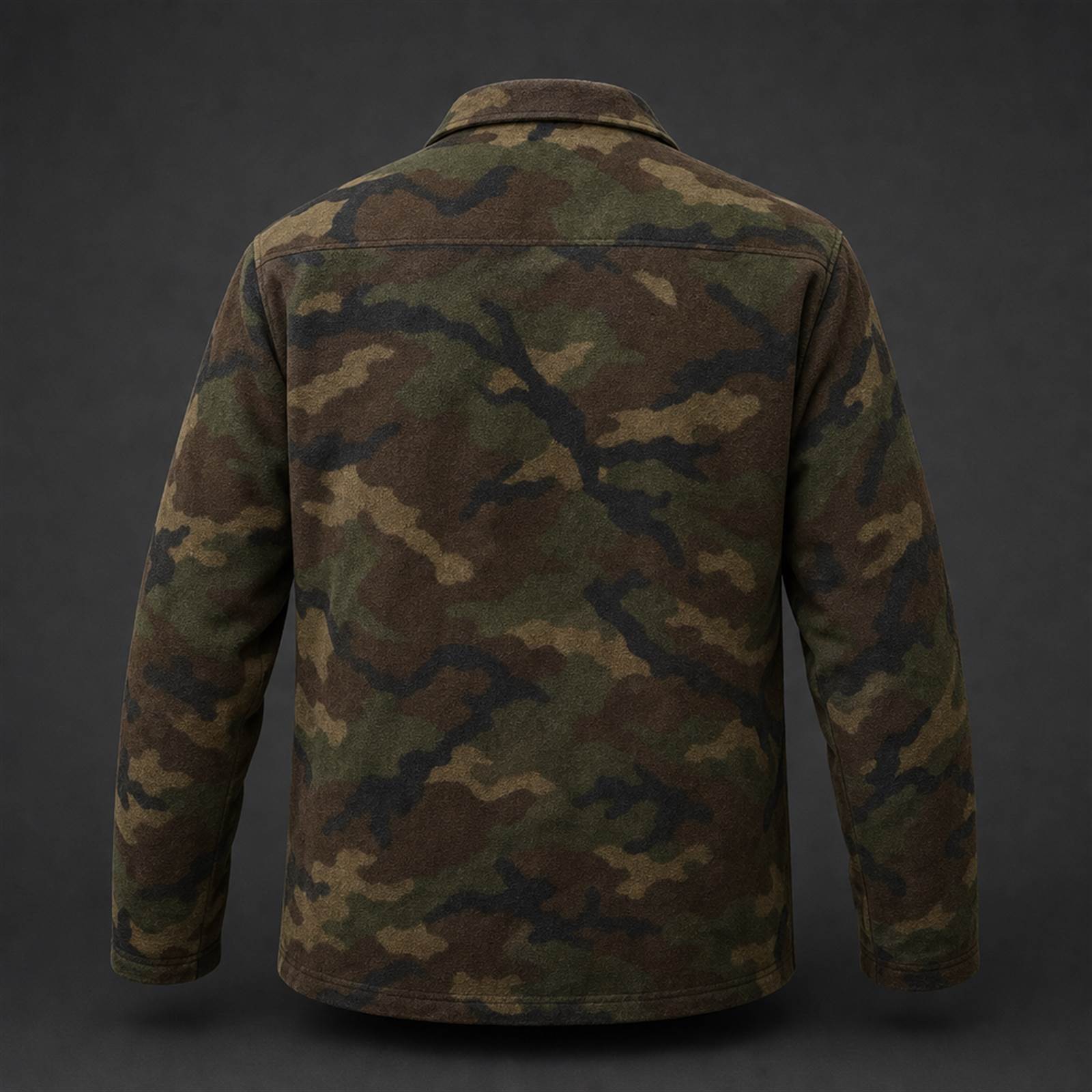
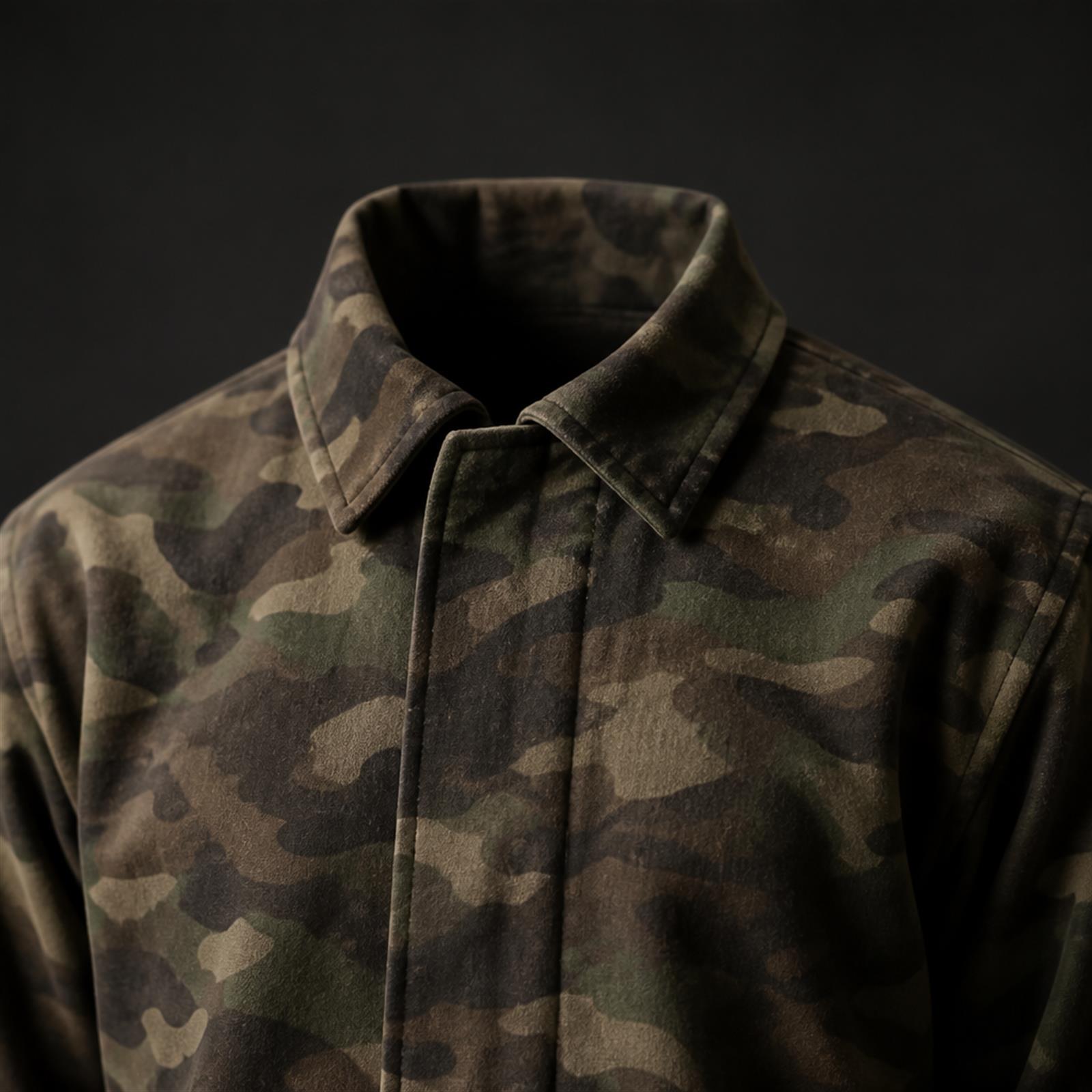
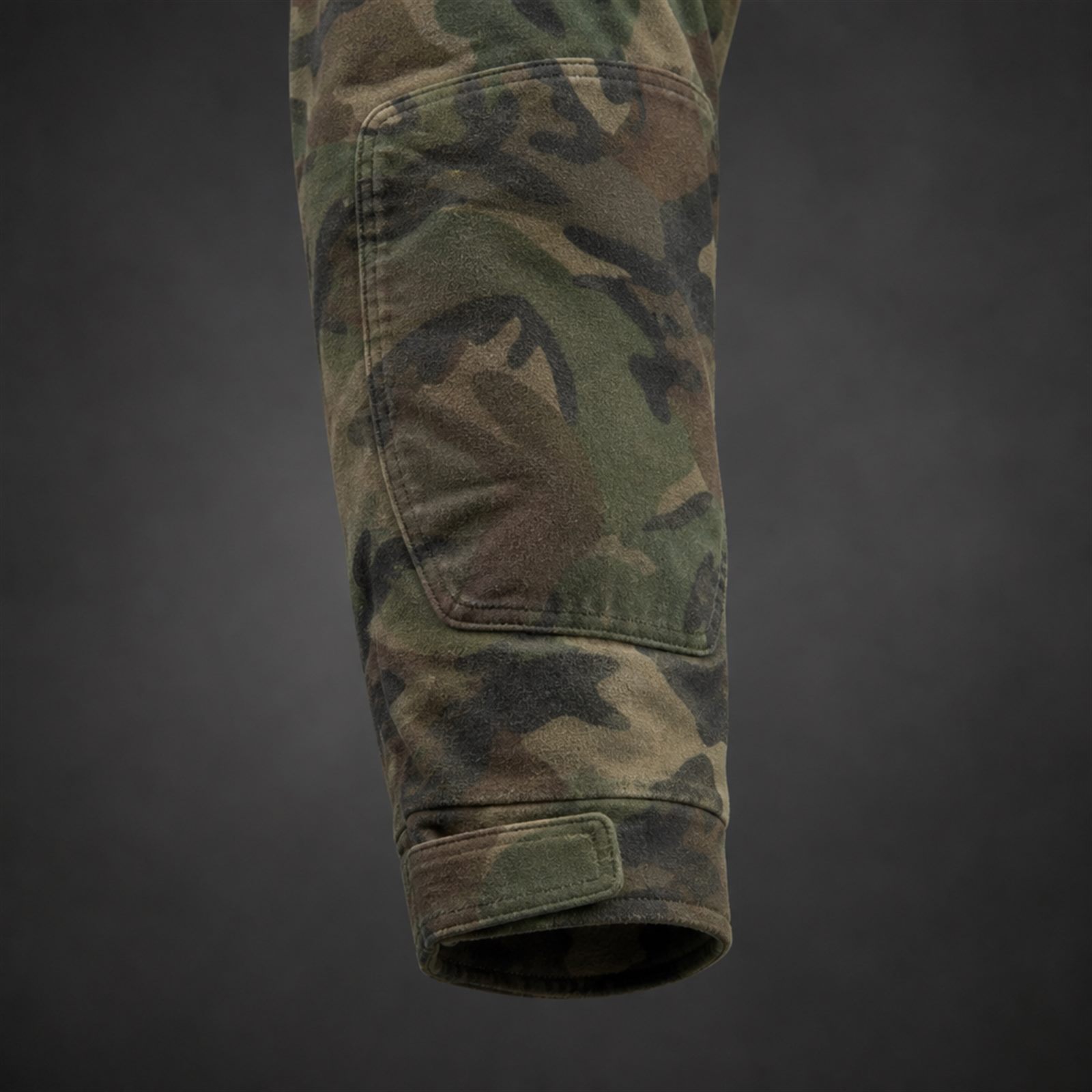
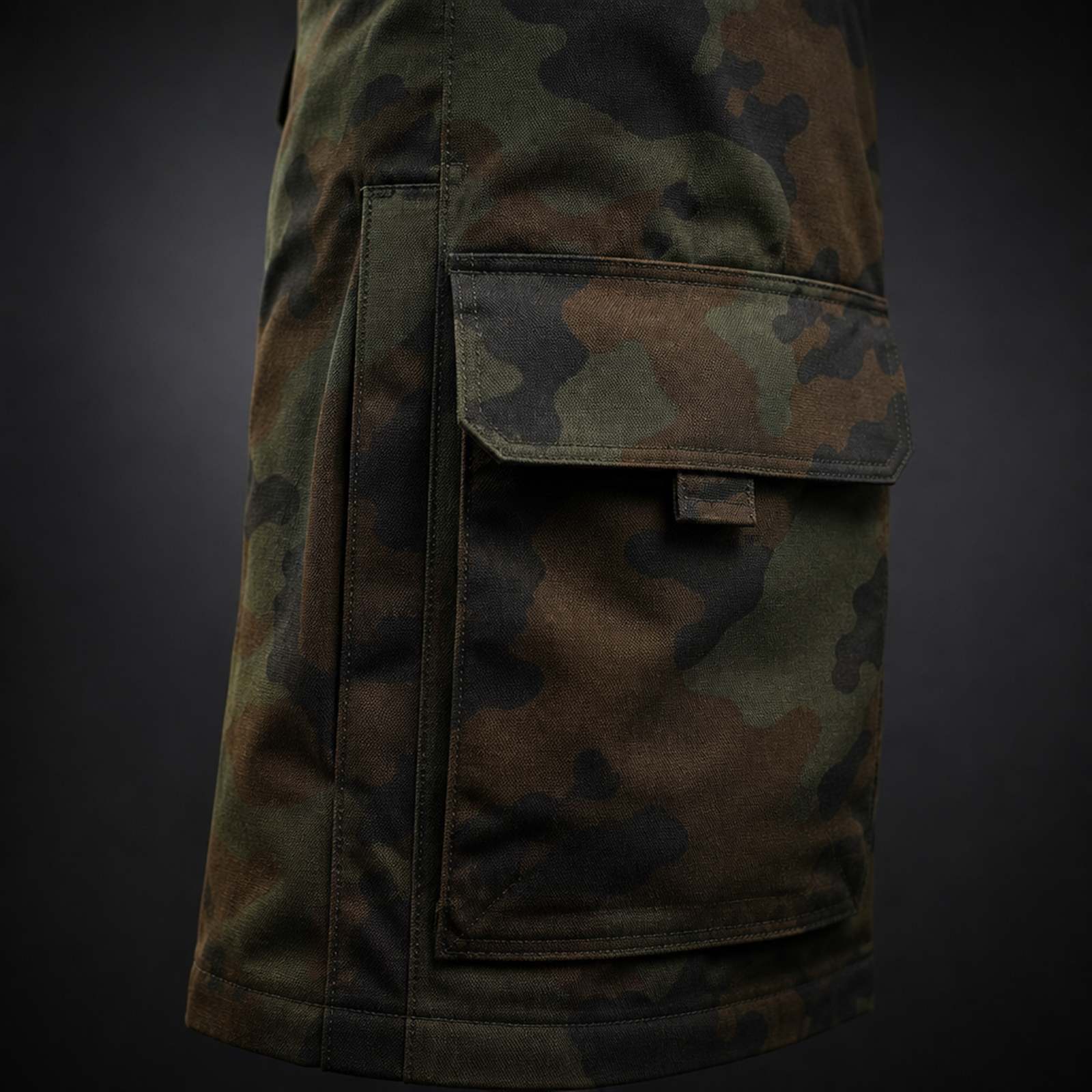
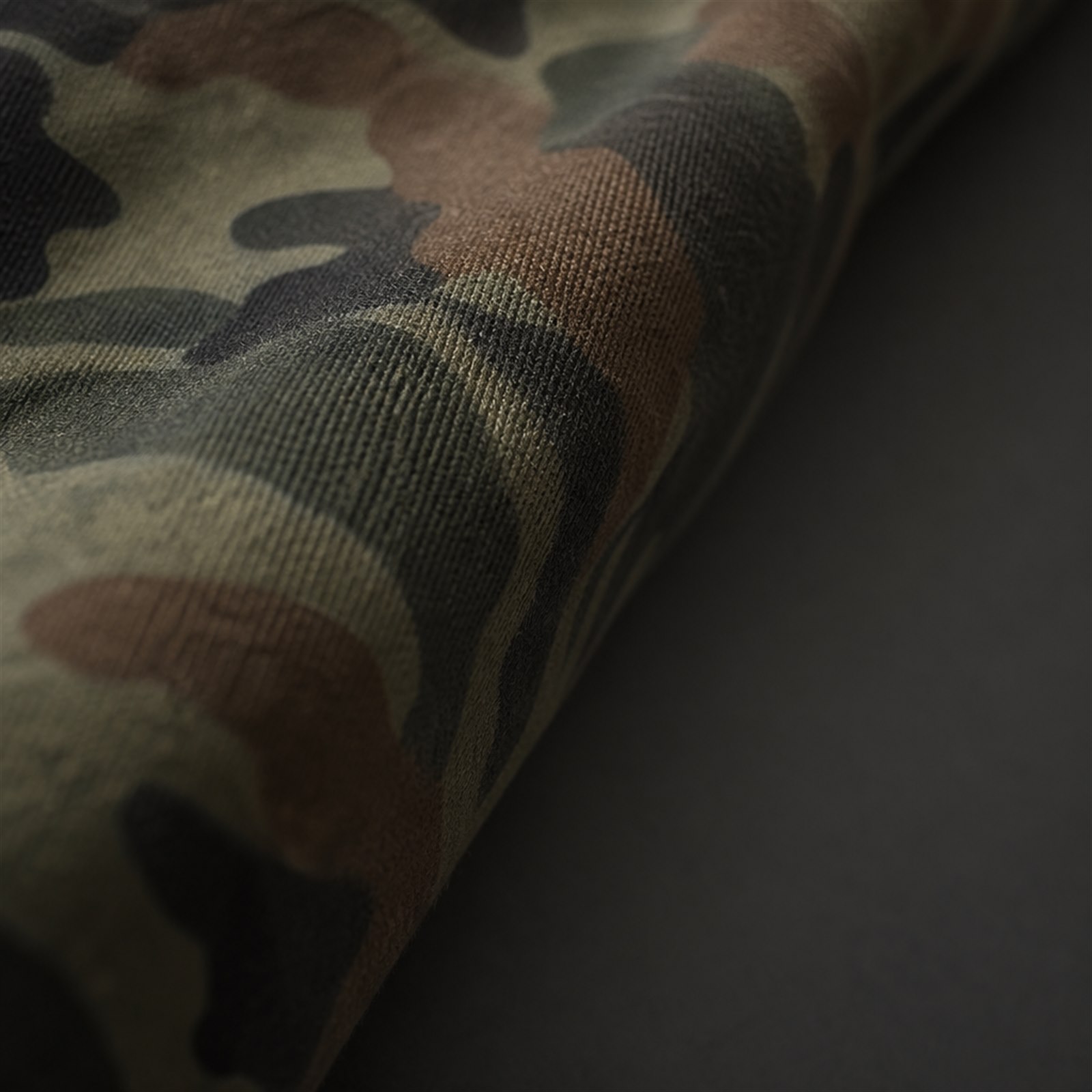
Design purpose
Balance quiet movement against abrasion life, and concealment against the visibility a buyer may need for safety. Every decision — face fabric, pocket treatment, closure hardware, pattern scale — is made against those two tensions and stated to the buyer rather than averaged out.
Applications
Interactive map
Hunting Camo Jacket: select a marker to see what can be specified at that part of the garment — all 10 mapped areas are also listed in full below the map, so nothing is hidden behind an interaction.
Customization by garment part
Select a marker to see the customization options available at that part of the garment. Every option below is a manufacturing decision you control.
Materials
4 material options for Hunting Camo Jacket, specified per garment area — a single fabric cannot serve heat management and abrasion resistance at the same time.
Face fabric
The quietest option is rarely the most abrasion resistant. Where the buyer's end user pushes through heavy cover, a ripstop face is proposed and the noise trade-off is stated; where still hunting dominates, a brushed quiet face is proposed and the buyer is told what it will not survive.
Body lining
A soft lining reduces fabric noise against the base layer and adds warmth, but increases weight and drying time. Lining choice is agreed against the season the jacket is built for.
Insulation
Insulation level is set by the season and by whether the jacket is worn static in a hide or moving. Static use needs more loft; moving use needs less and dries faster.
Reinforcement
Applied only where the garment actually contacts cover, so quiet panels stay quiet.
Construction
How each of the 8 parts of Hunting Camo Jacket is assembled, and why that choice was made.
Front closure
Full-length zip with a quiet flap, or a button and flap closure where noise at the opening matters. Zip pulls are specified for silent operation with or without gloves, and zip stops are checked because a hard pull striking a stop is one of the loudest things a jacket does.
Collar
Stand collar with a soft inner face to reduce noise against the neck, sized to work with a hood or a hat. Collar height and stiffness are agreed because a stiff collar transmits noise directly to the head.
Hood
Fixed, roll-away or detachable hood, with adjustment designed to be operated quietly. Drawcord type matters as much as hood shape, because cord locks rattle and elastic runs silently.
Sleeve
Articulated or gusseted sleeve construction at the shoulder so the wearer can raise a shooting arm or climb without the fabric pulling or binding.
Cuff
Hook and loop, elasticated or knitted cuff. The cuff is where cold air and debris enter, so closure is specified against the intended season.
Pockets
Flap and quiet-closure pockets, with placement checked against a shoulder strap and a waist belt so access is not blocked and contents do not rattle.
Hem
Drawcord or elasticated hem with quiet adjusters, length set so the jacket does not catch on the knee when the wearer steps over obstacles.
Camouflage panels
Panels cut so the pattern continues across seams and matches at the front closure, with the print standard approved before bulk.
Features
The 6 functional features of Hunting Camo Jacket each exist to solve a specific problem in use, and where a feature is a trade-off rather than a pure gain that is stated.
Face fabrics are proposed with their noise behaviour stated, and the buyer chooses how much abrasion life to trade for quiet movement.
Zips, pulls, cord locks and closures are selected and tested for noise in use, because the loudest failure in hunting clothing is usually hardware, not fabric.
Pattern scale, repeat and panel alignment are specified against the buyer's environment, and controlled at cutting so the garment reads as one continuous pattern.
Reflective piping, tabs or panels can be added where a market requires them for safety. This is a deliberate concealment trade, and its placement is agreed with the buyer rather than assumed.
Construction and labelling are kept so the garment can be washed and dried in the way scent control requires, and care instructions are written accordingly.
Articulated shoulders and sleeves so a shooting arm, a climbing step or a kneeling position does not pull the hem out of place.
Customization
13 customization lines for Hunting Camo Jacket: branding, colour, camouflage and packaging are all part of the specification, and every item is confirmed on the pre-production sample.
Face Fabric
Camouflage Pattern
Lining
Insulation
Hood
Closure
Cuff
Visibility Elements
Reinforcement
Logo
Label
Packaging
Colour
Camouflage
Sizing
Sizes are developed from the buyer's target size range and existing size chart. Because a hunting jacket is worn over a base layer and often over insulation, the size set is confirmed over the layers the end user will actually wear, including the ability to raise a shooting arm and kneel. A size set sample is produced so critical measurements — chest, shoulder, sleeve length, back length and hem opening — are confirmed across the range. Measurement tolerances are agreed in writing before bulk so inline and final inspection measure against the same numbers.
Branding
Main label, size label, care label and country of origin label are produced to the buyer's artwork and content. Branding can be applied as woven label, printed label, rubber patch, embroidery or heat transfer, positioned so it does not create noise or shine in use. Care labelling is written to match the actual face fabric, lining and insulation, and to support the washing routine your market expects for scent control. All labelling and packaging is confirmed on the pre-production sample.
Logistics
Sample development
Development of Hunting Camo Jacket runs in 7 stages, each risk removed before the next step commits cost.
Requirement review
Hunting method, terrain, season, layering and any local visibility requirement reviewed, and specification gaps returned in writing before any material is cut.
Material proposal
Face fabric, lining and insulation proposed against the intended season, with quietness and abrasion trade-offs stated for each option.
Pattern and camouflage development
Pattern developed to the approved measurements, with the camouflage print scale and panel layout placed so the pattern reads continuously across the garment.
Prototype
First sample produced for fit, movement, hardware noise and camouflage assessment.
Revision
Consolidated buyer comments applied in a single revision round.
Size set
Full size range produced for measurement confirmation.
Pre-production sample
Final approved construction, materials and print standard locked as the bulk standard.
Bulk production
7 stages of bulk production for Hunting Camo Jacket — where the approved specification is either held or lost.
Fabric and trim approval
Bulk face fabric, lining, insulation, zips, hook and loop, thread and labels approved against the pre-production standard.
Print standard confirmation
Bulk camouflage print checked against the approved standard for shade, scale and repeat before cutting begins.
Cutting
Cutting performed against the approved pattern with markers controlled so the camouflage pattern aligns at seams and the front closure.
Panel preparation
Printed or embroidered panels prepared and checked before assembly.
Assembly
Line assembly to the approved construction sequence with defined reinforcement at stress points.
Inline inspection
In-process inspection so faults are corrected on the line.
Final inspection and packing
Measurement, construction, hardware function and packing inspection against the agreed standard, documented.
Quality control
The 7 checks applied to Hunting Camo Jacket, each measured against an agreed standard rather than against opinion.
Incoming fabric inspection
Shade, weight, width and print alignment checked before the fabric enters production.
Camouflage print verification
Bulk print verified against the approved standard for colour, scale and repeat, because a shift in print scale changes how the garment reads in the field.
Pre-production approval
Buyer-approved pre-production sample becomes the reference standard.
Inline inspection
Work in progress inspected at defined points during assembly.
Hardware and noise check
Zips, pulls, cord locks and closures checked for function and for noise in operation against the approved sample.
Measurement and construction inspection
Critical measurements checked against the approved size set with agreed tolerances, and stitching, reinforcement, pattern alignment and symmetry checked against the approved sample.
Final inspection and packing inspection
Finished goods inspected before packing, then labels, folding, poly bagging and carton marking checked against the packing instruction.
Specifications
19 specification rows for Hunting Camo Jacket: only confirmed items are listed, so a row that depends on your programme is omitted rather than filled with an estimate.
| Product type | Hunting camo jacket |
|---|---|
| Face fabric | Quiet brushed, ripstop or stretch woven — confirmed at specification stage |
| Lining | Mesh, taffeta, brushed tricot or lining-free |
| Insulation | Shell only, light loft or mid loft to buyer specification |
| Camouflage system | Buyer artwork, or woodland, desert or digital style to agreed print standard |
| Closure | Zip with quiet flap, or button and flap to buyer requirement |
| Hood | Fixed, roll-away, detachable or no hood |
| Visibility elements | None unless specified by the buyer for safety requirements |
| Size range | Developed to buyer size chart over the intended layers |
| Wash and care | Care labelling written to the approved face fabric, lining and insulation |
| Labelling | Private label to buyer artwork |
| Packaging | To buyer packing instruction |
FAQ
We do not average them. Quiet fabrics — brushed and soft-face constructions — move silently but pill and snag faster, while ripstop wovens survive brush but are noticeably louder. We propose both against your terrain and hunting method and state what each one will and will not take, then reinforce only the contact points so quiet panels stay quiet.
Yes, and that is a deliberate trade. Any reflective piping, tab or blaze panel makes the wearer more visible to a companion, which some markets require for safety. We can produce the jacket with no visibility elements, with fixed elements, or with a detachable band so the buyer can serve both requirements from one product.
A print standard is approved before bulk, and the bulk print is verified against it for colour, scale and repeat. Panels are then cut so the pattern continues across seams and matches at the front closure. A shift in print scale or panel alignment changes how the garment reads in the field, so it is inspected rather than assumed.
Construction and labelling are kept compatible with the washing and drying routine your market uses for scent control, and care instructions are written to match the actual face fabric, lining and insulation. We do not claim a scent-control technology we cannot substantiate — if you require a specific treatment, it must be specified and verified by a nominated laboratory.
Yes. Buyer artwork is the normal route. We need the artwork files, the required repeat size and the intended substrate, and a print standard is approved before bulk so shade and scale are controlled across the production run.
MOQ depends on the face fabric, the camouflage print, the insulation and the number of colourways, and we do not publish a figure we have not confirmed for your specification. Tell us the product and quantity you have in mind and we will state the MOQ that applies to your programme.
Related Products
Related Applications
Related Capabilities
Related Articles
Related Categories
More products
Hunting & Outdoor Camouflage Clothing
Hunting pants fail in predictable places, and they fail for predictable reasons.
Camouflage Uniforms
A camouflage uniform set is judged on the print before it is judged on anything else.
Tactical Jackets
A field jacket is bought for a specific job: it carries what the wearer needs to reach without opening a pack, stays out of the way when the wearer kneels, climbs or drives, and can be worn over a shirt or a fleece without becoming a straightjacket.
Send us your tech pack, reference sample or product idea. We review your requirement, recommend materials and construction, and come back with a development plan you can act on.