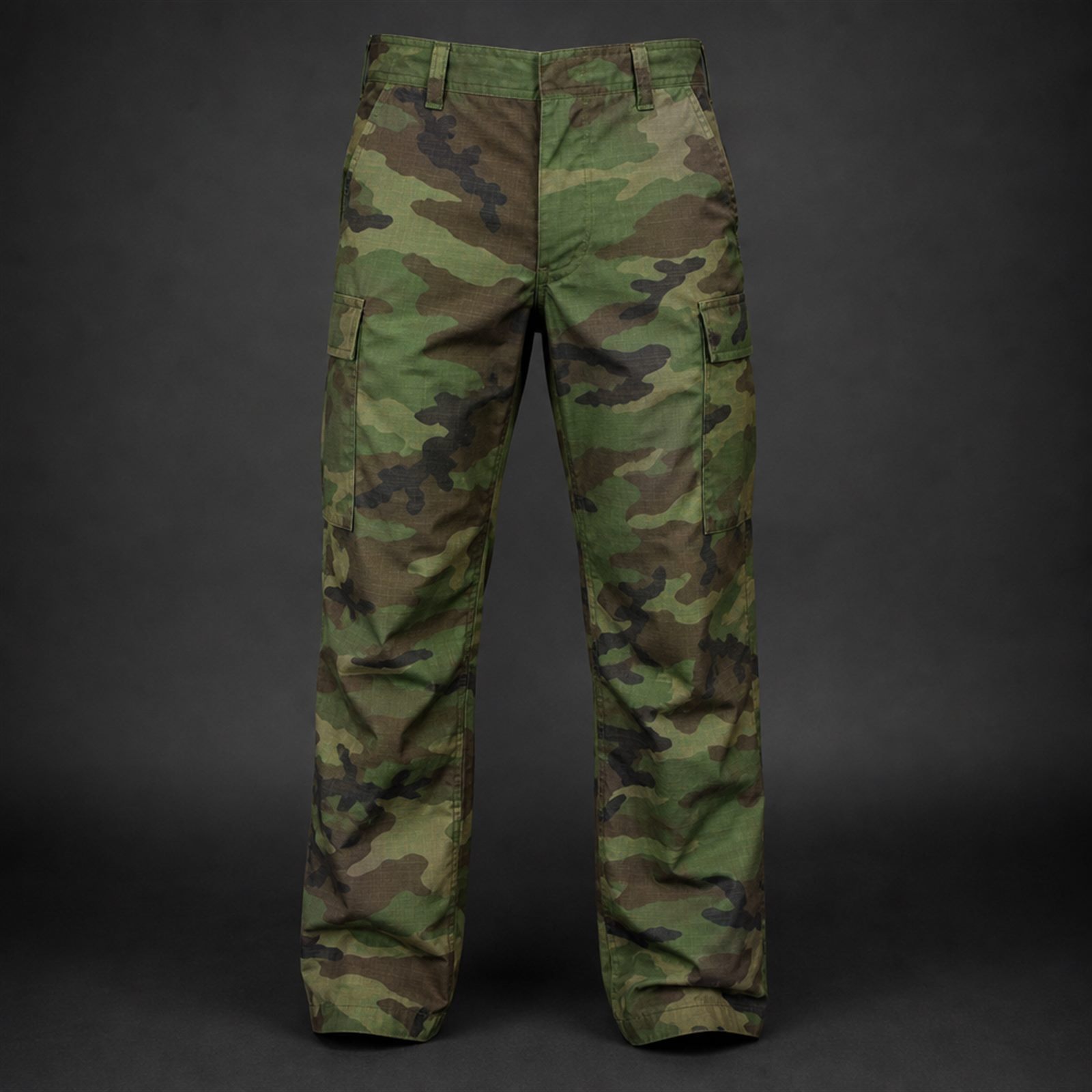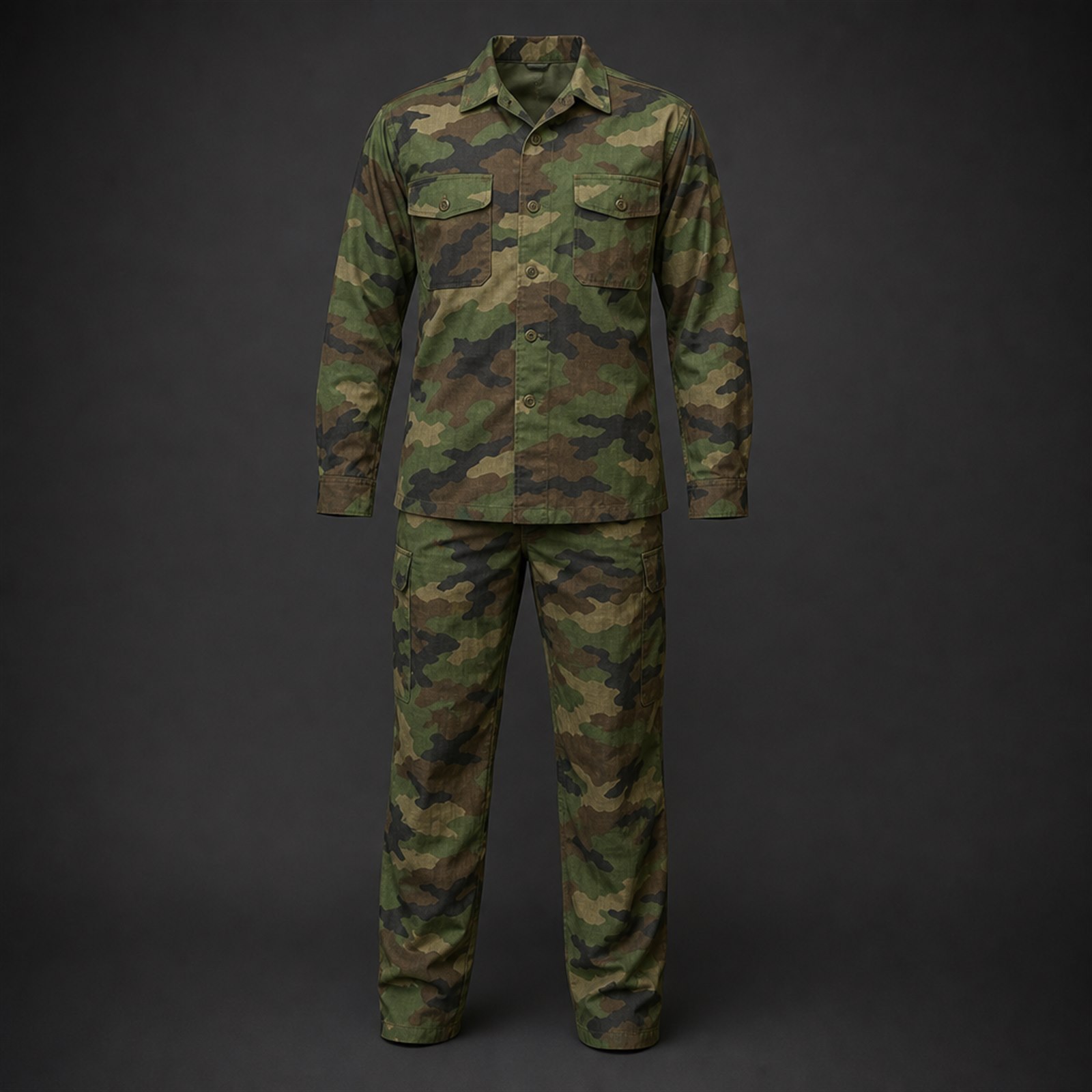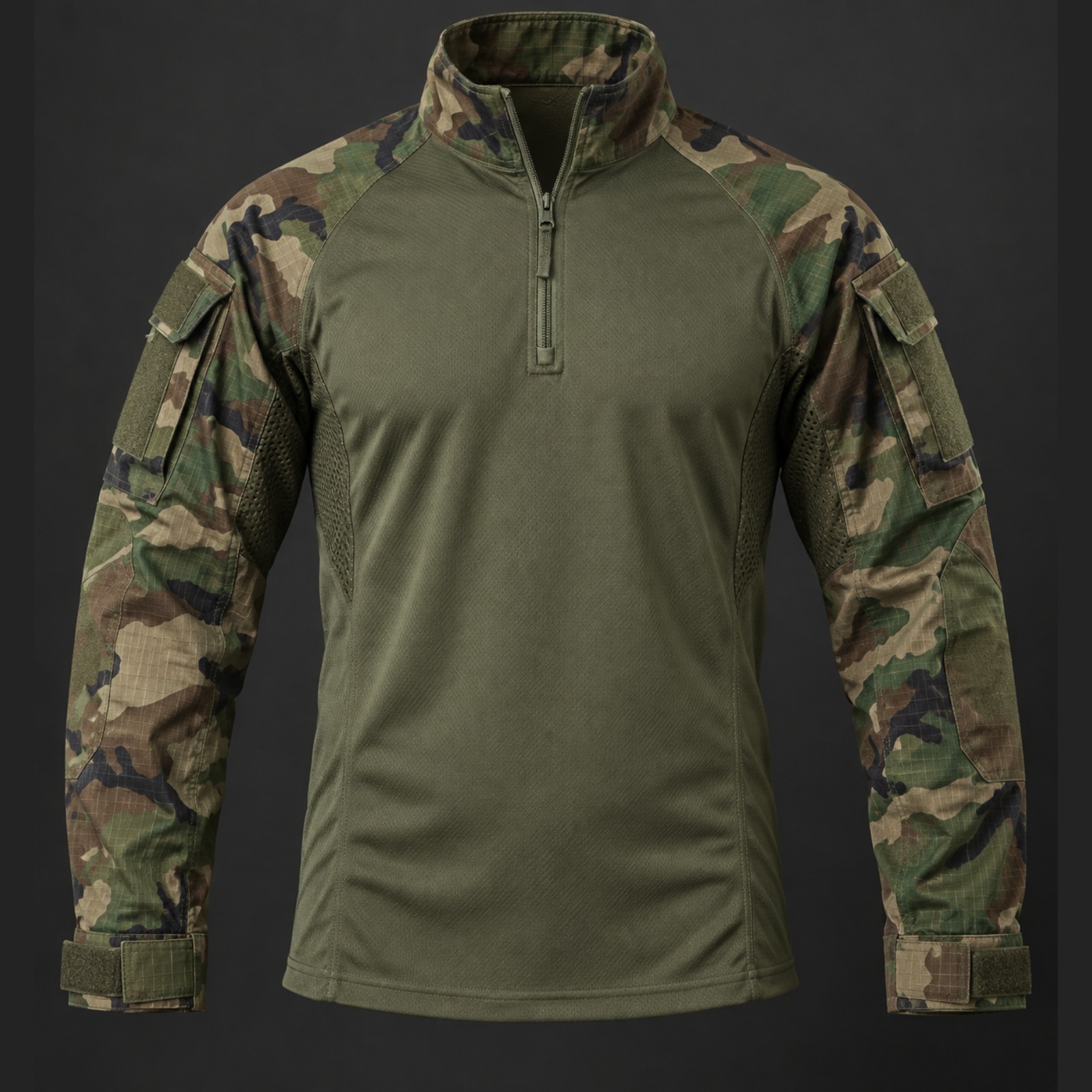
Combat Shirts
Hot Weather Combat Shirt
This garment exists to solve one problem: a combat shirt that can be worn through a full day of heat without becoming saturated and unusable.
HotTropical / HumidDesert
View productProducts / Hot Weather Tactical Clothing
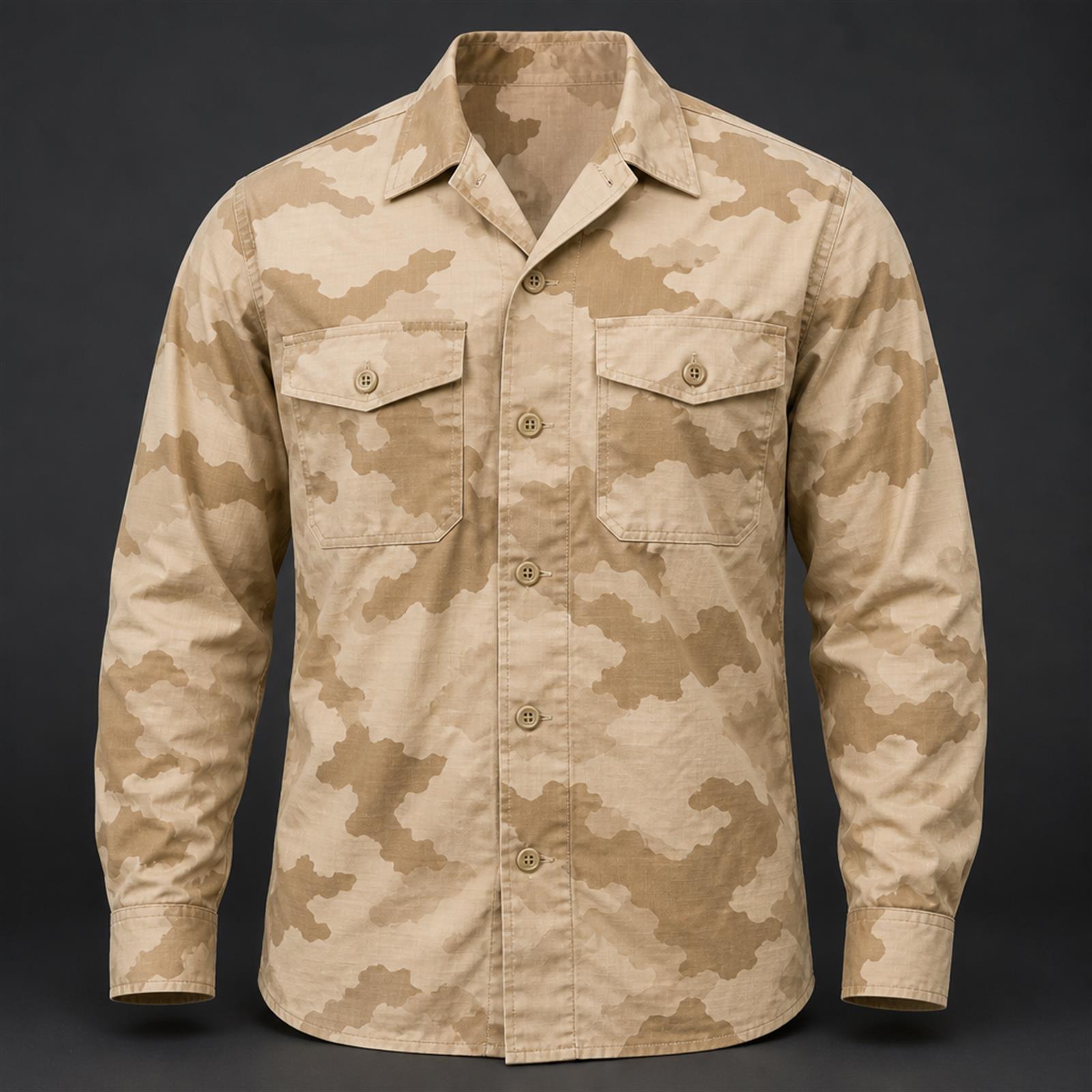
In sustained heat the limiting factor is not durability, it is whether the wearer can keep working. This is the woven button-front shirt for that condition: a full light fabric shirt rather than a knit-torso combat shirt, developed for dry desert heat and for humid tropical patrol work where the shirt is worn all day and washed at night. Every decision that improves airflow or drying speed costs something else, so the specification is a set of deliberate trade-offs. Lighter and more open constructions give up abrasion resistance and shape retention; a looser cut ventilates better but behaves differently under load-bearing equipment. This product documents which trade-off was chosen and why.
Gallery
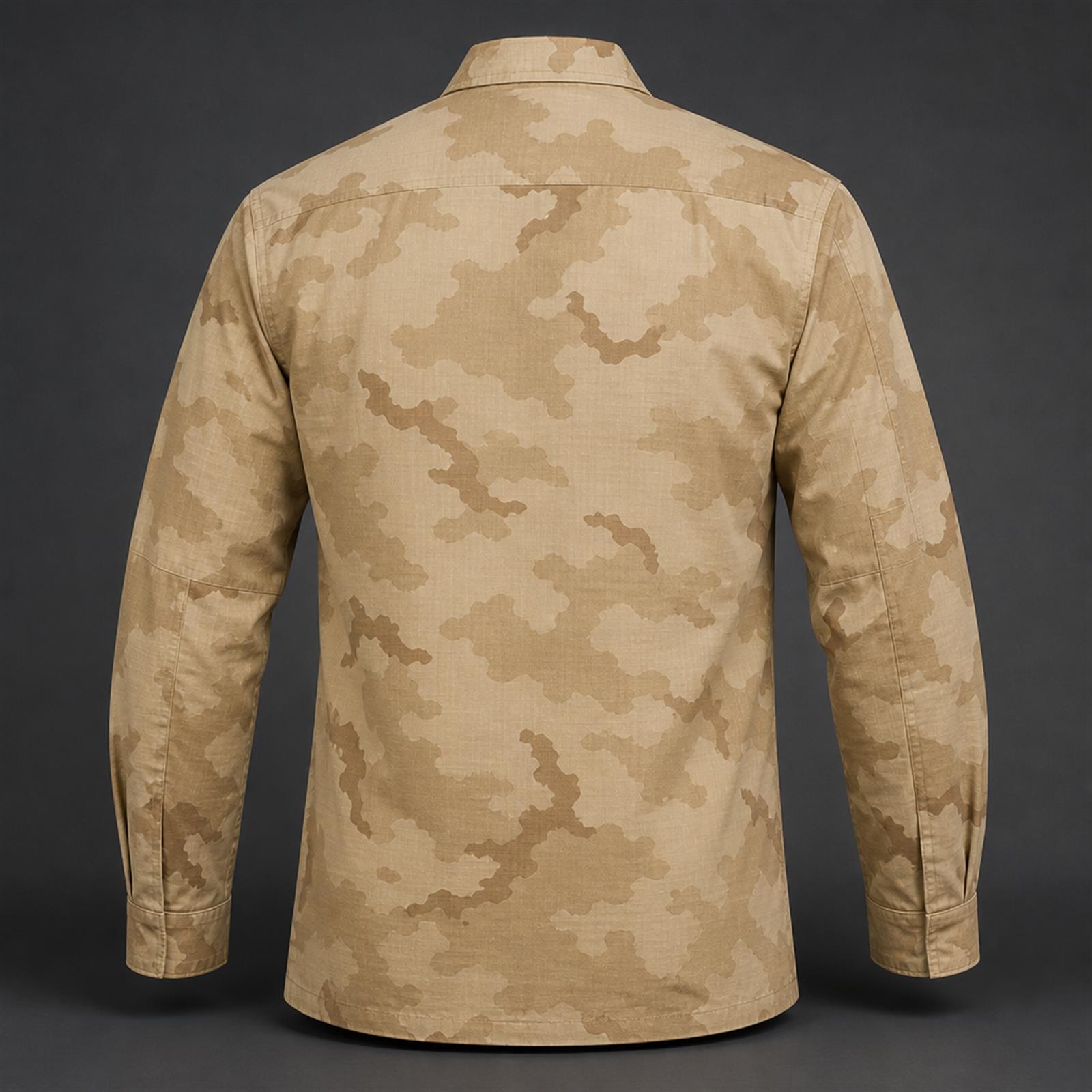
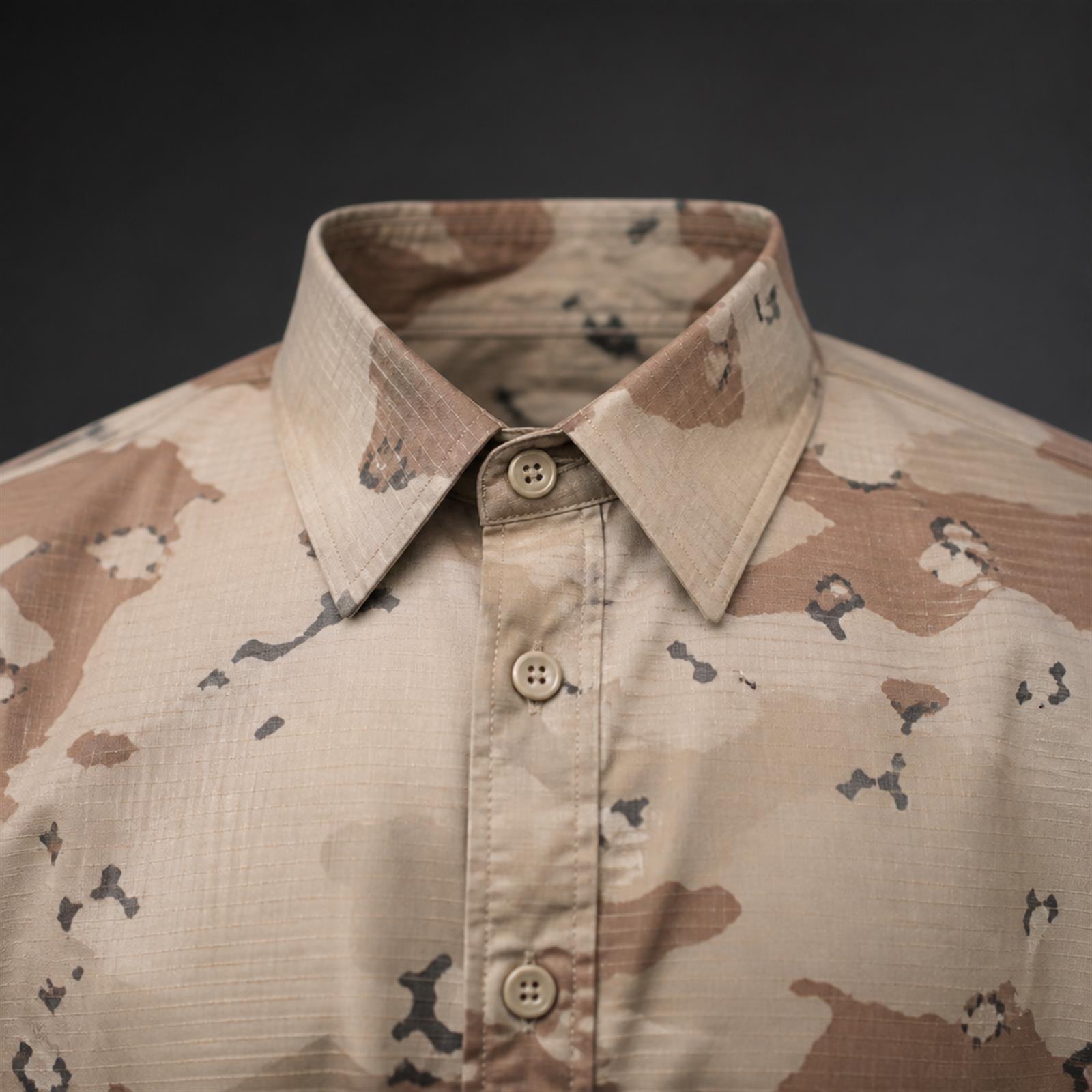
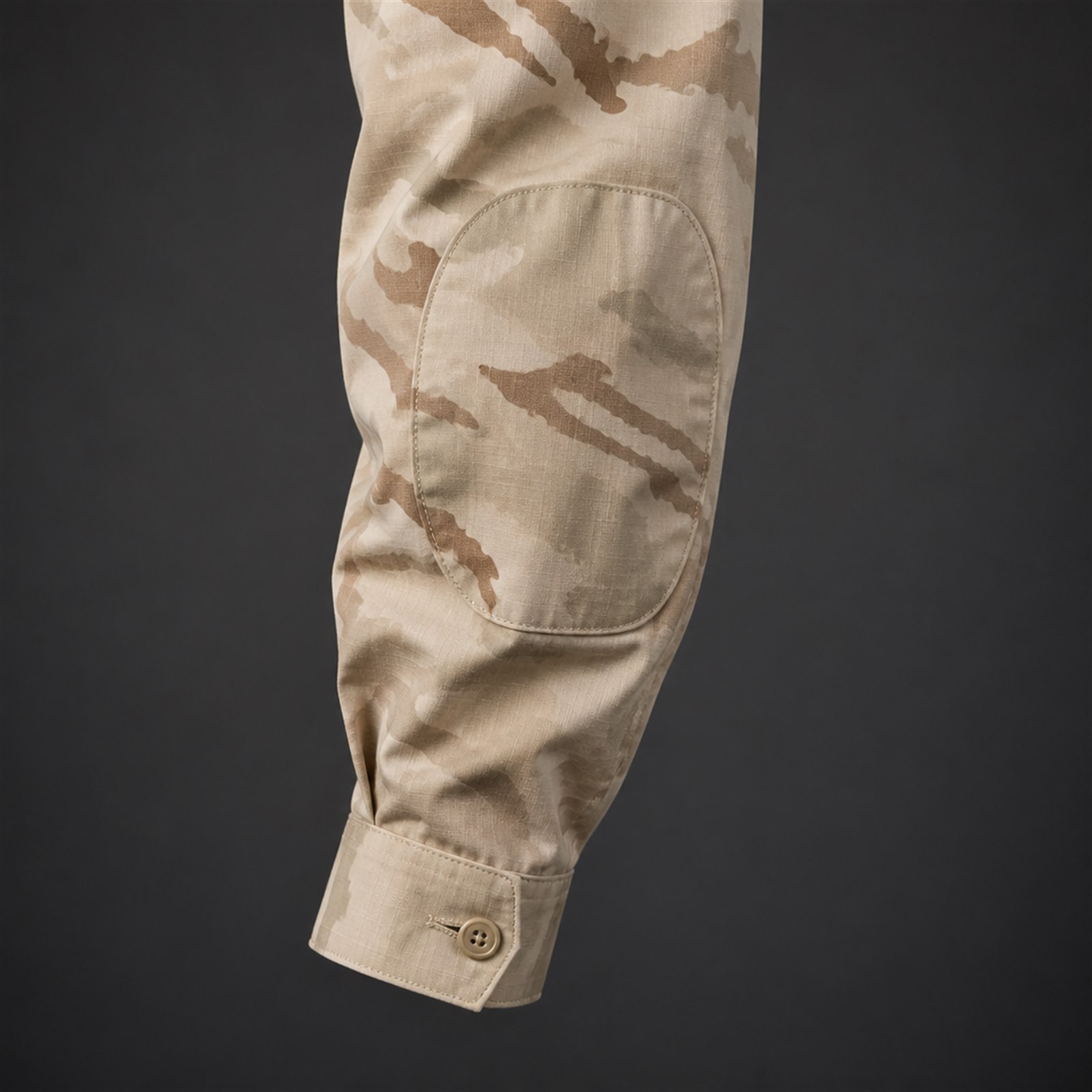
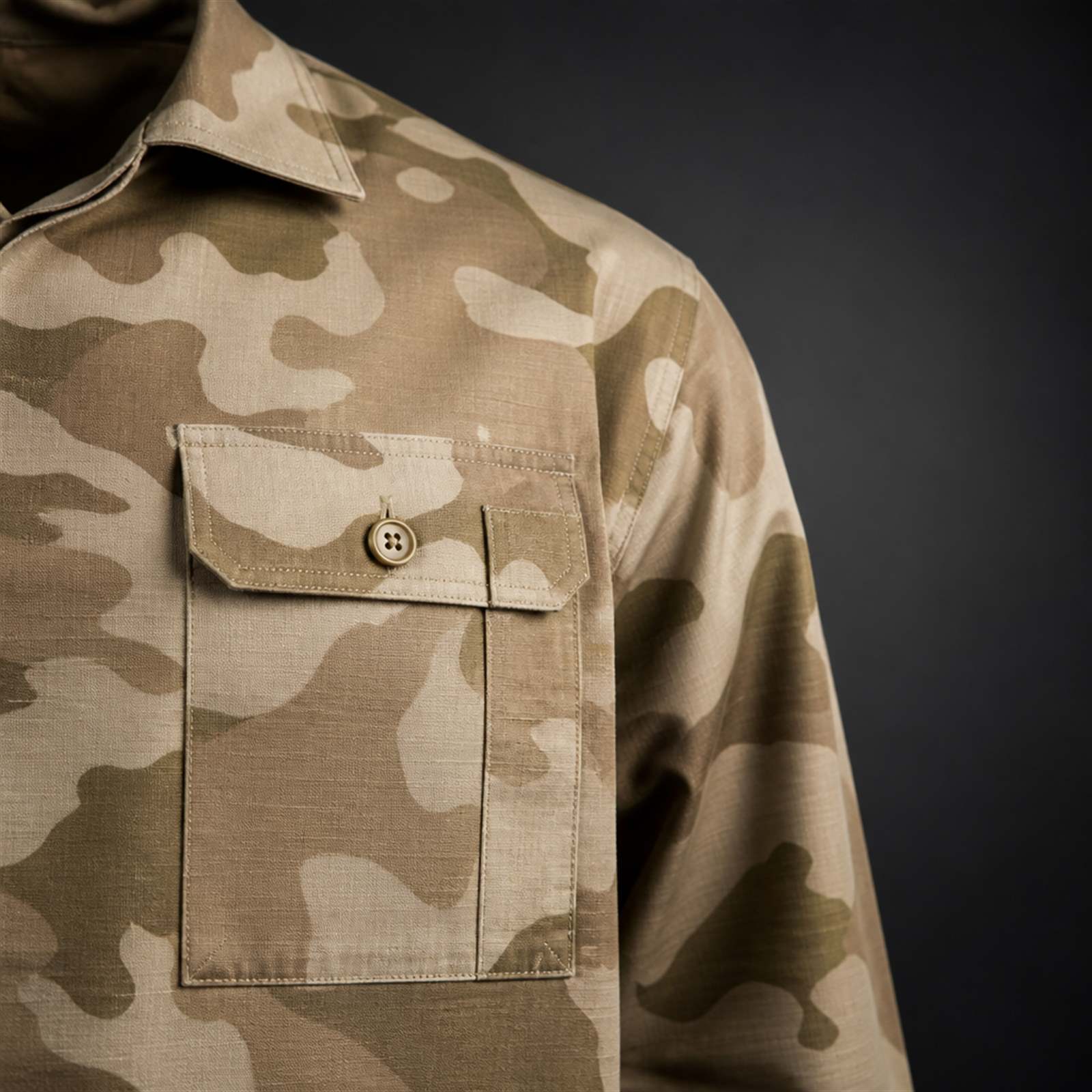
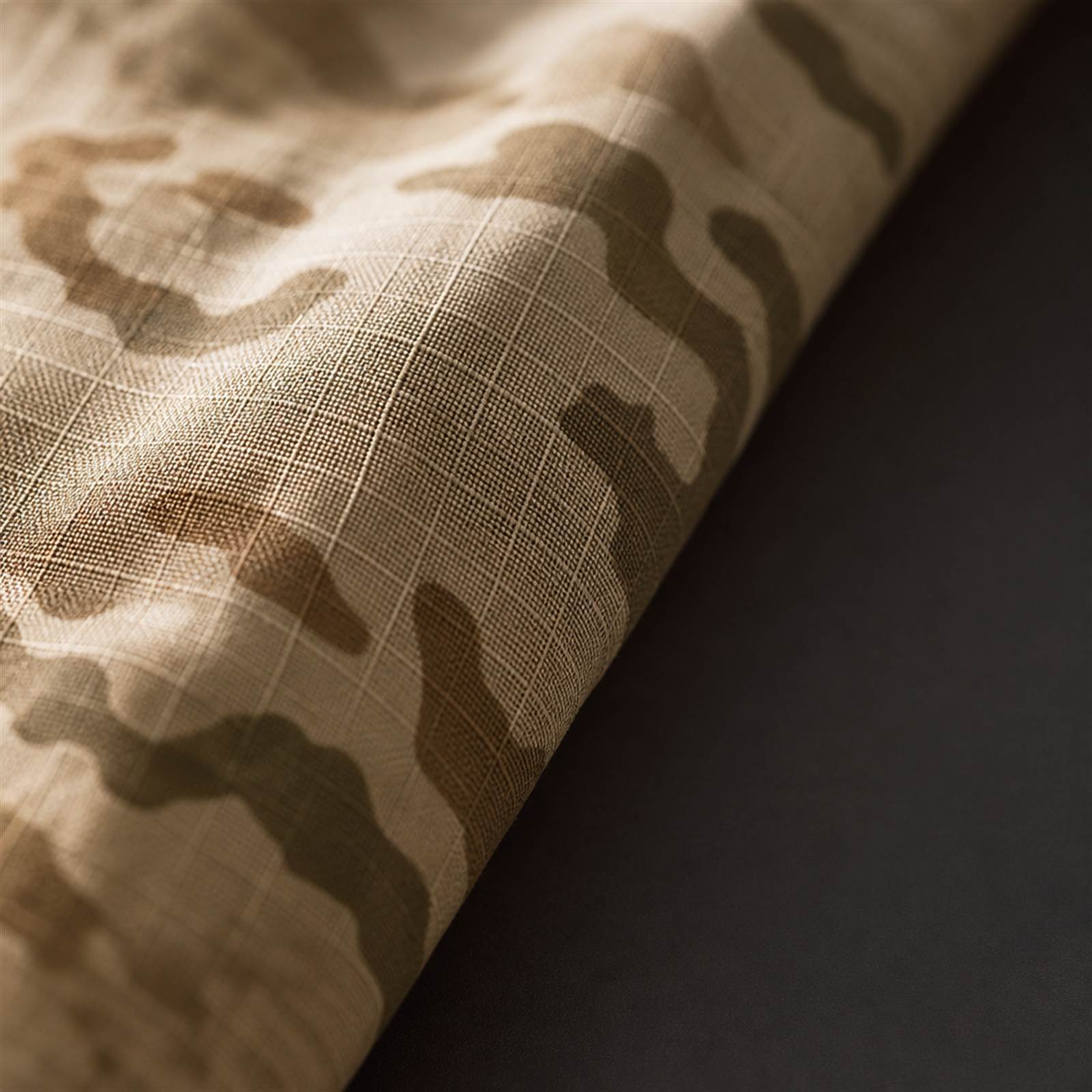
Design purpose
Build a light woven button-front shirt on the buyer's pattern that a wearer can keep on through a full hot day, dry overnight without a machine, and still wear under equipment without the shirt bunching or holding water against the skin.
Applications
Interactive map
Hot Weather Patrol Shirt: select a marker to see what can be specified at that part of the garment — all 10 mapped areas are also listed in full below the map, so nothing is hidden behind an interaction.
Customization by garment part
Select a marker to see the customization options available at that part of the garment. Every option below is a manufacturing decision you control.
Materials
4 material options for Hot Weather Patrol Shirt, specified per garment area — a single fabric cannot serve heat management and abrasion resistance at the same time.
Main fabric
Fabric weight is the single biggest lever on both airflow and drying time, and it is also the biggest lever on abrasion life. The right answer depends on whether the shirt is worn against equipment or against skin.
Ventilation
Ventilation that sits under a pack or plate carrier will be blocked. Where the buyer's role includes load-bearing equipment, the venting position is chosen around it rather than in the centre of the back.
Drying and moisture behaviour
Drying speed is usually what decides whether a hot weather shirt survives a multi-day issue. A shirt that holds water and does not dry overnight becomes a liability on the second day.
Reinforcement and wear points
Any reinforcement adds weight and reduces airflow locally. It is placed only where the buyer reports wear, rather than applied across the garment as a default.
Construction
How each of the 8 parts of Hot Weather Patrol Shirt is assembled, and why that choice was made.
Fit and cut
The shirt is cut to allow air movement between the fabric and the body without becoming a hazard under equipment. Where the role involves a plate carrier or pack, the torso is fitted so the shirt does not bunch under straps while still venting.
Back yoke ventilation
Where vents are specified, the yoke is constructed with a mesh or open panel and finished so the opening does not gape when the wearer bends, and so the panel does not show as a separate colour under the fabric.
Underarm construction
Gussets are added where the role needs reach, and vents are positioned so they remain open when the arm is down. This is also the position where sweat accumulates first, so the finish here is specified for drying.
Front placket and closures
Button or snap placket construction is specified against whether the wearer operates it with gloves, with buttons sized and spaced accordingly, and the placket edge reinforced where it wears against pockets and equipment.
Collar and sleeve
Collar height and sleeve length are set against the sun and dust exposure the buyer reports, and sleeve roll-up tabs or a buttoned sleeve tab are offered where the wearer is expected to work with sleeves up.
Pocket configuration
Pocket positions, flap closures and the number of pockets are set around what the wearer actually carries, because every pocket adds a layer of fabric in exactly the place where airflow is wanted.
Seam and stitch specification
Seam types, thread and stitch density are written into the tech pack so the shirt keeps its shape after repeated hot washing, which is where a light woven most often fails.
Labelling and care
Care labelling is specified against the next-day wash cycle the buyer's programme actually uses, including whether tumble drying is permitted, so the garment is not laundered in a way that destroys the finish.
Features
The 6 functional features of Hot Weather Patrol Shirt each exist to solve a specific problem in use, and where a feature is a trade-off rather than a pure gain that is stated.
This is the full button-front woven shirt for buyers whose role calls for one. Where the requirement is a knit torso with abrasion-resistant sleeves, that is a different garment and we will say so rather than stretch this specification.
Fabric weight, openness, reinforcement and abrasion life pull against each other. The specification records which way the buyer chose, so the choice can be revisited deliberately instead of drifting at bulk.
A vent in the wrong position is blocked by exactly the equipment the wearer is carrying. Vent placement is set against the role, not against the middle of the back.
The specification targets the second day, when the shirt has to be usable after one night without a machine. That is a different requirement from comfort on the first wearing.
Shoulders, elbows and placket edges take the abrasion. Reinforcement is placed there rather than applied uniformly, because every added layer costs airflow and weight.
Light woven shirts fail by losing shape, not by tearing. Seam type, thread and stitch density are specified for the laundry cycle the programme actually uses.
Customization
12 customization lines for Hot Weather Patrol Shirt: branding, colour, camouflage and packaging are all part of the specification, and every item is confirmed on the pre-production sample.
Main fabric
Fabric weight
Ventilation
Closure
Collar
Sleeve
Pockets
Reinforcement
Moisture finish
Colour and camouflage
Labelling
Packaging
Colour
Camouflage
Sizing
Hot weather shirt sizing is developed for air movement as well as fit: the shirt needs enough ease to let air pass between the fabric and the body, and enough structure that it does not bunch under a pack or plate carrier. That is a different target from a close-fitting temperate garment, and it changes chest, shoulder and body length. A size set is produced across the range and confirmed on a wearer with the equipment the role uses, rather than judged on a standing form.
Branding
Your pattern, your fabric and finish specification, your pocket and ventilation layout, your hardware and your packaging. Labels, trims and cartons can be left blank, so the range ships as your own product with the specification held on file against every repeat order.
Logistics
Sample development
Development of Hot Weather Patrol Shirt runs in 7 stages, each risk removed before the next step commits cost.
Specification review
We agree fabric and weight, ventilation placement, closure type, pocket layout, reinforcement points and the equipment the shirt must sit under, in writing before anything is cut.
Fabric selection against the trade-offs
Fabric options are presented with the airflow, drying speed and abrasion life each one buys and gives up, so the buyer chooses the trade-off deliberately rather than by price alone.
Pattern development
The pattern is developed on the buyer's size range with ease for airflow, gussets for reach and ventilation positioning built in from the start.
Proto sample
A first sample proves fit, vent placement and reach, and is worn under the equipment the role uses to confirm the shirt does not bunch under straps.
Fit sample
A revised sample is produced with the agreed corrections and assessed on a wearer while moving continuously, since the cooling behaviour of the garment only appears under activity.
Size set
A set across the size range is produced so grading of chest, shoulder, body length and sleeve is confirmed, not only the base size.
Sealed sample
The approved sample is sealed and retained as the reference for inline and final inspection, including the ventilation construction and finish specification.
Bulk production
7 stages of bulk production for Hot Weather Patrol Shirt — where the approved specification is either held or lost.
Material receipt and inspection
Fabric lot and weight, mesh panel, closures, thread and trims are checked against the sealed sample before cutting, and colour is verified against the approved standard in daylight.
Cutting
Panels are cut to the approved pattern with print or camouflage placement controlled on the marker, including the yoke and pocket panels so the pattern breaks consistently.
Ventilation and assembly
Back yoke vents, mesh panels and underarm gussets are assembled in the correct sequence and inspected, because a vent constructed after the body is closed cannot be finished to the sample.
Closure and pocket assembly
Placket, buttons or snaps and pocket flaps are attached and function-checked, including operation with gloves where the buyer requires it.
Inline inspection
Garments are measured against approved tolerances at defined points through the run, so a drift in body length or fit is caught while it can still be corrected.
Finishing and labelling
Care labels, size marking and issue identification are applied to agreed positions, and loose threads, button security and seam appearance are finished to the sealed sample.
Final inspection and packing
Final inspection follows the approved specification and the AQL agreed with the buyer, and approved goods are packed and marked to the buyer's carton instructions.
Quality control
The 7 checks applied to Hot Weather Patrol Shirt, each measured against an agreed standard rather than against opinion.
Incoming material check
Fabric construction and weight, finish, mesh panel, closures, thread and trims are recorded against the specification, and fabric lots are retained for reference.
Colour verification
Production colour is compared with the approved standard and the sealed sample under agreed lighting, and shade variation across rolls is recorded before cutting.
Ventilation construction check
Back yoke vents, mesh panels and gussets are inspected for correct position, clean finishing and no gaping, since this is the feature most likely to be simplified during production.
Measurement check
Chest, shoulder, body length, sleeve length and collar are measured against approved tolerances during the run, including the graded sizes rather than the base size alone.
Closure function testing
Placket closures are operated repeatedly on sampled garments to confirm they stay closed under movement and can be opened by the wearer in the conditions of use.
Wash and shape check
Sampled shirts are washed on the care cycle specified for the programme and checked for shrinkage, seam appearance and shape retention, because this is how a light woven shirt fails.
Final inspection and records
Final inspection results, inspection records and retained samples stay with the order, so a repeat order is produced against evidence rather than against memory.
Specifications
18 specification rows for Hot Weather Patrol Shirt: only confirmed items are listed, so a row that depends on your programme is omitted rather than filled with an estimate.
| Product type | Light woven button-front patrol shirt for hot weather use |
|---|---|
| Main fabric | Lightweight woven ripstop, nyco or poly-cotton ripstop, open plain weave or mechanical stretch light woven, to specification |
| Fabric weight | Selected against the airflow, drying speed and abrasion life trade-off, to buyer specification |
| Ventilation | Vented back yoke, underarm gussets with vent, mesh-lined upper back, or none, placed around the equipment carried |
| Closure | Button, snap, concealed or two-way placket, sized for glove operation where required |
| Collar | Standard, stand, mandarin or convertible, with height set against sun and dust exposure |
| Sleeve | Long with roll-up or buttoned tab, short, or reinforced long sleeve, to specification |
| Pockets | Chest pockets with flap or zip, sleeve pocket, or no pockets, to specification |
| Reinforcement | Elbow, shoulder or placket edge, placed against reported wear points |
| Moisture finish | Quick-dry or wicking finish, optional anti-odour finish, or unfinished, to specification |
| Cut | Ease for airflow, with gussets where reach is required and fitting confirmed under the role's equipment |
| Stitch specification | Seam type, thread and stitch density written into the tech pack for the programme's laundry cycle |
| Size range | EU or US runs including extended sizes, cut for airflow and equipment compatibility |
| Colour and camouflage | Solid colourways, panelled blocking or buyer artwork camouflage, matched to an approved standard |
| Labelling | Woven main label, printed care label, size and issue marking as required |
| Packing | Poly bag, individual carton and buyer-specific cartons |
FAQ
A combat shirt is usually a knit torso with abrasion-resistant woven sleeves, built to sit under load-bearing equipment. This is a full woven button-front shirt — the garment for buyers whose role calls for a shirt rather than a base layer. Where the requirement is genuinely the knit-torso form, we will say so and develop that instead of stretching this specification to cover both.
It depends on which trade-off matters more to your programme. Fabric weight is the biggest lever on airflow and drying time, and also on abrasion life, so a very light fabric cools better and wears faster. We present the options with the airflow, drying speed and abrasion life each one buys and gives up, and record the choice so it can be revisited deliberately rather than drifting at bulk.
We do not quote figures of that kind unless they come from a test actually performed on that material and construction. A number taken from a fabric datasheet does not describe a finished garment. Where your tender requires a figure, the correct sequence is to agree the test method first and have the result produced on the actual construction.
That depends on two decisions: how the shirt is cut, and where the ventilation sits. Ventilation placed in the centre of the back is blocked by exactly the equipment the wearer is carrying, so we position venting around the role's load-bearing system, and we fit the torso so the shirt does not bunch under straps. Both are confirmed on a wearer with the equipment rather than on a standing form.
Drying speed is usually what decides whether a hot weather shirt survives a multi-day issue, so we treat the second day as the design case rather than comfort on first wearing. Fabric choice, the moisture finish and the stitch specification are all set against the laundry cycle your programme actually uses, and sampled shirts are washed on that cycle and checked for shrinkage and shape retention.
Usually yes, with one caveat. The shirt and pant are often different fabric constructions that take colour differently, so a single reference cannot describe both. We agree a shade band per fabric and verify it on lab dips, and where an exact match between the two is not realistic we will tell you rather than promise it and correct it at bulk.
Related Materials
Related Applications
Related Capabilities
Related Articles
Referenced By
More products
Combat Shirts
This garment exists to solve one problem: a combat shirt that can be worn through a full day of heat without becoming saturated and unusable.
Tactical Pants
In sustained heat the limiting factor is not durability, it is whether the wearer can keep working.
Tactical Uniform Sets
A uniform set is a specification problem that two separate garments do not have: the shirt and the pant have to behave as one system.
Send us your tech pack, reference sample or product idea. We review your requirement, recommend materials and construction, and come back with a development plan you can act on.