Skip to content
TACTICALOEM / ODM TACTICAL APPAREL
ENEnglish

Products / Thermal Base Layers

Thermal Base Layer Manufacturer

A thermal base layer is not an ordinary undershirt with a warmer name. It is the innermost layer of a cold weather system, and its job is to move perspiration away from the skin so the layers above it can keep working. That function depends on the fabric, but it depends just as much on fit: a layer that does not touch the skin cannot move anything off it. Base layers also sit against the body for the whole working period, so seam construction, gusseting, neckline shape and how the fabric behaves after repeated laundering decide whether the garment is worn or left in the kit bag. In the four-layer model of base, mid, insulation and shell, this is Layer 1, and it is the layer most often specified last and regretted first. The trade is real: a thicker base layer feels warmer when it goes on and dries more slowly, while a thinner one moves moisture faster and provides less warmth when the wearer is static.

custom thermal base layersthermal base layer OEMwholesale thermal base layer tops and bottomsmoisture wicking base layer supplier
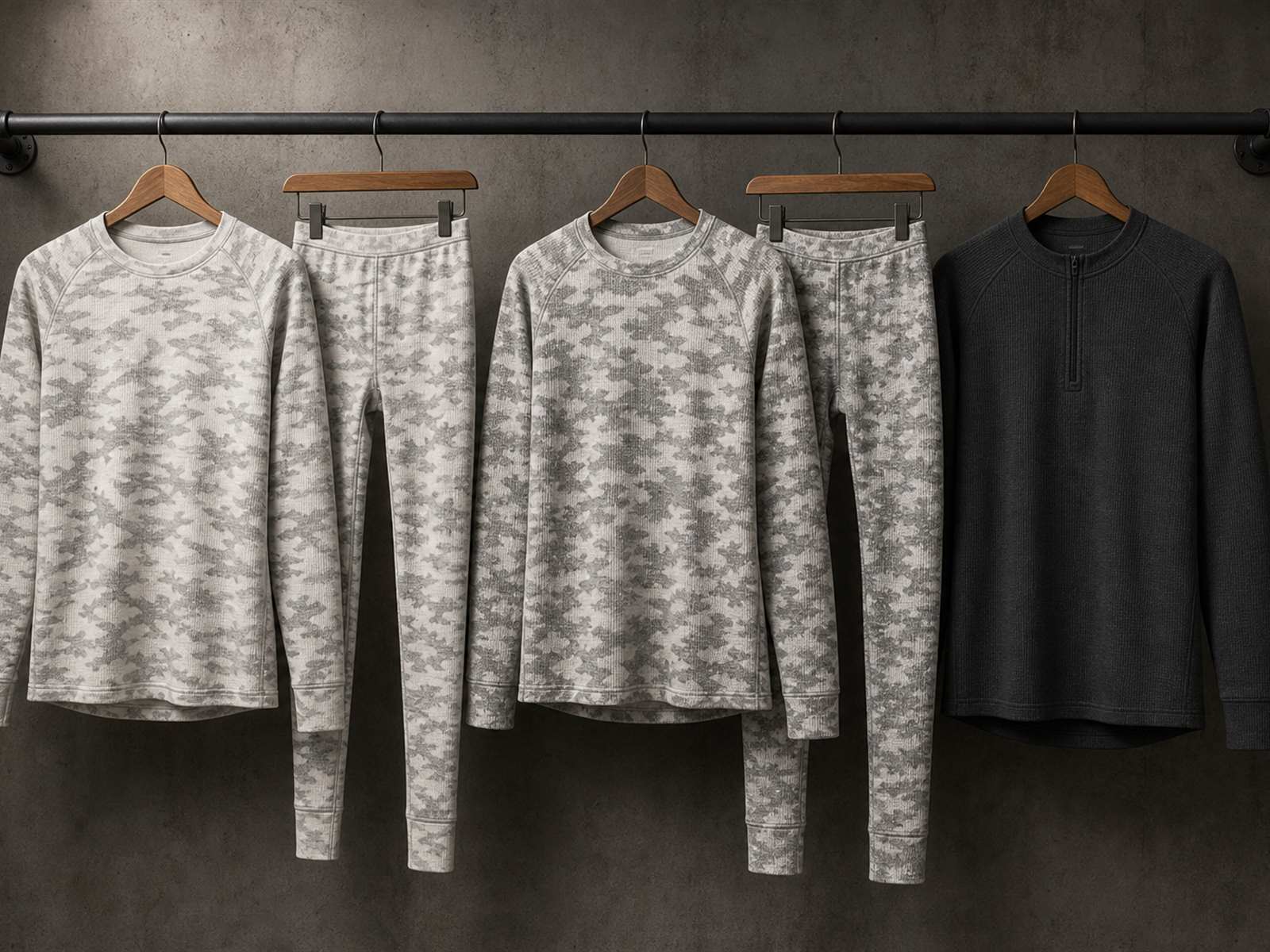
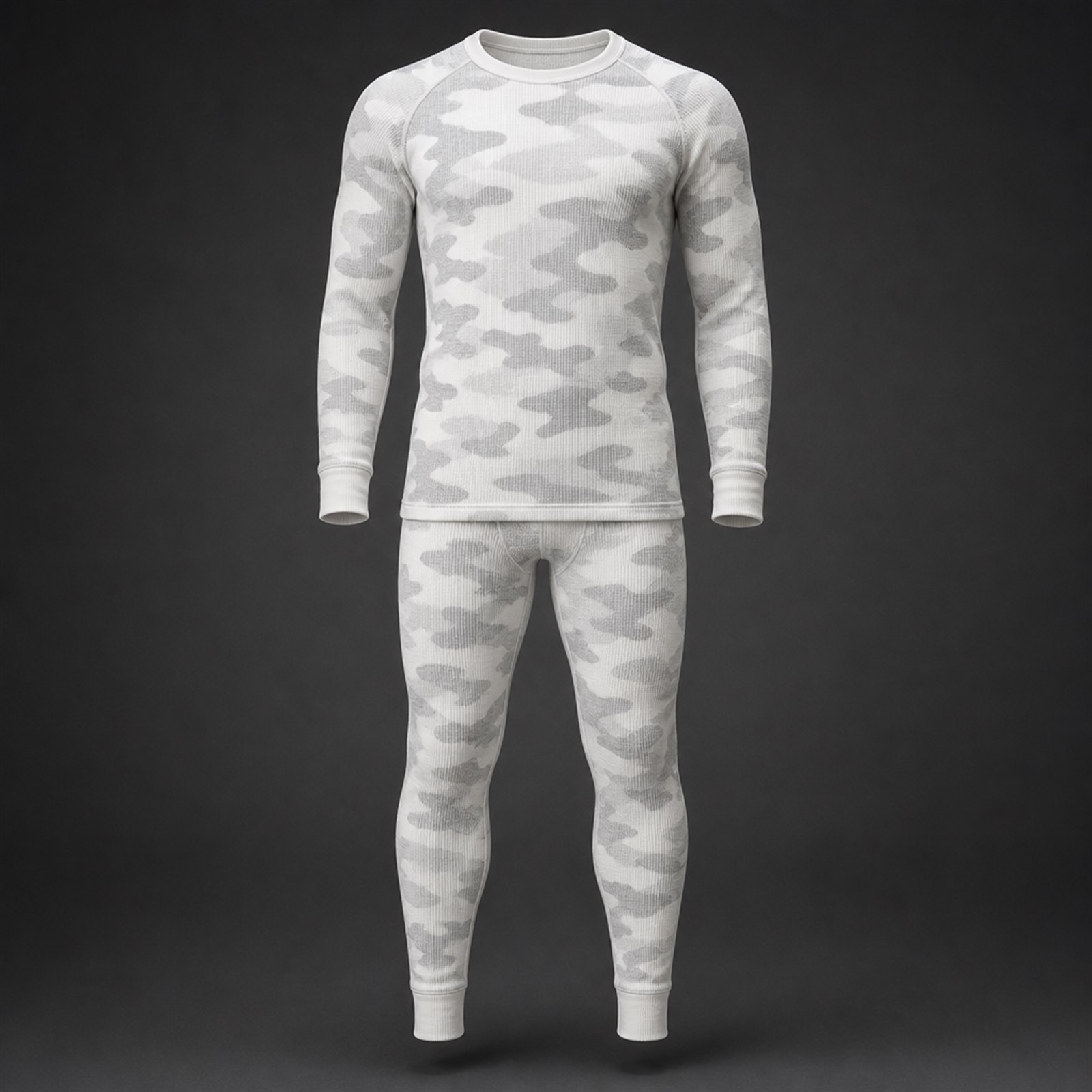
Thermal base layer top and bottom with moisture-moving knit and flat-lock seams made for OEM buyers
Primary keyword
thermal base layer manufacturer
Climate focus
Cold / high-output activity · Cold / low and moderate activity · Cold / all activity patterns
Development input
Tech pack · Reference sample · Sketch · Photo
Thermal Base LayersThermal Base LayersThermal Base LayersThermal Base Layers

Buyers

Who buys thermal base layers?

Thermal Base Layers is specified by organisations rather than bought as a single garment, so a quotation has to satisfy all 6 buyer profiles listed below.

Tactical Brands

A base layer whose knit, fit and seam construction are documented, so a reordered set matches the approved sample in stretch, thickness and feel.

Outdoor & Hunting Brands

Quiet, low-odour base layers in earth and camouflage-compatible tones, developed to a civilian fit and delivered with their own retail labelling.

Uniform Distributors & Wholesalers

Base layer sets in volume, issued as top and bottom pairs, with a stable colour standard and a written specification for reorders.

Government Contractors & Procurement Companies

Documented fabric and construction decisions, consistent sizing across the range, and inspection records for garments issued in quantity.

Security Companies

A discreet base layer that stays comfortable through a long shift indoors and out, with a clean neckline for wear under a uniform shirt.

Private Label Brands & Importers

Base layers developed to their own fit, knit direction and price architecture, with artwork, labels and packaging on agreed specifications.

Types

Thermal Base Layers types

The same category name covers very different garments depending on climate and wear pattern. 3 types of Thermal Base Layers are covered here, and the type is chosen before the fabric.

Cold / high-output activity

Lightweight Moisture-Moving Base Layer

The thinnest build, intended for wearers who generate heat continuously and need moisture to leave the skin quickly. It adds little warmth of its own and relies on the mid and insulation layers above it. The trade is exactly that: during long static periods it contributes almost nothing, and a programme that specifies only lightweight base layers will find the wearer cold whenever they stop moving.

  • Thin knit with a smooth inner face for fast moisture movement
  • Close fit that keeps the fabric in contact with the skin
  • Flat-lock or bonded seams to reduce chafing under equipment
  • Extended back length so the layer does not ride up under a belt
  • Low-profile neckline for wear under a collar or over a shirt
Cold / low and moderate activity

Midweight Thermal Base Layer

A thicker build with a light lofted inner face, for wearers who alternate between moving and standing still. It moves moisture more slowly than a lightweight build but holds more warmth while the wearer is stationary, which makes it the more forgiving choice for duty and static work. The trade is bulk under the mid layer, a longer drying time and a garment that becomes uncomfortable if the wearer is working hard.

  • Lofted, brushed inner face for warmth against the skin
  • Slightly relaxed fit for comfort during long static periods
  • Flat-lock seams at shoulder, side and underarm
  • Thumb loop or extended cuff option on the top
  • Matching bottom with a gusseted crotch and flat waistband

Cold / all activity patterns

Base Layer Bottom

The lower half of Layer 1, and the piece programmes most often forget. A top alone leaves the legs covered only by the trouser, so the same moisture problem appears at the thigh and the knee. Bottoms are built as a matching set to the top, with a flat waistband that does not bunch under a belt and a gusseted crotch that survives kneeling. The trade is the same as the top: warmth against drying speed, plus a fit that has to work under a lined or insulated trouser.

  • Flat, low-bulk waistband for wear under a belt
  • Gusseted crotch to reduce seam stress when kneeling
  • Articulated or lightly shaped knee
  • Ankle length that stays inside the boot without bunching
  • Fabric and colour matched to the corresponding top

Engineering

Construction, part by part

8 construction decisions define Thermal Base Layers, and each row below is one decision you control at specification stage.

Fabric Structure and Knit

  • Single knit with a smooth inner face
  • Grid or channel knit for moisture movement
  • Brushed or lofted inner face for warmth
  • Bicomponent knit with a warm inner and smooth outer face
  • Mesh knit at ventilation panels

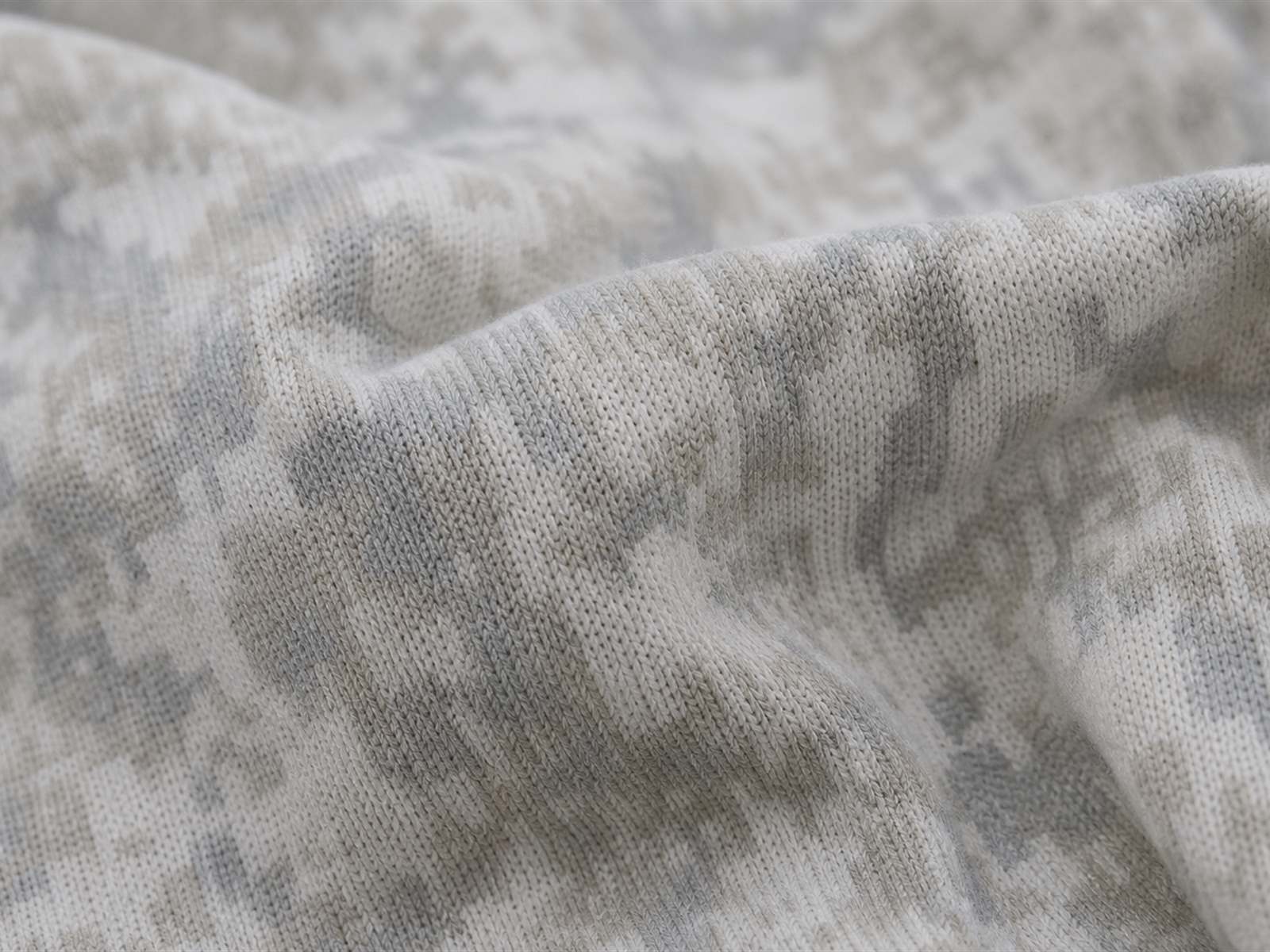
The knit structure decides how moisture leaves the skin and how the fabric feels when it is wet. A grid knit moves moisture through defined channels; a brushed face holds warmth but holds water for longer. The choice is made against the activity pattern, not against a preference for a softer hand feel.

Fit and Skin Contact

  • Close, stretch fit for maximum skin contact
  • Standard athletic fit
  • Relaxed fit for static comfort
  • Compression fit at the calf and thigh
  • Sizing allowance where the layer is worn over a second base

Fit is a functional specification on this layer. A base layer that hangs away from the skin cannot move moisture from it, however good the fabric is. Where the buyer's size chart comes from an outerwear range, the base layer fit is usually wrong and has to be developed separately.

Seam and Stitch Construction

  • Flat-lock seams
  • Bonded or welded seams
  • Moved seams away from shoulder and underarm pressure points
  • Cover-stitched seams
  • Minimal seam count panel layout

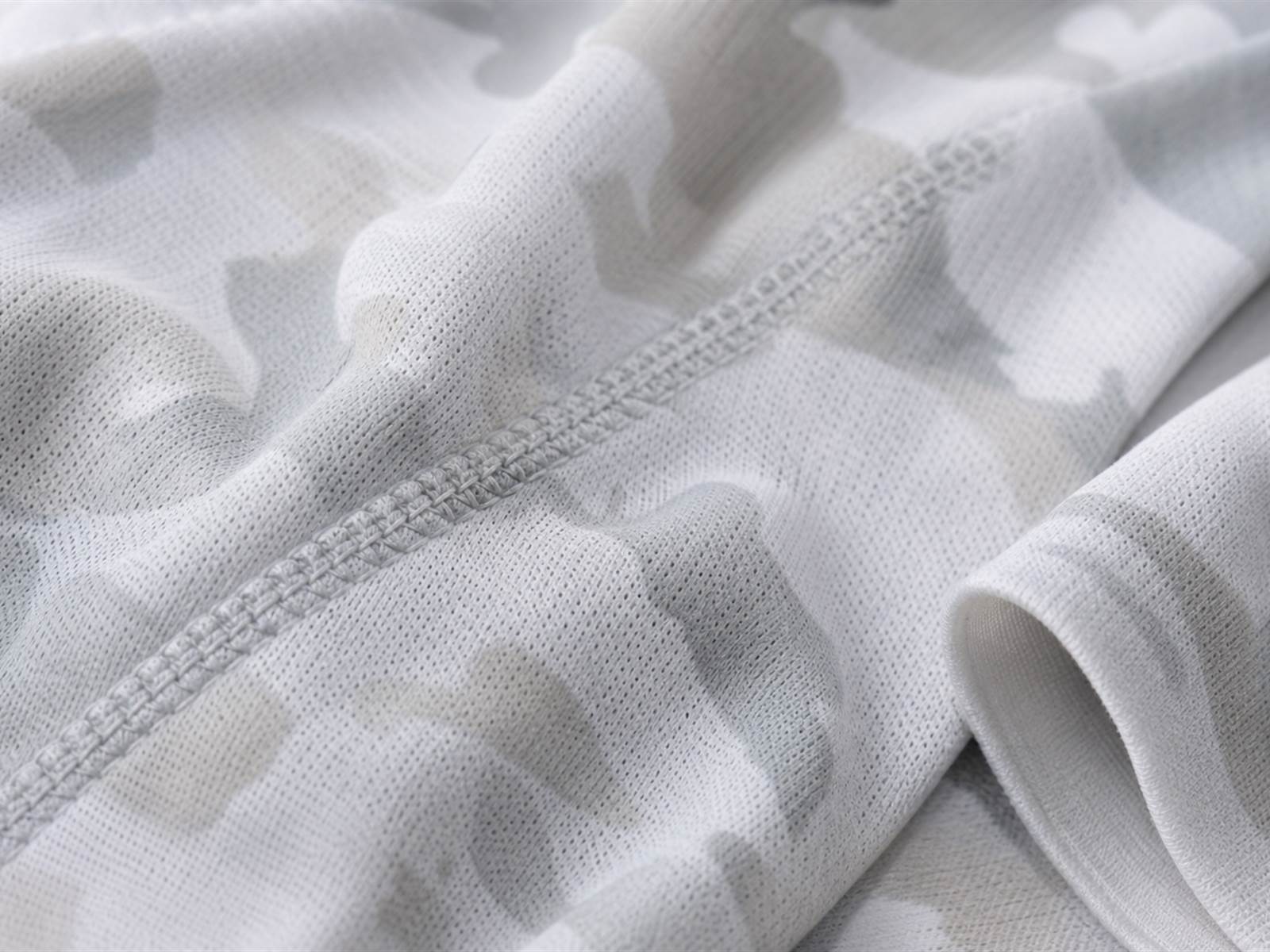
On a layer worn directly against the skin, seam bulk is felt rather than seen. Seams that sit under a strap, a harness or a pad are the ones that cause complaints, so their position is a pattern decision as much as a stitching one.

Neckline and Collar

  • Crew neck
  • Low crew neck for wear under a collared shirt
  • Zip neck with chin guard
  • Mock neck
  • High collar for wear under a hood

The neckline has to work with what is worn above it. A high collar that conflicts with the mid layer or the jacket collar creates bulk at exactly the point where cold reaches the body fastest, and a low neckline under a jacket leaves a gap.

Sleeve, Cuff and Thumb Loop

  • Short sleeve
  • Long sleeve with plain hemmed cuff
  • Long sleeve with thumb loop
  • Extended sleeve with a watch opening
  • Raglan or set-in sleeve construction

Sleeve length shifts when the layers above are added, and a sleeve that pulls back exposes the wrist. Where the wearer uses gloves, a thumb loop or extended sleeve can close the gap between cuff and glove, but it has to be sized against the glove.

Underarm, Gusset and Movement Panels

  • Underarm gusset
  • Raglan sleeve to avoid a shoulder seam under straps
  • Gusseted crotch on the bottom
  • Stretch panels at the side body
  • Shaped elbow or knee

Base layers are worn while reaching, kneeling and carrying. Gussets and seam placement remove the strain that otherwise becomes a failure point, and they cost little compared with the returns they prevent.

Panel Mapping and Ventilation

  • Uniform construction throughout
  • Lighter knit at back and underarm
  • Mesh panels at high-sweat zones
  • Brushed face at torso and smooth face at limbs
  • Zoned knit density

Mapping a base layer is the same principle as mapping insulation, applied in reverse: less material and faster moisture movement where the wearer sweats most. It is decided from the activity pattern and written into the specification as a drawing.

Waistband, Hem and Care Durability

  • Flat elastic waistband on the bottom
  • Soft-covered waistband
  • Drawcord waist
  • Extended back hem on the top
  • Construction specified for repeated industrial laundering

This layer is washed more often than anything else in the system, so its shape retention and colour stability after repeated laundering are treated as functional requirements and specified in the care instruction rather than left to the end user.

Available fabrics

Material options by garment area

Knit Fabric

Moisture wicking fabricQuick dry fabricMechanical stretch fabricGrid knit fabricBrushed lofted knit for midweight builds

Base layer fabrics are selected for how they move moisture and how quickly they dry, and only then for warmth. A fabric that feels warm in the hand but holds water against the skin works against the rest of the system.

Fibre Direction

Synthetic knit to buyer directionSynthetic and natural blend directionRecycled fibre content where the buyer requires itBuyer-specified composition and weight

Fibre and blend decisions are confirmed per programme. A cotton-rich construction is generally the wrong choice for this layer in cold conditions, because it holds moisture against the skin instead of moving it away.

Panel and Ventilation Fabric

Mesh knit panelsLighter knit at back and underarmStretch knit at movement zonesSmooth outer face fabric for layering

Panel fabrics are chosen to match the knit they sit next to in stretch and laundering behaviour, so the garment does not distort where a panel meets the body fabric.

Trim and Elastic

Flat elastic waistbandSoft-covered elasticBuyer-specified drawcordThumb loop materialThread specified for stretch seams

On a stretch garment the thread and elastic matter as much as the fabric. A thread that does not extend with the knit causes seam failure and pucker after washing, so it is written into the specification.

Customization

What can be customized

13 specification lines are available for Thermal Base Layers, and where an option changes cost, weight or durability the consequence is stated next to it.

Fabric

Single knitGrid knitBrushed lofted knitBicomponent knitBuyer-specified composition and weight

Build Weight

Lightweight buildMidweight buildHeavier static buildZoned build with mapped knit weight

Set Configuration

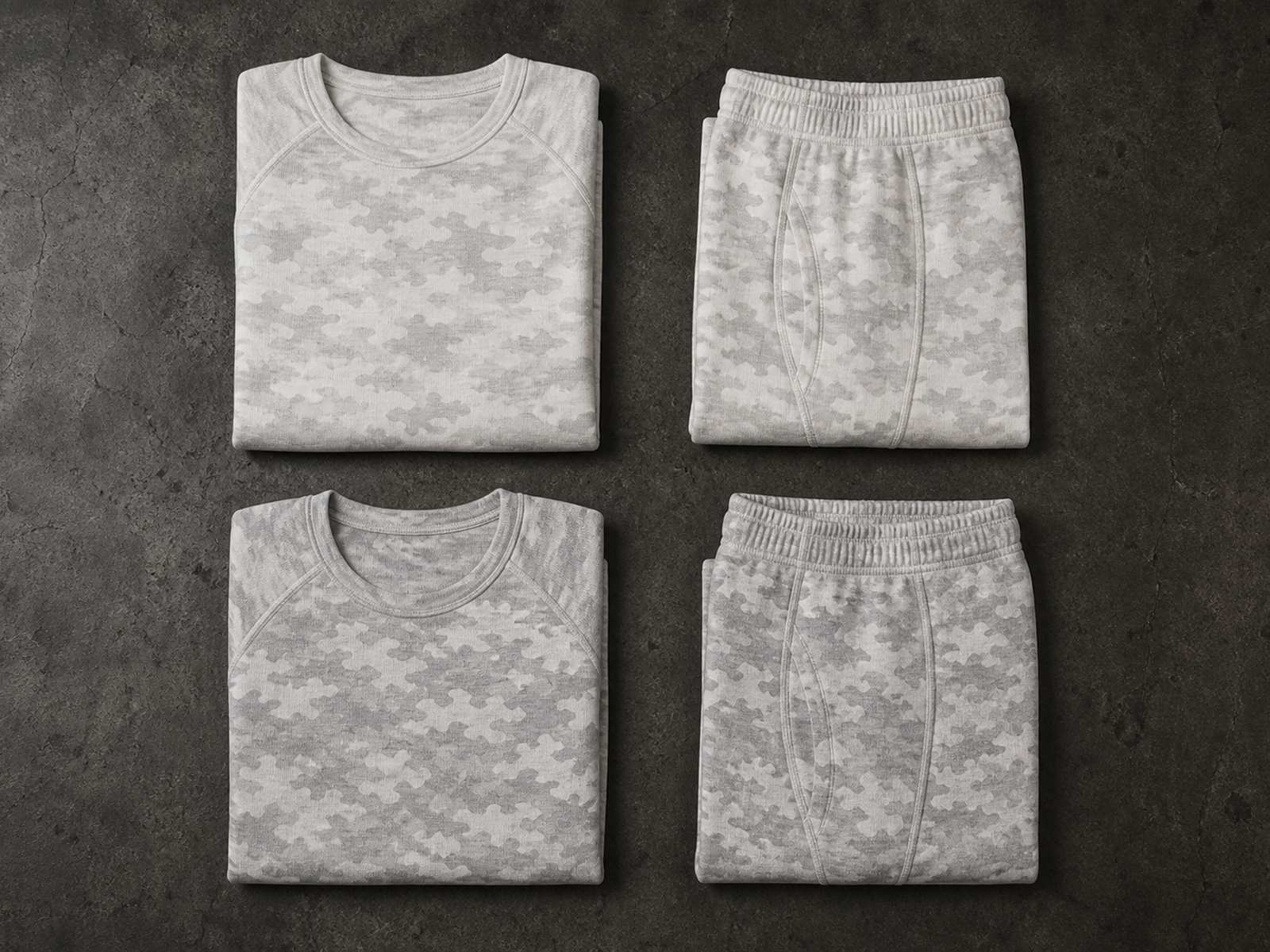
Top onlyBottom onlyTop and bottom as a matched setSet with a spare top for changing

Fit

Close stretch fitStandard athletic fitRelaxed fitCompression fit at calf and thigh

Neckline

Crew neckLow crew neckZip neck with chin guardMock neckHigh collar

Sleeve

Short sleeveLong sleeve plain cuffLong sleeve with thumb loopExtended sleeve with watch openingRaglan construction

Seams

Flat-lockBonded or weldedCover-stitchedSeams moved off pressure points

Panel Mapping

Uniform constructionLighter knit at back and underarmMesh panels at high-sweat zonesMapping to buyer drawing

Waistband

Flat elasticSoft-covered elasticDrawcordWide comfort waistband

Color

Solid colourwaysBuyer Pantone targetsBuyer lab dip approvalTonal neutral sets

Logo

Woven labelPrinted labelHeat transferEmbroidery

Label

Main labelSize labelCare labelCountry of origin label

Packaging

Poly bagPrinted poly bagHangtagHeader cardCustom box

Sizing

Size development

Base layer sizing is not outerwear sizing scaled down. The garment has to stay in contact with the skin across the whole size range, so the critical measurements are different: chest and body length matter, but so do sleeve length, shoulder position, neckline width, waist and inseam on the bottom, and above all how much the fabric extends when worn. A size set that is correct in the middle size can still fail at the extremes, where fit either hangs away from the skin or restricts movement. Size development therefore starts from the buyer target size range and from any sizing system already in use in their market, plus either garment measurements from a reference sample or body measurements. A full size set is produced so those measurements can be confirmed across the range, and tolerances are agreed in writing before bulk. Where the same base layer is issued in both a lightweight and a midweight build, sizing is developed for each build separately, because the same tolerances do not apply.

How size development works

Branding

Private label

Private label on a base layer covers branding and the care instruction that decides whether the garment keeps its shape and colour after repeated washing, which happens far more often on this layer than on any other garment in the system. Main label, size label, care label and country of origin label are produced to the buyer artwork and content requirements, and care wording is agreed against the knit and elastic actually used. Branding can be applied as woven label, printed label, heat transfer or embroidery, applied so that it does not sit against the skin and create a pressure point. Packaging ranges from a plain poly bag to a printed poly bag with hangtag, header card or custom box, and sets are commonly packed as top and bottom pairs for issue. All artwork, label content and packaging are confirmed on the pre-production sample.

Customization capability

Development

Sampling process

Sampling for Thermal Base Layers runs in 8 stages, each one removing a specific risk before the next stage commits cost.

01

Requirement review

We review the tech pack, reference garment, photo or sketch and list every open specification, including the layer stack the base layer must sit under and the activity pattern, before any yarn or fabric is committed.

02

Function and fit brief

Activity pattern, expected sweat output, static periods and what is worn above are written down first, because they decide build weight, knit structure and fit.

03

Knit and trim proposal

Knit structure, fibre direction, panel fabric, elastic and thread options are proposed against that brief, with alternatives where the build weight is not yet fixed.

04

Pattern development

The pattern is developed or adapted to the buyer reference, including gussets, thumb loops, neckline shape and seam positions moved off pressure points.

05

Prototype

A first sample is produced in the proposed knit so the buyer can assess skin contact, stretch, seam feel and movement under a mid layer rather than in a bag.

06

Revision round

Comments on fit, neckline, sleeve length, seam placement and build weight are consolidated into one revision round so the specification converges.

07

Size set

The full size range is produced, in each build weight that will be issued, so skin contact and stretch can be confirmed at the extremes of the range.

08

Pre-production sample

Final knit, fit, seam construction, elastic and labelling are locked in a pre-production sample that becomes the bulk reference standard.

Production

Bulk manufacturing

Bulk production of Thermal Base Layers runs in 7 stages, which is where an approved specification is either held or lost.

01

Knitted fabric and trim approval

Knit fabric, panel fabric, elastic, thread and labels are approved against the pre-production standard for shade, weight, stretch and recovery before cutting.

02

Relaxation and bulk cutting

Knitted fabric is relaxed before cutting, and markers are controlled for shade and for the direction the knit runs, because knitted goods distort differently from woven goods.

03

Panel preparation

Mesh, stretch and body panels are prepared and matched to the correct body area before assembly, so a mapped garment is not assembled with panels in the wrong positions.

04

Assembly

Line assembly follows the approved sequence, with flat-lock seams, gussets, thumb loops and neckline construction built in the order the sample was approved.

05

Inline quality control

Work in progress is inspected during assembly so seam quality, stretch behaviour and hardware or elastic fitting are corrected on the line.

06

Finishing and setting

Thread trimming, seam checks and controlled setting or pressing are carried out so the garment is not over-stretched or distorted before inspection.

07

Final inspection and packing

Measurement, construction and packing inspection are completed against the agreed standard and documented before shipment.

Quality Control

Quality control for this category

Inspection of Thermal Base Layers is measured against an agreed standard, and the 7 checks below are listed with what each one is measured against.

01

Incoming fabric inspection

Knit fabric and panel fabric are checked on receipt for shade, width, weight, stretch and recovery, and for defects before they enter production.

02

Relaxation and shrinkage control

Knitted goods are relaxed and controlled before cutting, because unrelaxed fabric is one of the main causes of garments that change size after the first wash.

03

Pre-production approval

The pre-production sample is approved by the buyer and becomes the reference standard for bulk, including fit, knit weight and seam construction.

04

Inline inspection

Work in progress is inspected at defined points, with attention to flat-lock seam quality, gusset construction and neckline shape.

05

Measurement inspection

Critical measurements are checked against the approved size set using the agreed method for measuring a stretch garment relaxed.

06

Construction and function inspection

Seam integrity, stretch and recovery, elastic function, thumb loops and left and right symmetry are checked against the approved sample.

07

Final and packing inspection

Finished goods are inspected before packing, and labels, folding, set pairing, poly bagging and carton marking are checked against the packing instruction.

Choosing a Thermal Base Layers manufacturer

How to choose a thermal base layers manufacturer

The 6 questions buyers ask about Thermal Base Layers before committing to a first order.

Start with the activity pattern, not the fabric

A base layer for a wearer who moves continuously and one for a wearer who stands and waits are different garments. The active wearer needs a thin, fast-moving knit; the static wearer needs a lofted face that holds warmth and can tolerate a slower drying time. Briefing a supplier with a fabric name instead of an activity pattern usually produces the wrong build weight.

Ask how fit is specified, not just how the fabric performs

A base layer only moves moisture where it touches the skin. Ask how the supplier develops fit for this layer, whether the pattern is developed separately from outerwear and how they confirm skin contact across the full size range. A supplier who reuses an outerwear size chart for a base layer has not understood the garment.

Look at where the seams sit, not how many there are

Seam count matters less than seam position. The seams that cause complaints are the ones that sit under a strap, a harness or a pad. Ask for the seam layout as part of the specification and check the sample while carrying the equipment the wearer normally uses.

Specify the top and the bottom as one programme

A base layer top issued without a matching bottom leaves the legs covered only by the trouser. Development cost is lower when both are built from the same knit and colour direction, and the two pieces are then consistent in fit and behaviour. Treat the set as one product rather than as two items.

Treat repeated laundering as a design case

This layer is washed more than anything else in the system, and washing is what reveals whether a knit holds shape, whether elastic recovers and whether seams pucker. Ask how the care instruction was set for the knit and elastic used, and whether the construction was specified with the laundering the buyer intends to print on the label.

Confirm what the layer has to fit under

Sleeve length, neckline height and body length all have to work with the mid layer and the jacket collar above. Send the garments the base layer will be worn under, or their measurements, so the interfaces are developed rather than discovered when the system is first assembled.

Products

Thermal Base Layers products

Each product in Thermal Base Layers is a developed specification with its own material options, construction detail and customization map.

Thermal Base Layers

Thermal Base Layer Set

A base layer is the cheapest garment in a layering system and the one that decides whether the rest of it works.

Cold and extreme cold under an insulated layerCool and wet conditions where moisture management matters more than warmthHot markets as a wicking layer under a uniform shirt
View product

FAQ

Thermal Base Layers FAQ

What makes a thermal base layer different from an ordinary undershirt?

Function and fit. A base layer is built to move perspiration away from the skin and to dry relatively quickly, and it is patterned to stay in contact with the body so that it can do so. An ordinary undershirt is usually built from a cotton-rich fabric that holds moisture against the skin, which is the opposite of what a cold weather system needs, and its fit is not developed for skin contact under layers.

Should we specify a lightweight or a midweight base layer?

It follows from the activity pattern. Wearers who generate heat continuously do better with a thin knit that moves moisture fast and adds little warmth of its own. Wearers who alternate between moving and standing still do better with a lofted build that holds more warmth and tolerates a slower drying time. Many programmes issue both and let the wearer choose by task, and we develop the sizing for each build separately.

Is a cotton base layer acceptable in cold conditions?

A cotton-rich construction is generally the wrong choice for this layer, because it holds moisture against the skin instead of moving it away, and moisture against the skin is the fastest route to losing warmth once activity stops. Where a buyer requires a natural fibre content, we will discuss what that means for the layer function rather than treat it as a substitution.

Do you provide base layer bottoms as well as tops?

Yes, and we would usually recommend developing them together. A top issued on its own leaves the legs covered only by the trouser, which reproduces the same moisture problem at the thigh and knee. Building both from the same knit and colour direction keeps the set consistent and reduces development work compared with developing the two pieces as unrelated products.

How is fit confirmed for a garment worn against the skin?

Through a size set assessed on wearers rather than on a form. A stretch garment has to be checked for skin contact across the range, not only in the middle size, and the measuring method has to state whether the garment is measured relaxed or extended, because the number differs. That method and the tolerances are agreed in writing before bulk.

What information do you need for a quotation?

Target quantity, whether a top, a bottom or a set is in scope, activity pattern, build weight, knit and fibre direction, fit, neckline and sleeve requirements, panel mapping, colour direction, size range, and labelling and packaging requirements, together with the target market and the layers the garment will be worn under. Where a figure such as MOQ or lead time has not been confirmed with you, we state that explicitly rather than quote a number we cannot hold.

Request a Manufacturing Assessment

Send us your tech pack, reference sample or product idea. We review your requirement, recommend materials and construction, and come back with a development plan you can act on.