Tactical Pants
Cold Weather Tactical Pants
Cold weather changes what a tactical pant has to do.
Cool / ColdCold / DryTemperate — Cold Season
View productProducts / Cold Weather Tactical Pants
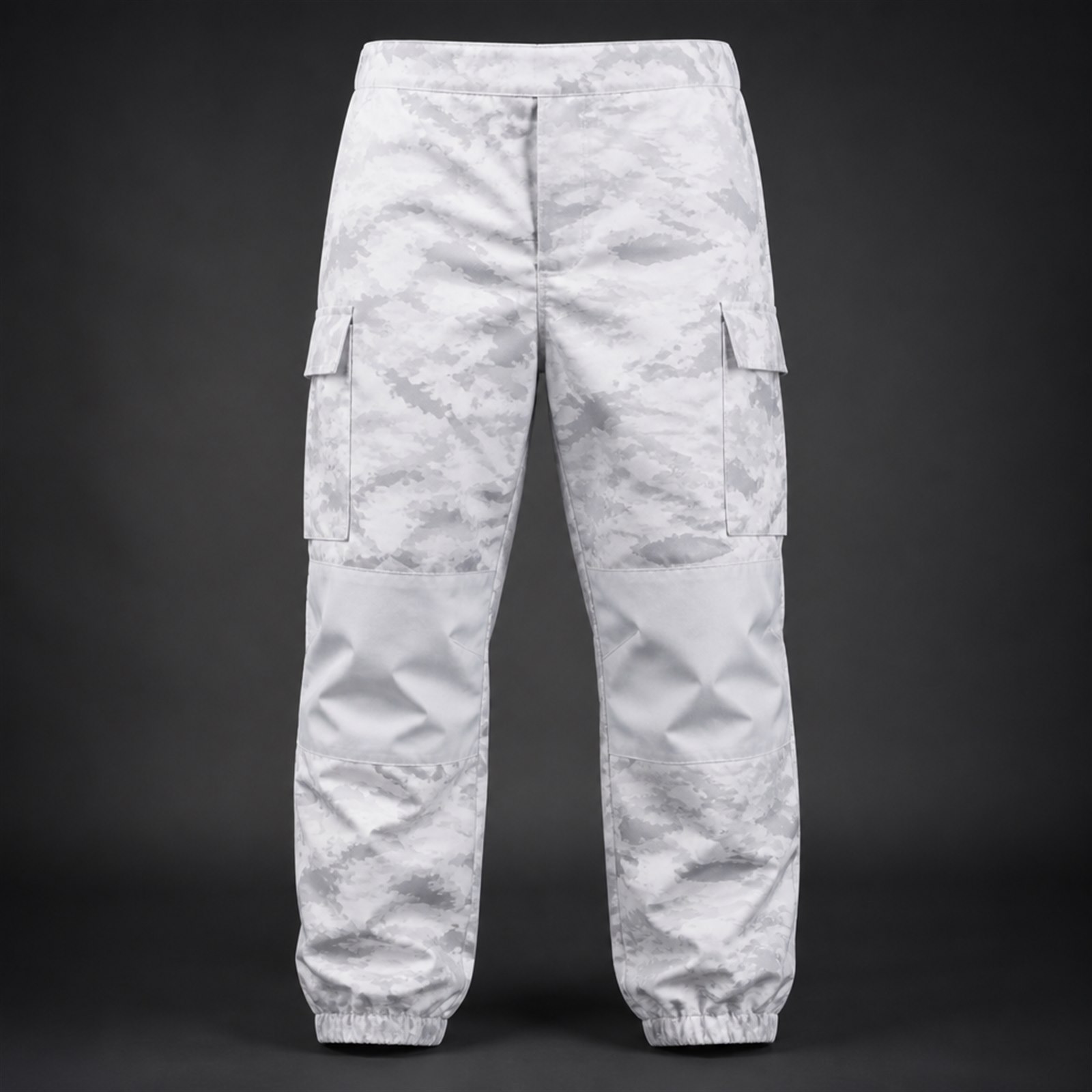
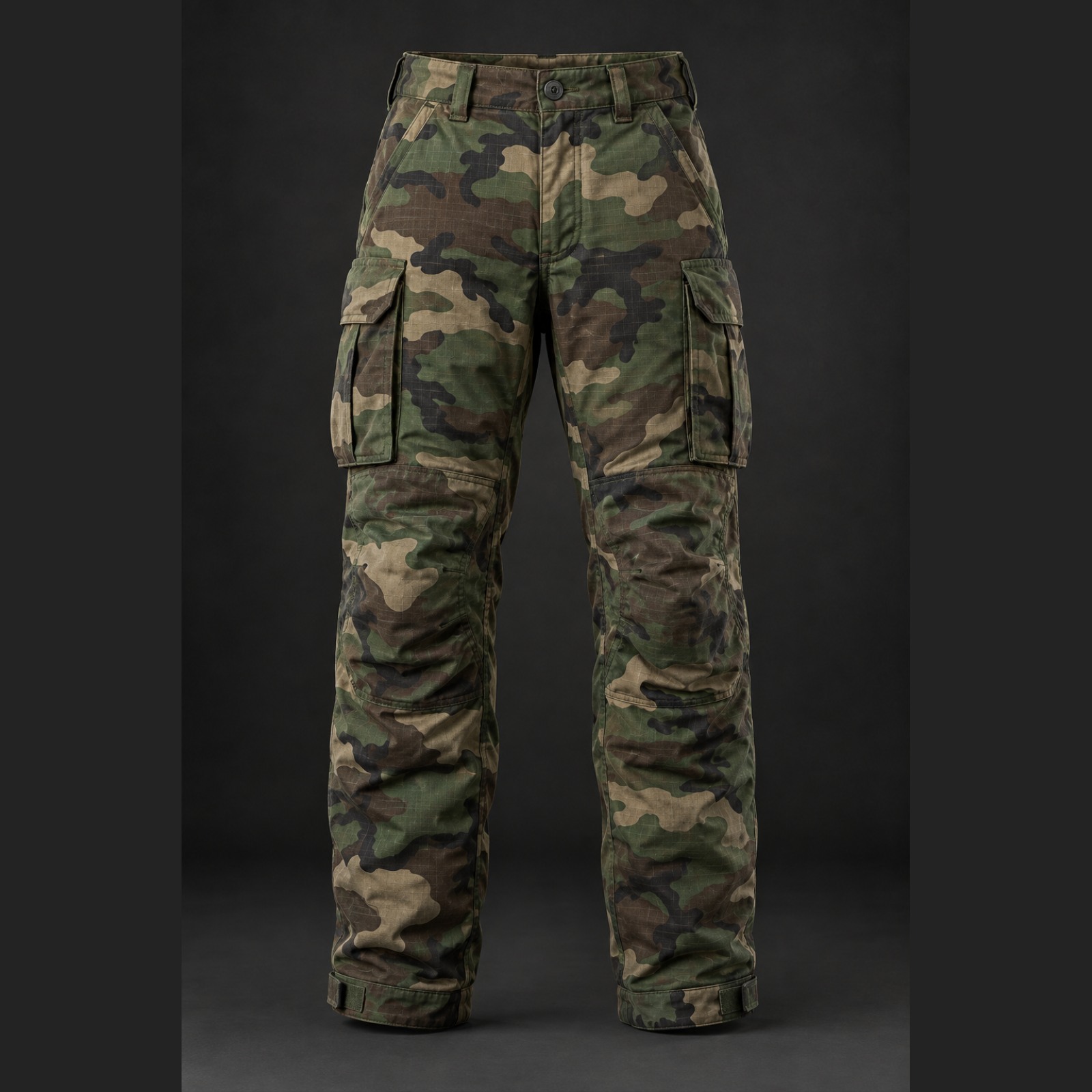
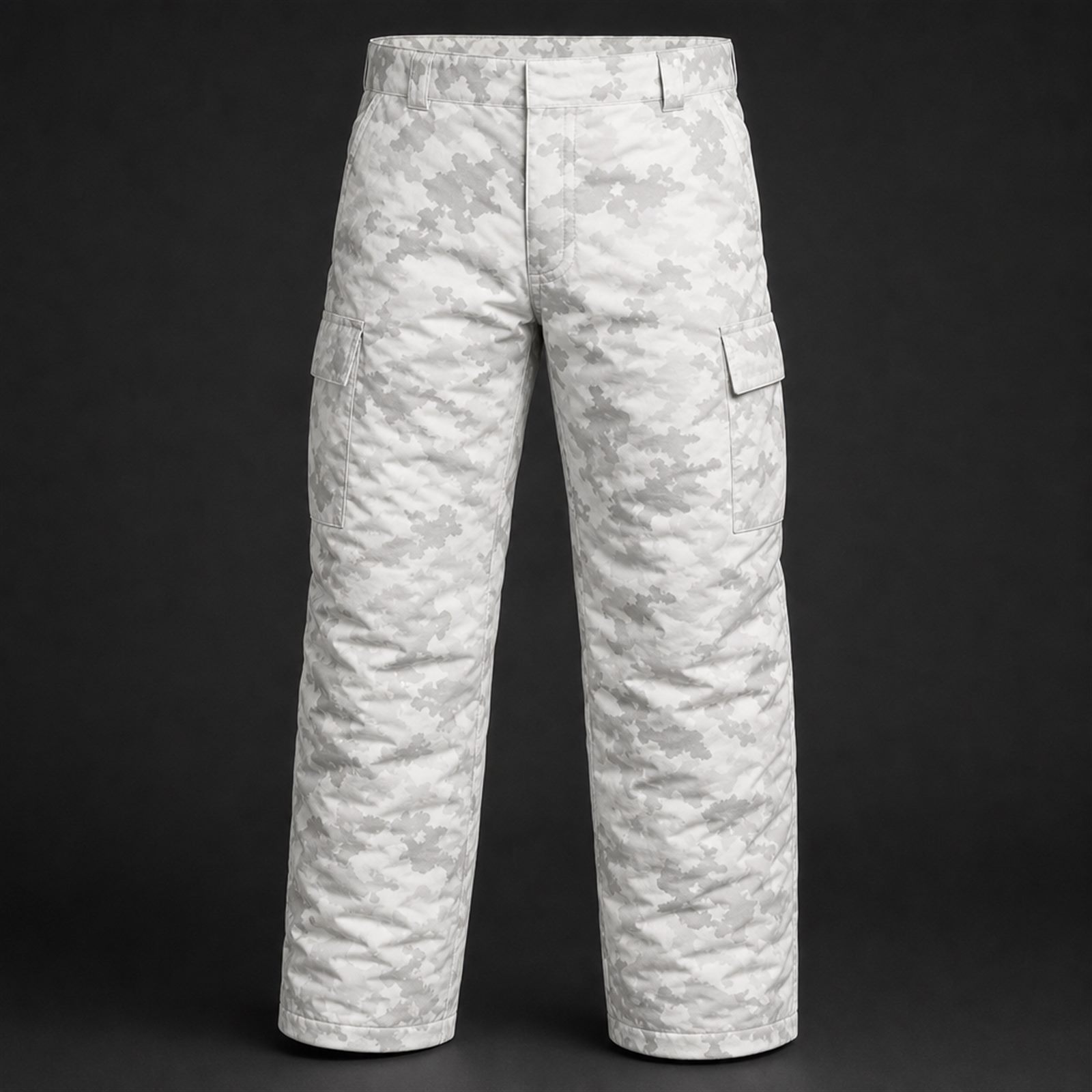
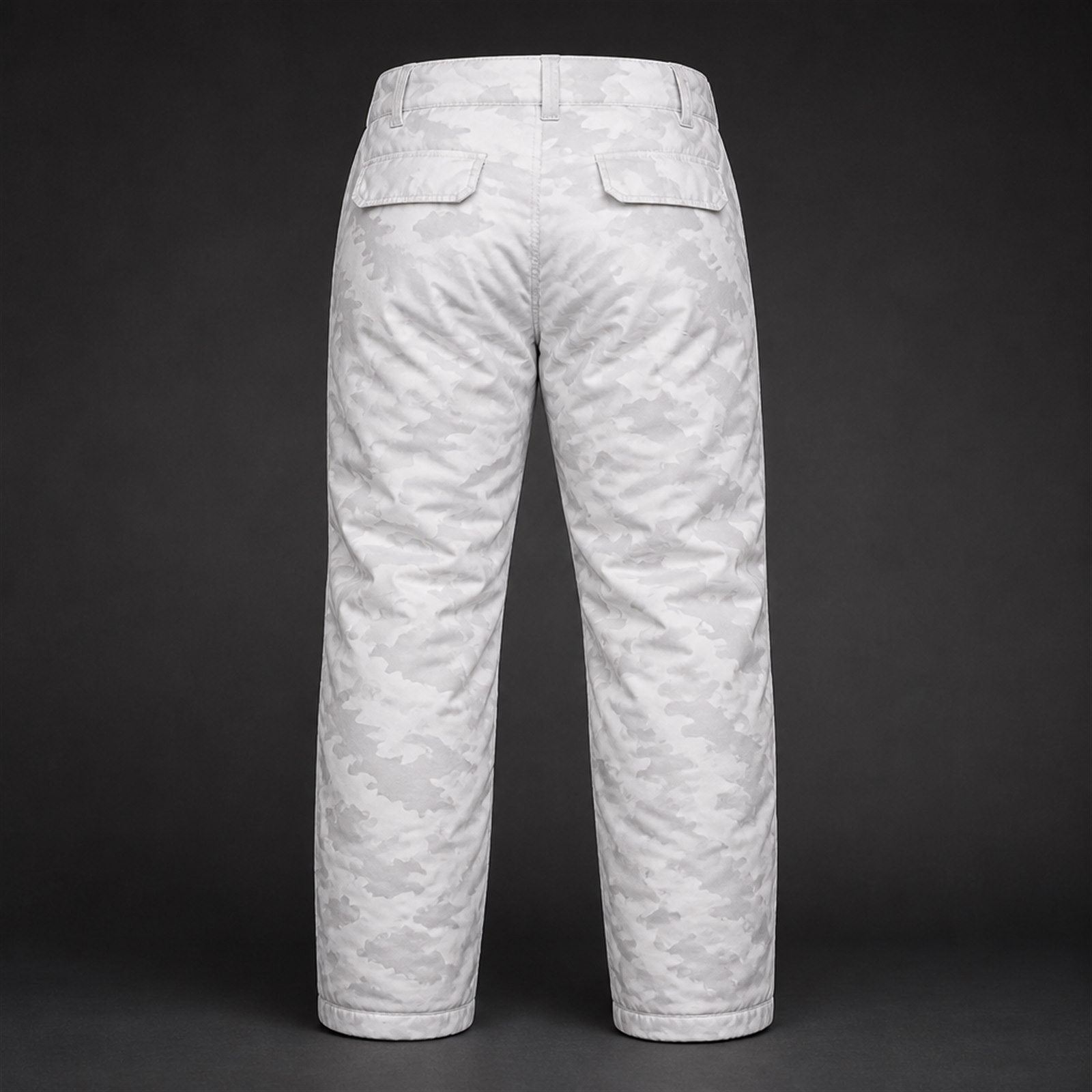
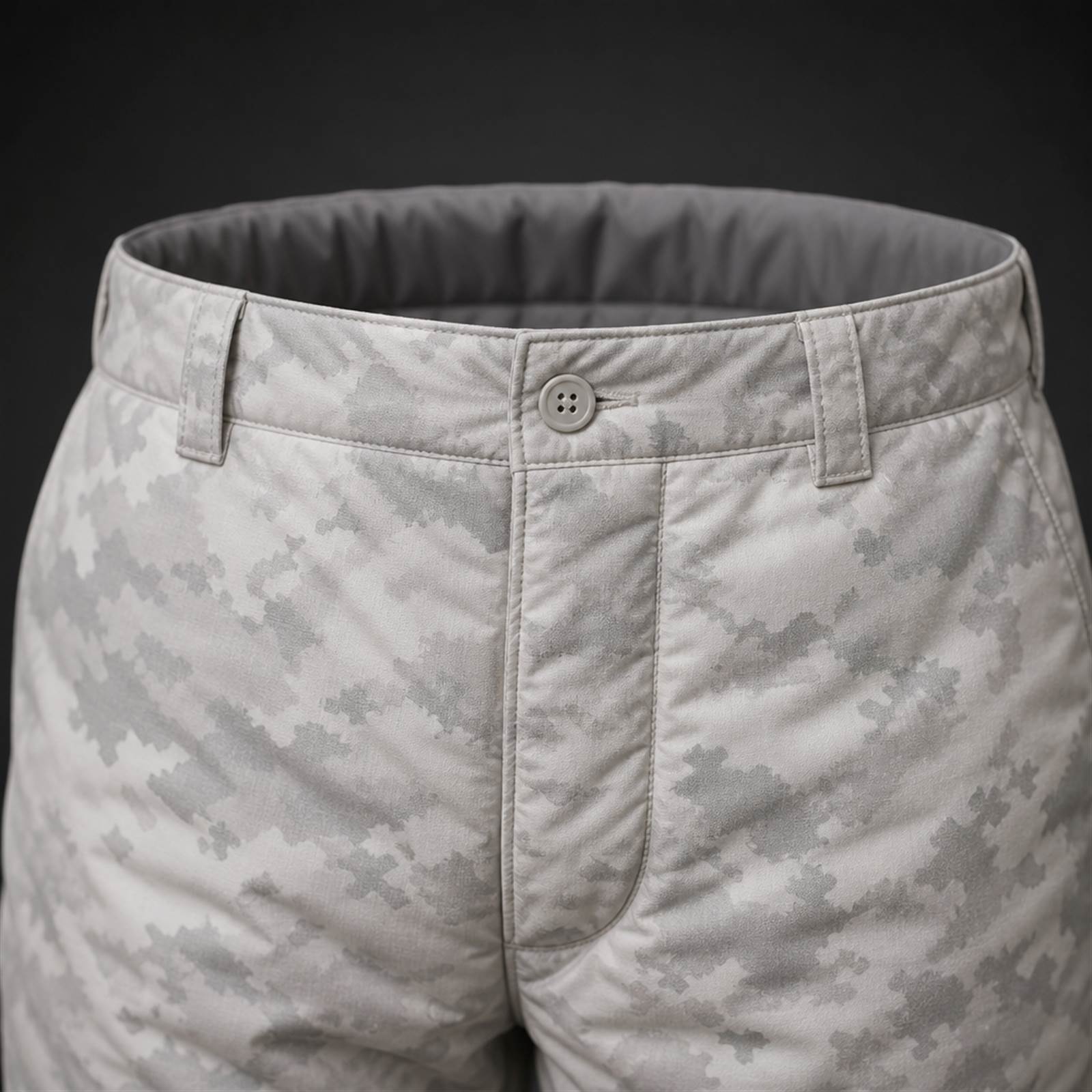
A cold weather pant is not a jacket for the legs. The lower body works differently in three ways that decide the whole specification. The legs generate heat while the wearer moves, so a pant insulated like the torso becomes too warm to work in and then too cold the moment the wearer stops. The lower body meets the ground, the boot and the seat, so it wears out in places a jacket never does. And the knee and hip need more range than any other part of the garment while carrying the most bulk. So this product is built as a mapped, vented, articulated pant for use inside a layering system, with the insulation placed where standing warmth is needed and reduced where movement and heat build-up happen.
Gallery
Design purpose
Build an insulated field pant on the buyer's pattern that delivers warmth during the static part of the working day without overheating the wearer during the moving part, and that survives kneeling, sitting and boot contact for a full season.
Applications
Interactive map
Insulated Cold Weather Field Pants: select a marker to see what can be specified at that part of the garment — all 10 mapped areas are also listed in full below the map, so nothing is hidden behind an interaction.
Customization by garment part
Select a marker to see the customization options available at that part of the garment. Every option below is a manufacturing decision you control.
Materials
4 material options for Insulated Cold Weather Field Pants, specified per garment area — a single fabric cannot serve heat management and abrasion resistance at the same time.
Shell and face fabric
The face fabric decides whether the pant breathes while the wearer moves. A fully windproof, non-breathable face on an insulated pant is the usual reason a winter trouser is rejected as too hot indoors.
Insulation build
Uniform insulation ignores the fact that the legs heat up and cool down faster than the torso. Mapping is what keeps one pant usable across the working day.
Ventilation
Ventilation is the only way to dump heat from an insulated pant without removing it in the cold. Where it is left out, the wearer opens the waist instead, which defeats the garment.
Knee, seat and hem reinforcement
The knee and seat are where a working pant fails first, and where the wearer contacts ground, equipment and vehicle surfaces. Reinforcement follows those contacts rather than the lines that are easiest to reinforce.
Construction
How each of the 8 parts of Insulated Cold Weather Field Pants is assembled, and why that choice was made.
Knee articulation
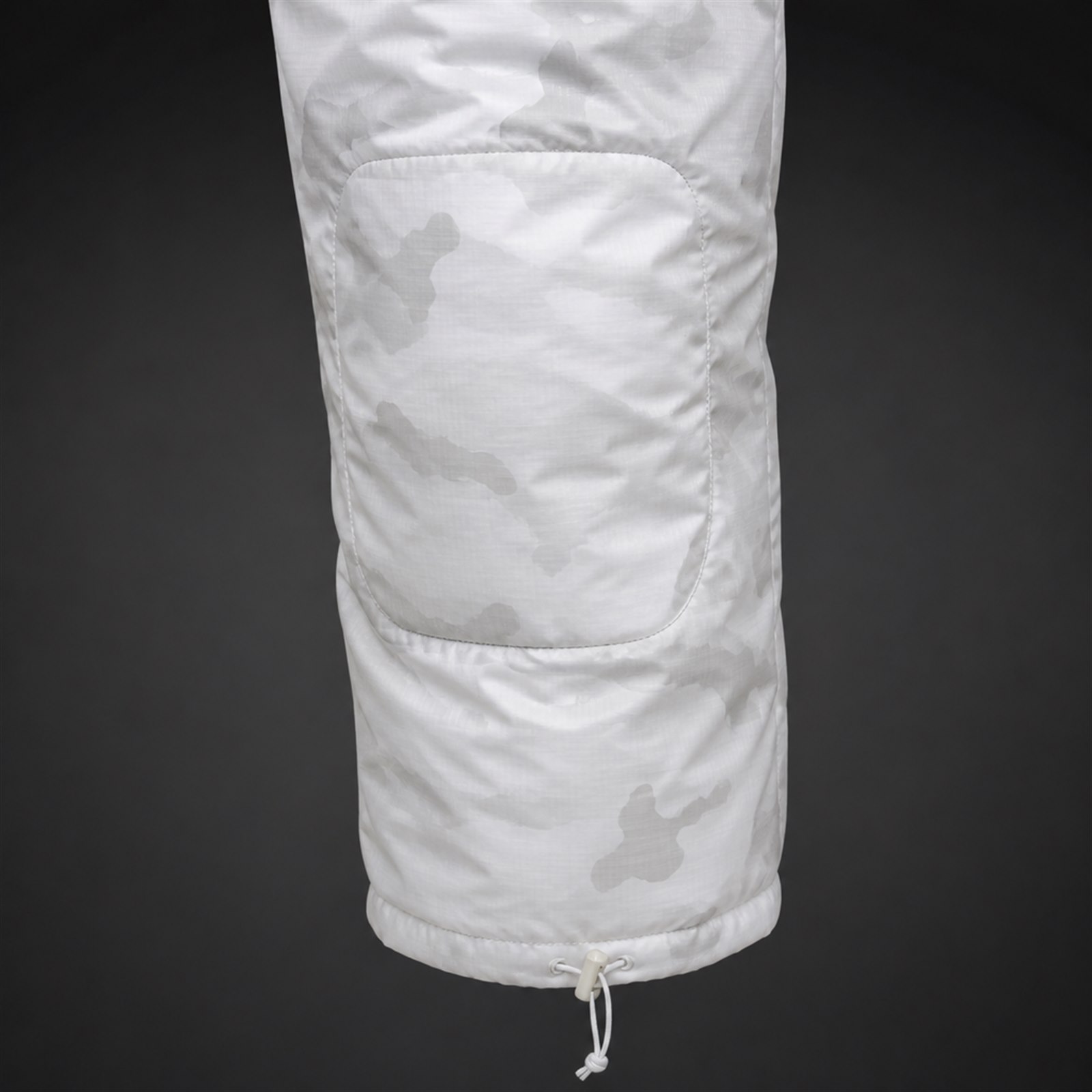
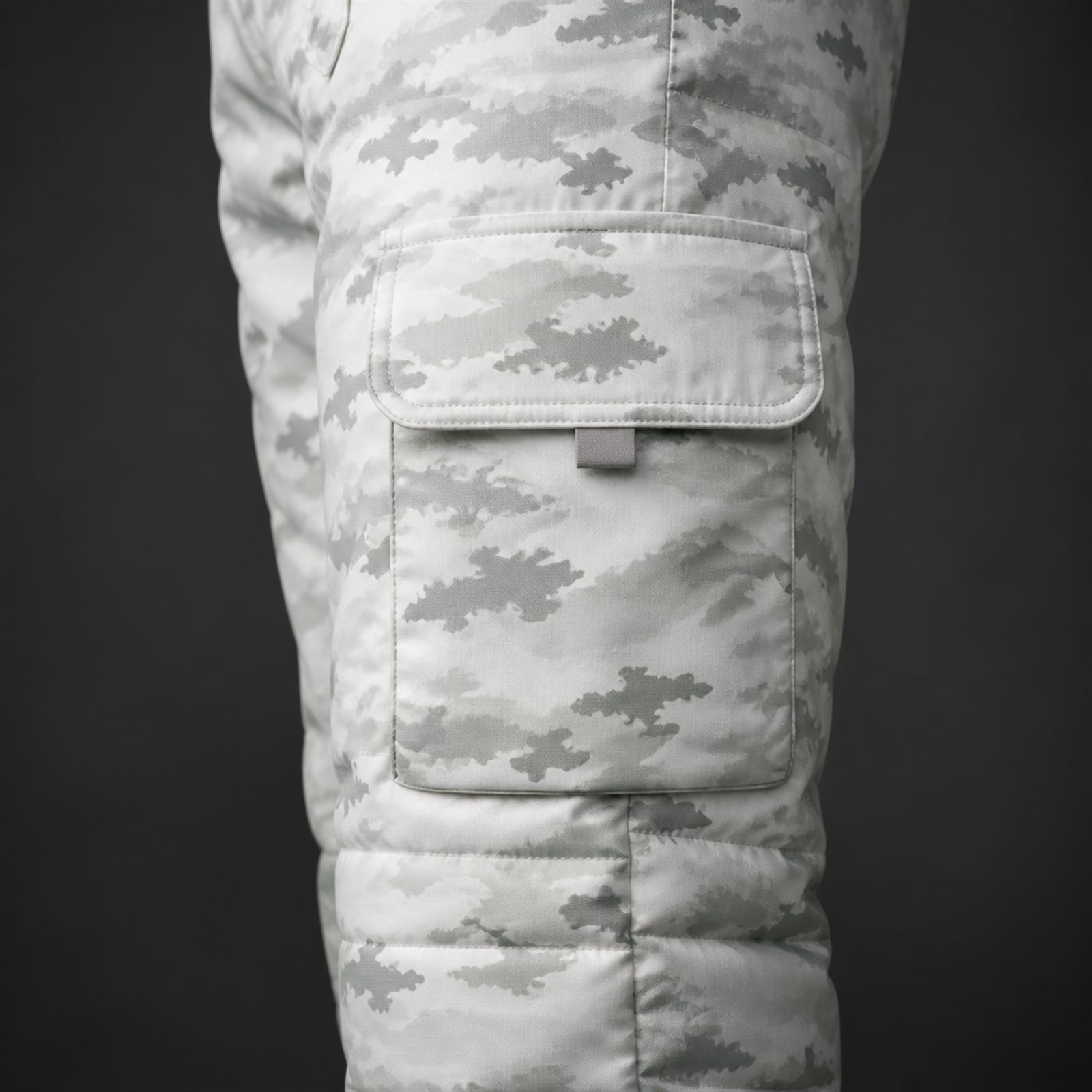
The knee is darted or articulated so the pant bends without tightening across the front of the leg. On an insulated pant this matters more than on an unlined one, because the added volume has to be absorbed by the pattern rather than by stretching the fabric.
Insulation mapping by zone
Insulation amount and construction are specified per zone: seat and thigh carry more, the area behind the knee carries less, and any zone the wearer compresses in use is handled differently from zones that are not loaded.
Ventilation construction
Vents are set into the pattern so the opening sits behind the seam line, does not gape when closed, and can be operated with gloves. Placement is checked against the equipment the wearer carries.
Waist and rise
The waistband is developed with the belt or suspender interface the wearer actually uses, and the rise is set so the pant does not ride down when the wearer kneels or climbs, which is also what keeps the lower back covered.
Crotch and gusset
The crotch is the most common failure point on any working pant and the first place a pant tears under load. Gusseting, seam placement and stitch density are decided here against the movement the role requires.
Seat construction
The seat is built to take contact with ground, seating and vehicle surfaces, with reinforcement placed as the wearer actually contacts them rather than as a uniform panel.
Boot and hem interface
The leg opening is specified against the boot height on issue, with the closing direction agreed with the buyer so the pant does not fight the boot the wearer already has.
Pocket placement and closures
Pockets are set around the equipment carried and clear of the kneeling contact area, with closures chosen so they stay shut when wet and can be operated with gloves.
Features
The 6 functional features of Insulated Cold Weather Field Pants each exist to solve a specific problem in use, and where a feature is a trade-off rather than a pure gain that is stated.
Warmth is concentrated where the wearer needs it when standing still and reduced where heat builds up during movement, so one pant covers both halves of the working day.
Vents are positioned and built so they can be opened with gloves and do not gape when closed. Ventilation that cannot be operated is a specification line rather than a function.
Articulation and reinforcement are developed together, so the pant bends where it is reinforced instead of pulling the seam open across the front of the knee.
Where the buyer issues a waterproof over-pant, this pant is developed and confirmed to work underneath it, including waistband interaction and room at the knee.
Gusseting, seam movement and stitch specification are decided before the first sample, because the crotch is the failure the buyer will see first if it is left to the line.
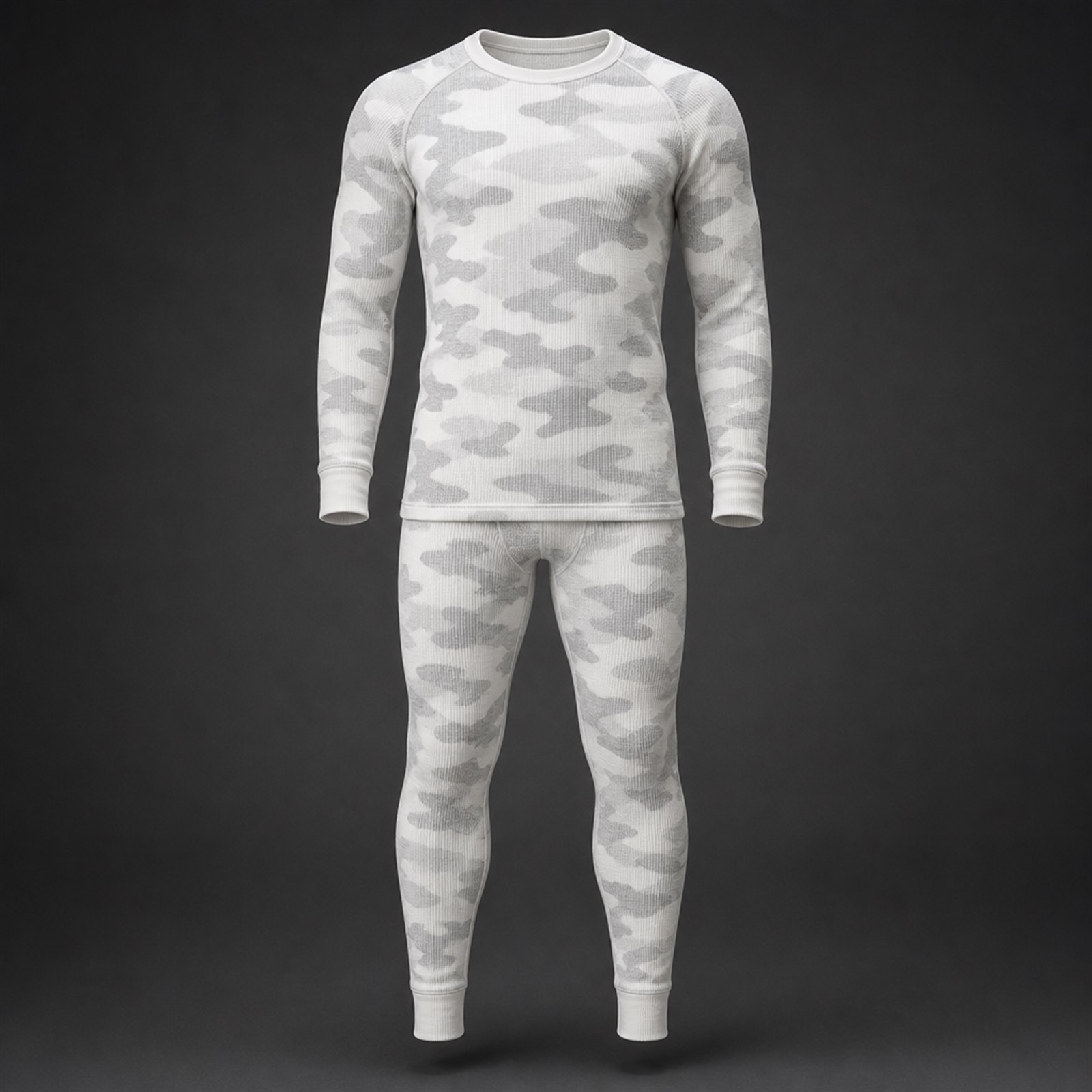
The pant is fitted over the base layer the wearer actually wears, not over a bare leg, so the knee and seat do not bind once the full system is on.
Customization
12 customization lines for Insulated Cold Weather Field Pants: branding, colour, camouflage and packaging are all part of the specification, and every item is confirmed on the pre-production sample.
Face fabric
Insulation
Knee
Ventilation
Waist and rise
Crotch
Reinforcement
Pockets
Leg opening
Colour and camouflage
Labelling
Packaging
Colour
Camouflage
Sizing
Sizing is developed with the layer stack the wearer uses underneath in mind, not for a bare leg. That changes inseam, knee position, seat depth, thigh and waist: a pant cut for a single layer binds at the knee once an insulated trouser is worn beneath it, and the same pant will sit differently on a wearer who is seated for part of the day. A size set across the range is produced and confirmed on a wearer in the intended configuration before bulk.
Branding
Your pattern, your face fabric, your insulation map, your ventilation placement and your packaging. Labels, trims and cartons can be left blank, so the range ships as your own product with the specification held on file against every repeat order.
Logistics
Sample development
Development of Insulated Cold Weather Field Pants runs in 7 stages, each risk removed before the next step commits cost.
Specification review
We agree the face fabric, insulation map, ventilation placement, knee construction, rise and reinforcement points in writing, together with the base layer the wearer uses and any over-pant the garment must sit under.
Fabric and insulation selection
Face fabrics and insulation builds are presented against the buyer's activity pattern, with the trade-off between moving warmth and standing warmth stated rather than averaged away.
Pattern development
The pattern is developed on the buyer's size range with articulation, mapped insulation volume and ventilation placement built in from the start, so nothing has to be added after a fit failure.
Proto sample
A first sample proves fit over the intended base layer, confirms that the vents can be reached and operated, and tests the knee in a kneeling position.
Fit sample
A revised sample is produced with the agreed corrections and assessed on a wearer while walking, kneeling, sitting and stepping up onto a surface.
Size set
A set across the size range is produced so that grading of knee position, seat depth and inseam is confirmed, not only the base size.
Sealed sample
The approved sample is sealed and retained as the reference for inline and final inspection, including the insulation map and ventilation hardware.
Bulk production
7 stages of bulk production for Insulated Cold Weather Field Pants — where the approved specification is either held or lost.
Material receipt and inspection
Face fabric, insulation lot, lining, closures and trims are checked against the sealed sample before cutting, and colour is verified against the approved standard in daylight.
Cutting
Panels are cut to the approved pattern with print or camouflage placement controlled on the marker so left and right legs match across the run.
Insulation and panel assembly
Mapped insulation is laid to the approved zone plan and quilted or fixed as specified, so the warmth sits where the sample showed it should rather than drifting in production.
Knee, seat and vent assembly
Articulated knees, reinforcement panels and vents are assembled in the correct sequence and inspected before the leg is closed.
Inline inspection
Garments are measured against the approved tolerances at defined points through the run, including knee position and inseam, so a drift is caught while it can still be corrected.
Finishing and labelling
Care labels, size marking and issue identification are applied to agreed positions, and loose threads, hardware function and hem finish are completed to the sealed sample.
Final inspection and packing
Final inspection follows the approved specification and the AQL agreed with the buyer, and approved goods are packed and marked to the buyer's carton instructions.
Quality control
The 7 checks applied to Insulated Cold Weather Field Pants, each measured against an agreed standard rather than against opinion.
Incoming material check
Face fabric construction and finish, insulation lot and weight, lining, closures and adjusters are recorded against the specification, and fabric lots are retained for reference.
Colour verification
Production colour is compared with the approved standard and the sealed sample under agreed lighting, and shade variation across rolls is recorded before cutting.
Insulation mapping check
Sampled garments are opened or sectioned to confirm that insulation is present in the specified zones at the specified amounts, because this is the specification most easily lost in production.
Measurement check
Waist, seat depth, inseam, knee position, thigh and leg opening are measured against approved tolerances during the run rather than only at the end.
Function testing of vents and closures
Vent zips, pocket closures and adjusters are operated repeatedly on sampled garments to confirm they open, close and stay closed in use.
Movement check
Sampled pants are assessed in kneeling and squatting positions over the intended base layer to confirm the articulation works and no seam is pulled open under load.
Final inspection and records
Final inspection results, inspection records and retained samples stay with the order, so a repeat order is produced against evidence rather than against memory.
Specifications
19 specification rows for Insulated Cold Weather Field Pants: only confirmed items are listed, so a row that depends on your programme is omitted rather than filled with an estimate.
| Product type | Insulated cold weather field pant or unlined cold softshell pant |
|---|---|
| Layer position | Lower body warmth layer, worn over a base layer and under a waterproof over-pant where issued |
| Face fabric | Softshell, stretch ripstop, abrasion-resistant canvas face or poly-cotton, to specification |
| Insulation | Mapped lofted insulation, brushed backer, fleece lining, light loft throughout, or unlined, to specification |
| Knee | Articulated or darted, with optional reinforcement panel and pad interface |
| Ventilation | Side leg, thigh or two-way side openings with covered zip closures, or none, to specification |
| Waist and rise | Fixed waistband, elasticated side panels or suspender interface, with optional high back rise |
| Crotch | Gusseted where the role requires it, with seam placement agreed against movement |
| Seat | Reinforced where the wearer contacts ground, seating or vehicle surfaces |
| Leg opening | Closing over or inside the issued boot, with optional cuff adjuster, drawcord or snap tab |
| Pockets | Cargo, rear, internal security and tool loops with flap or zip closures to specification |
| Reinforcement | Knee, seat, inner leg and hem edge, placed against reported wear points |
| Size range | EU or US runs including extended sizes, cut to layer over the buyer's base layer |
| Colour and camouflage | Solid colourways, panelled blocking or buyer artwork camouflage, matched to an approved standard |
| Labelling | Woven main label, printed care label, size and issue marking as required |
| Packing | Poly bag, individual carton and buyer-specific cartons |
FAQ
Because the legs behave differently. They generate heat while the wearer moves, so the same amount of insulation that keeps a torso comfortable will make a leg too warm to work in — and then too cold once the wearer stops and the built-up heat leaves. The usual answer is mapped insulation: more at the seat and thigh for standing warmth, less behind the knee where heat builds and where bulk costs movement.
No. How warm a pant feels depends on activity level, wind, humidity, exposure time, what is worn underneath and how it fits, not only on the insulation. What we do instead is specify the build to the coldest condition your programme expects, map the insulation to your activity pattern, and document it so the specification is repeatable. Any comfort claim should come from your own field trial with the actual composition.
Both are normal. As a warmth layer under an issued over-pant, this pant can be lighter and more breathable, because the shell takes the weather and the pant only has to manage warmth and moisture. Worn alone, it needs a face fabric that sheds light precipitation and wind. We develop the pant against whichever way your programme issues it, and confirm it over the base layer and under the shell if one is used.
On an insulated pant they are the only way to dump heat without removing a layer in the cold. Without them the wearer opens the waistband or rolls the hem, which defeats the garment. The vents also have to be positioned clear of load-bearing equipment and built so they can be operated with gloves, otherwise they will not be used.
By treating it as a design decision rather than an assembly detail. The crotch is gusseted where the role needs it, the seams are moved off the highest-stress line, and stitch density and thread are specified in the tech pack. It is also the area where an insulated pant is most likely to bind, which is why we confirm it on a wearer kneeling and squatting rather than on a standing form.
Where your programme allows it, yes. Knee, seat and hem are where a working pant wears out first, so those panels are developed so they can be replaced in isolation. That has to be designed in at the pattern stage — it cannot be added to a pant built as a single closed unit.
Related Materials
Related Applications
Related Capabilities
Related Articles
Related Categories
More products
Tactical Pants
Cold weather changes what a tactical pant has to do.
Waterproof Winter Tactical Pants
Winter pants do not fail because the fabric on the order sheet was wrong.
Thermal Base Layers
A base layer is the cheapest garment in a layering system and the one that decides whether the rest of it works.
Send us your tech pack, reference sample or product idea. We review your requirement, recommend materials and construction, and come back with a development plan you can act on.