Tactical Pants
Ripstop Tactical Pants
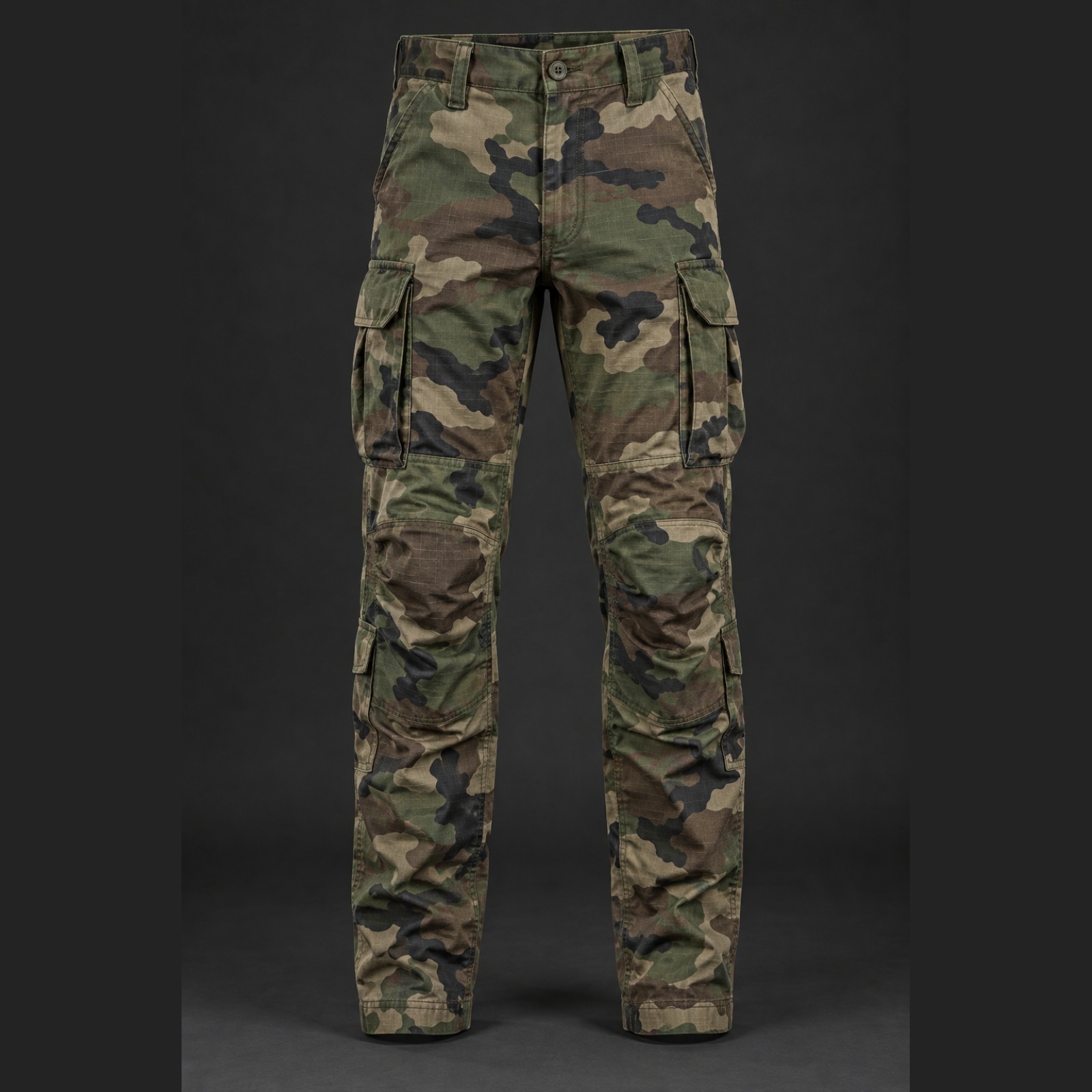
A tactical pant is judged by three things: whether the crotch survives, whether the knee holds up, and whether the waist still fits the same after a full day of movement.
TemperateHotArid / Desert
View productProducts / Tactical Shorts
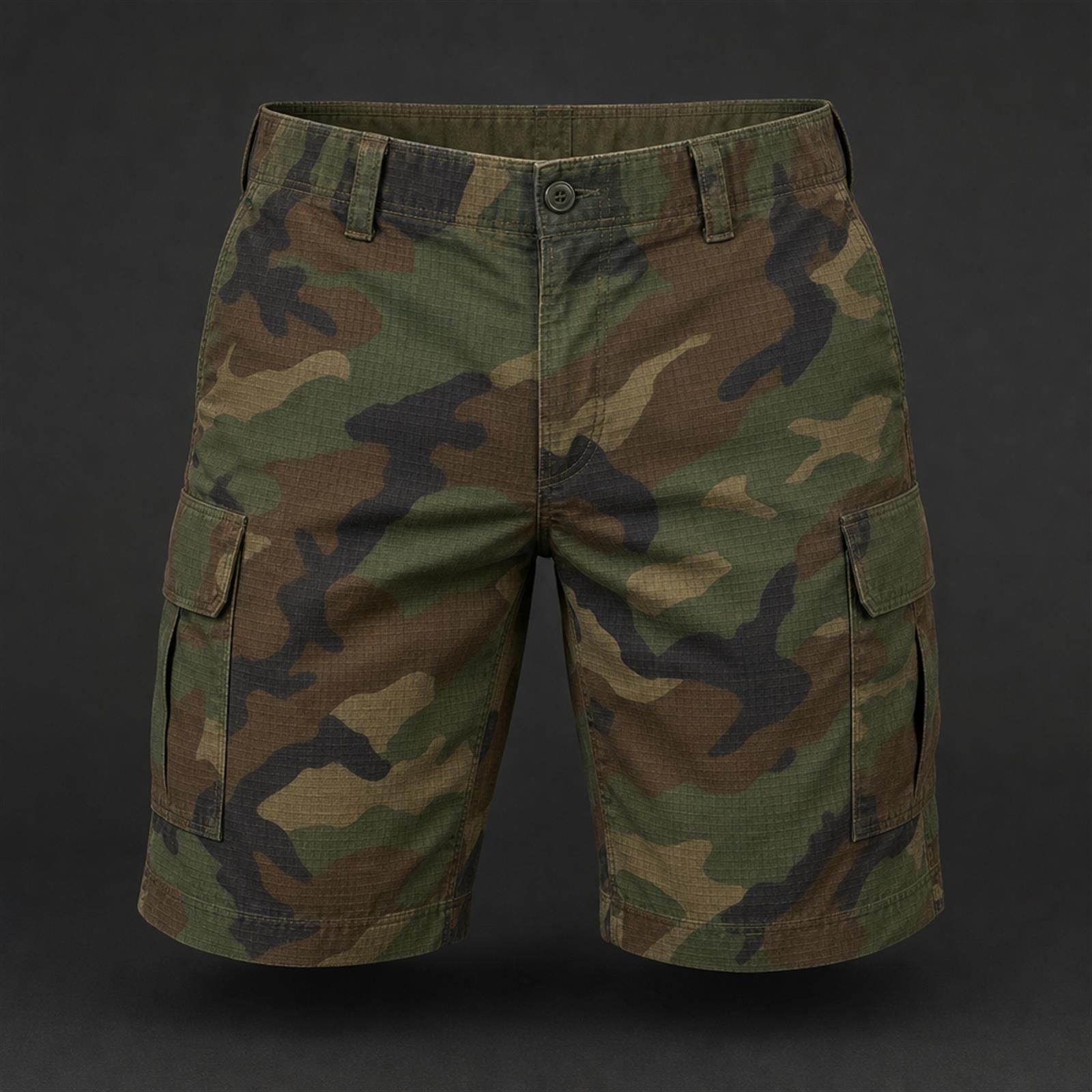
Cargo shorts take more abuse than any other garment in a uniform programme: the most kneeling, the most laundering and the heaviest pockets. The failures are predictable — a crotch that blows out, a cargo pocket that drags the side seam out of line, a waistband that never looks new again, and a garment that fits at sampling but rides up after the first industrial wash. This page is the buying side of those four problems: which construction details decide whether a short survives a season, and what to measure on every run afterwards.
Gallery
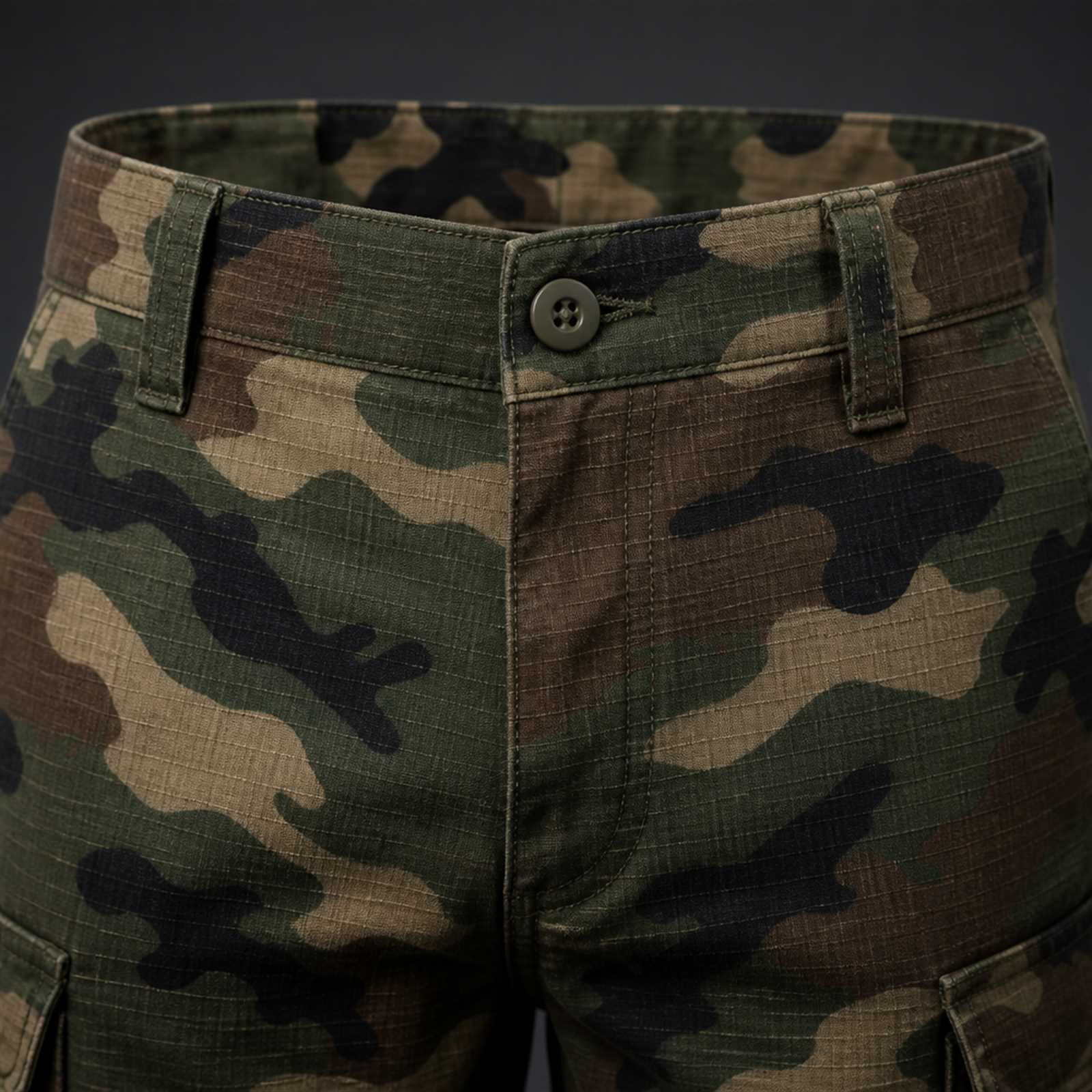
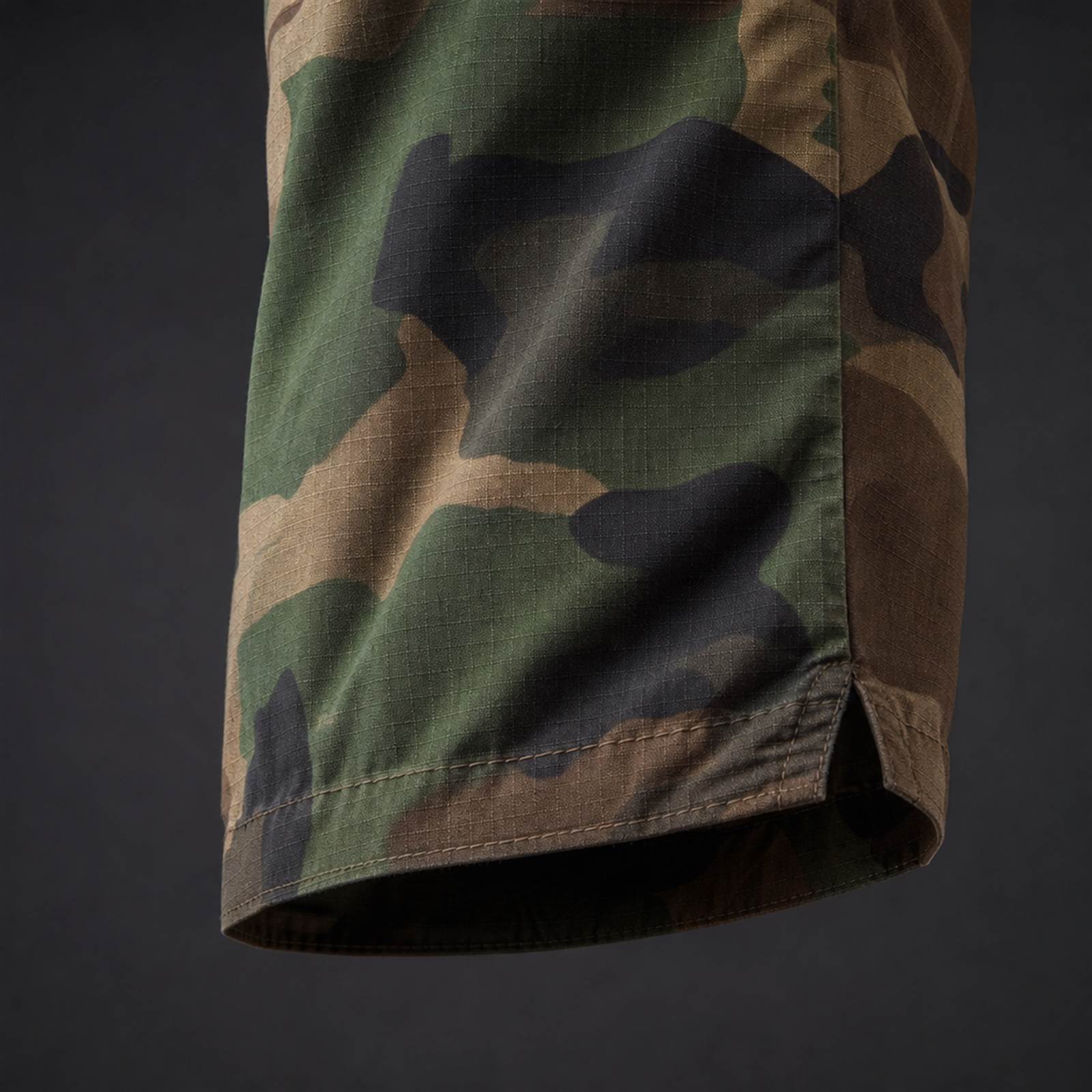
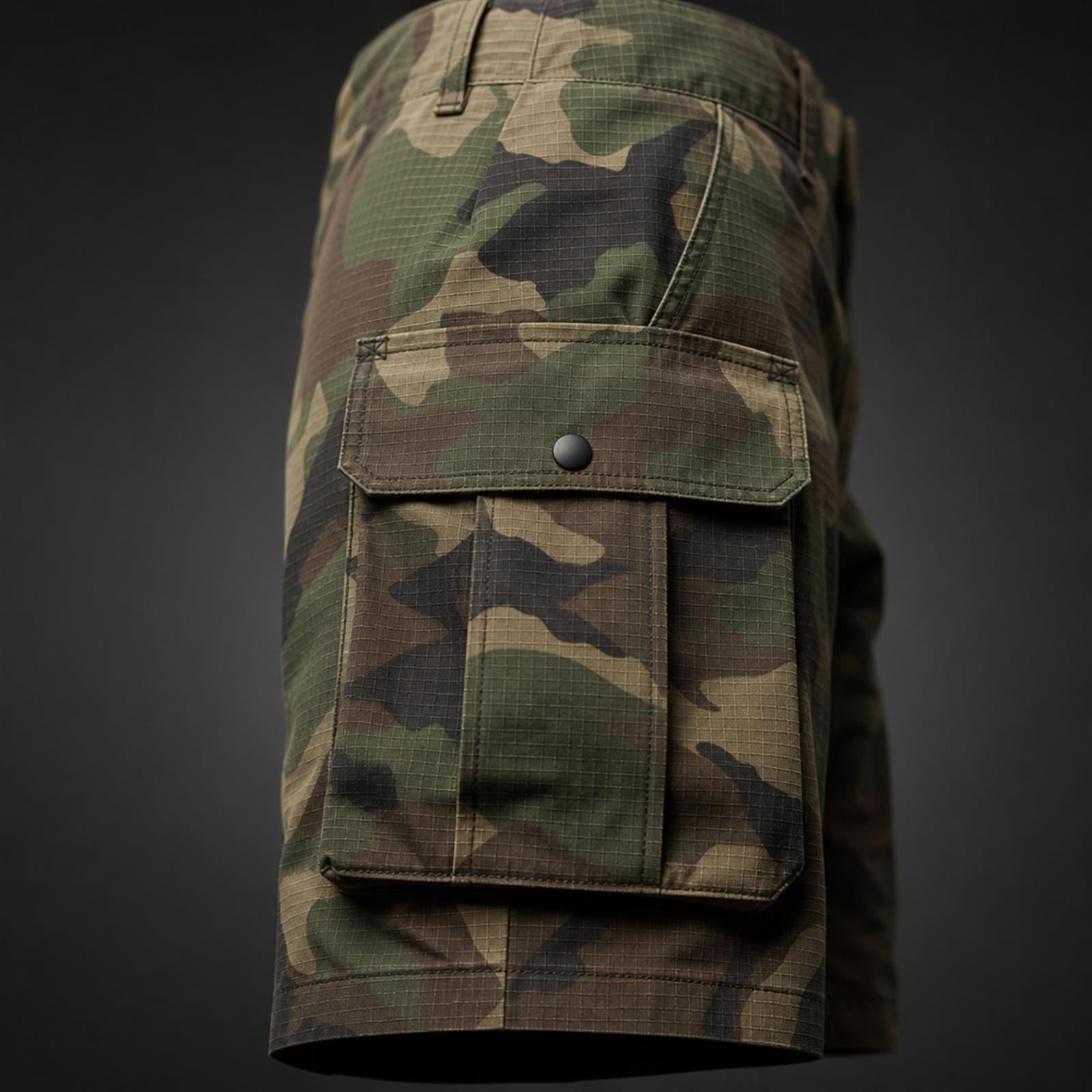
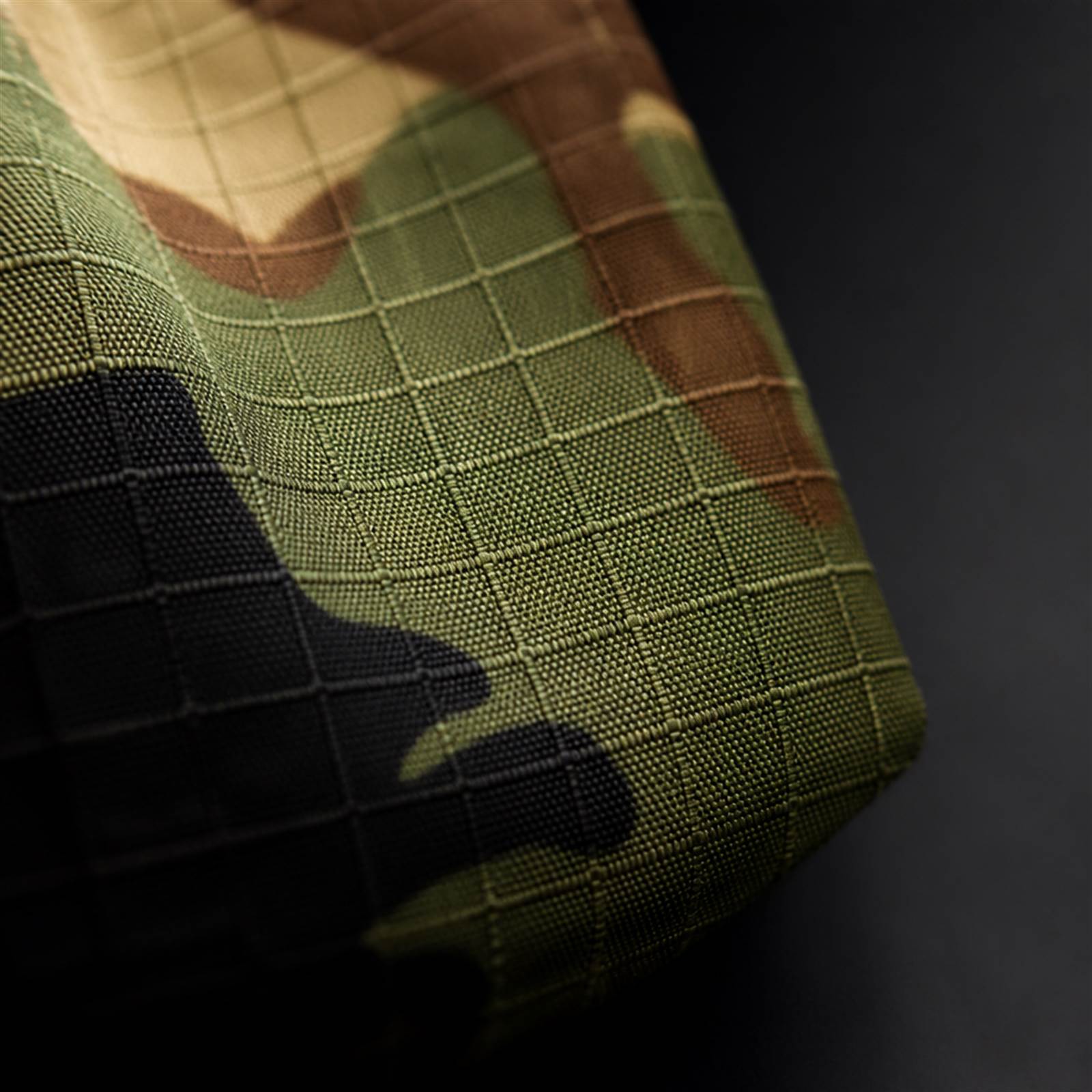
Design purpose
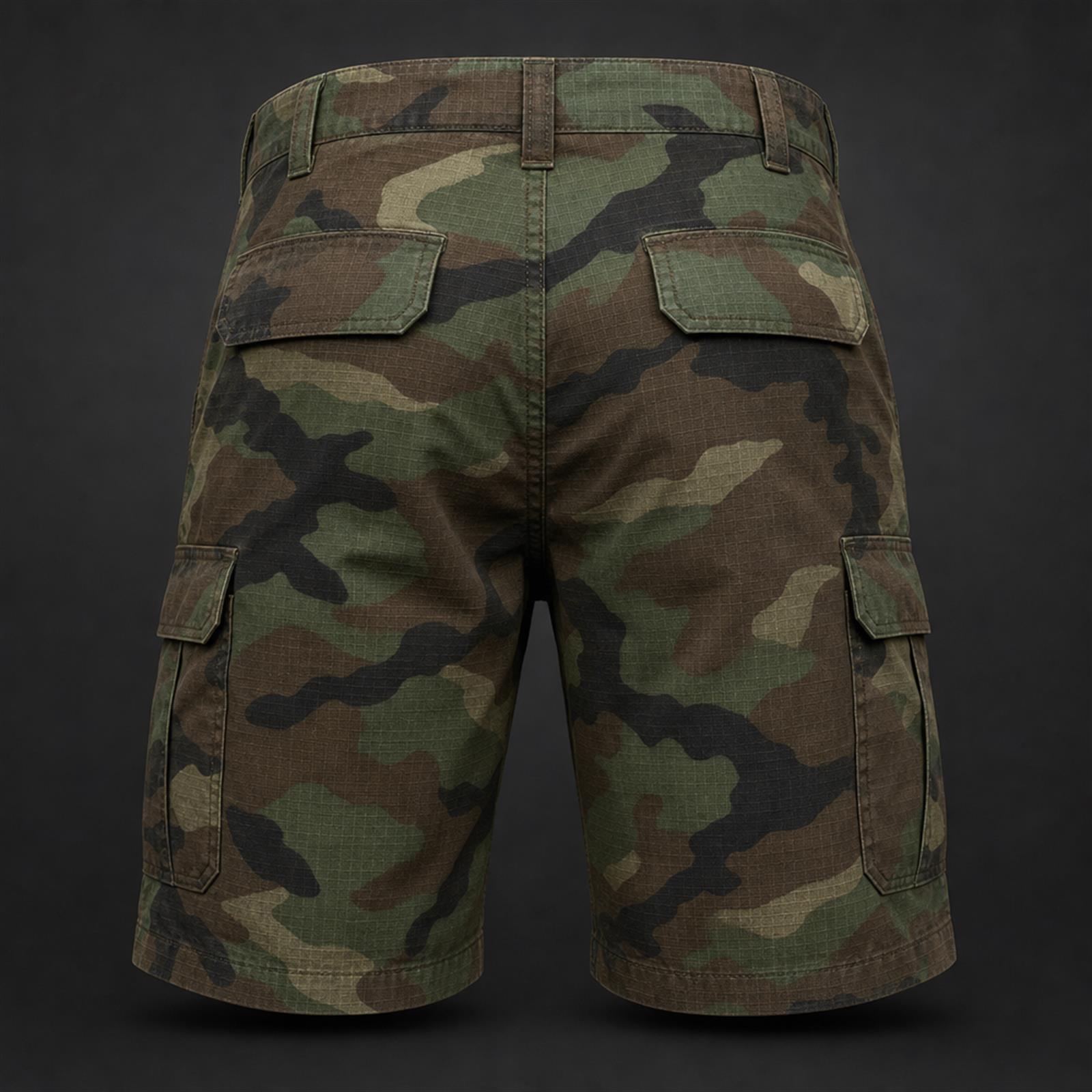
Build a hot-climate cargo short on the buyer's pattern that keeps its shape and its measurements through repeated laundering, with the crotch, pocket anchoring and waistband specified before sampling rather than corrected after the first complaint.
Applications
Interactive map
Ripstop Cargo Short: select a marker to see what can be specified at that part of the garment — all 10 mapped areas are also listed in full below the map, so nothing is hidden behind an interaction.
Customization by garment part
Select a marker to see the customization options available at that part of the garment. Every option below is a manufacturing decision you control.
Materials
4 material options for Ripstop Cargo Short, specified per garment area — a single fabric cannot serve heat management and abrasion resistance at the same time.
Body fabric
Ripstop resists tearing and holds shape; cotton-rich fabric breathes better in dry heat; mechanical stretch is what makes a duty cut wearable. We ask which climate the shorts are sold into before recommending, then confirm the shrinkage your market accepts.
Waistband and interlining
A structured waistband is what keeps a duty short looking correct with a tucked-in shirt. Grip tape is the small addition that stops the shirt riding up, and interlining weight is what decides whether the waistband still looks new after thirty washes.
Pocketing and reinforcement
Every pocket that carries weight must be anchored into a seam or a reinforcement rather than sewn onto the surface. This single decision prevents most seam failures, and it is invisible in a product photo.
Trims and hardware
Thread tone and button finish are the cheapest parts of the short and the first ones buyers inspect on a contract sample. We match them to the fabric tone agreed at sampling, not to whichever reel is closest.
Construction
How each of the 8 parts of Ripstop Cargo Short is assembled, and why that choice was made.
Pattern and rise
Rise, seat depth and leg opening are matched to your reference pair, because these decide whether the shorts stay put when the wearer squats and whether the waistband stays in place under load.
Crotch construction
A gusseted crotch with flat-felled inseams and a reinforced bar-tack, which is where work shorts fail first and the cheapest place to prevent it.
Pocket anchoring
Cargo pockets anchored into the side seam with bar-tacked corners, so weight in the pocket does not pull the seam out of line.
Waistband and belt loops
Structured waistband with fusible interlining, button closure and duty belt loops reinforced at the attachment, so hanging equipment does not tear the loop off a light waistband.
Fly and closure
Fly built with a YKK-class zipper and button or snap closure, finished so it reads uniform-correct rather than utility-casual.
Side seams and hem
Side seams reinforced where the cargo pocket load lands and the hem finished with double stitching in the inseam length agreed for the market.
Shrinkage control
Fabric lots are checked for shrinkage behaviour before cutting and the pattern is adjusted to your laundering protocol, so a re-order in a second season measures like the first.
Finishing and inspection
Thread ends, marking and pressing completed, with waist, seat, thigh and inseam measured flat against the graded specification.
Features
The 6 functional features of Ripstop Cargo Short each exist to solve a specific problem in use, and where a feature is a trade-off rather than a pure gain that is stated.
The crotch is where utility shorts fail first. A gusset with flat-felled inseams and a reinforced bar-tack removes the most common return reason at a cost that is negligible in production.
Pockets are anchored into the side seam rather than sewn onto the surface, with bar-tacked corners, so a loaded pocket does not drag the seam out of line.
Fusible interlining, a structured band and grip tape keep the uniform look and stop the shirt riding up during a shift.
Loops are reinforced at the attachment and specified together with the waistband, so hanging a radio or pouch does not simply move the failure point.
We test to the laundering protocol your market uses and adjust the pattern accordingly, because a short that fits at sampling and rides up after the first wash is a full-run problem.
The approved pair is sealed as the golden sample and stays with us, with measurements taken flat on sampled pieces in every later run and records filed per batch.
Customization
12 customization lines for Ripstop Cargo Short: branding, colour, camouflage and packaging are all part of the specification, and every item is confirmed on the pre-production sample.
Inseam length
Cut
Waistband
Pocketing
Fabric
Finish
Colourways
Crotch and seam build
Closure and hardware
Size runs
Branding
Packaging
Colour
Camouflage
Sizing
Shorts are graded from the confirmed pattern with the waist open measurement, seat, thigh and inseam measured flat at the smallest and largest size before the full run is cut. Extended sizes are a commercial decision as much as a technical one: adding them later re-opens the grading table, so confirm the size curve your market buys before the markers are made. Shrinkage is measured after your laundering protocol rather than a generic one.
Branding
Your pattern, your fabric specification, your hardware and your packaging. Labels, printed waistbands and carton markings can all be left blank, so the range ships entirely under your name.
Logistics
Sample development
Development of Ripstop Cargo Short runs in 7 stages, each risk removed before the next step commits cost.
Specification review
We agree the cut, fabric, inseam, pocketing, waistband, closure and finish in writing before any fabric is cut.
Pattern and fit reference
Your reference pair or measurements define the rise, seat and leg opening that the sample will be judged against.
Fabric and finish confirmation
Fabric construction, weight and finish are confirmed against physical swatches together with your shrinkage requirement.
First sample
One pair built to the agreed specification for fit, pocket behaviour and construction review.
Fit and wash trial
The sample is worn and then washed to your protocol, so shrinkage and shape retention can be judged before approval rather than after the bulk run.
Revision
Rise, leg opening, pocket placement or reinforcement corrected and the pair rebuilt where needed.
Sealed golden sample
The approved pair is sealed and kept as the reference for every later production run and inspection.
Bulk production
7 stages of bulk production for Ripstop Cargo Short — where the approved specification is either held or lost.
Material receipt and inspection
Fabric lot, shrinkage behaviour, thread and hardware are checked against the sealed sample before cutting.
Cutting
Legs, waistband, pocket parts and linings cut to the confirmed markers with grain and stretch direction controlled.
Pocket and reinforcement assembly
Cargo pockets, flaps and reinforcements attached and bar-tacked before the legs are joined, so the anchoring is inside the construction rather than added on top.
Leg and seat construction
Inseams, outseams, the gusset and the seat assembled with the agreed seam type and stitch density.
Waistband and closure
Waistband, belt loops, fly and closure attached, with the waist measured flat against the specification.
Finishing
Thread ends, marking and pressing completed, with colour and finish matched to the sealed sample.
Packing and size-run control
Shorts packed by size with the run counted against the order, so a shipment never arrives with broken size runs.
Quality control
The 7 checks applied to Ripstop Cargo Short, each measured against an agreed standard rather than against opinion.
Incoming material check
Fabric construction, weight, colour and shrinkage test results recorded against the specification.
In-line inspection
Stitch density, pocket alignment and reinforcement checked during assembly, not only at final inspection.
Measurement check
Waist, seat, thigh and inseam measured flat on sampled pieces against the graded specification.
Pocket and closure strength
Pocket mouths, belt loops and the fly pulled on sampled pieces to confirm the reinforcement holds under a loaded pocket.
Wash and shrinkage test
Sampled shorts washed to the agreed protocol and re-measured, so shrinkage stays inside the tolerance your market accepts.
Colour fastness check
Sampled pieces checked for colour retention after laundering, which is what buyers in high-sun markets raise first.
Final inspection and records
Visual inspection against the sealed golden sample, with results filed per batch so a claim traces to fabric lot, operator and date.
Specifications
16 specification rows for Ripstop Cargo Short: only confirmed items are listed, so a row that depends on your programme is omitted rather than filled with an estimate.
| Product type | Cargo short |
|---|---|
| Body fabric | Poly-cotton ripstop, cotton ripstop or mechanical stretch, to specification |
| Waistband | Structured with fusible interlining and belt loops |
| Closure | YKK-class zipper with button or snap, covered button optional |
| Crotch | Gusseted with flat-felled inseams and reinforced bar-tack |
| Pocketing | Cargo pockets anchored into the side seam, bar-tacked corners |
| Belt loops | Duty loops reinforced at the attachment |
| Inseam | Short, above knee, knee or long utility, to buyer measurement |
| Finish | Soil-release, water-repellent, soft wash or none, to specification |
| Shrinkage | Tested against the buyer's laundering protocol before bulk |
| Size range | EU, UK or US runs including extended sizes, per buyer size curve |
| Colourways | Khaki, olive, grey, black and camouflage to buyer standard |
| Branding | Woven label, printed inner waistband, heat transfer, embroidery or unbranded |
| Packaging | Poly bag, retail bag, hanger packing or unmarked export carton |
| MOQ | Per fabric and colourway — confirm your size curve for a quote |
FAQ
Yes. Send a physical pair that fits your market and we match the rise, seat, leg opening, pocket placement and inseam. Matching an existing pair is the normal way we start a shorts programme and it removes most fit risk from the first order.
Usually cotton or poly-cotton ripstop rather than a synthetic quick-dry fabric, because it breathes better in dry heat and feels cooler against the skin. Tell us the climate the shorts are sold into and we will confirm the construction and the shrinkage tolerance with it.
With a gusseted crotch, flat-felled inseams and a reinforced bar-tack. It is the cheapest change in the construction and it removes the most common failure reported on utility shorts.
Yes, and for work shorts we usually recommend both: pockets anchored into the side seam with bar-tacked corners, and loops reinforced at the attachment so hanging equipment does not tear a light waistband.
Fabric lots are checked for shrinkage behaviour before cutting, the pattern is adjusted to your laundering protocol, and washed measurements are filed per batch — so a re-order in a second season measures like the first.
MOQ is quoted per fabric and per colourway, because fabric buying and cutting drive the cost more than assembly. Send the size curve and colour split you sell and we will quote against it.
Related Products
Related Materials
Related Applications
Related Capabilities
Related Categories
Referenced By
More products
Tactical Pants
A tactical pant is judged by three things: whether the crotch survives, whether the knee holds up, and whether the waist still fits the same after a full day of movement.
Tactical Boots
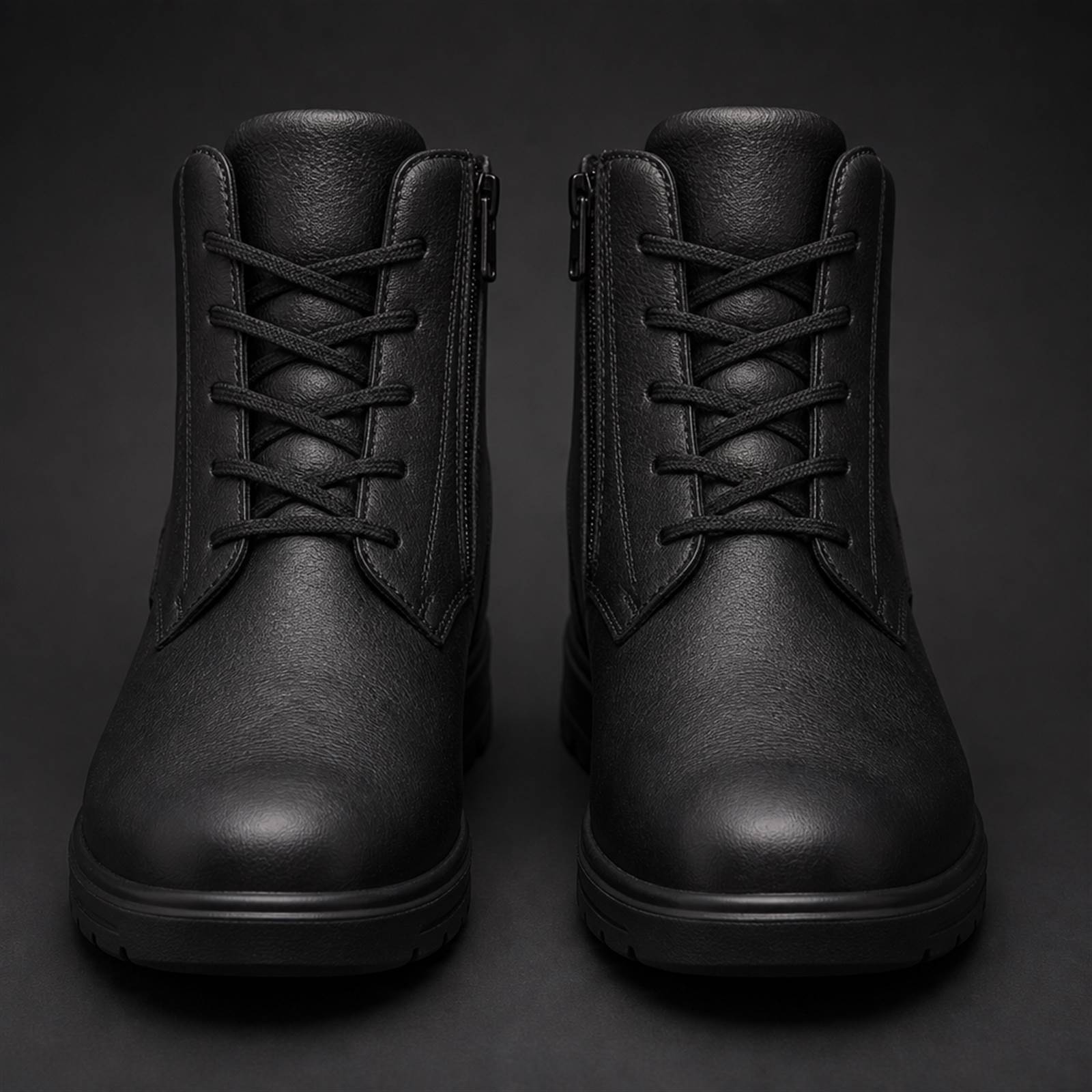
A side-zip boot exists for one reason: a shift worker can lace it once and zip it every time after.
Send us your tech pack, reference sample or product idea. We review your requirement, recommend materials and construction, and come back with a development plan you can act on.