Field Lab
Ripstop Tear Comparison
This Field Lab page exists to answer one question with evidence rather than opinion: how much does the ripstop grid actually limit tear propagation in the fabrics we use for tactical garments? The page structure, test intent and limitations are published now. Observations and results will be added only when the test has actually been run on real fabric and the numbers have been recorded.
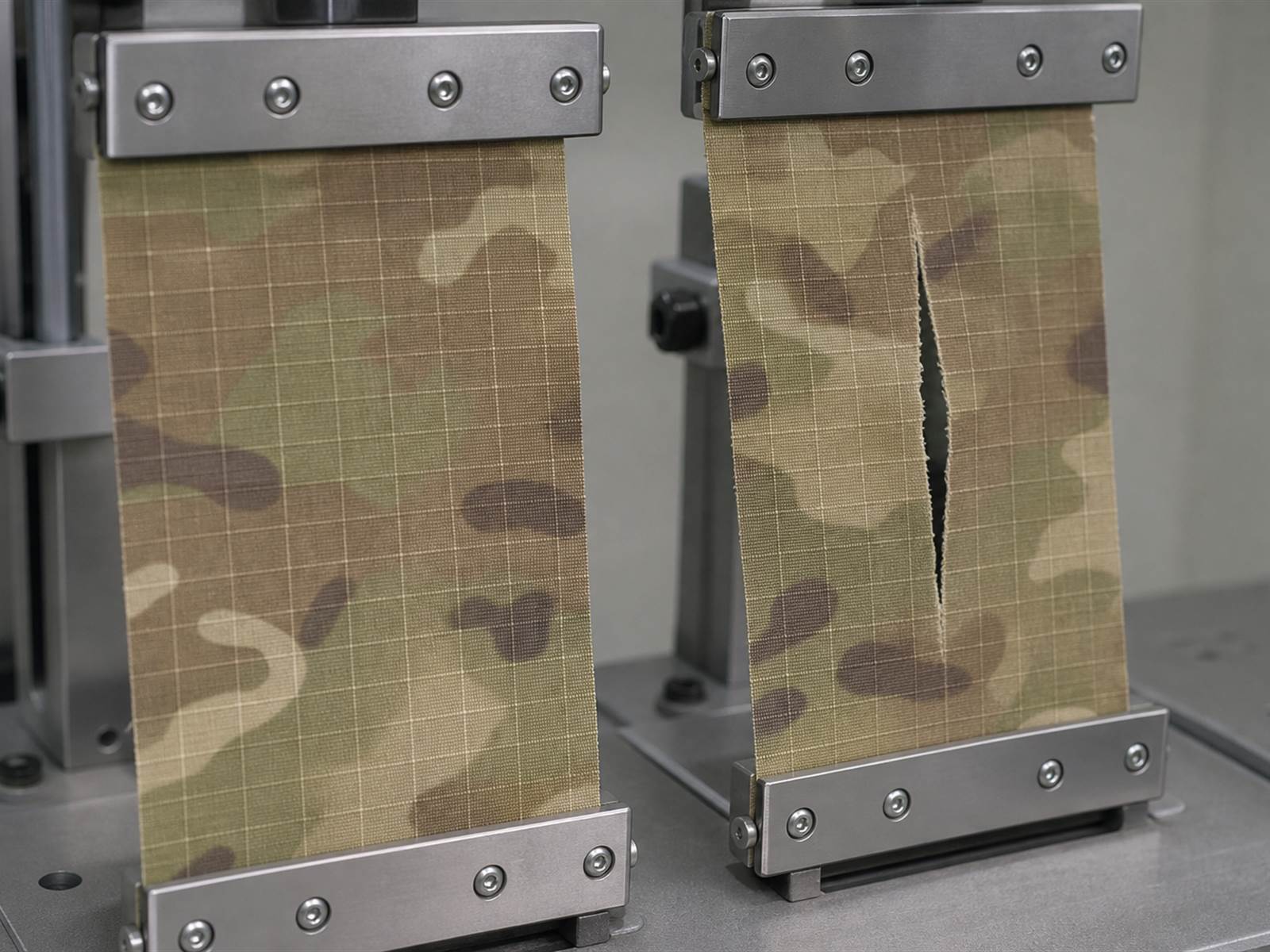
- Status
- Awaiting test data
- Materials compared
- 4
Gallery
Test bench
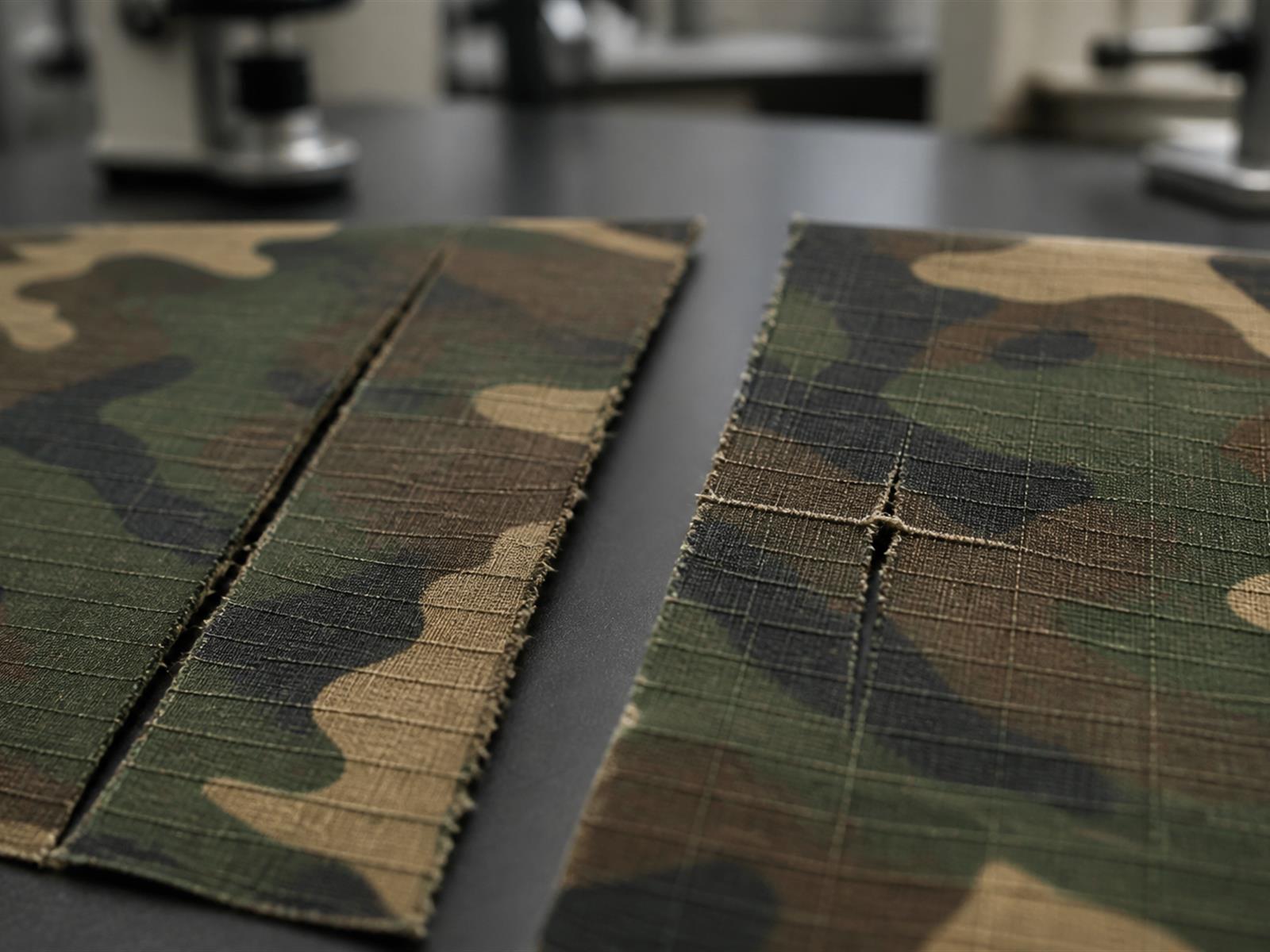
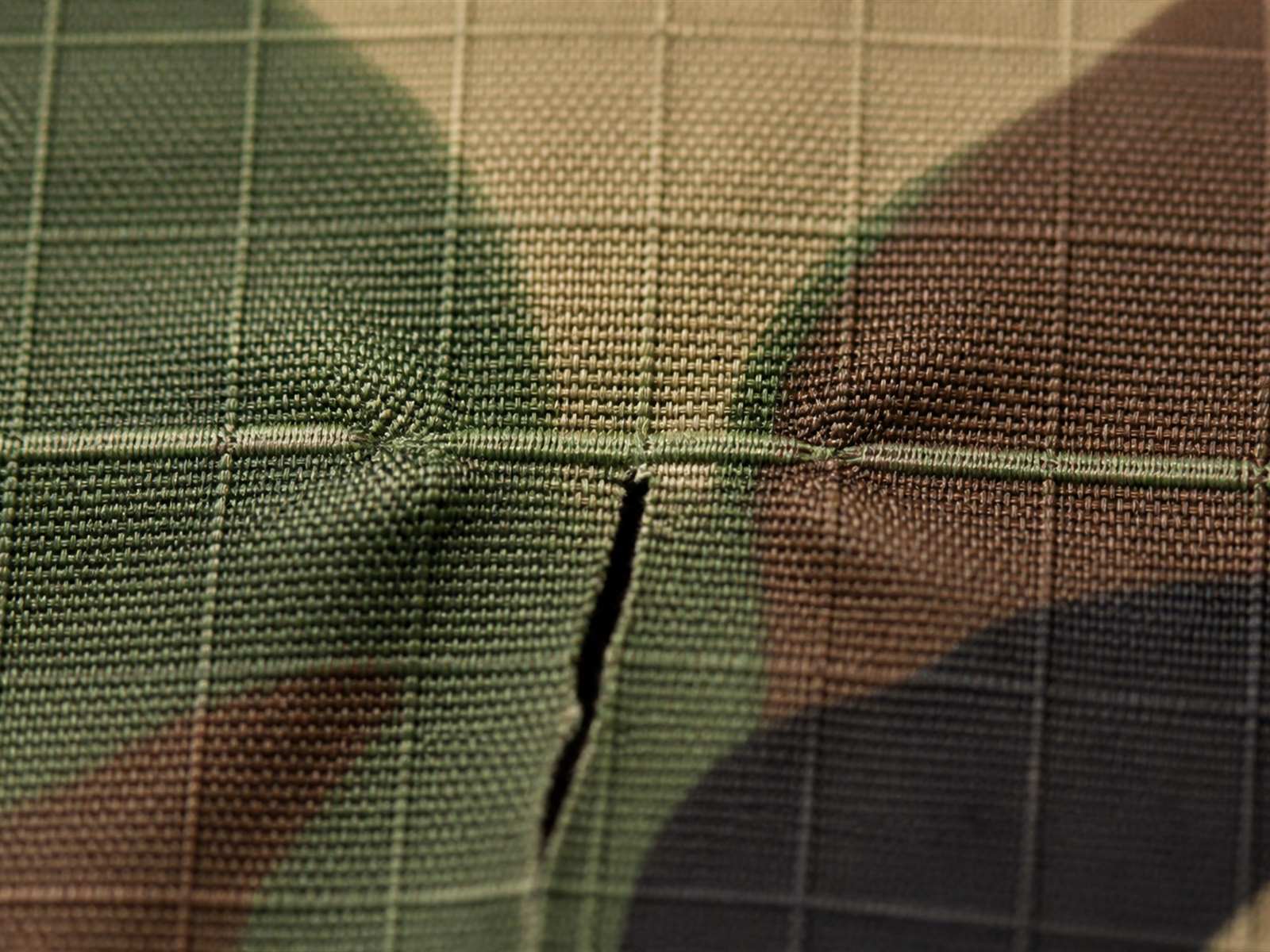
Status: AWAITING TEST DATA — Ripstop Tear Comparison has not yet been run on real material. Method, observations and result will be published once the test has been completed and the output recorded.
Question
What are we testing?
Whether a tear that starts inside a ripstop grid square propagates less than the same tear in a plain woven fabric of comparable weight. The test is intended to compare fabrics against each other under the same method, not to certify any single fabric against an external standard.
Relevance
Why does it matter?
Tear resistance is the main reason a buyer pays more for a ripstop sleeve or trouser than for a plain woven of similar weight. If that benefit is not measurable, the specification is being carried by marketing rather than by performance. A buyer deciding between two quotations should be able to see what the difference in construction actually delivers at the failure point — the pocket corner, the elbow and the knee.
Materials
Materials in this test
Material
Poly Cotton Ripstop
Poly cotton ripstop is a woven fabric built from a blend of polyester and cotton, reinforced with a grid of thicker yarns woven at intervals.
Material
NYCO Ripstop
NYCO ripstop is a woven fabric that blends nylon with cotton and reinforces the structure with a grid of heavier yarns woven at regular intervals.
Material
Cotton Ripstop
Cotton ripstop is a woven fabric made entirely from cotton, reinforced with a grid of heavier yarns woven at regular intervals.
Material
Stretch Ripstop
Stretch ripstop combines the tear containment of a ripstop grid with the movement of a stretch construction.
Method & result
Method, observations and result
Ripstop Tear Comparison is published only when the underlying work has been carried out, so an empty field means the test has not yet produced that value.
Testing method
Awaiting test data — to be published when the test is complete.
Observations
Awaiting test data — to be published when the test is complete.
Result
Awaiting test data — to be published when the test is complete.
Limitations
What this test cannot tell you
Any result published here applies only to the specific fabric lots tested, at the specific weight and construction of those lots. Fabric performance varies with composition, yarn size, weave density and finishing. A comparison test of this kind is not a substitute for a buyer's own specification, and small differences between lots should be expected. Where a buyer has a performance requirement, the requirement should be written into the specification and verified on the actual production lot rather than inferred from a laboratory comparison.
Related
Related content
Related Materials
Related Applications
Related Capabilities
Related Categories
Request a sample to evaluate yourself
Send the product type and the application. We will propose the material options for that application and state the trade-offs, so the comparison you run is against the right candidates.