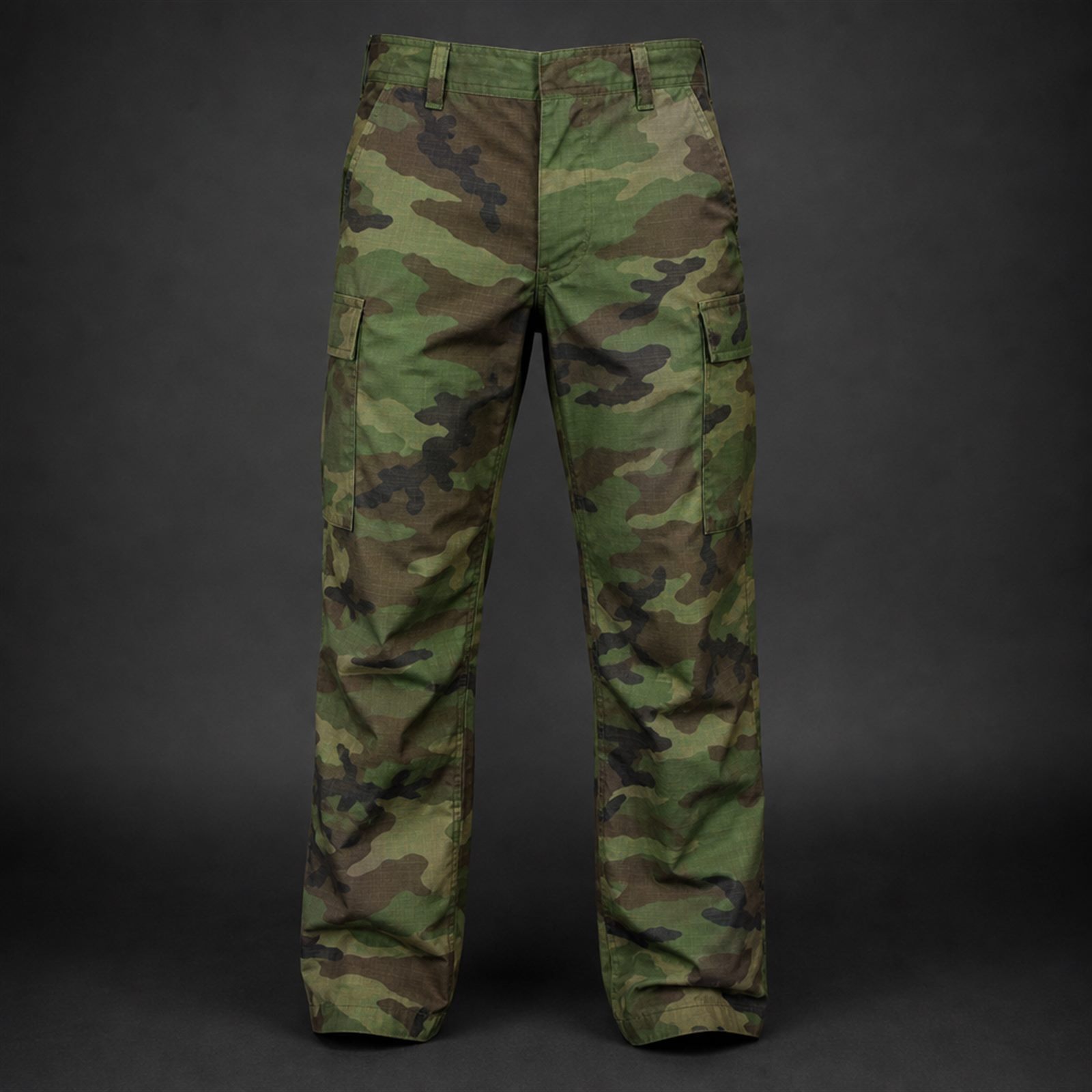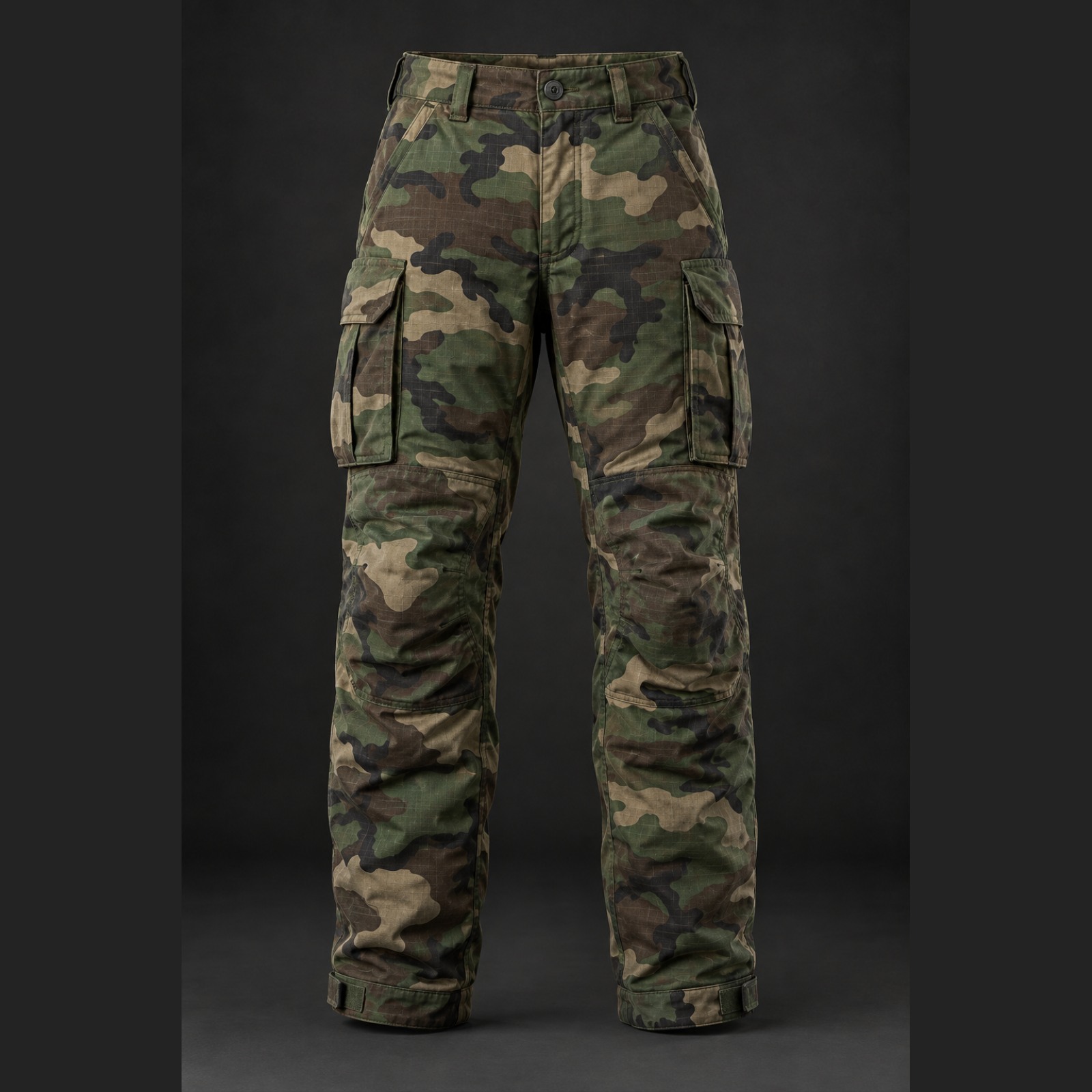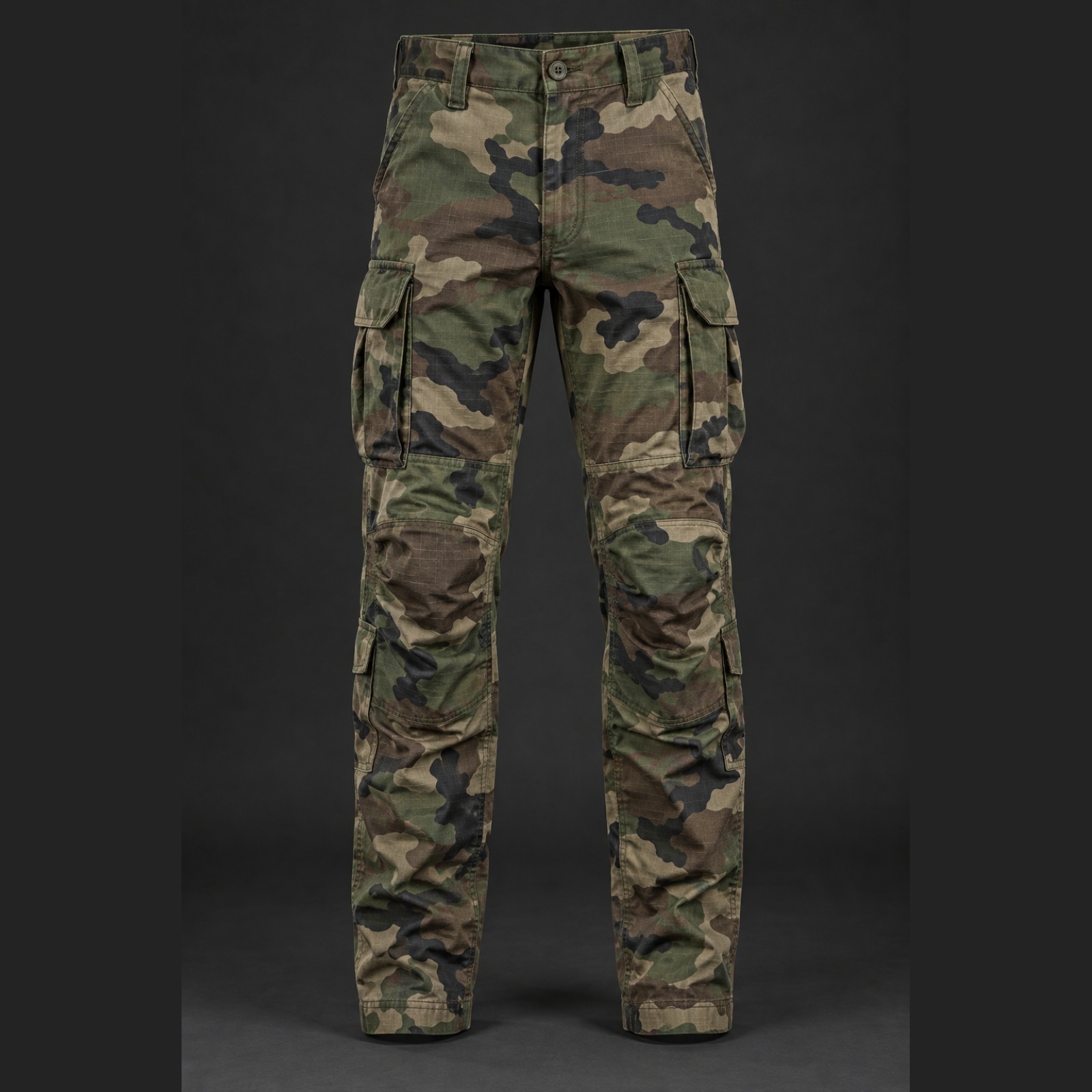
Tactical Pants
Ripstop Tactical Pants
A tactical pant is judged by three things: whether the crotch survives, whether the knee holds up, and whether the waist still fits the same after a full day of movement.
TemperateHotArid / Desert
View productProducts / Tactical Pants
Stretch in a tactical pant is a mobility decision with a durability bill attached. Adding stretch lets a wearer step over an obstacle, kneel behind cover or climb without the fabric pulling tight, and it removes the binding at the knee and crotch that makes a rigid pant uncomfortable over a long day. What it also does is reduce abrasion resistance, because the yarns that allow movement are generally not the yarns that resist wear, and it introduces recovery as a new failure mode: a stretch panel that does not return to shape bags at the knee and the seat, and a bagged pant fits worse than a rigid one. This page treats stretch as an engineering choice to be specified, with the recovery, abrasion and drying consequences stated before the fabric is locked.
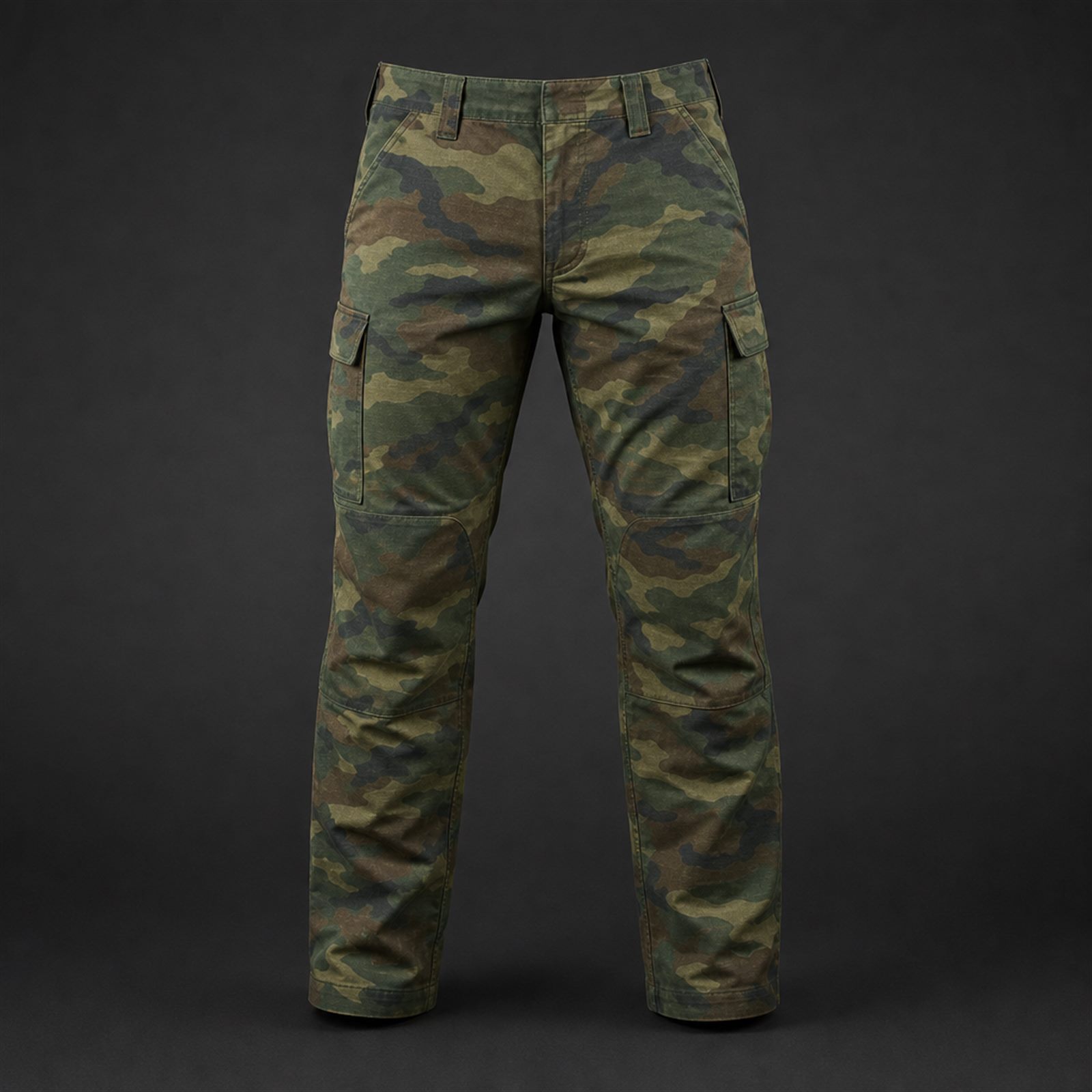
Gallery
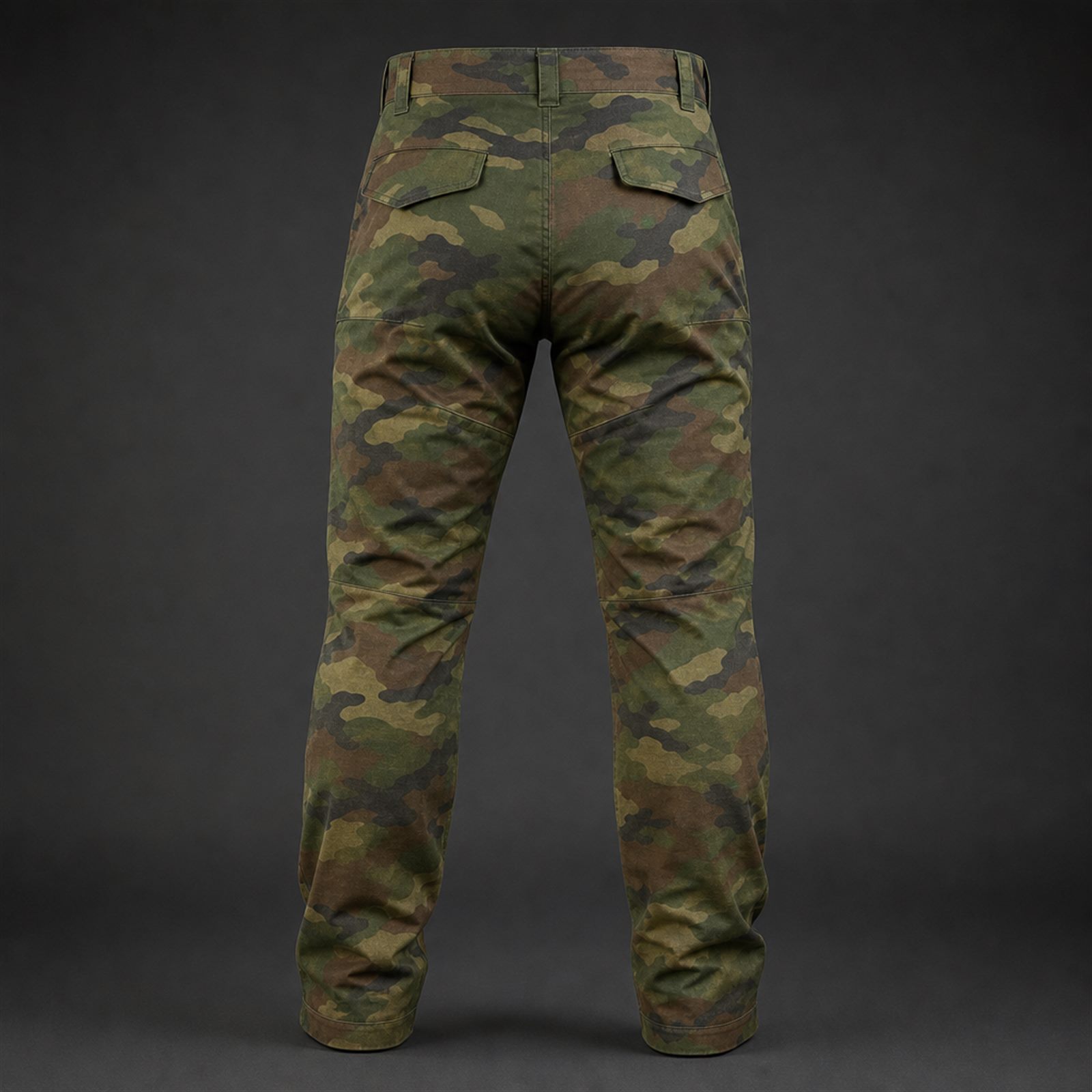
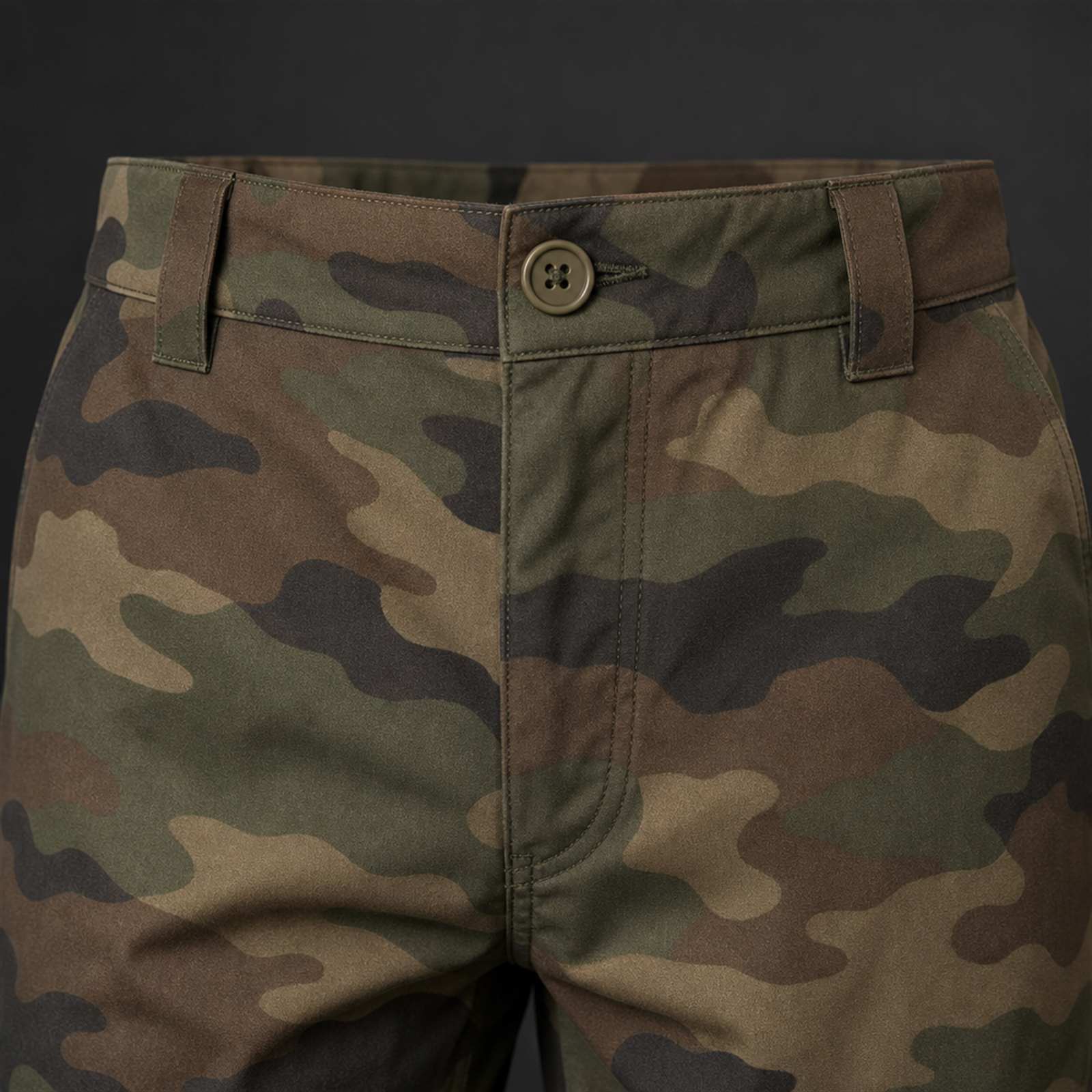
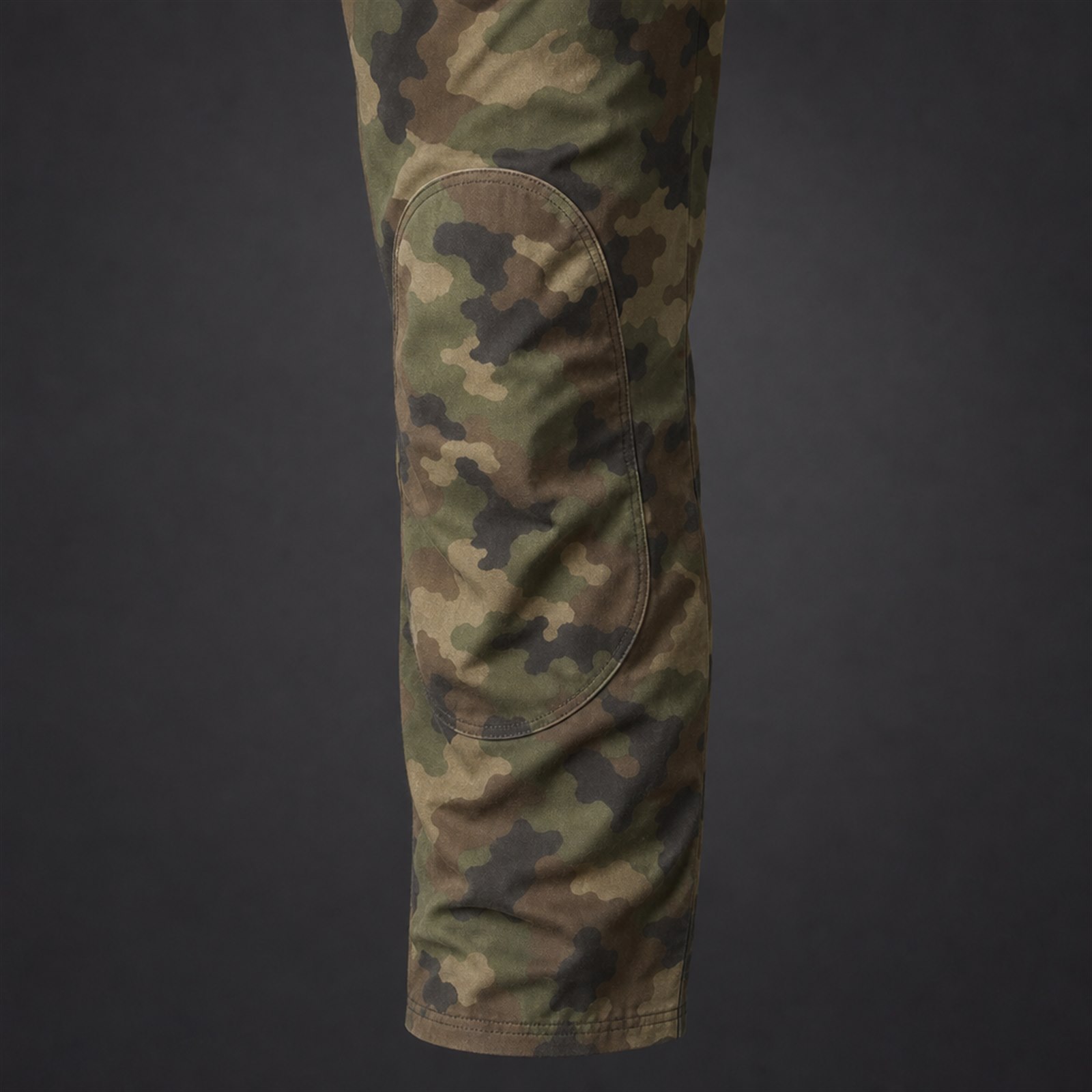
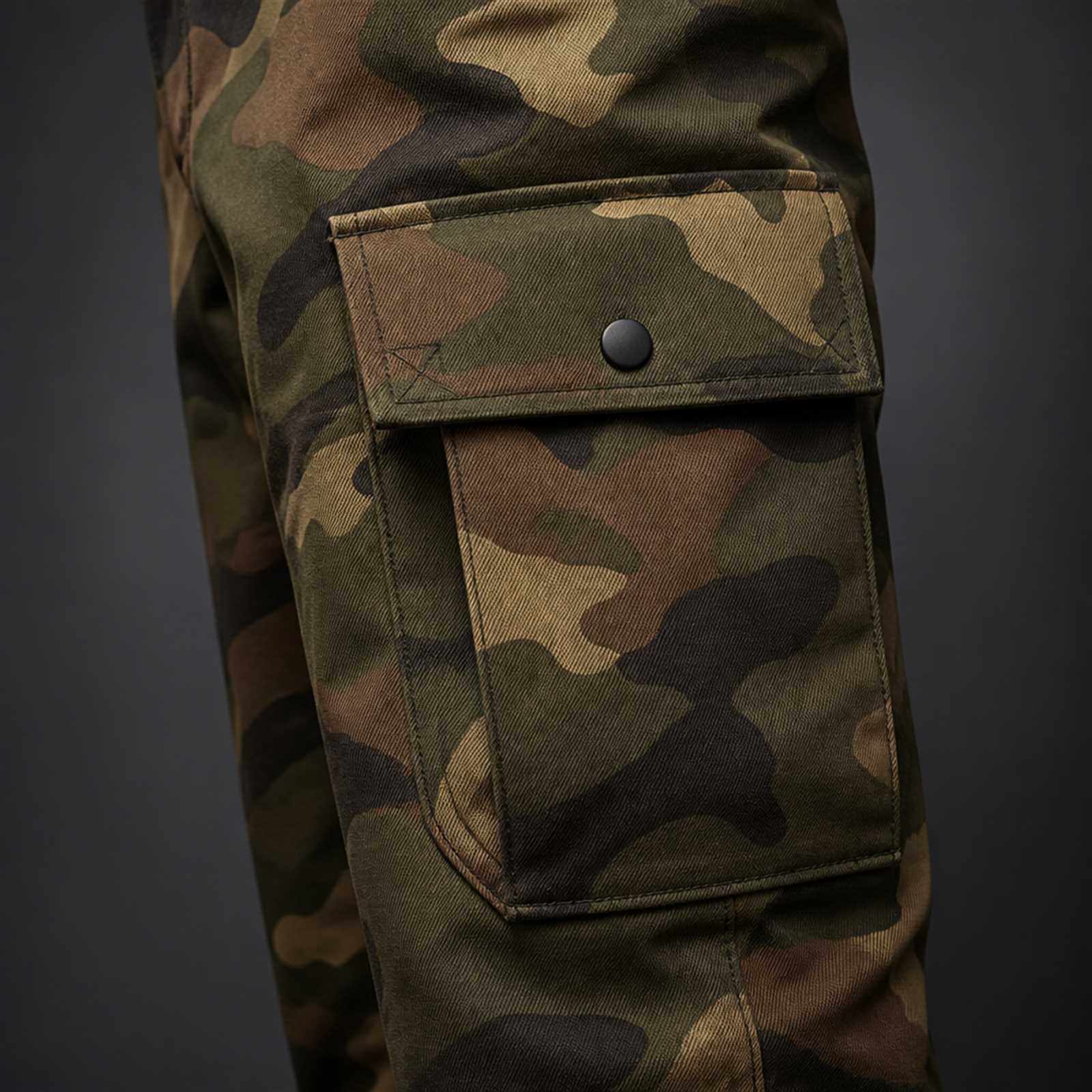
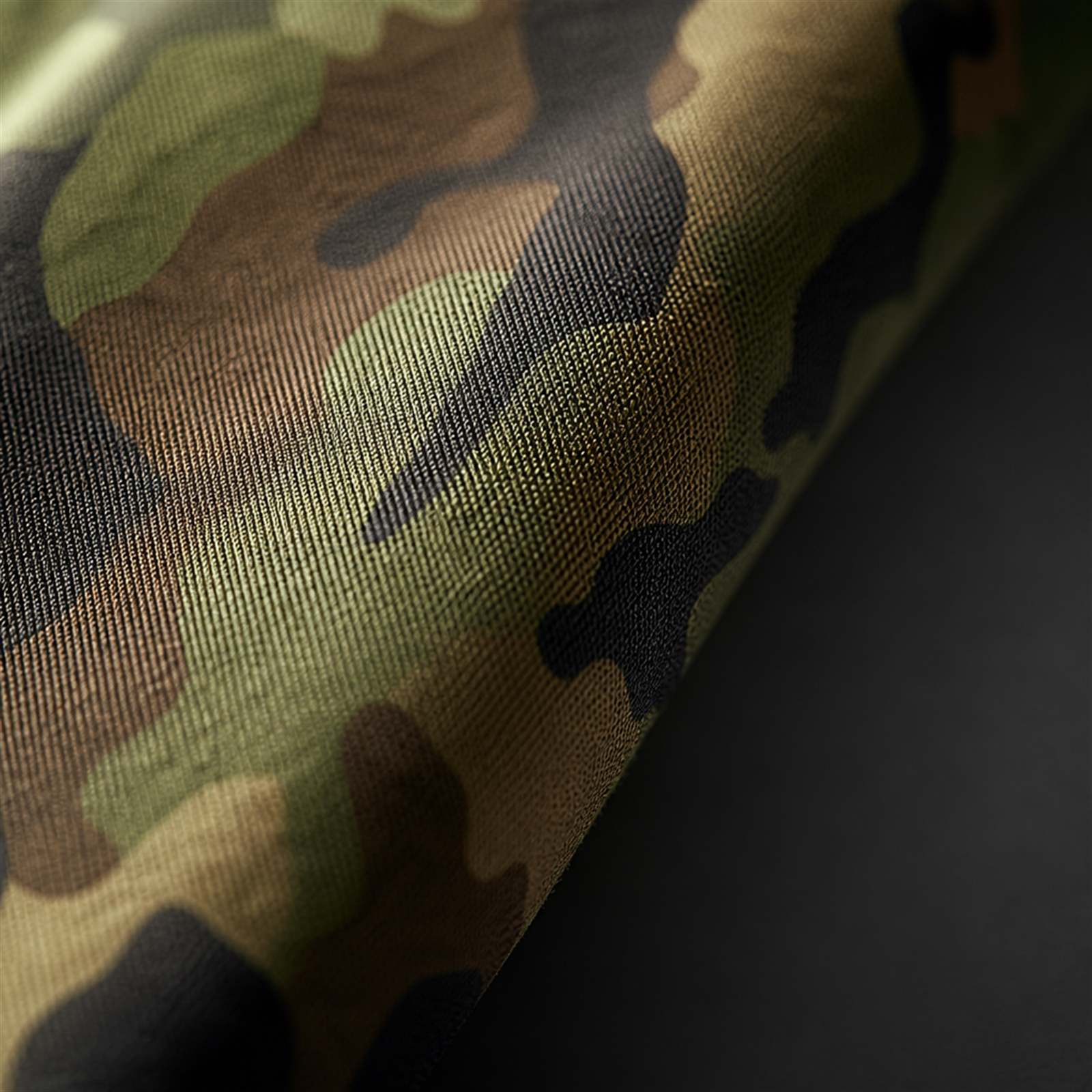
Design purpose
Give the wearer the range of movement that rigid ripstop pants deny, while restricting stretch to the panels where mobility matters and keeping stretch away from the panels where abrasion resistance does. Recovery, abrasion and drying behaviour are specified together rather than traded against each other without the buyer's knowledge.
Applications
Interactive map
Stretch Tactical Pants: select a marker to see what can be specified at that part of the garment — all 10 mapped areas are also listed in full below the map, so nothing is hidden behind an interaction.
Customization by garment part
Select a marker to see the customization options available at that part of the garment. Every option below is a manufacturing decision you control.
Materials
4 material options for Stretch Tactical Pants, specified per garment area — a single fabric cannot serve heat management and abrasion resistance at the same time.
Leg and seat shell
Mechanical stretch holds its shape better after repeated laundering than fabrics that rely on elastane for recovery, which matters on a garment that is worn daily. Pure stretch without any ripstop protection snags more readily, so many programmes keep ripstop at the knee and lower leg.
Mobility panels
Placing stretch only where movement is concentrated gives most of the mobility benefit with less of the abrasion penalty. It does add seams and a second fabric to control, so colour and shrinkage matching become specification items.
Knee and seat reinforcement
Reinforcement over a stretch panel is the standard answer: the reinforcement carries abrasion, the stretch beneath it carries movement. The combination adds weight and stiffness at the joint, and the two layers dry at different rates.
Waistband and trim
Waistbands on stretch pants should not depend on stretch for fit, or the waist grows with use and the belt has to compensate. Adjusters and side inserts are specified explicitly rather than assumed.
Construction
How each of the 8 parts of Stretch Tactical Pants is assembled, and why that choice was made.
Waist
Waistband rise and loop placement are specified so that belt-mounted equipment loads the loops and not the stretch fabric. Where stretch side inserts are used, they are sized so that the waist returns to its measured dimension after wear instead of relaxing permanently.
Fly
Zip fly with a reinforced facing. The fly is a non-stretch zone by design, and the transition between the stretch shell and the stable fly facing is where distortion appears first, so the seam type is chosen to hold that dimension.
Crotch
Gusseted crotch, usually in stretch fabric, because the gusset is the panel that absorbs the widest range of movement. The gusset seam is built low-bulk so it does not become a pressure point in a crouch.
Seat
Seat panel cut with a defined rear rise and a seam position that is not loaded when the wearer crouches. On stretch pants the seat is where recovery failure shows first, so the panel is specified with the recovery requirement stated rather than assumed.
Thigh
Cargo pocket placement is set so the pocket does not sit across the maximum stretch zone of the thigh. A pocket placed across a stretch panel distorts when loaded and pulls the pocket mouth open.
Knee
Articulated knee with darts or a separate panel, optionally combined with a stretch articulation insert. Stretch reduces the need for deep articulation, but articulation still reduces the tension that accelerates abrasion, so most programmes keep both.
Reinforcement
Reinforcement concentrated at knee, seat and pocket corners. On stretch pants the reinforcement is also a dimensional control, because it holds the panel shape where the stretch fabric alone would relax.
Hem
Straight hem, drawcord cuff or hook and loop adjustment. Because the shell has give, cuff closures are specified so the leg does not ride up over the boot when the fabric is stretched in a stride.
Features
The 6 functional features of Stretch Tactical Pants each exist to solve a specific problem in use, and where a feature is a trade-off rather than a pure gain that is stated.
Movement comes from the weave structure rather than from elastane dependence, so the pant keeps its dimensions through repeated laundering and wear.
Stretch is used at the crotch, knee and waist where movement concentrates, and ripstop or heavier reinforcement is kept where abrasion is the dominant risk.
The recovery requirement is stated in the specification so that knee and seat bagging is designed for rather than discovered after the first production run.
Removes the four-seam junction at the highest-stress point of the garment and spreads movement load across a panel.
Reinforcement at the knee and seat also holds panel shape where stretch fabric alone would relax over time.
Thread with the correct elongation, and tape and tape-free options, are selected so that the stitching does not crack or pop when the shell is stretched.
Customization
15 customization lines for Stretch Tactical Pants: branding, colour, camouflage and packaging are all part of the specification, and every item is confirmed on the pre-production sample.
Fabric
Color
Camouflage Pattern
Waist
Fly Closure
Knee
Crotch
Hem
Stitching
Logo
Label
Size
Care Instruction
Packaging
Colour
Camouflage
Sizing
Sizes are developed from the buyer's size chart, a waist and inseam grid, or the buyer's uniform sizing standard. Stretch changes how a pant measures in use as well as on the table, so the specification states whether critical measurements are taken relaxed or extended, and inspection follows the same instruction. A size set sample is produced so that waist, hip, front and rear rise, thigh, knee height and leg opening are confirmed across the range. Because a stretch pant can mask a grading error by taking up the difference, the fit is assessed in a crouch and a stride as well as on the table.
Branding
Main label, size label, care label and country of origin label are produced to the buyer's artwork and content, including any care wording the buyer requires for a stretch shell. Branding can be applied as woven label, printed label, rubber patch, embroidery or heat transfer, with placement confirmed on the approved sample. Packaging ranges from plain poly bag to printed poly bag with hangtag, header card or custom retail box. Where care content is the buyer's responsibility, it is confirmed in writing before labels are ordered so that the printed label matches the fibre content actually used.
Logistics
Sample development
Development of Stretch Tactical Pants runs in 7 stages, each risk removed before the next step commits cost.
Requirement review
Specification, size chart and reference pant reviewed, with the mobility requirement and the abrasion requirement stated separately so they can be traded deliberately.
Stretch zone planning
The panels that receive stretch and the panels that keep ripstop or reinforcement are agreed before pattern development, because this determines the number of seams in the block.
Material proposal
Stretch fabrics proposed with their recovery, abrasion and drying behaviour described, and the trade-offs against a rigid ripstop stated.
Pattern development
Block developed with the gusset, articulation and stretch panels, and with measurement points defined as relaxed or extended.
Prototype
First sample produced for fit, movement range and reinforcement placement.
Movement and recovery check
The prototype is checked in a crouch, kneel and stride, and the knee and seat panels are inspected for distortion after the sample has been worn, so recovery problems appear on the sample rather than in bulk.
Revision, size set and pre-production sample
Buyer comments consolidated into one revision round, the size range produced for measurement confirmation, and the approved construction locked as the bulk standard.
Bulk production
7 stages of bulk production for Stretch Tactical Pants — where the approved specification is either held or lost.
Fabric and trim approval
Bulk shell, stretch panel, reinforcement, zips, thread and labels approved against the pre-production standard, including thread elongation for stretch seams.
Cutting
Cutting performed against the approved pattern with the stretch direction respected and markers controlled for shade and print alignment.
Panel preparation
Stretch panels, reinforcement layers and printed or embroidered panels prepared and checked before assembly.
Assembly
Line assembly to the approved sequence with defined stitch types at stretch seams so the stitching does not crack when the fabric extends.
Inline inspection
In-process inspection with gusset construction, stretch panel seams and pocket attachment checked as critical operations.
Finishing
Thread trimming, hardware function check and careful pressing, since heat and tension during pressing can distort a stretch panel permanently.
Final inspection and packing
Measurement, construction and packing inspected against the agreed standard and recorded.
Quality control
The 7 checks applied to Stretch Tactical Pants, each measured against an agreed standard rather than against opinion.
Incoming fabric inspection
Shade, weight, width, stretch direction and recovery behaviour checked before the fabric enters production.
Trim inspection
Zips, buttons, thread, tape and labels checked for shade, elongation and match to the approved standard.
Pre-production approval
The buyer-approved pre-production sample becomes the reference standard for the whole order.
Inline inspection
Work in progress inspected at defined points, with stitch type and tension at stretch seams checked as a critical item.
Measurement inspection
Critical measurements checked against the approved size set with the relaxed or extended measurement instruction applied consistently.
Construction and recovery inspection
Seam security, reinforcement placement, hardware function and panel recovery after handling checked against the approved sample.
Final and packing inspection
Finished garments checked before packing, then labels, folding, poly bagging and carton marking checked against the packing instruction.
Specifications
21 specification rows for Stretch Tactical Pants: only confirmed items are listed, so a row that depends on your programme is omitted rather than filled with an estimate.
| Product type | Stretch tactical pants |
|---|---|
| Shell material | Stretch woven or stretch ripstop — confirmed per programme |
| Stretch placement | Agreed per programme — crotch, knee, waist or full shell |
| Crotch construction | Gusseted crotch in stretch or shell fabric |
| Knee construction | Articulated knee with optional stretch insert, reinforcement or pad pocket |
| Waist options | Fixed waistband, stretch side inserts, internal adjusters |
| Fly closure | Zip with button, zip with hook and loop, or button fly |
| Pocket options | Cargo with flap or zip, flat cargo, rear pockets, lower leg pocket |
| Stitch specification | Stretch thread and stitch type defined at movement zones |
| Climate | Temperate, hot, tropical / humid |
| Size range | Developed to buyer size chart, waist and inseam grid, or uniform sizing standard |
| Labelling | Private label to buyer artwork and content |
| Packaging | To buyer packing instruction |
FAQ
Usually it does reduce abrasion resistance, because the yarns that give movement are generally not the yarns that resist wear. The practical answer is to place stretch only where movement is concentrated, such as the crotch gusset, knee articulation and waist, and to keep ripstop or a heavier reinforcement at the knee, seat and lower leg where the pant meets ground and equipment. That combination gives most of the mobility with much less of the durability penalty.
Recovery. A stretch panel that does not return to its original dimensions bags at the knee and the seat, and a bagged pant fits worse than a rigid one and looks worn out before it is. Mechanical stretch generally holds its shape better through repeated laundering than elastane-dependent fabric, and the recovery requirement should be stated in the specification rather than assumed.
Yes, and it is the usual configuration. The reinforcement carries abrasion while the stretch beneath carries movement. The costs are extra weight and stiffness at the joint, and two layers with different drying rates, which is why the reinforcement is kept to the panel that needs it.
MOQ depends on the stretch fabric selected, the number of colourways and whether the fabric has to be developed or matched. We do not publish a figure that has not been confirmed against your specification. Tell us the construction and the quantity and we will state the MOQ that applies.
Development time depends on whether the stretch fabric has to be sourced or matched, and on how many revision rounds the fit needs. Movement checks on a stretch pant usually require more than one wear assessment, and we will state a timeline against your actual specification rather than a general number.
The specification states whether each critical measurement is taken relaxed or extended, and inspection follows the same instruction. That matters because a stretch pant can absorb a grading error by stretching, so measurements alone are not sufficient evidence of fit. The fit is confirmed by wear assessment in a crouch and a stride as well as on the measuring table.
Related Applications
Related Capabilities
Related Categories
More products
Tactical Pants
A tactical pant is judged by three things: whether the crotch survives, whether the knee holds up, and whether the waist still fits the same after a full day of movement.
Tactical Pants
In sustained heat the limiting factor is not durability, it is whether the wearer can keep working.
Tactical Pants
Cold weather changes what a tactical pant has to do.
Send us your tech pack, reference sample or product idea. We review your requirement, recommend materials and construction, and come back with a development plan you can act on.